
 Bitaigen Research
 From a macro perspective, we examine the recent regulatory risks facing MicroStrategy, analyzing its survival test among index exclusion, NAV premium fluctuations, and debt pressure, helping readers grasp the potential turning point for this Bitcoin whale. The following sections will provide in‑depth analysis and possible response pathways.
Key Risk Overview
At the end of 2025, the biggest concern for MicroStrategy (now renamed Strategy Inc.) is not the price volatility of Bitcoin itself, but the intersection of its business with traditional capital markets.
- Threat of Index Exclusion: MSCI is reviewing a proposal to re‑classify companies whose digital‑asset holdings exceed 50 % as “investment tools.” If approved, MicroStrategy would be removed from the MSCI Global Investable Market Index (GIMI). Passive funds that track the index could be forced to liquidate holdings worth tens of billions of dollars, potentially causing a sharp decline in the share price and compressing the net‑asset‑value (NAV) premium.
- NAV Premium Volatility: The company’s share‑repurchase mechanism depends on the market’s willingness to pay a premium for MSTR shares above the underlying Bitcoin net value. In early December 2025, concerns over index exclusion pushed the stock into roughly an 11 % discount. When the share price falls below NAV, any new equity issuance would dilute existing shareholders’ Bitcoin exposure, compelling the firm to pause further Bitcoin purchases.
- Debt Burden and Liquidity Risk: As of Q3 2025, MicroStrategy’s total debt stood at about US $8.24 billion, with annual interest expense of roughly US $36.8 million and preferred‑stock dividends of approximately US $638.7 million per year. Although the convertible bonds are not collateralized by Bitcoin, an extreme drop in Bitcoin’s price would markedly increase debt‑service pressure. *(Note: crypto‑related gains may be taxable under the investor’s local jurisdiction; consult a tax professional.)*
From Software Company to “Bitcoin Bank”
In 2025 the firm officially rebranded to Strategy Inc., signaling that its core business has shifted entirely from business‑intelligence software to Bitcoin asset management. The underlying logic is straightforward: when the market price of MSTR shares exceeds the net value of its Bitcoin holdings, the premium can be used to raise capital for buying more Bitcoin, thereby maintaining or increasing the amount of Bitcoin represented per share.
This cycle creates the so‑called “flywheel effect”: rising share price → new share issuance → purchase of additional Bitcoin → further share‑price uplift. If the premium disappears, the flywheel stalls.
The Three‑Pronged Financing Playbook
1. ATM Program: Immediate Funding When a Premium Exists
MicroStrategy’s primary financing channel is the At‑the‑Market (ATM) offering of its Class A common stock (ticker: MSTR). The mechanics are simple: when the share price trades above the Bitcoin NAV, the company sells new shares on the open market and directs the proceeds directly to Bitcoin purchases. Between December 8–14 2025, MicroStrategy sold roughly 4.7 million MSTR shares, netting about US $888.2 million. As long as the premium persists, each issuance “adds value” for existing shareholders rather than diluting them.
2. Perpetual Preferred‑Stock Matrix
Later that year the company launched a series of perpetual preferred shares aimed at investors with varying risk appetites.
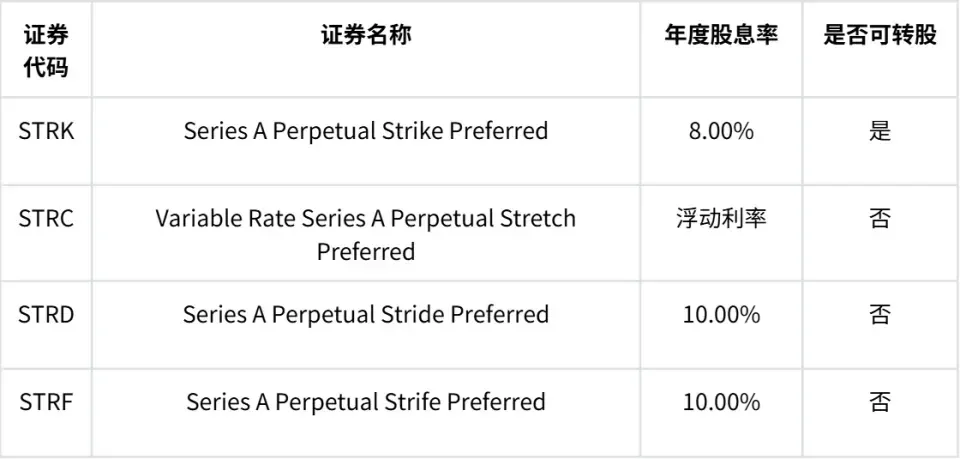
During a single week in December, these preferred securities raised roughly US $82.2 million from the STRD offering. The preferreds typically feature a “capital‑return” dividend structure, allowing investors to defer tax liability for at least ten years—a feature that enhances their tax appeal, especially for jurisdictions that permit deferred taxation on qualified securities. *(U.S. investors should note that purchases must be made through Binance.US or other U.S.‑compliant platforms; international investors can use SEPA/SWIFT for fiat transfers.)*
3. The “42/42 Plan” – A US $84 billion Capital Ambition
Strategy Inc. is advancing an upgraded “42/42 Plan.” The roadmap calls for raising US $42 billion through equity issuances and an additional US $42 billion via fixed‑income securities over the 2025‑2027 period, totaling US $84 billion earmarked exclusively for Bitcoin purchases. This scheme effectively turns the company into a closed‑ended fund with leveraged Bitcoin exposure, while retaining the financing flexibility that only a publicly listed entity can enjoy.
Clarifying the “Sell‑Bitcoin” Rumors
From mid‑November to early December 2025, on‑chain monitoring tools such as Arkham Intelligence detected the movement of approximately 43,415 BTC (valued at about US $4.26 billion) from known addresses to more than 100 new wallets. The activity sparked market panic, briefly pushing Bitcoin below US $95,000.
Subsequent forensic audits and statements from management clarified that the transfers constituted a “custodian and wallet rotation”—a risk‑mitigation measure designed to diversify custody across platforms (e.g., moving assets away from a single provider like Coinbase Custody) and enhance security, not a liquidation event. Executive Chairman Michael Saylor repeatedly emphasized on Twitter and in CNBC interviews that the company continues to buy Bitcoin at scale. In the second week of December, Strategy Inc. increased its Bitcoin holdings by 10,645 BTC at an average price of US $92,098 per coin, directly refuting sell‑off allegations.
Moreover, the firm has built a US $1.44 billion cash reserve in dollars, sufficient to cover at least 21 months of operating expenses, underscoring that it does not rely on Bitcoin sales to fund dividends or interest payments.
Ongoing Software Operations
While the Bitcoin side dominates public discourse, MicroStrategy’s software division remains the engine that sustains its public‑company status and covers day‑to‑day costs. In Q3 2025, software revenue reached US $128.7 million, a 10.9 % year‑over‑year increase that beat market expectations.
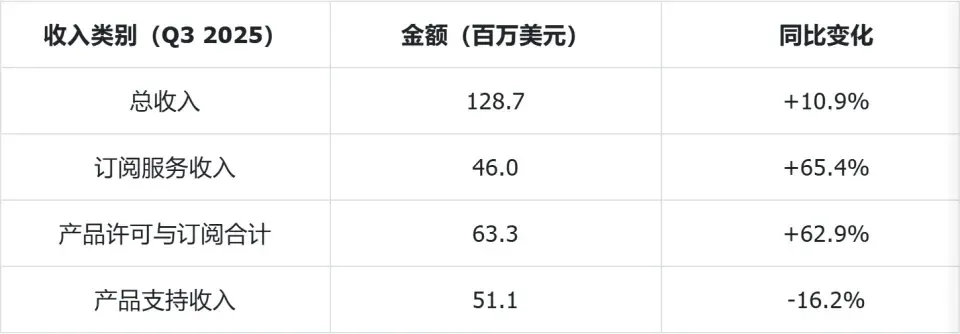
Nevertheless, continued investment in AI research and cloud infrastructure meant the software segment did not generate positive operating cash flow in the first half of 2025. Free cash flow in Q3 was a negative US $45.61 million, indicating that Bitcoin accumulation still depends heavily on external financing.
Effective January 1 2025, the company adopted ASU 2023‑08, accounting for Bitcoin holdings at fair value through the income statement. This accounting shift caused pronounced profit volatility: the Q3 2025 unrealized gain from Bitcoin price appreciation amounted to US $3.89 billion, propelling net profit to roughly US $2.8 billion.
Comprehensive Assessment
The situation facing Strategy Inc. at the close of 2025 illustrates both the opportunities and challenges of a firm attempting to redefine its financial boundaries around Bitcoin. The company remains committed to expanding its Bitcoin position and has set aside a US $1.44 billion dollar reserve to buffer potential liquidity squeezes.
However, if index providers such as MSCI ultimately exclude the stock from traditional benchmarks, Strategy Inc. will need to demonstrate that it can sustain growth without the inflow of passive capital, relying instead on structured financing products and the steady performance of its software business.
The success of the “42/42 Plan” will hinge on the firm’s ability to keep offering attractive returns to institutional investors as Bitcoin becomes increasingly financialized, while simultaneously navigating the “cloud‑migration pain” in its software arm to preserve fundamental fiscal health.
This experiment is not only a bold corporate gamble for MicroStrategy but also a microcosm of the broader convergence between the crypto ecosystem and the conventional financial system. In the face of such an unprecedented wager, the only certainty is that the outcome remains highly uncertain.
Related Reading
- MicroStrategy's 40k BTC Blitz: Can It Reverse 2026 Market?
- STRC Shares Surge as MicroStrategy Boosts Bitcoin Holdings
💡 Register on Binance with referral code B2345 for the maximum trading fee discount. See Binance complete guide.



