
 Bitaigen Research
 We start by examining the parallel‑computing characteristics of graphics cards, outline the key milestones in the evolution of Bitcoin mining, and explain why GPUs were once the mainstream mining equipment. Understanding this history helps readers grasp the technical logic behind hardware choices; the following sections will dive deeper into the details.
What is the relationship between Bitcoin and graphics cards?
Bitcoin mining requires massive parallel computation. Graphics cards (GPUs) contain thousands of stream processors that can efficiently perform hash calculations, so GPUs have traditionally been employed for Bitcoin mining.
- Bitcoin is a decentralized digital currency that does not rely on a central authority for issuance. It uses a specific consensus algorithm and generates new coins through intensive computation.
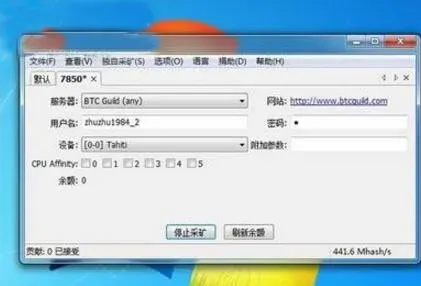
- In the early days, the hardware needed to perform the required hash calculations was dominated by high‑performance AMD GPUs. When the Bitcoin boom arrived, models such as the HD7850, HD7870, HD5850, HD5870, R7 270 and R7 280X—high‑bandwidth cards—were in short supply and became the workhorses of mining rigs.
- Later, purpose‑built ASIC (Application‑Specific Integrated Circuit) miners entered the market, delivering a dramatic increase in hash power and gradually pushing GPUs out of the mainstream mining arena.
In other words, high‑end AMD graphics cards were once the primary platform for acquiring Bitcoin, which explains the direct link between the two.
Mining itself is the process of using computational resources to solve the hash puzzles required by Proof‑of‑Work. Any device that can provide sufficient hash power can participate; participants are called “miners,” and their activity is referred to as “mining.” Because of their parallel‑processing capabilities, GPUs have often been nicknamed “mining machines.”
Why use a graphics card to mine Bitcoin?
GPUs far outstrip ordinary CPUs in parallel computation. Take the common RX 580 as an example: it houses 2,304 stream processors, whereas a typical mainstream CPU has four cores. This difference is comparable to the computing power of four university students versus 2,304 high‑school students. Bitcoin’s hash calculations consist of a huge number of identical mathematical operations, and a GPU’s parallel architecture can process many hashes simultaneously, markedly improving mining efficiency.
CPU vs. GPU hash‑rate comparison (illustrative)
| Device | Number of cores / processors | Ideal workload |
|---|---|---|
| CPU (4‑core) | 4 | General‑purpose tasks, single‑threaded programs |
| GPU (RX 580) | 2,304 stream processors | Large‑scale parallel hashing, graphics rendering |
Key metrics to consider when selecting a GPU
- Video memory capacity – Choose a card with 6 GB or more of VRAM; this is sufficient for the majority of mining software.
- Usable VRAM – Some cards marketed as “5 GB” actually provide around 4.5 GB of usable memory, which can affect mining stability and hardware lifespan.
- Used GPUs – When buying a second‑hand mining rig, verify that the VRAM meets the above threshold and inspect cooling solutions and power‑delivery components.
In summary, GPUs offered a combination of high parallelism and relatively low cost, making them the core hardware for Bitcoin mining in the early years. Although ASIC miners now dominate the market, understanding the historical link between GPUs and Bitcoin remains valuable for appreciating the broader evolution of blockchain technology.
For additional articles on the Bitcoin‑GPU relationship, follow Bitaigen (比特根).
Note: Cryptocurrency gains may be subject to taxation in your jurisdiction; consult a tax professional for guidance.
Global market tip: When dealing with fiat transactions, use USD and standard SEPA/SWIFT channels. U.S. residents should access Binance.US rather than the global Binance platform.
Related Reading
- How Bitcoin Mining Works and China’s Legal Risks
- Solana Seeker Phone: Specs, Airdrop & Buying Guide
- Crypto Cloud Mining: Mine Bitcoin Without Hardware
💡 Register on Binance with referral code B2345 for the maximum trading fee discount. See Binance complete guide.



