
 Bitaigen Research
 Everyone knows that the Ethereum network is undergoing a pivotal upgrade — The Merge, which will combine the execution layer with the Beacon Chain.
The Ethereum Merge aims to transition from proof‑of‑work (PoW) to proof‑of‑stake (PoS), improving security, reducing energy consumption, laying the groundwork for future scaling solutions, and providing critical support for the Ethereum 2.0 roadmap.
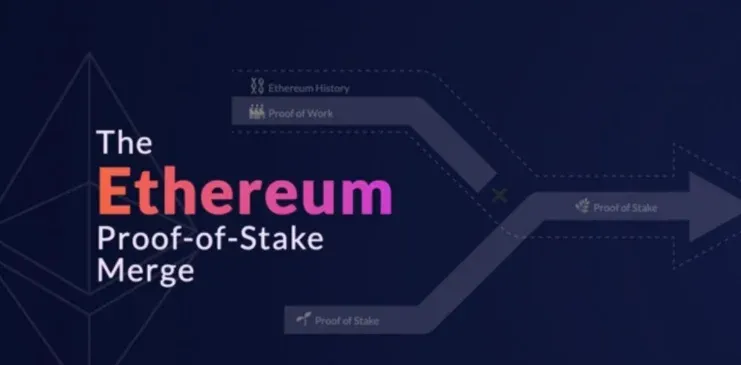
As the Bitaigen editorial team, we have distilled the core logic behind the Ethereum Merge, focusing on how the shift from proof‑of‑work to proof‑of‑stake impacts security, energy use, and subsequent scalability. This article will help readers trace the technical evolution, understand the ecosystem’s future direction, and is worth a careful read.
Why is Ethereum merging?
The core objectives of The Merge are to boost the network’s security, scalability, and energy efficiency. These goals manifest as follows:
- Improved security: In PoW, an attacker needs to control over 51 % of the hashing power to launch a double‑spend attack, whereas in PoS an attacker must stake a large amount of ETH and will be penalised if the attack fails, dramatically raising the cost of an attack.
- Energy efficiency: PoW relies on power‑hungry mining rigs; after the Merge, blocks are produced simply by staking ETH, causing a dramatic drop in electricity consumption.
- Scaling foundation: Although the Merge does not directly increase transaction throughput or lower fees, it provides the necessary consensus‑layer foundation for later scaling solutions such as sharding.
- Enhanced decentralization: PoW ecosystems tend to be dominated by large mining pools, while PoS allows many small‑balance holders to participate in validation, improving the network’s decentralization.
The Merge is a critical step in the Ethereum 2.0 roadmap; subsequent upgrades (e.g., sharding) will build on this foundation, markedly increasing overall processing capacity.
Why is Ethereum moving to PoS?
- Massive energy consumption: According to Digiconomist, the current Ethereum network consumes roughly 112 TWh of electricity per year—more than the entire annual consumption of Pakistan or the Philippines, and comparable to the total usage of the Netherlands. A single ETH transaction can use more energy than 150,000 VISA transactions. By comparison, Bitcoin’s annual electricity usage is about 137 TWh.
- Historical limits of PoW: Proof‑of‑work was first proposed in 1993 as a spam‑prevention mechanism and was adopted by Bitcoin’s creator Satoshi Nakamoto in 2009 to secure a blockchain. It requires every node to compete in solving cryptographic puzzles, which led mining companies to build massive hash‑power farms and created a concentration of mining power.
- Inevitable PoS replacement: PoS replaces hash‑power competition with staking, reducing energy demand and lowering the barrier to entry, allowing more token holders to contribute to network security.
Risks and mitigations during the Merge
- The difficulty bomb: Introduced by Ethereum developers in 2016, the difficulty bomb exponentially raises PoW mining difficulty over time, eventually leading to a “cryptographic ice age.” The Merge mitigates this by stripping away the PoW chain and retaining it only as part of the PoS Beacon Chain, enabling a smooth transition and avoiding network downtime.
Summary
The core of the Ethereum Merge is the shift from proof‑of‑work (PoW) to proof‑of‑stake (PoS), delivering a greener, more secure network while laying the groundwork for future scaling technologies. For more detailed information about the Merge, you can continue searching for related Bitaigen (比特根) articles or explore the links below. We hope you keep following and supporting Bitaigen (比特根)!
*When acquiring ETH with fiat, global platforms typically accept USD via SEPA or SWIFT transfers; U.S. residents should use Binance.US rather than the international Binance platform.*
*Please note that cryptocurrency gains may be taxable in your jurisdiction; consult a local tax professional for guidance.*
Related Reading
- Top 10 ETH Rich List 2026: Who Holds the Most Ethereum?
- What is Account Abstraction? A clear explanation with examples
- What is ERC-20? A clear explanation with examples
💡 Register on Binance with referral code B2345 for the maximum trading fee discount. See Binance complete guide.



