
 Bitaigen Research
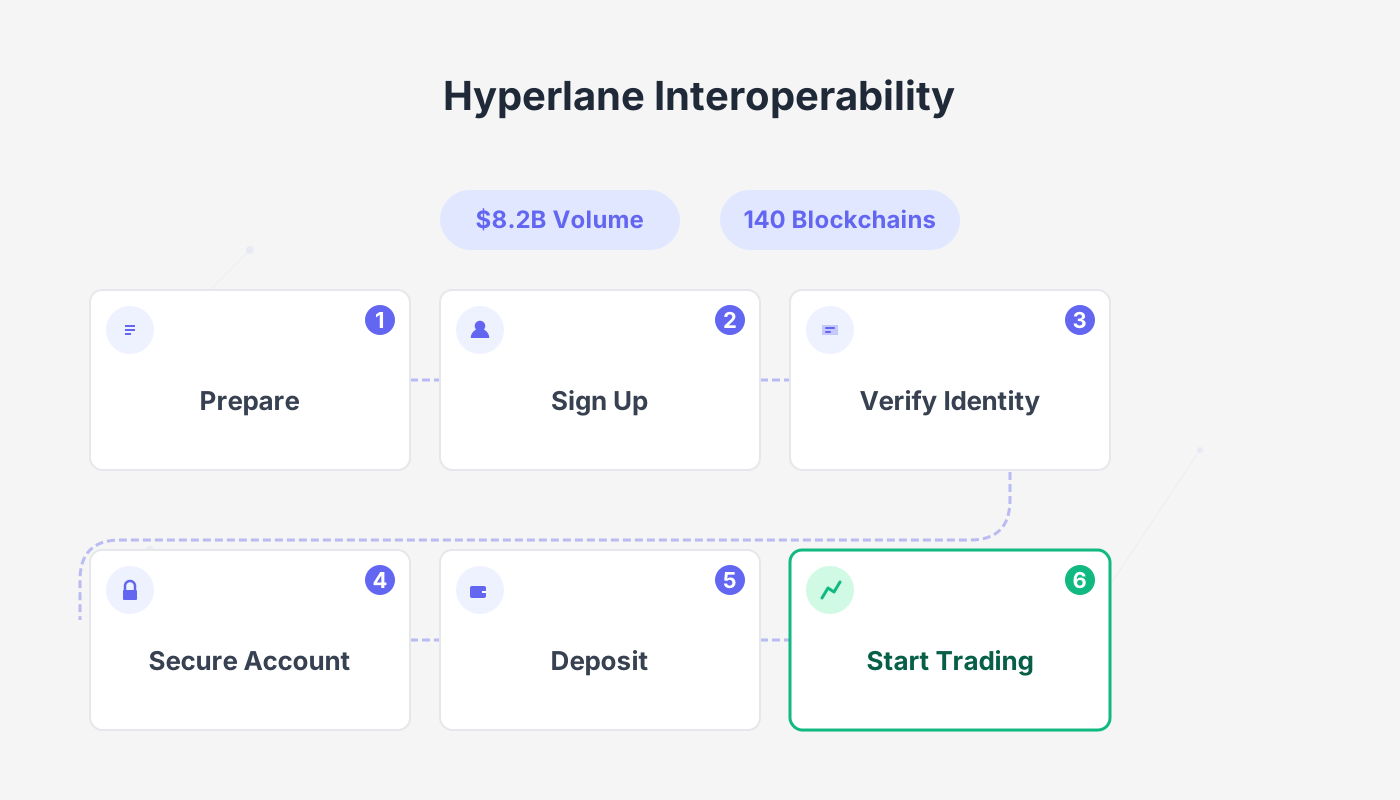
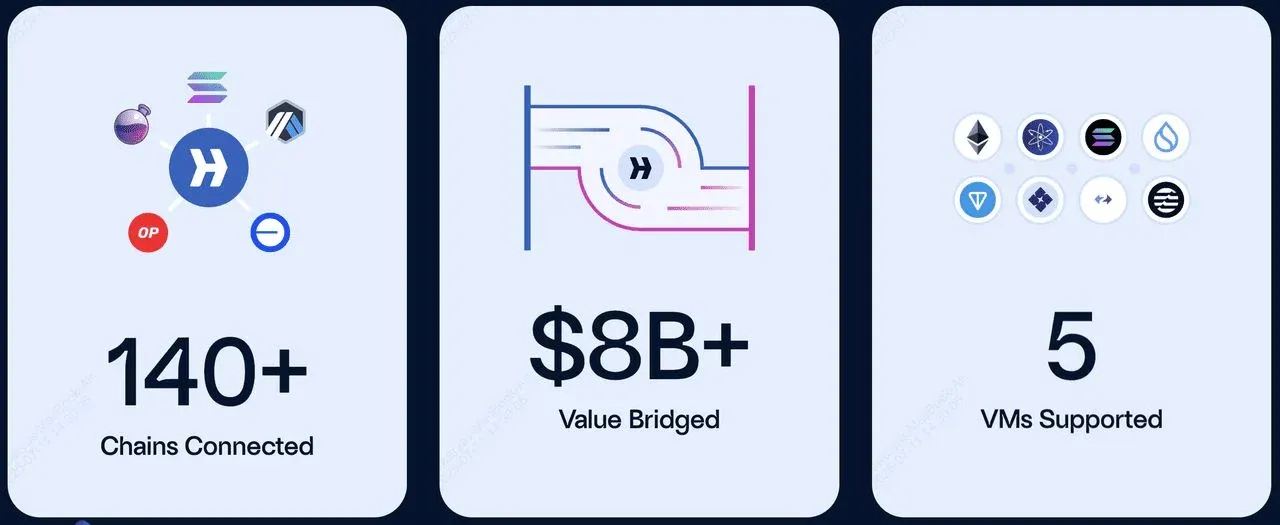
 Hyperlane is setting a new benchmark for interoperability between blockchains. To date, it has enabled cross‑chain message flow across 140 chains, transferring a cumulative value of roughly $8.2 billion, supporting five major virtual machines, and maintaining an active validator network to secure messages. With a modular security model and a liquid‑staking token (stHYPER), Hyperlane is becoming core infrastructure for the multi‑chain era.

In this article we take a deep dive into the design philosophy and core mechanisms of the Hyperlane cross‑chain connectivity protocol, explaining how its modular security model and liquid‑staking token provide low‑cost, trustworthy message transmission for a multi‑chain ecosystem. Through use‑case examples and technical breakdowns we help developers get started quickly and assess the deployment potential in DeFi, NFT and other scenarios. Keep reading to discover the latest path toward Web3 interconnectivity.
Why Hyperlane Is Critical for Web3
The blockchain ecosystem has long suffered from fragmentation; the high cost and security risks of cross‑chain communication have limited the rollout of innovative solutions. Hyperlane’s permissionless deployment approach and customizable security modules (ISM) let developers freely transfer tokens, smart‑contract calls, and arbitrary data between disparate chains, enabling the construction of full‑stack Web3 solutions such as cross‑chain DeFi, NFT marketplaces, and DAO governance. To date the platform has processed close to 9 million cross‑chain messages, becoming a true backbone for an interconnected Web3.
Core Features of Hyperlane
- Permissionless Deployment
Any blockchain can directly deploy Hyperlane’s Mailbox contract without centralized approval, dramatically accelerating network expansion and network effects.
- Mailbox Smart Contract
The Mailbox acts as the on‑chain entry point for messages, handling the sending and receiving of cross‑chain data and verifying messages through an ISM (Interchain Security Module).
- Interchain Security Module (ISM)
ISM follows a plug‑and‑play design; developers can choose according to their needs:
- Use the default ISM for baseline security;
- Select from preset ISM configurations;
- Combine multiple ISM layers for tiered protection;
- Write a custom ISM from scratch.
This flexibility lets projects strike the optimal balance between trust assumptions and cost.
- Warp Paths (Token Bridges)
Warp provides “burn‑and‑mint” style, zero‑slippage bridging for ERC‑20 tokens, NFTs, and native chain tokens. Each path can be assigned its own security policy, ensuring reliable asset transfers.
- Interchain Gas Paymaster (IGP)
The IGP contract lets users pre‑pay gas on the destination chain, simplifying the user experience for cross‑chain transactions.
How Hyperlane Achieves Cross‑Chain Interoperability
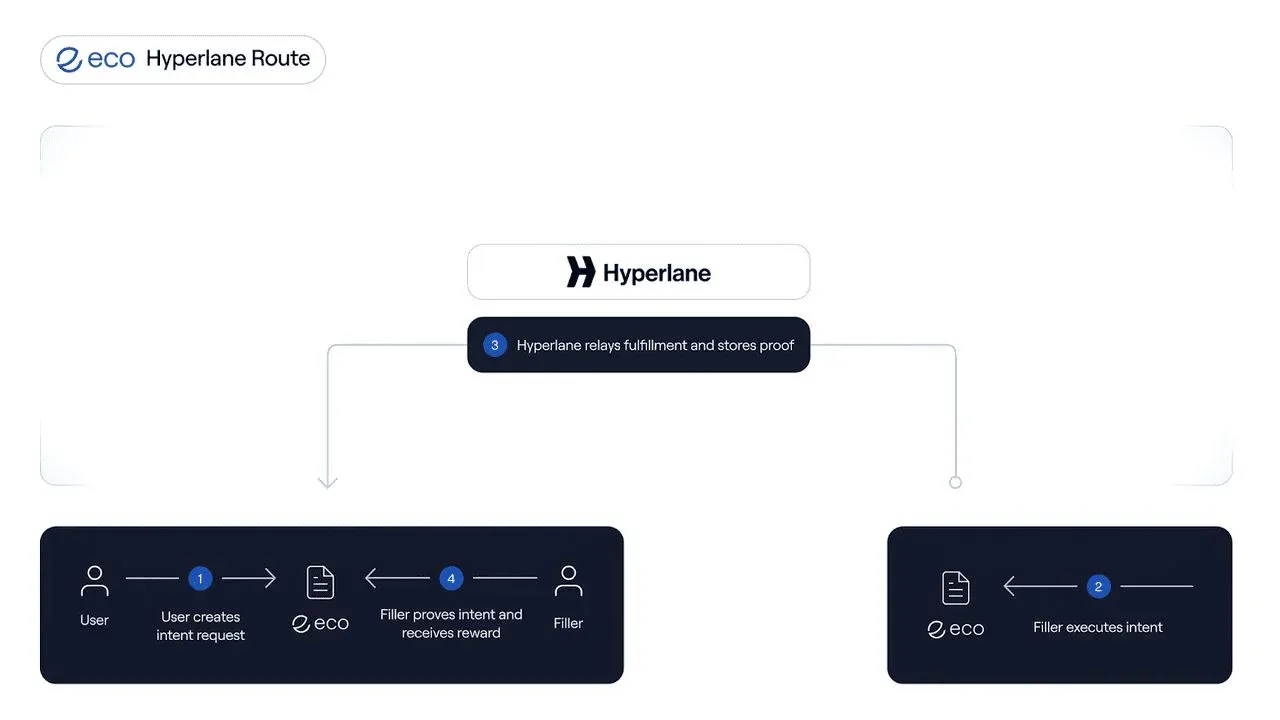
Hyperlane relies on a Mailbox contract deployed on every supported chain to send and receive messages. After a message leaves the source‑chain Mailbox, validators (entities that have staked HYPER tokens) verify it via the appropriate ISM and then deliver it to the destination‑chain Mailbox. The process also involves two categories of off‑chain participants:
- Relayers: Decentralized nodes that shuttle messages between chains, operating under a permission‑less model.
- Validators: Stake HYPER to secure the network and guarantee that messages are not tampered with.
- Interchain Gas Paymaster (IGP): Allows gas to be prepaid on the target chain, further lowering the barrier for end users.
Because the architecture is modular, developers can swap the default ISM for a custom solution that matches the security requirements of their specific business logic.
How Hyperlane Differs From Other Cross‑Chain Protocols
| Feature | Hyperlane | LayerZero | Wormhole |
|---|---|---|---|
| **Permissionless** | ✔️ | ❌ | ❌ |
| **Modular Security** | Fully customizable | ❌ | ❌ |
| **Relayer Model** | Decentralized | Fixed relayer | Guardian set |
| **VM Support** | EVM, SVM, CosmWasm | EVM | EVM, SVM |
| **Liquid Staking** | ✔️ (stHYPER) | ❌ | ❌ |
Hyperlane gives projects far greater autonomy over their security model, making it especially suitable for multi‑chain applications that demand specific levels of decentralization and performance.
Utility and Tokenomics of the HYPER Token
HYPER is the native token of the protocol and serves three primary functions: incentive, governance, and security.
Main Uses of HYPER
- Staking: Delegate HYPER to validators to uphold the trustworthiness of cross‑chain messages.
- Governance: Token holders can vote on protocol upgrades, treasury allocations, and other critical decisions.
- Incentives: Rewards are distributed to validators, stakers, and active cross‑chain users.
- Liquid Staking (stHYPER): While locking HYPER, users receive tradable stHYPER, preserving liquidity and continuing to earn rewards.
Token Distribution Overview
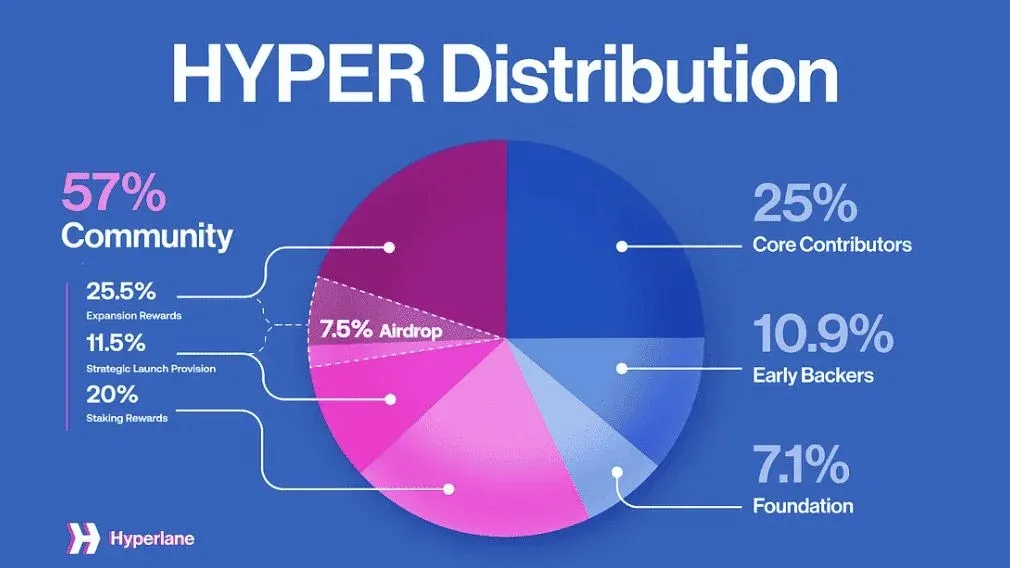
- Total Supply: 1 billion HYPER (capped)
- Community: 57 %
- Core Contributors: 25 %
- Early Supporters: 10.9 %
- Foundation: 7.1 %
Difference Between HYPER and stHYPER
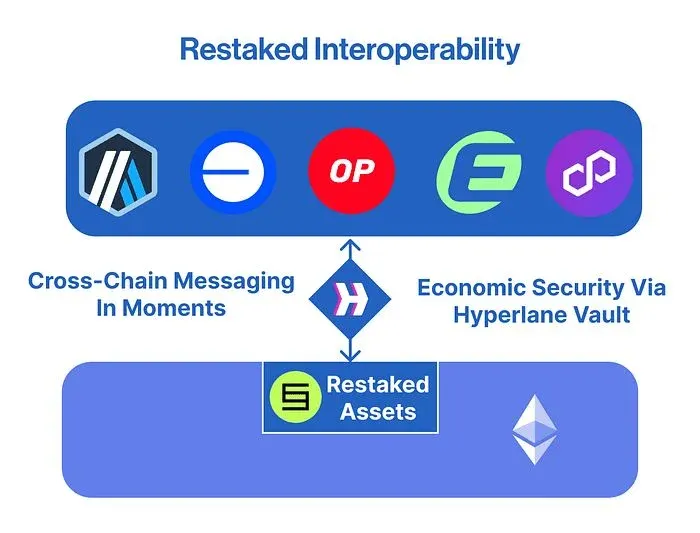
HYPER is the protocol’s native token used for staking, governance, and security guarantees. When a user deposits HYPER into the Symbiotic Vault, they receive an equivalent amount of stHYPER, which represents their staking share and continues to accrue rewards. Unlike HYPER, which can freely move across multiple chains, stHYPER stays within the DeFi ecosystem, offering holders additional yield while preserving liquidity.
How to Stake HYPER on Hyperlane and Earn Rewards
Step 1: Acquire HYPER Tokens
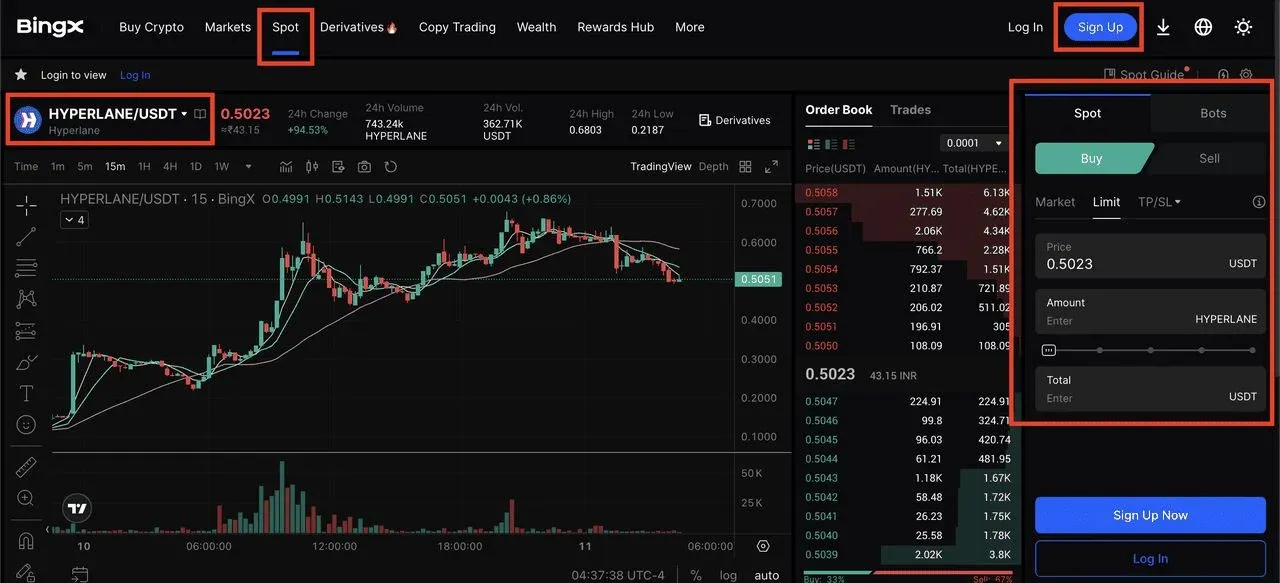
Search for the HYPERLANE/USDT trading pair on a supported exchange (for example, BingX). Execute a market or limit order to purchase HYPER. Make sure the wallet you use is compatible with the Ethereum or BSC network so that subsequent steps can be performed smoothly.
Note for U.S. residents: Use Binance.US or another U.S.-registered exchange that offers the HYPERLANE/USDT pair, as the global Binance platform is not available to U.S. customers. Fiat deposits can be made via SEPA (for EUR) or SWIFT (for USD) where supported.
Tax reminder: Gains from buying, staking, or selling crypto assets such as HYPER may be taxable in your jurisdiction. Consult a tax professional to understand reporting obligations.
Step 2: Stake via the Symbiotic Application
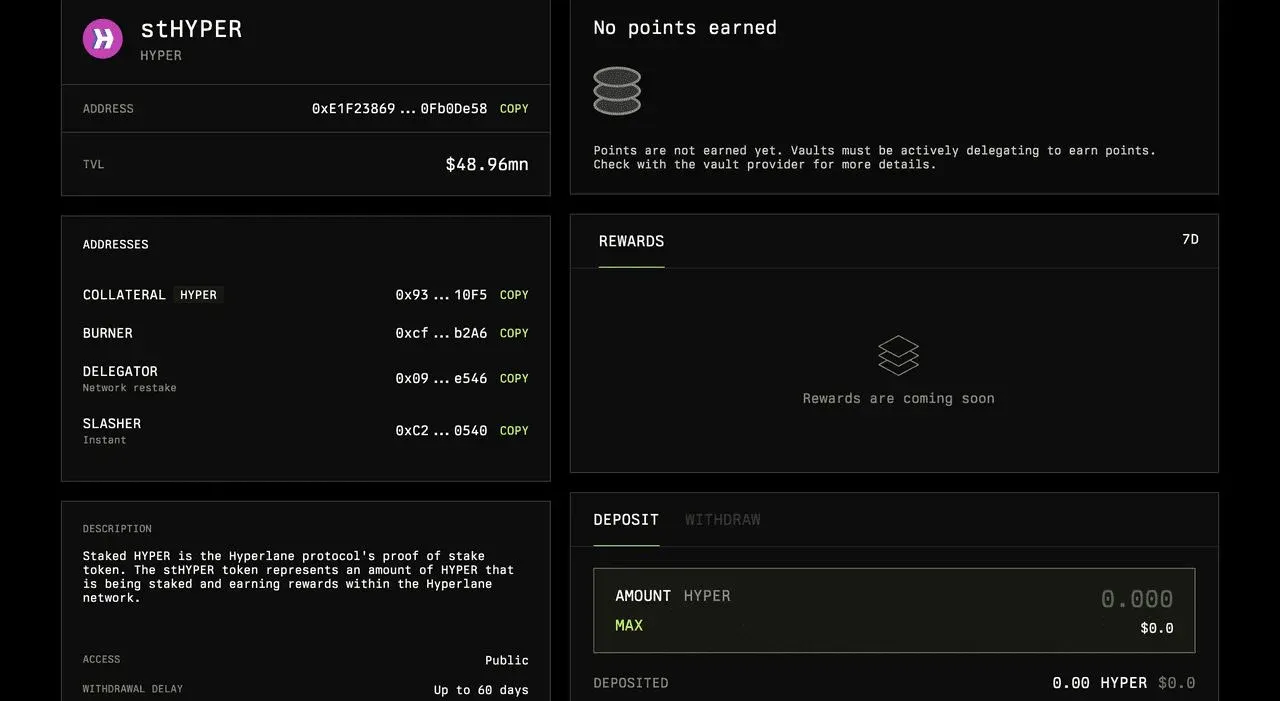
- Open the Symbiotic web app.
- Lock your HYPER into the HYPER Vault.
- The system will mint an equivalent amount of stHYPER as a receipt.
Step 3: Claim Rewards
- Rewards are distributed roughly every 30 days.
- Holding stHYPER can trigger a HyperStreak bonus that further amplifies reward yields.
Step 4: Unstake
- Submit an unstake request and wait for the current reward cycle to finish.
- After the cycle ends, manually withdraw the original HYPER tokens from the vault.
Final Thoughts: Hyperlane’s Position in a Multi‑Chain Future
With its permissionless architecture, fully customizable security model, and a network that already spans more than 140 chains, Hyperlane is laying the foundational layer for true Web3 connectivity. The HYPER token engages the community through staking, governance, and liquid‑staking mechanisms, allowing participants to share in the protocol’s expansion as new chains are added and trust‑less ISM upgrades are rolled out.
Nevertheless, any cross‑chain solution inevitably faces risks such as smart‑contract bugs, validator misbehavior, or slashing events for stakers. Prospective participants should conduct thorough due diligence and only allocate capital they can afford to lose.
This concludes the detailed analysis of the Hyperlane (HYPER token) cross‑chain connectivity protocol. For further reading, you may consult previous Bitaigen (比特根) articles or explore the related links below. Thank you for supporting Bitaigen (比特根)!
Related Reading
- Liquid Staking Leaders in Babylon: TVL Survey of 8 Protocols
- Understanding Liquid Staking: Concepts & Operational Flow
- Crypto Staking: Mechanisms, Types & Liquid Staking Guide
💡 Register on Binance with referral code B2345 for the maximum trading fee discount. See Binance complete guide.



