
 Bitaigen Research
 Proof of Stake (PoS) obtains ledger‑writing rights by locking tokens, while Proof of Work (PoW) relies on hash power competition to create blocks. Their differences in energy consumption, decentralisation degree, and security models mean that the “better” choice depends on the specific business requirements.
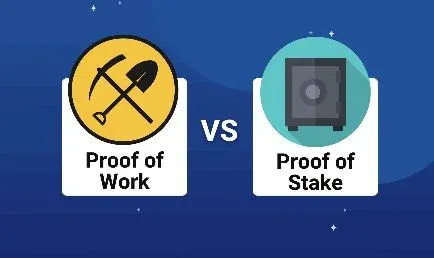
In this article we systematically outline the core principles, energy use, decentralisation level, and other key dimensions of PoS and PoW. By means of a side‑by‑side comparison, readers can determine which consensus mechanism best fits different use cases. Continue reading for a complete analysis of their pros, cons, and real‑world deployments.

PoS and PoW: What Are They?
Blockchain networks rely on two major consensus mechanisms to confirm transactions: Proof of Work (PoW) and Proof of Stake (PoS).
- PoW: Bitcoin was the first blockchain to adopt PoW. The mechanism requires miners to use specialised hardware to perform massive calculations, generating new blocks and earning block rewards. The process consumes a lot of electricity and incurs high hardware costs, which means not everyone can participate and it raises environmental concerns.
- PoS: In a PoS system, validators must “stake” a certain amount of tokens. The protocol randomly selects validators to propose blocks based on the size of the stake and the coin‑age (how long the tokens have been held). Rewards are distributed proportionally to the amount staked. Because no intensive computation is required, PoS is viewed as more energy‑efficient and environmentally friendly.
Which Is Better, PoS or PoW?
Both have strengths and limitations; the choice hinges on a project’s particular needs:
| Dimension | PoW | PoS |
|---|---|---|
| **Energy consumption** | High – requires massive compute power and electricity | Low – only token holding is needed |
| **Security** | Tested for over a decade; 51 % attack cost is very high | Relatively new; attack resistance still being validated |
| **Decentralisation** | High hardware entry barrier can lead to hash‑power concentration | Staking thresholds can lead to token concentration |
| **Cost** | Significant hardware and electricity expenses | The primary cost is the capital locked in tokens |
| **Scalability** | Fixed block time and difficulty limit throughput | Block time can be adjusted dynamically, boosting transaction rate |
In summary, if a project prioritises energy efficiency and low transaction costs, PoS is more attractive; if the focus is on a mature security model and strong censorship resistance, PoW remains a reliable option.
What Is Proof of Work?
Proof of Work (PoW) was introduced by Bitcoin’s creator Satoshi Nakamoto and is the earliest and most widely used consensus algorithm. Its core idea is to let network participants (miners) compete to create the next block by expending computational resources; the winner receives the block reward.
Advantages
- High security – Launching a 51 % attack would require an enormous amount of hash power, making the cost prohibitive.
- Strong fairness – Any miner who can provide sufficient hash power has a chance to earn rewards, encouraging decentralisation.
Disadvantages
- Energy waste – Massive electricity and hardware consumption impose a heavy environmental burden.
- Limited scalability – Fixed block intervals and difficulty adjustments cap transaction throughput, resulting in slower confirmations and higher fees.
What Is Proof of Stake?
Proof of Stake (PoS) was designed to address the energy and scalability bottlenecks of PoW. Validators obtain the right to write blocks by locking up tokens (staking). The protocol randomly selects a block producer based on the amount staked and the coin‑age, then distributes rewards accordingly.
Advantages
- Energy‑efficient and eco‑friendly – No heavy computation is needed; participation is based solely on token stake.
- Flexible scaling – Block times can be tuned according to network conditions, increasing throughput and reducing fees.
Disadvantages
- Security risks – The “nothing‑at‑stake” problem may arise, where validators sign multiple competing forks to collect extra rewards.
- Fairness debate – Large token holders have a higher probability of being selected, potentially leading to a “rich‑get‑richer” effect.
Differences Between Ethereum’s PoW and PoS
Ethereum 2.0 migrated the original PoW mechanism to PoS, fundamentally changing the miner role. Below is a concise comparison:
- Reward source
- PoW: Rewards depend on the mining hardware’s hash power.
- PoS: Rewards depend on the amount of staked tokens and their age, similar to earning interest in a bank.
- Trust model
- PoW: Built on “distrust” of ledger nodes; security emerges from computational competition.
- PoS: Built on “trust” in large‑stake holders; security is guaranteed by locking up assets.
- Cost of cheating
- PoW: High hash‑power requirements make forging blocks extremely expensive.
- PoS: If a staker attempts to double‑sign, the protocol slashes (confiscates) the staked tokens, penalising the misbehaviour.
Differences Between PoW and PoS Mining
1. Different resource origins
- PoW mining: Relies on the computational speed of CPUs, GPUs, ASICs, and other hardware.
- PoS mining: Requires no extra hardware; the probability of block creation is determined by token amount and coin‑age (the time since the last transfer).
2. Different reward calculation
In PoW, block rewards are independent of how many tokens a miner holds. In PoS, the more tokens staked and the longer the coin‑age, the higher the reward. A simplified illustrative formula (for explanation only) is:
```
Reward = TokenAmount × CoinAge × AnnualYield
```
For example, staking 1,000 tokens with a coin‑age of 183 days at a 15 % annual yield would generate an expected reward of roughly 274.5 tokens.
3. Cost structure differences
- PoW: High hash power leads to significant electricity bills and hardware depreciation.
- PoS: The primary cost is the capital locked in the staked tokens; there is no additional electricity expense, resulting in lower overall operating costs.
4. Impact on the network
Since 2018, several blockchains—including Ethereum—have been transitioning from PoW to PoS for reasons such as:
- Reducing transaction fees and energy consumption to improve user experience.
- Encouraging token holders to validate transactions directly, decreasing reliance on external mining farms and strengthening censorship resistance.
Summary
- PoW secures the network through computational competition and is suitable for scenarios that demand the highest levels of decentralisation and censorship‑resistance.
- PoS centres on token staking, offering low energy use and higher scalability, making it a better fit for applications that require efficiency and lower costs.
- The choice of consensus mechanism should be evaluated against the project’s business goals, regulatory environment, and community governance requirements.
For users worried about malicious transactions, PoS mitigates risk by requiring validators to stake more tokens than any potential illicit reward. If a validator attempts to approve an incorrect transaction, the staked assets are forfeited, protecting network integrity.
At the same time, it is worth noting that PoS can inherently favour validators with large token holdings, giving them a competitive edge in collecting transaction fees and block‑production opportunities—an aspect designers must carefully balance.
---
Localization note: When acquiring or converting fiat currency, the global market typically uses USD, with transfers conducted via SEPA (for euros) or SWIFT for other currencies. Users residing in the United States should use Binance.US for compliant trading, while users elsewhere may use Binance.com or other reputable exchanges that support USD, SEPA, and SWIFT withdrawals.
*Crypto gains may be taxable in many jurisdictions; consult local tax regulations to ensure compliance.*
Related Reading
- TVL vs PoS Staking: Differences & Misconceptions
- Tether MiningOS: Open-Source P2P Bitcoin Mining Revolution
- Bitcoin Mining: Proof-of-Work, Difficulty & Coin Creation
💡 Register on Binance with referral code B2345 for the maximum trading fee discount. See Binance complete guide.



