
 Bitaigen Research
 TRC20 is based on the TRON network, while ERC20 is based on the Ethereum network. The two token standards differ markedly in underlying consensus mechanisms, transaction speed, fees, functional features, and ecosystem maturity.
On the two major public blockchains—TRON and Ethereum—the choice of token standard directly influences a project’s cost structure, transaction speed, and ecosystem positioning. The Bitaigen editorial team outlines the technical principles, user experience, and ecosystem maturity of TRC20 and ERC20 in this article, helping readers quickly identify each standard’s strengths and limitations. Subsequent sections include practical case studies for reference, so a careful read is recommended.
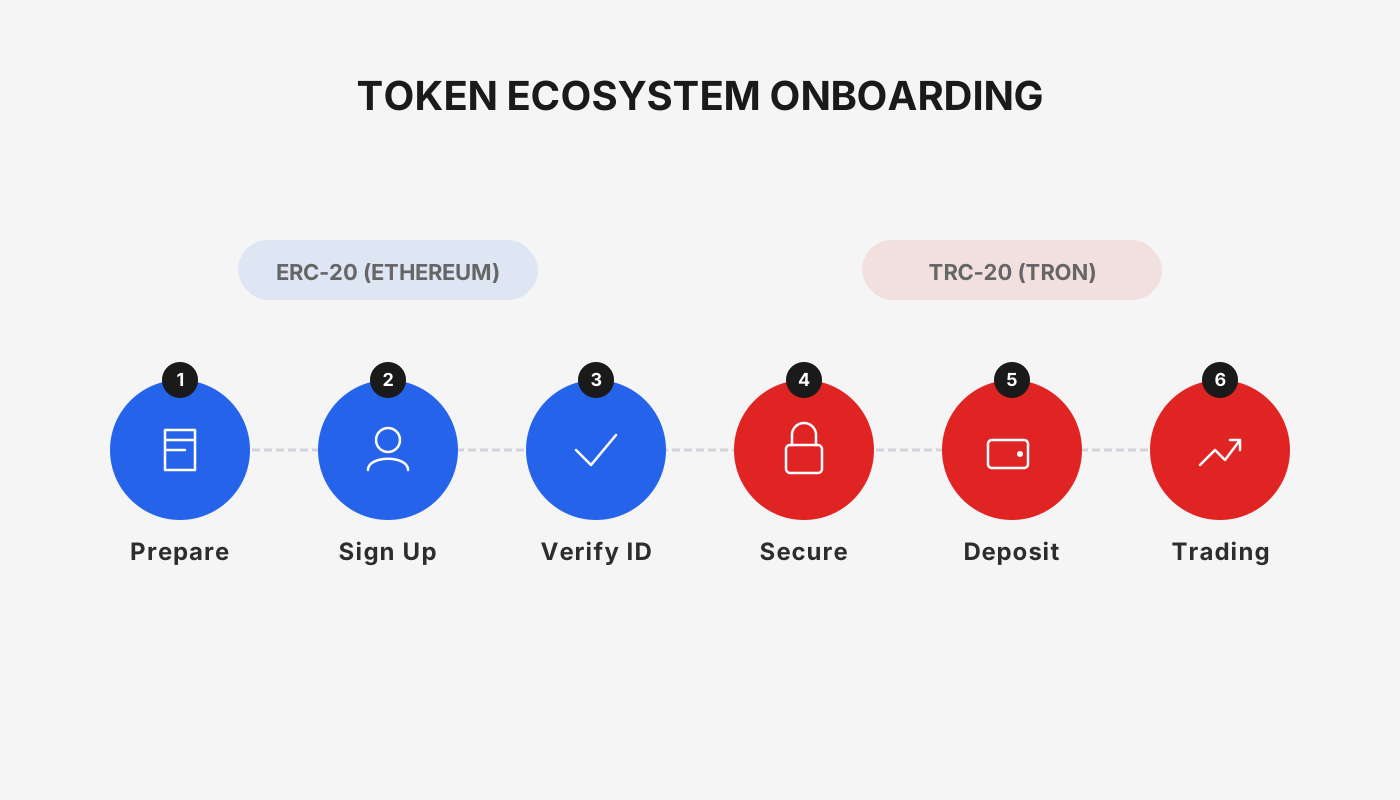
What Is TRC20?
TRC20 is the token‑technical standard on the TRON blockchain, running on the TRON Virtual Machine (TVM). It expands on the earlier TRC10 standard, allowing developers to define custom token attributes and execute more complex transactions. TRC20 is fully compatible with the TRON network and can be used to build decentralized applications (dApps). Common TRC20 tokens include USDT, USDC, BUSD, USDD, BTT and others.
What Is ERC20?
ERC20 (Ethereum Request for Comments 20) is the token standard for the Ethereum blockchain, proposed by Fabian Vogelsteller in 2015. Built on the Ethereum Virtual Machine (EVM), it defines a unified set of interfaces that enable compliant tokens to circulate freely on Ethereum. ERC20 also supports dApps; typical ERC20 tokens are USDT, USDC, DAI, UNI, LINK and many more.
Differences Between TRC20 and ERC20
Although both belong to the family of smart‑contract token standards, they differ across several key dimensions:
- Underlying Network
- TRC20: Operates on the TRON network, which uses Delegated Proof‑of‑Stake (DPoS) consensus with 27 Super Representatives producing blocks.
- ERC20: Operates on the Ethereum network, currently using Proof‑of‑Work (PoW) but slated to transition to Proof‑of‑Stake (PoS) in the near future.
- Transaction Speed
- TRON processes roughly 2,000 transactions per second (TPS), with transfers typically completing in a few seconds to a few minutes.
- Ethereum processes about 15 TPS, and transfers usually require several minutes.
- Transaction Fees
- TRC20 fees are extremely low—practically zero—requiring only a small amount of TRX to cover Energy and Bandwidth.
- ERC20 fees are highly sensitive to network congestion; gas costs can range from tens of USD to hundreds of USD, especially during peak periods. Payments for fiat withdrawals are generally handled via SEPA, SWIFT, or other traditional banking channels.
- Functionality
- Both standards provide basic operations such as balance queries, transfers, and approvals.
- ERC20 adds advanced features like batch transfers, token freezing, burning, and seamless interoperability with other Ethereum standards such as ERC721 and ERC1155.
- Popularity and Ecosystem
- ERC20, as the earliest and most mature standard, enjoys a larger developer community and a richer ecosystem of tools, wallets, and DeFi protocols.
- TRC20’s ecosystem is comparatively smaller, yet it is widely adopted within the TRON space by projects such as JustSwap, BitTorrent, Wink, and others.
Pros and Cons Comparison
| Standard | Advantages | Disadvantages |
|---|---|---|
| **TRC20** | - High transaction speed<br>- Near‑zero fees<br>- Compatible with TRON dApps | - Smaller ecosystem size<br>- Reliant on the TRON network |
| **ERC20** | - Richer feature set (batch, freeze, burn, etc.)<br>- Mature ecosystem with a large user base | - High fees<br>- Slower transaction throughput |
Suggested Use Cases
- Fast, low‑cost asset transfers
Choose TRC20, as the TRON network delivers high‑speed, low‑cost transaction experiences.
- Requirements for complex functionality or cross‑standard interoperability
Choose ERC20, whose extensive contract capabilities and compatibility with other Ethereum standards better serve such needs.
- Seeking integration with large ecosystems or well‑known DeFi projects
Adopt ERC20, enabling direct access to platforms like Uniswap, Chainlink, MakerDAO and other established services.
- Developing or using dApps within the TRON ecosystem
Adopt TRC20, leveraging TRON’s high TPS and minimal fees to deploy applications quickly.
---
This article has systematically outlined the differences between TRC20 and ERC20 as well as the respective strengths and weaknesses of each standard. For further reading, search for past Bitaigen (比特根) articles or continue browsing the related posts below. We appreciate your ongoing interest and support!
Related Reading
- TRC20 vs ERC20 USDT Transfer: Fees, Speed & Congestion
- USDT on Tron vs Ethereum: ERC‑20 vs TRC‑20 Fee Comparison
- Ethereum Layer 2 Explained: Scalability, Low Fees & Speed
💡 Register on Binance with referral code B2345 for the maximum trading fee discount. See Binance complete guide.



