
 Bitaigen Research
 Dogecoin, as one of the earliest meme‑coins to achieve widespread popularity, has seen its mining profitability drop dramatically compared with major chains such as Bitcoin. Nevertheless, it remains a common entry point for many crypto enthusiasts to gain hands‑on experience and to support community development. Depending on the algorithm used and the hardware configuration chosen, there are numerous ways to mine Dogecoin, and each will be explained in detail below.
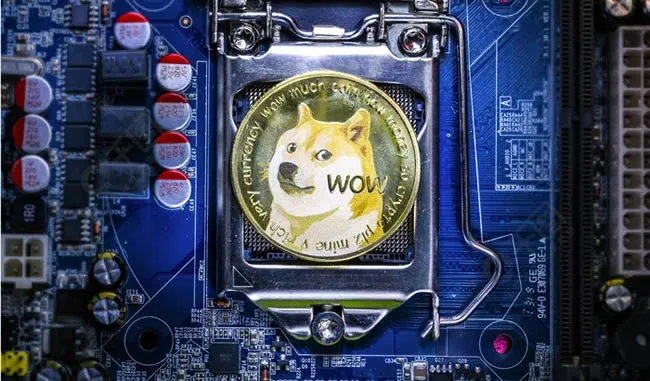
From both a technical and a cost perspective, we systematically outline the main Dogecoin mining routes, including cloud‑hash power rental, GPU rigs, and ASIC machines, helping readers quickly assess the strengths, weaknesses, and suitable scenarios of each option. After understanding the details, you can decide which method best matches your resources and goals. Continue reading for a complete step‑by‑step guide.
What are the ways to mine Dogecoin?
1. Cloud Mining
Cloud mining refers to users paying a fee to a company that offers hash‑power rental services; the company runs dedicated equipment in large‑scale data centers on the user’s behalf. The rental agreement typically stipulates that the generated rewards are sent directly to the user’s crypto wallet. This model’s advantage is that no hardware purchase or maintenance is required, making it suitable for individuals with limited capital who still want to participate in mining. However, the payment is usually required up‑front; if DOGE’s market price declines, the sunk cost may not be recoverable, and the user cannot swap out the hardware or software provided by the platform.
2. GPU Mining
Using graphics cards to mine is currently one of the most common approaches. Building a GPU‑based mining rig involves a relatively controllable cost and can deliver respectable hash rates. A typical setup includes a motherboard, a CPU, and a chassis equipped with several GPUs. The parallel‑processing capability of GPUs makes them perform well on Dogecoin’s Scrypt algorithm, making this method suitable for small‑ to medium‑scale individuals or teams.
3. ASIC Mining
ASIC (Application‑Specific Integrated Circuit) devices are hardware engineered specifically for a particular cryptographic algorithm, and their processing speed far exceeds that of general‑purpose CPUs or GPUs. Mining Dogecoin with ASICs generates many more hashes per unit of time, increasing the probability of finding a block. The flip side is that the immense hash power intensifies competition; ordinary miners find it difficult to compete with large ASIC farms, raising concerns about hash‑power centralization.
4. CPU Mining
CPU mining is the most primitive method; it only requires a computer with mining software installed. It used to be a viable option, but as algorithm difficulty has risen and specialized hardware has proliferated, CPU hash rates have fallen far behind, resulting in very thin margins that may take months or longer to yield noticeable returns. Nonetheless, the entry barrier is the lowest, and a handful of hobbyists still use it as a learning or experimental tool.
5. Solo Mining
Solo mining means a miner runs an independent node and assumes full responsibility for locating blocks. If a block is successfully found, the miner receives the entire block reward at once. This approach demands extremely high hash power—typically only players who own dozens of GPUs or large‑scale ASIC installations have a realistic chance of profiting. In addition, cooling, power consumption, and maintenance costs rise proportionally with the hardware scale.
6. Pool Mining
Mining pools combine the hash power of multiple miners to improve the overall block‑finding rate, then distribute rewards proportionally according to each participant’s contribution. By joining a pool, even miners whose individual hash power is insufficient to discover a block on their own can earn relatively steady income. For example, six devices collectively contributing roughly 335 MH/s can form an aggregate hash rate of about 2 GB/s. Pools usually provide dedicated servers or allow participants to use their existing hardware in a coordinated fashion.
Summary
In summary, Dogecoin mining methods range from the simplest CPU mining to the high‑performance ASIC approach, and even to hardware‑free cloud mining, each with its own set of pros and cons. Within the current community, GPU mining and cloud mining are relatively popular because they strike a balance between cost and entry barrier; ASICs, while the most efficient, bring the risk of hash‑power concentration; and CPU mining is no longer economically viable for most participants. Most experts advise newcomers to start by joining a mining pool, which smooths out revenue fluctuations and reduces the uncertainty associated with solo block discovery. For more in‑depth information about Dogecoin mining, stay tuned to future articles from Bitaigen (比特根).
Related Reading
- Dogecoin Daily Production: Hashrate, Difficulty & Rewards
- MEXC Exchange Review 2026: Safety, Fees, Pros & Cons
- Step-by-Step Guide to Buying USDT on OKX C2C Marketplace
💡 Register on Binance with referral code B2345 for the maximum trading fee discount. See Binance complete guide.



