
 Bitaigen Research
From the perspectives of technology, governance, and risk, we conduct an in‑depth analysis of the USDE stablecoin launched by Ethena. The goal is to help readers understand its decentralized collateral mechanism, sources of yield, and potential CeDeFI characteristics, to identify investment risks, and to present our assessment of its long‑term sustainability.
What Is the USDE Token?
USDE is a decentralized synthetic stablecoin issued by Ethena Labs on Ethereum (ERC‑20) and Solana. It is pegged to the U.S. dollar and seeks additional yield through multi‑asset collateral and spot‑futures arbitrage.
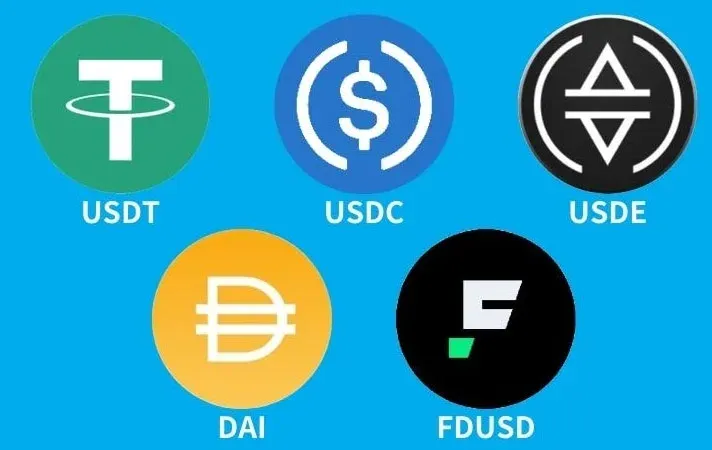
Unlike traditional, centrally‑managed stablecoins such as USDT or USDC, USDE’s underlying reserves consist of stETH, ETH, BTC, SOL as well as USDC and USDT. The assets are primarily held on large international exchanges like Binance and Bybit for hedging purposes.
The official dashboard shows that as of August 2025 the total reserve is roughly $9.48 billion, with a collateralisation ratio of 100.67 %, and it is continuously audited by third parties such as Chainlink and Chaos Labs.
Although USDE is classified as a “decentralized” stablecoin, its hedging and asset‑allocation activities still rely on centralized exchanges, making it a CeDeFi (centralized finance + decentralized finance) construct. The yield is therefore heavily dependent on the funding rates offered by those exchanges.
Feature 1: No Reliance on Traditional Centralized Dollar or Treasury Reserves
USDE uses a multi‑chain, multi‑asset collateral basket rather than a single‑dollar or Treasury‑bond reserve. Assets are dynamically hedged on exchanges, improving capital efficiency and reducing single‑point‑of‑failure risk.
Feature 2: Provides Additional Yield Through Distribution
USDE generates yield by combining on‑chain protocols with exchange‑based spot‑futures arbitrage:
- Long Position: Holds spot assets such as BTC, ETH, SOL.
- Short Position: Opens equivalent short positions in perpetual futures markets (e.g., shorting ETH).
The long‑short hedge locks the overall value; when the funding rate is positive, the protocol can collect the rate plus staking interest, delivering extra returns to holders.
USDE Token Fact Sheet
| Item | Information |
|---|---|
| **Project Name** | Ethena USDe |
| **Token Symbol** | $USDE |
| **Market Cap** | Approximately $9.48 billion |
| **Market‑Cap Rank** | #17 (CoinMarketCap live) |
| **Category** | Decentralized synthetic stablecoin |
| **Issuing Chains** | Ethereum (ERC‑20) & Solana |
| **Circulating Supply** | About 9.41 billion tokens (4.99 B USDE) |
| **Maximum Supply** | About 9.41 billion tokens (4.99 B USDE) |
| **Official X (Twitter)** | https://x.com/ethena_labs |
| **Official Website** | https://ethena.fi/ |
As of August 2025, USDE’s market cap has surpassed $9 billion, making it the third‑largest dollar‑pegged stablecoin worldwide after USDT and USDC. Compared with centralized‑reserve models, USDE represents an innovative direction for decentralized stablecoins and has garnered widespread support from exchanges and DeFi applications.
What Risks Are Associated With USDE?
Although USDE features a novel design and high capital efficiency, it still faces several potential risks:
- Centralized Exchange Risk
All yield depends on exchange funding rates; if an exchange disables rates, suspends services, or is subject to regulatory action, the yield model could be disrupted.
- Delta‑Neutral Failure Risk
In periods of extreme volatility for assets like ETH, if the hedging positions are not adjusted promptly, a de‑pegging scenario may arise.
- Liquidity and Liquidation Risk
High‑leverage hedging strategies could trigger cascading liquidations during market stress, especially when long and short positions become concentrated and liquidity is thin.
- Smart‑Contract Vulnerabilities
Bugs in the on‑chain protocol could be exploited by attackers, leading to loss of funds.
- Regulatory Risk
Future stablecoin legislation that restricts non‑dollar reserves could create uncertainty for USDE’s development.
Conclusion: USDE is not a “risk‑free” stablecoin in the traditional sense; it is a structured product that relies on derivatives market dynamics. Prospective users should fully understand its dependence on exchanges, funding rates, and hedging mechanisms before allocating capital.
What Are the Use Cases for USDE?
USDE can be employed in several contexts:
- Store of Value
By pegging to the U.S. dollar, it offers a relatively stable asset amid cryptocurrency market volatility.
- Staking for Yield (Conversion to sUSDE)
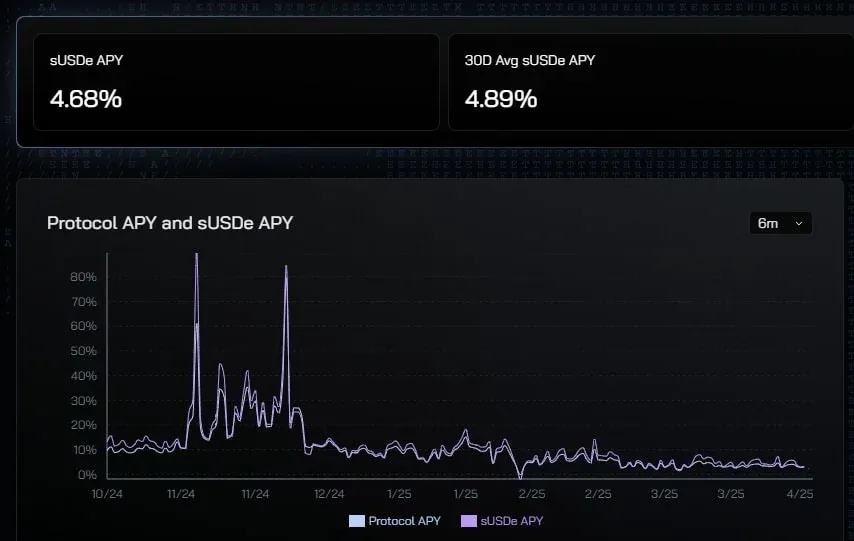
Holders can deposit USDE into the Ethena protocol, receive sUSDE, and participate in profit sharing. Annualised yields fluctuate with market conditions and are not guaranteed. *Note: In many jurisdictions, yields from staking may be taxable; users should consult local tax regulations and may need to report earnings via SEPA/SWIFT‑compatible fiat conversions where applicable.*
- Margin for Trading
Platforms such as Bybit, Gate.io, and Bitget support USDE as collateral for perpetual contracts, allowing users to trade while holding the token and earn additional rewards—effectively “one asset, multiple uses.”
- High‑Yield Dollar‑Savings Alternative
sUSDE, as a native dollar‑yield asset, posted an annualised return of roughly 20 % in 2024, considerably higher than conventional USD savings accounts or bonds. To capture such returns, users must first stake USDE to receive sUSDE and then partake in protocol revenue sharing.
- Bridge Between Traditional Finance and Crypto
Ethena’s iUSDE is a regulated version of USDE aimed at institutions, ETFs, and family offices, offering a compliant on‑ramp while still deriving yield from crypto‑market funding‑rate arbitrage.
USDE Development Roadmap
As the core asset of the Ethena protocol, USDE’s evolution includes:
- Entry Into Traditional Finance: Launch of iUSDE
In Q1 2025, Ethena plans to release iUSDE for institutional clients, featuring transfer limits and compliance features. The goal is to tap into the roughly $190 trillion global fixed‑income market, competing alongside Treasury bonds and money‑market funds.
- Super‑App for Savings + Payments on Telegram
slated for a 2025 release, an embedded sUSDE wallet within Telegram will enable “one‑click savings (interest collection) + payment (Apple Pay)”, targeting 1 billion users and positioning USDE as a mass‑adopted “Internet dollar.”
- Construction of the sUSDE‑Specific Ecosystem “Ethena Network”
The protocol will expand from a single contract to a full on‑chain financial platform, adding a perpetual‑futures and spot exchange Ethereal, and an options/structured‑finance suite Derive. All modules will settle in sUSDE and use it as the primary collateral, deepening utility.
- Beneficiary of Falling Interest‑Rate Cycles
sUSDE yields are negatively correlated with traditional interest rates; when rates decline, capital tends to flow into crypto markets, lifting funding rates and making USDE/sUSDE more attractive as alternatives to compressed fixed‑income returns.
With USDE’s steady integration into DeFi, the rollout of iUSDE, the Telegram wallet, and new on‑chain applications, Ethena is transitioning from a single‑product offering to a full ecosystem, positioning USDE as a strong candidate for realizing the “Internet dollar” vision.
USDE News and Recent Developments
Since the second half of 2024, Ethena Labs has been actively linking USDE with the newly launched RWA‑backed stablecoin USDtb in CeFi scenarios, forging partnerships with several leading exchanges to boost capital efficiency and transparency. Below are five notable recent headlines:
- March 2025 – Bybit Supports USDtb and Opens Native USDE Mint/Burn
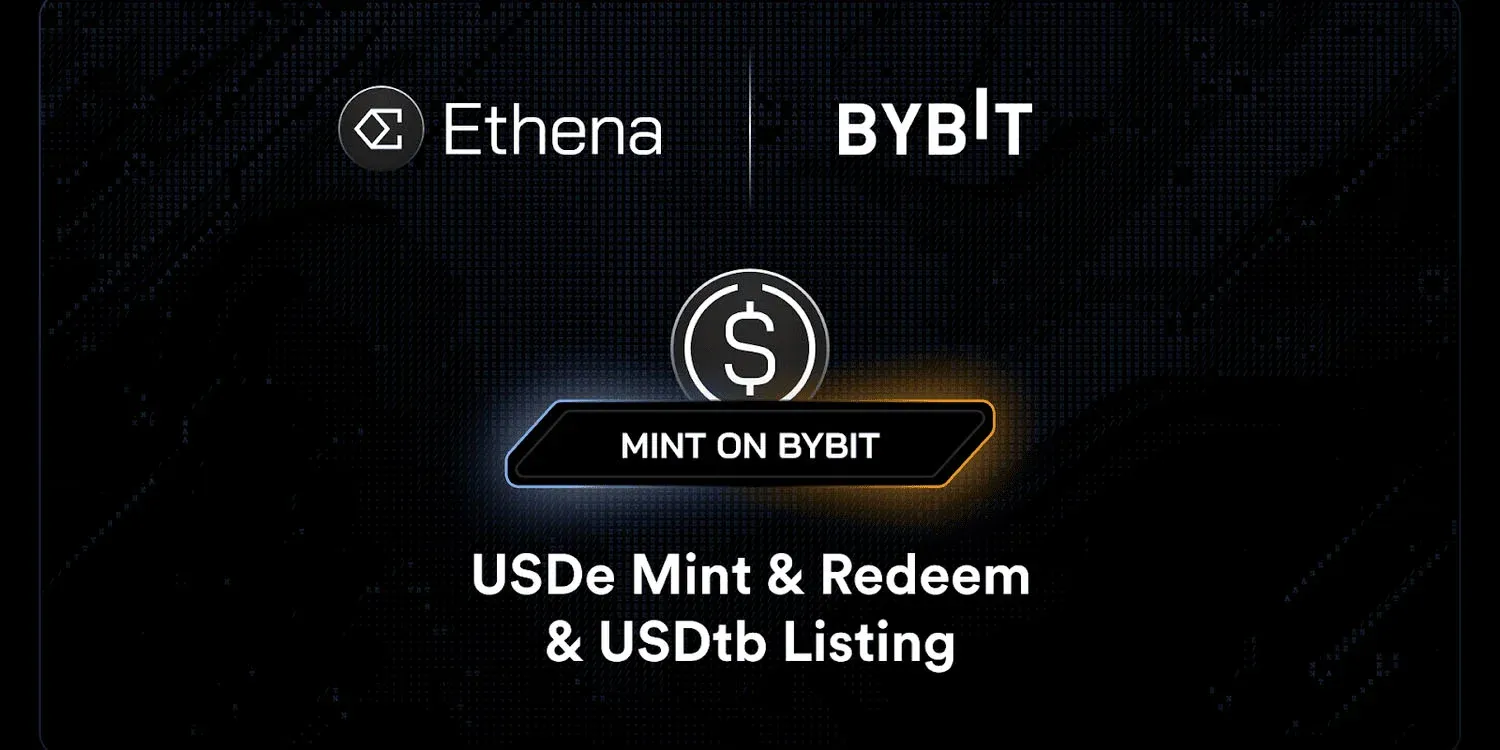
Bybit became the first CeFi platform to list BlackRock’s BUIDL‑fund‑backed USDtb and to enable one‑click USDC/USDT‑to‑USDE minting and redemption. Holding USDtb can earn up to 5 % APR, further enhancing capital efficiency.
- February 2025 – MEXC Integrates USDE, Six Trading Pairs Fee‑Free
MEXC listed USDE/USDT, BTC/USDE, ETH/USDE and three other pairs, all with zero trading fees. USDE is also designated as a reward asset for holdings, with daily distributions, signalling rapid penetration of USDE into Asian centralized‑exchange ecosystems.
- November 2024 – Gate.io Launches USDE Staking and Reward Program
Gate.io added USDE as a margin asset for derivatives, offering up to 45 % annualised return, and opened native staking where users can directly stake USDE to receive sUSDE—marking the first seamless bridge between a centralized platform and DeFi yield mechanisms.
- September 2024 – Ethena Announces USDtb, Connecting Real‑World Assets
USDtb will invest in BlackRock’s BUIDL fund and be tokenised by Securitize, covering U.S. Treasuries and repo agreements. Compared with sUSDE, which relies on funding‑rate arbitrage, USDtb offers lower‑risk Treasury yields, allowing complementary allocation under varying market conditions.
- May 2024 – USDE Listed on Bybit, Supporting Trading, Yield, and Margin
Bybit fully integrated USDE, providing zero‑fee BTC/USDE and ETH/USDE trading pairs, supporting perpetual‑contract margin and the Bybit Earn product. Users can also earn a 20× sats rebate, opening a new CeFi use case for stablecoins.
Closing Thoughts
USDE represents an innovative stablecoin that blends decentralized architecture with high capital efficiency, aiming to deliver a more resilient dollar‑denominated asset than traditional stablecoins. For investors seeking stablecoin exposure or exploring novel yield opportunities, USDE offers a viable option—but thorough due diligence on its reliance on exchanges, funding rates, and hedging mechanisms is essential. Do not overlook the associated risks in pursuit of potential returns.
This article has fully dissected “What Is the USDE Stablecoin? An In‑Depth Look at Ethena’s USDe Mechanism and Investment Risks.” For additional USDE coverage, search Bitaigen (比特根) archives or continue reading related posts below. Thank you for supporting Bitaigen (比特根)!
Related Reading
- Ethena Capital Deployment Shows Crypto Risk Appetite Shift
- 1INCH Token Explained: Role, Value & Future Outlook
- DeFi Expansion 2026: Key Trends Driving Growth
💡 Register on Binance with referral code B2345 for the maximum trading fee discount. See Binance complete guide.



