
 Bitaigen Research
 We compare Hyperliquid and Binance from three core dimensions—contract design, fee structure, and security mechanisms—to help you quickly discern the fundamental differences between decentralized and centralized platforms, identify each one's strengths and potential risks, and provide detailed analysis and practical reference suggestions.
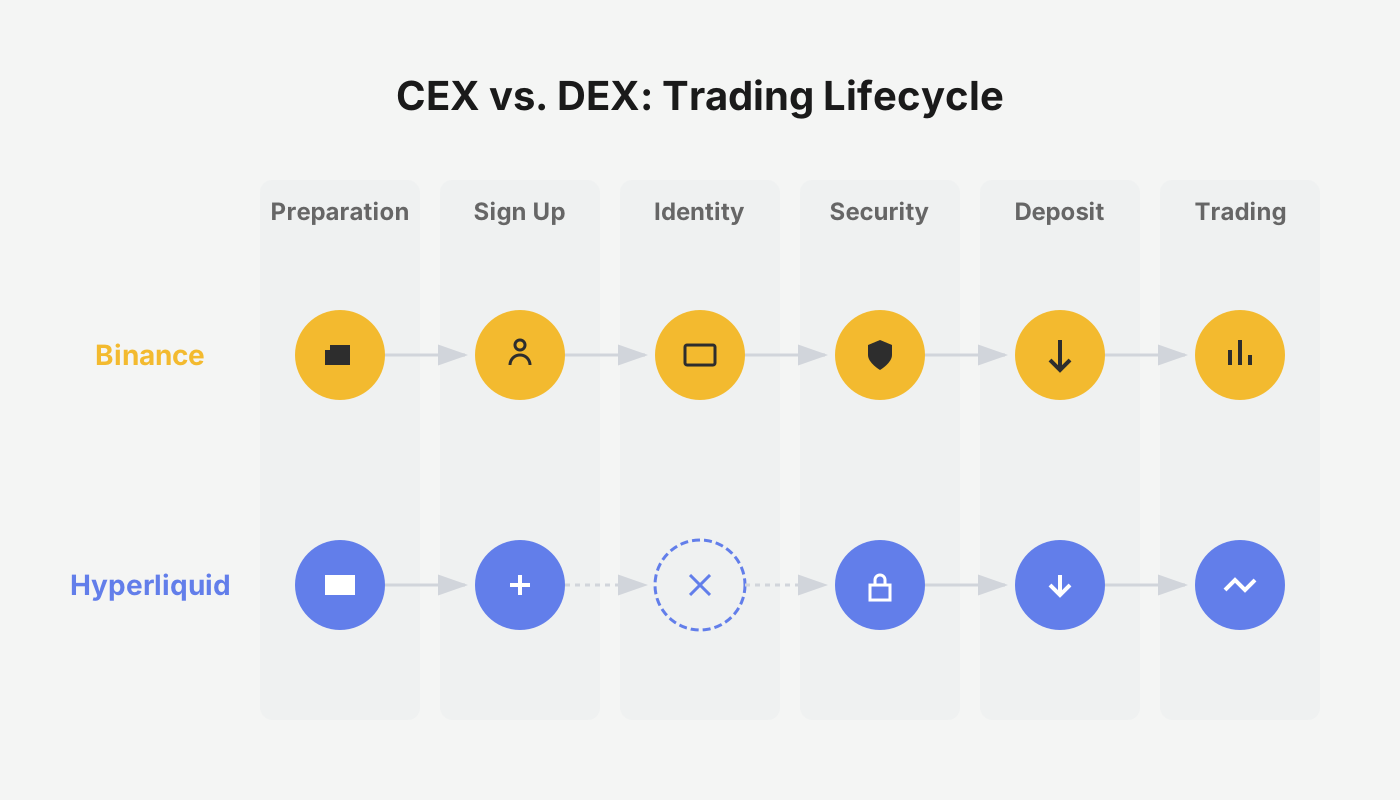
Overview of Hyperliquid vs. Binance
Hyperliquid and Binance each have distinct characteristics in perpetual contracts, fees, and security: the former offers on‑chain transparency and lower fees, while the latter provides deeper liquidity and a more complete compliance framework.
Hyperliquid is a decentralized exchange that uses HyperCore technology to implement a fully on‑chain central limit order book (CLOB), supporting spot and perpetual‑contract trading. The platform launched in 2023, now covering more than 100 assets, offering up to 40× leverage, and processing up to 200,000 orders per second.
Binance (official download official registration) was founded in 2017 and is the world’s largest centralized exchange, offering spot, margin (up to 10×) and futures services. For popular pairs such as BTC/USDT, leverage can reach 125×. The platform supports over 500 assets and boasts an industry‑leading matching engine capable of handling massive trade volumes.
| **Feature** | **Hyperliquid** | **Binance** |
|---|---|---|
| Year founded | 2023 | 2017 |
| User base | ~900,000 active users | Over 300 million registered users |
| Supported assets | 100+ (spot + perpetual) | 500+ cryptocurrencies, ~1,500 trading pairs |
| Maximum leverage | 40× | 125× |
| Core selling point | Fully on‑chain order book with centralized‑exchange speed | Deep liquidity, complete centralized‑finance suite |
| Advanced tools | Native matching engine, on‑chain risk & liquidation, options, margin, copy‑trading, API | Options, margin, API, BNB Vault, etc. |
| Native token | HYPE | BNB |
| Perpetual‑contract fees (maker/taker) | 0.015 % / 0.045 % | 0.02 % / 0.05 % |

Product Comparison: Hyperliquid vs. Binance
Hyperliquid delivers decentralized perpetual and spot trading through its proprietary Layer‑1 network, whereas Binance operates a centralized model covering spot, futures, and a variety of financial products, creating a stark contrast.
Hyperliquid Products
Hyperliquid uses a dual‑layer HyperCore and HyperEVM architecture, offering the following core functionalities:
- HyperCore Layer 1: A custom L1 blockchain built for high‑frequency trading, supporting 200,000 orders per second and sub‑second block finality.
- On‑chain perpetual contracts: CLOB trading for 100+ assets, up to 40× leverage, with transparent and verifiable liquidation mechanisms.
- Spot trading: Permission‑less on‑chain order book, enabling direct trading of native HIP‑1 tokens and bridged assets against USDC.
- HyperEVM: An EVM‑compatible execution environment that lets smart contracts tap into HyperCore’s deep liquidity and native financial primitives.
- Hyper Liquidity Providers (HLP): Community‑owned protocol vaults that share profits and fees through decentralized market‑making and liquidation processes.
- User vaults: Strategy leaders receive a 10 % profit share; investors can copy trades transparently on‑chain.
- HIP‑1 assets: A native token standard enabling permissionless atomic transfers between HyperCore and HyperEVM.
- HIP‑2 hyper‑liquidity: Automated market‑making strategies that anchor liquidity for newly issued HIP‑1 spot tokens.
- HYPE staking: A delegated proof‑of‑stake mechanism where users stake HYPE tokens to secure the network and earn rewards.
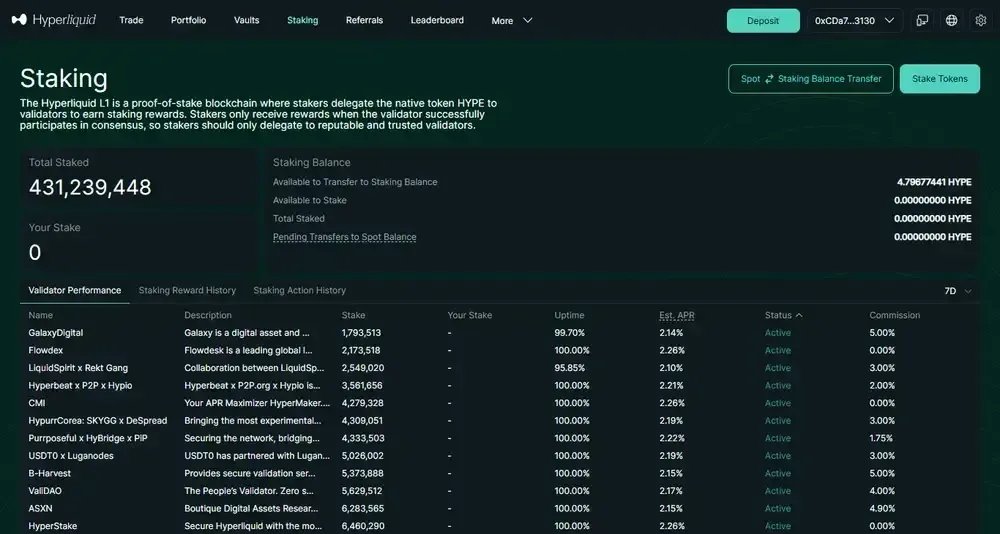
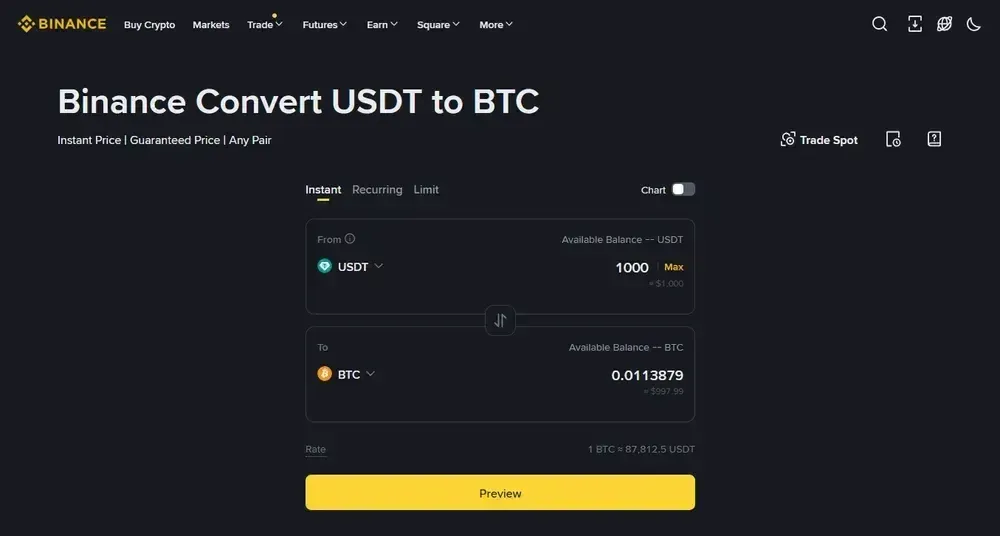
Binance Products
Binance offers a full‑featured centralized finance suite aimed at global retail and institutional users:
- Spot trading: 500+ cryptocurrencies, 1,500+ pairs, deep liquidity, industry‑leading matching engine.
- Convert: Real‑time rate conversion with zero fees, supporting hundreds of assets in a single interface.
- US‑denominated margin futures: USDT/USDC‑settled perpetual and quarterly contracts, up to 125× leverage.
- COIN‑margin futures: Contracts settled in the underlying crypto, allowing staking rewards during the position period.
- Margin trading: Isolated margin up to 10×, cross margin up to 5×.
- Binance Earn: Passive‑income products such as Simple Earn, ETH staking, dual‑currency investments, etc.
- P2P: Over 800 payment methods, supporting 100+ fiat currencies; ad‑based order limits are clearly displayed.
- Trading bots: Grid, rebalancing, spot dollar‑cost averaging, and other automation tools.
- Options: USDT‑settled options with both classic and simplified order modes.
- BNB Vault: A yield aggregator that consolidates multi‑channel rewards for BNB holders.
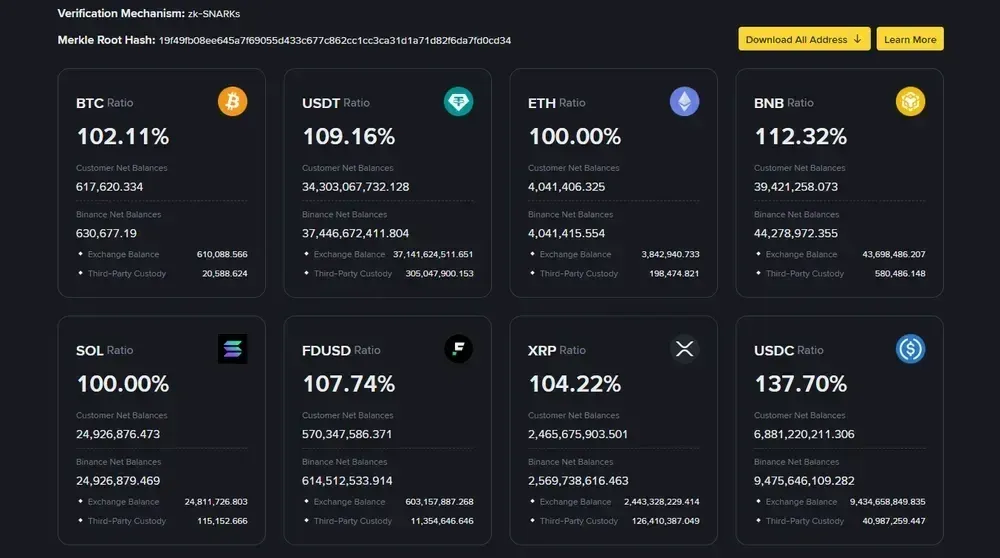
Security: Hyperliquid vs. Binance
Both platforms run bug‑bounty programs and multi‑factor authentication to safeguard users. Binance enforces centralized two‑factor verification, while Hyperliquid relies on encrypted wallet signatures and customizable API permissions.
- Hyperliquid security model: A non‑custodial design keeps user assets fully on‑chain and auditable. Its L1 layer has undergone audits by firms such as Dedaub and Zellic. Historically, the protocol suffered a market‑manipulation incident that resulted in roughly $5 million of bad‑debt losses.
- Binance security safeguards: A $1 billion SAFU (Secure Asset Fund for Users) reserve and monthly reserve‑fund reports (collateral ratio > 100 %) protect over 300 million users. After a 2019 breach that lost 7,000 BTC (≈ $40 million), Binance has not faced any major solvency crises.
Perpetual‑Contract Trading Comparison
Hyperliquid excels in low‑latency on‑chain execution, offering up to 40× leverage; Binance, leveraging centralized liquidity, can provide up to 125× leverage.
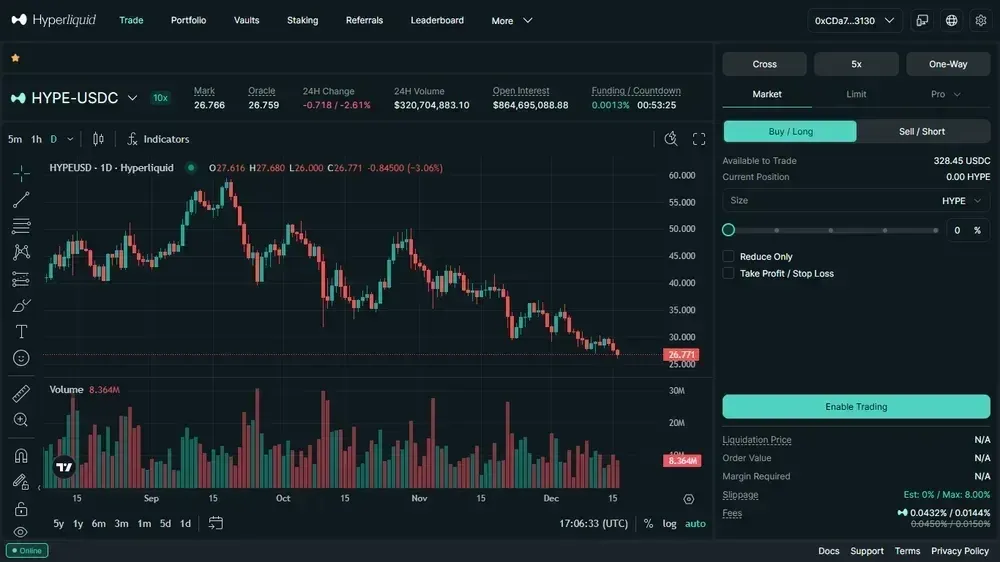
Hyperliquid Perpetual Contracts
Key characteristics of Hyperliquid’s perpetual contracts include:
- Asset variety: 100+ perpetual contracts, leverage ranges from 3× to 40× depending on the asset.
- Contract structure: Linear contracts priced in USDT and collateralized with USDC, using a quantized design to boost liquidity.
- Margin mode: Both cross‑margin and isolated‑margin options are available.
- Margin requirement: Initial margin = position size ÷ leverage; maintenance margin is 50 % of the initial margin at the highest leverage.
- Liquidation mechanism: First, a market order is sent to the order book to collect additional margin, with no extra liquidation fee.
- Forced liquidation: Positions exceeding 100,000 USDC trigger a 20 % partial liquidation after a 30‑second cooldown.
- Liquidation vault: When a position falls below two‑thirds of the maintenance margin, the vault steps in, routing P&L to the HLP community.
- Order types: Supports stop‑loss/stop‑take, market/limit, iceberg, TWAP, and ALO (add‑liquidity‑only) advanced orders.
Binance Perpetual Contracts
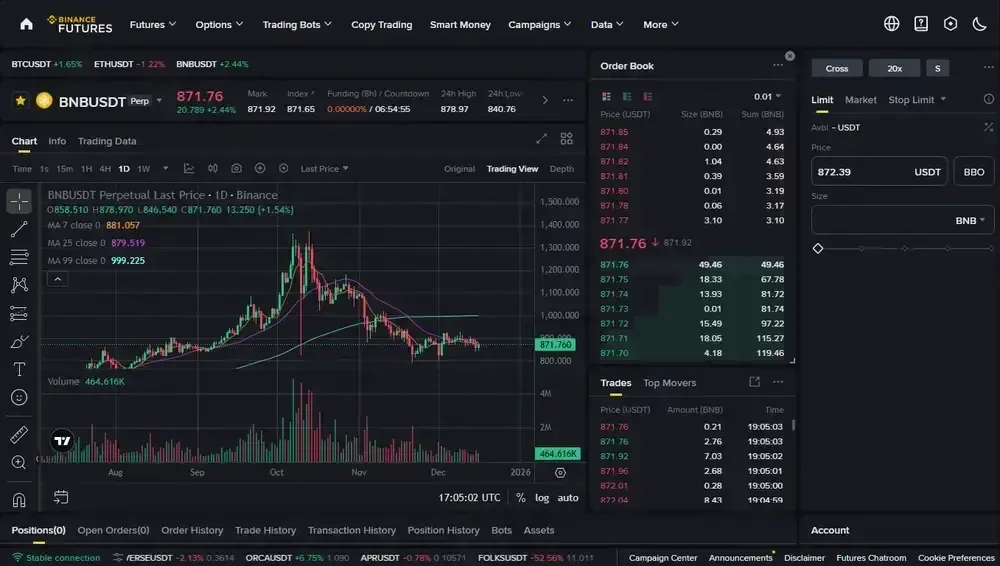
Core elements of Binance’s perpetual contracts are:
- Contract types: USD‑denominated (USDT/USDC) and coin‑denominated categories.
- Maximum leverage: Major pairs (e.g., BTC/USDT) up to 125×; altcoins range from 25× to 75×.
- Margin mode: Cross‑margin (shared collateral across positions) and isolated‑margin (single‑position collateral).
- Margin/ liquidation: Maintenance margin uses tiered rates based on the notional value of the position.
- Funding frequency: Funding rates settle every 4 or 8 hours to keep the contract price aligned with spot.
- Liquidation protocol: Positions are liquidated at the mark price, using market orders and charging a liquidation fee.
- Risk backstop: The SAFU fund and a dedicated futures insurance fund absorb bankrupt positions, preventing losses from being socialized via the ADL (auto‑deleveraging) mechanism.
- ADL mechanism: If the insurance fund is depleted, the system offsets the shortfall by liquidating profitable hedge positions.
Regulatory Landscape
Hyperliquid, as a decentralized L1 exchange, does not hold any specific national financial licenses and operates on a non‑custodial, KYC‑free basis. Its terms of service explicitly block access from the United States, United Kingdom, Canada, and several sanctioned jurisdictions.
Binance holds more than 18 licenses/registrations worldwide (e.g., France, Spain, Dubai) but is prohibited from operating in the United States, United Kingdom, Canada, and India. Following an anti‑money‑laundering breach, Binance was fined $4.3 billion, after which it tightened compliance and withdrew from certain markets. U.S. residents must use Binance.US rather than the global Binance platform.
Fee Comparison
Hyperliquid’s fee structure leans toward low rates and token‑based rebates; Binance achieves competitive pricing through VIP tiers and BNB discounts.
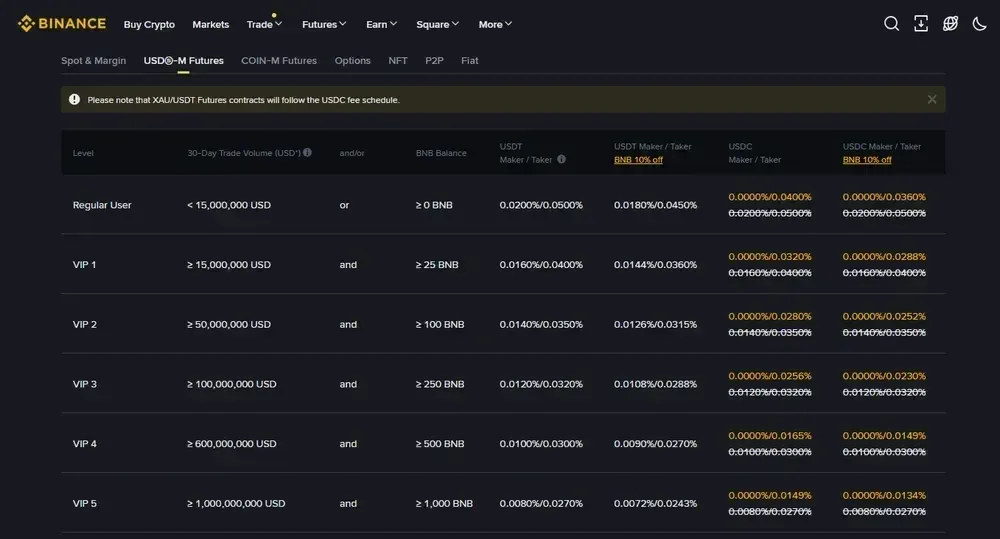
- Spot trading: Hyperliquid charges 0.04 % / 0.07 % (maker/taker), lower than Binance’s standard 0.10 % (discountable with BNB).
- Perpetual contracts: Hyperliquid’s 0.015 % / 0.045 % is slightly below Binance’s USDⓈ‑M standard of 0.02 % / 0.05 %.
- Token discounts: Staking HYPE can yield up to a 40 % fee discount, surpassing Binance’s BNB‑based 25 % (spot) and 10 % (futures) discounts.
- Market‑maker rebates: Hyperliquid offers up to –0.003 % maker rebates, whereas Binance merely reduces maker fees to zero.
- VIP requirements: Binance’s VIP levels depend on BNB holdings; Hyperliquid’s tiers are based solely on trading volume, with no token‑holding prerequisite.
- Fiat‑on‑ramp fees: Binance charges 0.10 %‑0.15 % on fiat‑to‑crypto and P2P transactions (payments typically via SEPA, SWIFT, or local methods). Hyperliquid currently supports only USDC, thus incurring no fiat‑conversion fees.
- Options fees: Binance options carry roughly a 0.03 % fee; this derivative product is not yet available in the Hyperliquid ecosystem.
Note: Crypto gains may be taxable in your jurisdiction. Consult local tax regulations or a professional advisor to ensure compliance.
Is Hyperliquid Better Than Binance?
Binance’s unrivaled liquidity depth, broader asset coverage, fiat on‑ramps, options market, and long‑standing track record across spot, margin, futures, P2P, and institutional products generally place it higher in overall rankings.
While Hyperliquid introduces innovative on‑chain transparency, Binance’s SAFU insurance fund, mature compliance framework, global licensing, and proven risk‑management practices provide most traders with stronger asset protection and reliability.
Final Thoughts
Hyperliquid’s core advantages lie in lightning‑fast execution, a KYC‑free experience, and a user interface that feels close to centralized exchanges—attributes that attract privacy‑focused professional traders.
In 2026, Hyperliquid plans to push further integration of EVM decentralized applications and institutional‑grade deployments, whereas Binance will continue to ensure global regulatory compliance and expand real‑world use cases.
In summary, Hyperliquid is well‑suited for seasoned DeFi users, while Binance remains an indispensable, risk‑controlled liquidity hub for the vast majority of global crypto participants.
The above provides a detailed comparison of Hyperliquid and Binance regarding perpetual contracts, fees, and security. For more related information, please follow Bitaigen’s other articles!
Related Reading
- Hyperliquid DEX: Architecture, Trading Benefits & HYPE Token
- Crypto Platform Comparison: Binance, OKX, Bitget, Gate.io
- Best 5 Crypto Exchanges for Chinese Users 2026: Binance & OKX
💡 Register on Binance with referral code B2345 for the maximum trading fee discount. See Binance complete guide.



