
 Bitaigen Research
 We detail the security mechanisms and common forms of cold wallets in this article, compare them with the use cases of hot wallets, and help readers select suitable offline storage solutions from both technical and risk perspectives. We then provide practical selection recommendations—worth continuing to read—to gain an in‑depth understanding of the operational essentials of each product.
What Is the Difference Between a Cold Wallet and a Hot Wallet?
In the blockchain ecosystem, cold wallets and hot wallets represent two fundamentally different methods of storing assets. They differ in network connectivity, usage scenarios, and security levels, each emphasizing distinct priorities.
Cold Wallet
Definition and Core Function
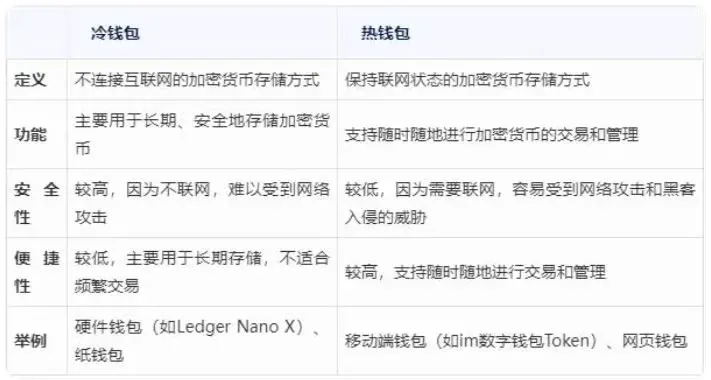
- A cold wallet refers to an entirely offline storage method that does not rely on the Internet. It is primarily used for long‑term, bulk custody of digital assets and can effectively resist online attacks.
- Its core responsibility is to keep the private key— the sole credential that can control on‑chain assets—secure. Because the private key never appears in a network environment, hackers find it extremely difficult to obtain it remotely.
Common Forms
- Hardware Wallets: Examples include the Ledger Nano S, Ledger Nano X, and Trezor Model T. These devices are equipped with physical buttons and a display, and users confirm transactions on the device itself. Even when some models support Bluetooth, the connection is used only for firmware updates or configuration; daily operations remain offline.
- Paper Wallets: Private keys and public addresses are printed on paper and stored safely. Although technically rudimentary, this method also eliminates the risk of online theft. When needed, a transfer can be performed by scanning a QR code or manually entering the private key.
Hot Wallet
Definition and Main Characteristics
- A hot wallet is an online wallet that remains constantly connected to the Internet, also known as an “online wallet.” It enables users to initiate transactions, check balances, and interact with a user‑friendly interface at any time, making it suitable for everyday use.
- Because it must be online to interact with the blockchain, a hot wallet is comparatively more exposed to network attacks or security vulnerabilities of the platform that hosts it.
Typical Examples
- Mobile Wallets: Apps such as imToken and TokenPocket run directly on smartphones, allowing transfers anytime and anywhere.
- Web Wallets: Some exchanges or blockchain service platforms provide browser‑based access points, offering the convenience of quick trades, though security depends on the provider’s protective measures.
Overview of Differences
---
2024’s Latest Top Ten Cold Wallets in the Blockchain Space
Among the many offline storage solutions, the following ten hardware or hybrid software wallets stand out in 2024 for their security, cross‑chain support, and ease of use, earning them industry‑wide recognition as leading products.
1. Ledger
Ledger, a pioneer of Bitcoin hardware wallets, builds on smart‑card technology to provide the highest level of private‑key protection for individuals and enterprises. Its product line includes the Ledger Nano S and Ledger Nano X, both supporting Bitcoin, Ethereum, Zcash, and other major chains. Ledger’s firmware is open‑source on GitHub, allowing users to pair the device with official software or third‑party wallets such as MyEtherWallet and Parity.
2. Trezor
Originating from the Czech Republic, Trezor is renowned for its “zero‑trust” security model— the system assumes that any component could be compromised, leading to multi‑layer protection in its design. As one of the earliest hardware wallets on the market, Trezor enjoys a broad global user base, compatibility with numerous crypto assets, and a comprehensive software ecosystem.
3. OneKey
OneKey streamlines the management of crypto assets and NFTs into a “one‑click” experience. Users can securely store private keys while easily completing transactions and tracking assets, making it ideal for holders who prioritize operational convenience.
4. imToken
imToken appears as a lightweight mobile wallet. Its core features include self‑custody of private keys, lightweight payment, multi‑currency support, and price alerts. It aggregates price data from multiple exchanges, helping users stay up‑to‑date with market movements.
5. HyperPay
HyperPay merges custodial wallets, self‑custody wallets, co‑custody wallets, and hardware wallets into a single platform, aiming to create a “one‑stop” digital‑asset service. Its philosophy— “security first, value creation as the mission” —offers asset custody, wealth‑generation services, and payment functions across the entire financial chain.
6. TokenPocket
As a multi‑chain wallet, TokenPocket supports fingerprint and facial recognition, achieving physical isolation of private keys on the device. Its three‑layer algorithmic encryption ensures that sensitive information is never leaked, and a single login grants users management of assets across multiple chains.
7. Trust Wallet
Trust Wallet is an online management tool for digital currencies, offering price displays and trading entry points for a wide variety of tokens. Its intuitive interface helps users quickly locate and execute desired asset operations.
8. Bitpie
Developed by the Bitpie team, Bitpie leverages HD‑wallet technology and multi‑signature mechanisms to secure on‑chain transactions. Users can conveniently send and receive Bitcoin and other mainstream cryptocurrencies through the platform.
9. BitKeep
BitKeep builds an all‑in‑one platform that covers decentralized multi‑chain wallets, exchanges, DApp ecosystems, financial lending, and cloud‑computing services. Core technologies include full‑node security isolation, patented DESM algorithm, and offline cold storage, supporting one‑click asset management and cross‑chain smart‑contract transfers.
10. Math Wallet
Math Wallet (also known as 麦子钱包) is a multi‑chain wallet with strong cross‑chain capabilities, already compatible with ecosystems such as EOS, TRX, BTC, ETH, and NEO. It supports decentralized cross‑chain transactions and has constructed a rich DApp ecosystem.

---
Conclusion
The above provides a complete overview of the 2024 top ten cold wallets in the blockchain industry. These products have earned their spots on the list not only because they deliver industry‑leading private‑key protection but also because of their user‑friendly interfaces, broad token compatibility, and continuously innovative features that attract widespread attention. Whether you are a blockchain newcomer or a seasoned investor, choosing the right cold wallet is a crucial step toward enhancing the security of your assets. Always keep your private keys safe, never expose or store them on internet‑connected devices, and avoid unnecessary risk.
Related Reading
- Cold vs Hot Wallets: Private/Public Keys & Mobile Setup
- Cold Wallet Security Guide: Offline Protection & Hardware Solutions
- Bitpie vs Bitshield: Hot Wallet vs Hardware Security Guide
💡 Register on Binance with referral code B2345 for the maximum trading fee discount. See Binance complete guide.



