
 Bitaigen Research
 Mnemonic phrases are the core backup credential for cryptocurrency wallets, typically consisting of 12‑24 English words. Essentially, they are a human‑readable seed phrase that can regenerate the corresponding private keys when those keys are lost or the wallet is damaged, thereby restoring control over assets on the blockchain.
If a mnemonic phrase falls into the hands of an attacker, it is equivalent to handing over the private key, and the assets become effectively unrecoverable. Consequently, proper storage of the mnemonic phrase is the primary prerequisite for safeguarding digital assets.
---
In crypto‑asset management, the mnemonic phrase is the only credential that can fully restore a wallet when the private key becomes invalid. In this article we will dissect the nature of mnemonic phrases, explain how they differ from private keys, and outline the correct methods for backing up and using them, helping you build a reliable asset‑protection system. Read on to master the essential techniques that prevent permanent loss of your holdings.
Why Is a Mnemonic Phrase So Critical in a Crypto Wallet?
- Recovery Function: When a cold‑wallet hardware device fails, a hot‑wallet app is deleted, or a private key is accidentally lost, the mnemonic phrase enables you to rebuild the entire wallet and retrieve all assets.
- Private‑Key Backup: The mnemonic phrase contains an internal checksum that ensures you cannot make errors while recording or entering it, thereby providing a secure backup of the private key.
- Enhanced Security: With a mnemonic phrase, users avoid a single point of failure that could permanently lock them out of their wallet, reducing the risk of irrevocable asset loss.
- Decentralization Support: Possessing the mnemonic phrase means you have full control over the private key, eliminating the need for any third‑party custodial involvement.
---
A Brief Overview of How Mnemonic Phrases Work
- Entropy Generation: When a new wallet is created, the system randomly generates at least 128 bits of entropy (high‑strength random data). The larger the entropy, the harder the resulting seed is to crack.
- Checksum Calculation: The entropy is hashed, and the first few bits of the hash are taken as a checksum to prevent errors during recording or transmission of the mnemonic phrase.
- Appending the Checksum: The checksum bits are appended to the end of the entropy, forming a complete bit stream.
- Segmentation Mapping: Depending on the desired length of the mnemonic, the bit stream is divided into chunks, each of which maps to an index in the BIP‑39 word list.
- Seed Phrase Generation: The words are placed in the original order, producing the mnemonic phrase; the final word carries the checksum function.
---
Fundamental Differences Between a Mnemonic Phrase and a Private Key
- Mnemonic Phrase: A readable string of 12‑24 words drawn from a predefined word list, used to re‑derive the private key when needed.
- Private Key: A fixed‑length hexadecimal or Base58‑encoded string that directly signs transactions and proves ownership of assets.
The mnemonic phrase acts as the “seed” that generates the private key. Losing the mnemonic means you can no longer recover the associated private key; conversely, if a private key is exposed, the holder can instantly control all assets tied to that key. Only when the mnemonic phrase remains intact can you regain access to the private key.
---
How to Safely Store Your Mnemonic Phrase
Paper or Metal Recording
- Write the phrase on durable paper, or engrave it onto fire‑, water‑, and corrosion‑resistant metal plates. Popular metal‑storage solutions include Ledger’s Cryptosteel Capsule Solo, Bilfodl, Cryptotag Zeus, and similar products.
Secure Location
- Store the paper or metal backup in a safe place such as a bank safe‑deposit box (using USD, SEPA/SWIFT for any related fiat transfers) or a home‑security safe, avoiding casual placement.
Never Share
- Do not disclose the mnemonic to anyone, including friends, family, or wallet providers, to prevent social‑engineering attacks that could lead to theft.
Offline Storage
- Avoid saving the phrase to cloud drives, email, or any online‑connected device, as these channels are vulnerable to hacking, phishing, or malware theft.
Sharded Storage (Optional)
- Use Shamir’s Secret Sharing (compatible with the SLIP‑39 standard) to split the mnemonic into multiple shares, storing each share at a different location or with trusted acquaintances. Only a predefined threshold of shares is required to reconstruct the wallet.
---
Steps to Recover a Cryptocurrency Wallet Using a Mnemonic Phrase
Step 1: Prepare a New Wallet Interface
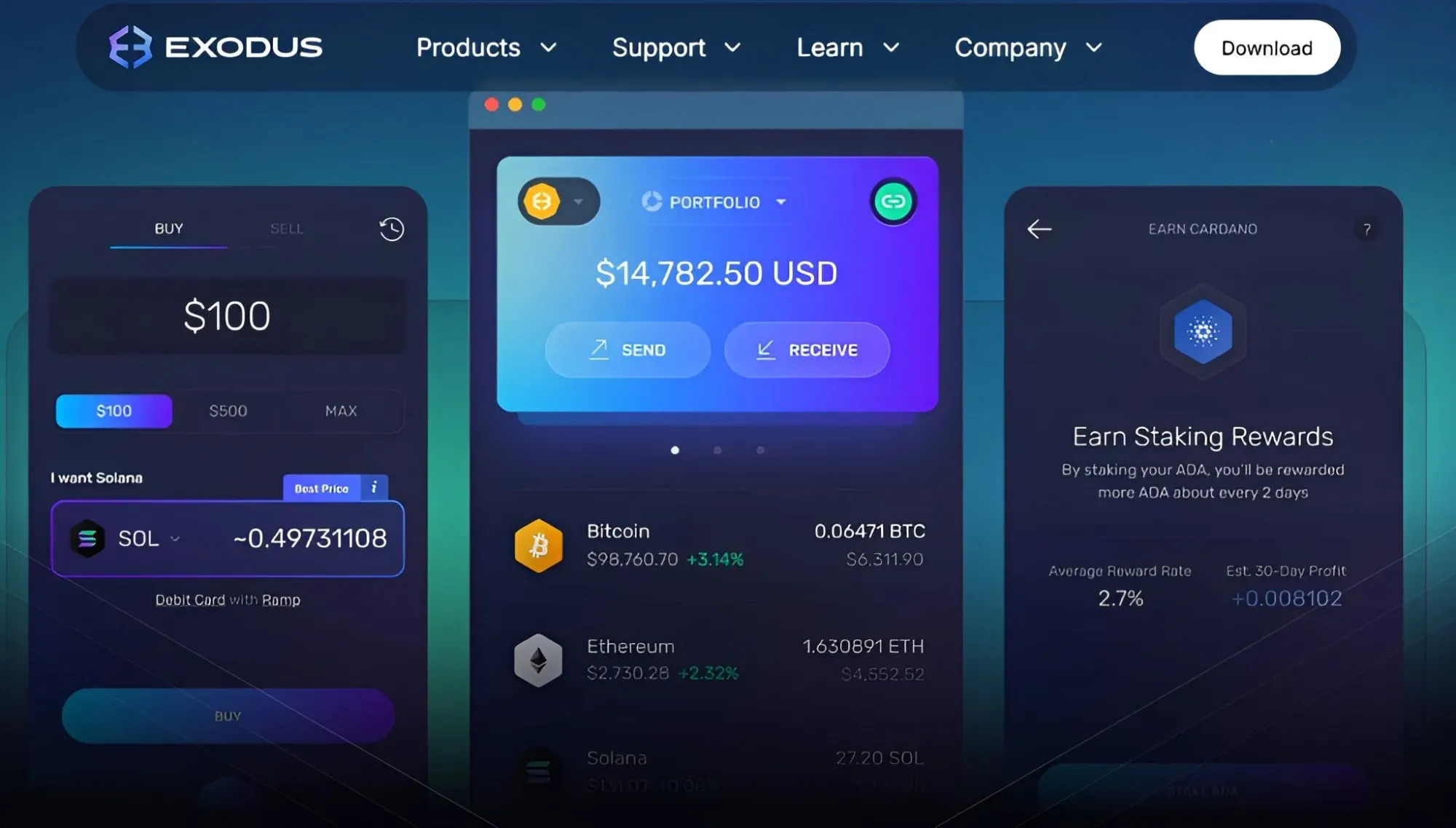
Choose the appropriate client according to your needs. Common hot wallets include Trust Wallet and Exodus; cold‑wallet options include hardware devices such as Trezor or Ledger.
- Hot/Software Wallet: Download the browser extension or mobile app from the official website or app store.
- Cold/Hardware Wallet: Connect the device to a computer, laptop, or smartphone and launch the accompanying software for initialization.
Step 2: Enter “Restore/Import” Mode
In the wallet UI, click the “Restore”, “Import”, or similarly labeled button to open the mnemonic‑entry screen.
Step 3: Accurately Input the Mnemonic
Enter each word in the exact original order. Hardware wallets typically provide physical buttons for word‑by‑word entry; be meticulous to avoid any misspelling.
Step 4: Set a New Password or PIN
After the mnemonic is verified, the system will ask you to create a new access password or PIN to protect subsequent transaction operations. Record this credential securely and do not forget it.
Step 5: Sync Blockchain Data
The wallet will automatically synchronize with the relevant blockchain network, downloading account balances, transaction history, and other data. For hardware wallets, you may need to open the corresponding desktop software to complete the sync. Once synchronization finishes, you will see the latest asset status and can operate normally.
---
Common Mistakes When Storing Mnemonic Phrases
- Cloud Storage: Uploading screenshots or documents containing the phrase to OneDrive, Google Drive, or similar services makes it easy for hackers to steal.
- Public Network Use: Accessing a hot wallet over public Wi‑Fi can expose the mnemonic to network‑level attacks.
- Fragile Paper: Ordinary paper is susceptible to fire, water damage, or natural disasters and is unsuitable for long‑term backup.
- Single‑Point Storage: Keeping the phrase in only one location means that if the location is compromised or destroyed, the assets become unrecoverable.
- Sharing with Others: Disclosing the phrase to strangers, customer‑service agents, or even trusted friends dramatically increases the risk of illicit asset transfer.
---
Real‑World Cases of Poor Mnemonic Management
- Writing the phrase on a scrap of paper that later ends up in the trash.
- Leaving the phrase inside a wardrobe or drawer where anyone could find it.
- Maintaining only a single backup without geographic redundancy.
- Mistyping a word during entry, causing recovery to fail.
- Storing the phrase in a synced notes app or a text file on an infected computer.
- Revealing the phrase during a phone call with a fraudster posing as support staff.
---
Conclusion
The mnemonic phrase is an indispensable security cornerstone in the cryptocurrency ecosystem. It not only enables users to regain wallet control when a private key is lost, but it also offers robust protection against hacking when stored offline or on metal. Implementing proper backup and management practices is a critical step toward safeguarding digital assets.
---
Frequently Asked Questions
What happens if I lose my mnemonic phrase?
If the phrase is lost, you lose the ability to recover the wallet, and the assets become permanently inaccessible. If the phrase is exposed, anyone who obtains it can regenerate the private key and transfer the assets away.
Can you give an example of a mnemonic phrase?
For instance: `acoustic cannon drum fault express scrub very yellow range poem limit jelly`.
Is the mnemonic phrase itself safe?
As long as it is kept offline and in a tamper‑resistant environment, the phrase is secure. Leakage or improper storage introduces asset risk.
Are all mnemonic phrases the same length?
Standard BIP‑39 phrases can be 12, 15, 18, 21, or 24 words. When using Shamir’s Secret Sharing (SLIP‑39), the generated share set can contain up to 33 words.
Can I reuse the same mnemonic across different wallets?
It is not recommended to use a hardware‑wallet mnemonic in a software wallet, because that would expose the private key to an online environment and increase the attack surface.
---
The above provides a complete analysis of what a mnemonic phrase is, how it differs from a private key, and how to use it to restore a wallet. For further details, you can search for additional articles by Bitaigen (比特根) or continue reading related content below. Thank you for your attention and support!
💡 Register on Binance with referral code B2345 for the maximum trading fee discount. See Binance complete guide.



