
 Bitaigen Research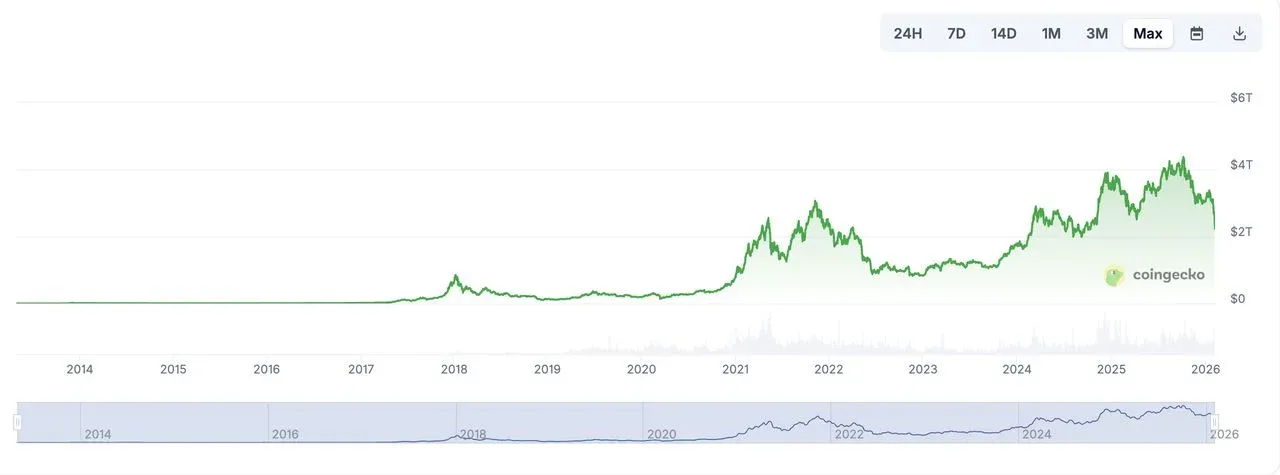
Proof of Reserves (PoR) for cryptocurrencies is a set of cryptographic procedures that centralized exchanges, custodial wallets, and similar platforms use to publicly demonstrate that the assets they hold fully cover user deposits. Unlike traditional financial statements, PoR generates verifiable evidence directly on the blockchain, typically publishing a public wallet address and aggregating user balances with structures such as Merkle trees, all while preserving individual privacy. Its core purpose is to prevent platforms from using client funds without authorization— the 2022 collapse of FTX, which left an approximately $8 billion shortfall, underscores this need. By making reserves auditable on‑chain, PoR can boost user confidence and lower “run” risk even in volatile market conditions.
From an industry perspective, we outline the fundamental principles and implementation pathways of Proof of Reserves (PoR), clarifying its unique value in enhancing exchange transparency and reducing run‑risk. By dissecting the technical workflow and security advantages, readers can quickly grasp this pivotal tool that is reshaping trust mechanisms. Subsequent sections will explore real‑world cases and future development trends.
How Cryptocurrency Proof of Reserves Works
The implementation of PoR revolves around several cryptographic steps that balance transparency with privacy:
- Liability Snapshot
The platform records all user balances at a predetermined point in time, producing an anonymized list.
- Merkle Tree Construction
Each balance is hashed and arranged into a binary tree; the root hash (the Merkle root) serves as a concise digest of total liabilities.
- Public Reserve Address Disclosure
The platform reveals the public wallet address that holds the reserves. Auditors or users can verify ownership by checking signatures generated with the corresponding private key.
- Comparison and Issuance of Proof
The on‑chain total reserve is compared against the numeric value represented by the Merkle root. If the reserve equals or exceeds the liabilities, the PoR is considered valid, often accompanied by a third‑party audit report. Some advanced implementations incorporate zero‑knowledge proofs to enable verification without revealing underlying details.
Five Main Benefits of Using Cryptocurrency Proof of Reserves
- Enhanced Transparency: The platform’s asset holdings are published as on‑chain data, replacing vague internal statements.
- Increased Trust: When a platform can demonstrate a 1:1 (or even >100 %) asset‑to‑deposit ratio, users are more likely to stay and new users are attracted.
- Reduced Insolvency Risk: Regular PoR reports allow users to monitor solvency themselves; any shortfall can prompt timely withdrawals, mitigating systemic shocks like those seen with FTX.
- Regulatory Assistance: In jurisdictions where oversight is tightening, PoR provides a technical means to satisfy disclosure requirements, lowering the chance of penalties.
- User Empowerment: Individuals can independently verify their own balances, shifting financial supervision from a centralized entity to the broader community.
Challenges and Limitations of Cryptocurrency Proof of Reserves
- Point‑In‑Time Nature: PoR captures the asset situation only at a specific moment; platforms could temporarily “top up” reserves through short‑term borrowing before or after the snapshot.
- Limited Scope: The mechanism focuses on on‑chain assets; off‑chain liabilities (e.g., loans, derivatives) are often omitted.
- Potential Collusion: If auditors collude with the platform, or assets are used as undisclosed collateral, the credibility of the PoR diminishes.
- Technical Barrier: Ordinary users may lack the cryptographic knowledge required to validate a PoR, constraining practical effectiveness.
- Evolving Risks: As flash‑loan attacks and complex smart‑contract exploits emerge, PoR must continuously evolve to remain effective.
Proof of Reserves vs. Traditional Bank Audits
Reserve Proofs in Traditional Markets and Tokenized Real‑World Assets
- Methodological Differences: PoR relies on publicly verifiable on‑chain proofs that anyone can query in real time; traditional bank audits are private examinations of financial statements performed by third‑party firms, typically on a quarterly or annual basis.
- Audit Scope: PoR concentrates on whether assets are sufficient to cover user deposits, whereas bank audits review the entire balance sheet, including off‑balance‑sheet items.
- Role in Tokenized Real‑World Assets (RWA): When physical assets such as real estate or commodities are issued as tokens on a blockchain, PoR can provide an on‑chain, verifiable credential of the underlying real‑world reserve, helping bridge conventional finance and DeFi ecosystems.
Cross‑Chain Assets and Wrapped‑Token Bridge Reserve Proofs
In a multi‑chain ecosystem, wrapped tokens (e.g., wBTC on Ethereum) must prove that the corresponding amount has been locked on the originating chain. In this scenario, PoR places the locked assets into a multi‑signature vault and publishes a corresponding asset proof, guaranteeing a one‑to‑one relationship between issued wrapped tokens and the actual reserve. By integrating zero‑knowledge technology, the verification process maintains transparency of cross‑chain solvency while concealing exact holding details, thereby reducing bridge‑related attack vectors and supporting the healthy growth of multi‑chain DeFi.
Conclusion
Proof of Reserves supplies a transparent and auditable trust foundation for the crypto‑financial system. From the most basic asset snapshot to advanced applications involving cross‑chain and tokenized real‑world assets, PoR is gradually closing the information asymmetry gap that has long plagued traditional finance. Although challenges such as point‑in‑time snapshots, limited coverage, and technical barriers remain, ongoing advances in real‑time verification and zero‑knowledge proofs are expected to enhance reliability further. As the industry’s total value locked approaches several trillion USD, platforms that adhere to rigorous PoR standards are more likely to achieve sustainable growth and help cryptocurrencies fulfill their original promise of financial empowerment. When selecting services, investors should give priority to exchanges and custodians that implement robust PoR mechanisms, as this can better protect assets amid market volatility.
This article ends here. For deeper analyses of reserve proofs in the crypto space, you may search for past articles by Bitaigen (比特根) or continue reading the related links below. Thank you for your continued interest and support!
💡 Register on Binance with referral code B2345 for the maximum trading fee discount. See Binance complete guide.



