
 Bitaigen Research
 In this article we systematically outline the staking mechanism of Ethereum 2.0, covering how to lock ETH to become a validator, where rewards come from, and the approximate time needed to withdraw assets. By deeply analyzing the core points of the consensus upgrade and the possible penalties, readers can decide whether to participate in staking and prepare accordingly. Subsequent sections will detail the operational steps and common risks.
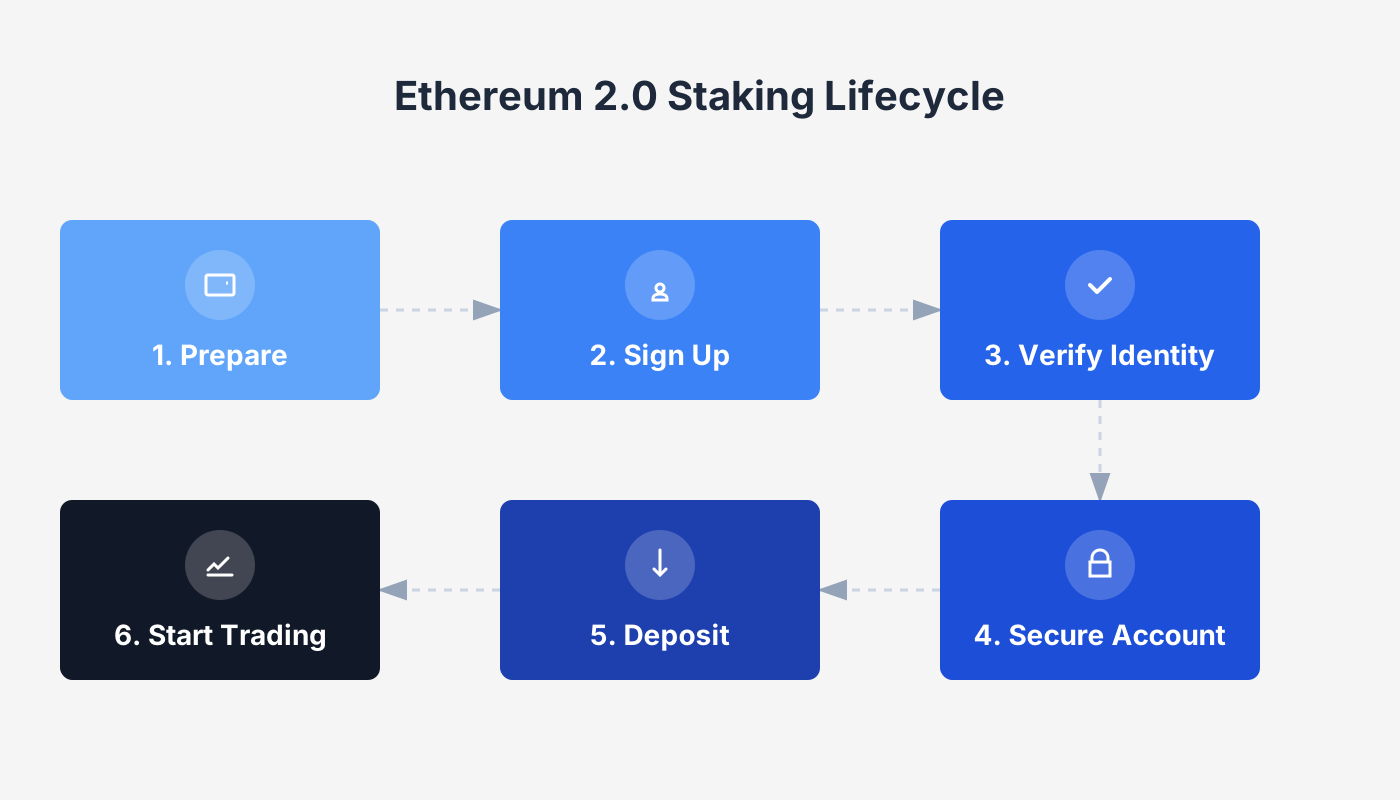
Ethereum 2.0’s main change is the shift from Proof‑of‑Work (PoW) to Proof‑of‑Stake (PoS), a consensus‑layer upgrade aimed at improving network security and scalability. The recent “Ethereum Shanghai” event marked the official launch of the Ethereum 2.0 staking withdrawal feature, signalling that Ethereum will finally decouple from traditional mining.

Ethereum 2.0 staking refers to holding ETH and locking it into validator nodes to earn block rewards; the unlock time depends on the asset being withdrawn—ETH typically requires several months to a year, while MATIC takes about 8‑10 days.
What does Ethereum 2.0 staking mean?
Ethereum 2.0 staking (Staking) means that users lock a certain amount of ETH in the network, either by becoming a validator themselves or by delegating to a validator, to participate in the PoS (Proof‑of‑Stake) consensus and receive rewards. The core points are:
- Locked assets: The minimum stake is 32 ETH, or participants can join via staking pools with a smaller amount.
- Running a node: Validators must run a validator client and stay online; otherwise they incur minor penalties.
- Penalty mechanism: Malicious behavior or prolonged offline periods trigger slashing, which confiscates part of the staked assets.
- Reward sources: Validators earn block rewards and a share of transaction fees by validating transactions, proposing blocks, and maintaining network security.
Unlike traditional PoW (Proof‑of‑Work), staking no longer requires energy‑intensive hash power competition; instead, the amount of held tokens and the duration of the lock determine validation weight.
How long does Ethereum staking take?
The unlock time for staked assets depends on the specific token:
| Asset | Checkpoints required for unlock | Approx. time | Notes |
|---|---|---|---|
| **MATIC** | 424 checkpoints | 8‑10 days | Reduced from the previous 888 checkpoints (≈ 18‑21 days) |
| **ETH** | Multi‑phase unlock | Several months to over a year | After “The Merge,” ETH cannot be withdrawn immediately; a subsequent upgrade is needed and exits occur in batches |
- ETH unlock process: After “The Merge” is completed, ETH remains locked. The next upgrade, expected within 6‑12 months, will enable withdrawals. Even if a user requests an exit, ETH is released only during system‑assigned exit windows, gradually over time. With roughly 395 000 validators currently active, a full exit could take about 424 days.
- MATIC unlock: Since the Shanghai upgrade, MATIC’s withdrawal period has been dramatically shortened, allowing users to retrieve their tokens in roughly 8‑10 days.
What is the Ethereum 2.0 staking yield?
Annual percentage yields (APY) offered by different platforms fluctuate with network conditions. Below are reference figures from two major exchanges (as of the time of writing):
- OKX
- Staking ratio 1:1 (BETH ↔ ETH)
- Approximate APY 3.5 %, with rewards distributed daily at 11:30 AM Hong Kong time.
- Binance (global platform; U.S. users must use Binance.US)
- Same 1:1 exchange ratio
- Most recent APY 3.61 %, rewards settled daily and paid out on T+2 (two business days after the day they are earned).
Note: Ethereum staking APY is influenced by the total amount staked on the network, on‑chain transaction activity, and protocol parameter adjustments. As the total stake grows, reward distribution becomes thinner, reducing yields; transaction‑volume swings can also cause reward variations.
Tax reminder: Gains from staking may be taxable in your local jurisdiction. Consult a tax professional to understand your obligations, especially when converting rewards to fiat currencies such as USD via SEPA or SWIFT transfers.
The above answers “What is Ethereum 2.0 staking?” and “How long does Ethereum staking take?” For a deeper dive into Ethereum 2.0 staking yields, stay tuned to Bitaigen’s upcoming articles.


Related Reading
- Ethereum 2.0 Staking Withdrawal After Shanghai Upgrade
- Ethereum Staking Explained: How ETH Validators Earn Rewards
- Liquidity Mining vs Staking: Key Differences, Rewards & Risks
💡 Register on Binance with referral code B2345 for the maximum trading fee discount. See Binance complete guide.



