
 Bitaigen Research
 Token contract addresses can be viewed directly through a blockchain explorer or the asset‑detail page of a wallet; simply search for the token name on the relevant chain and open its project details to retrieve the address.
Within the blockchain ecosystem, a token contract address is the key piece of information for verifying the authenticity of an asset. In this article we outline the most common retrieval paths, covering the steps for major wallets and blockchain explorers and providing clear screenshots to help newcomers quickly locate contract addresses and avoid mistakes. To master safe lookup techniques, keep reading.
How to Obtain a Token Contract Address?
Token contract address is the unique identifier of a smart contract on a blockchain, and there are two primary ways to obtain it:
1. Using the TP Wallet (example: USDT on the BSC chain)
- Open the TP wallet and switch to the BSC (Binance Smart Chain) network.
- Tap the “+” button in the lower‑right corner, type USDT in the search box, select USDT from the result list, and click the “+” next to it again.
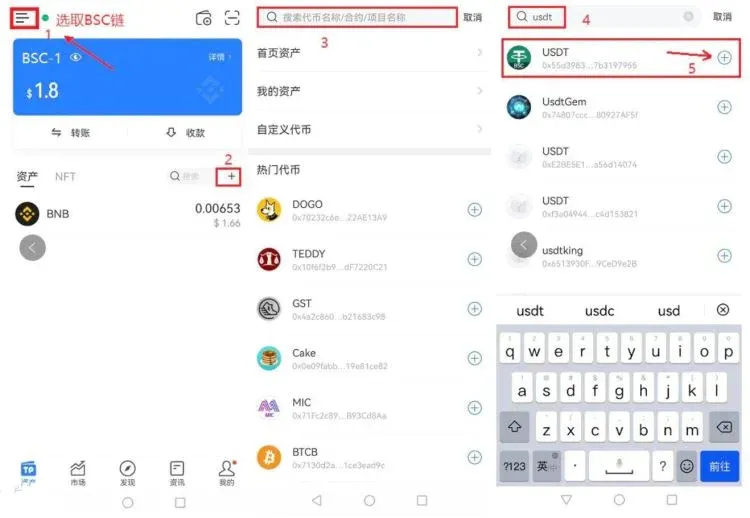
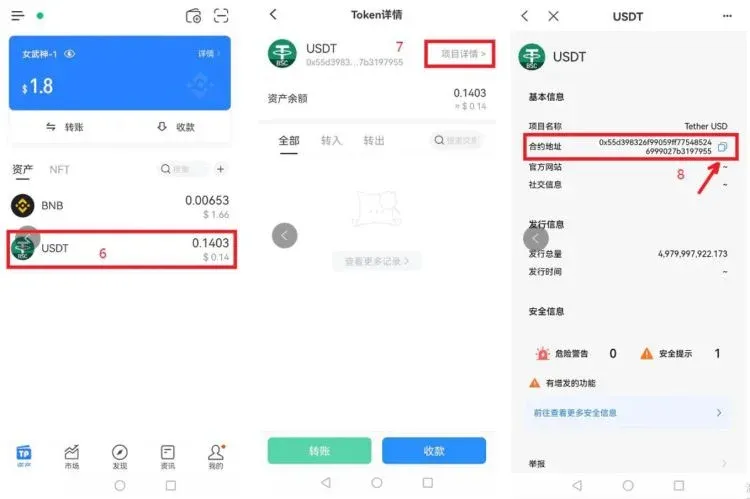
- In the asset list, tap USDT to open the token detail page.
- The contract address appears in the “Project Details” section.
2. Through a Blockchain Explorer
| Step | Action |
|---|---|
| 1 | Visit the blockchain explorer for the relevant chain (e.g., BscScan, Etherscan). |
| 2 | Enter the token name or symbol (for example “USDT”) in the search field. |
| 3 | Choose the correct token contract from the results; the page will display the **contract address**, issuer information, and other details. |
The Role of a Token Contract Address
A contract address is essentially a unique identifier generated from the smart‑contract code, similar in concept to a Bitcoin address but it does not correspond to a private key. The generation process relies on randomness—for instance, a 256‑bit binary number derived from 256 coin flips can serve as the source of entropy for a private key. Because the random space is astronomically large, the probability of two identical 256‑bit numbers occurring is effectively zero.
In the Ethereum ecosystem, the common account types are:
- Wallet address: An externally owned account (EOA) generated by the user, consisting of a public‑private key pair, used to receive and send assets.
- Contract address: An account created by deploying Solidity code; it has no private key and can only be interacted with through contract functions. Issuing an ERC‑20 token creates a contract account, and its address is the token’s contract address.
Why You Should Know the Token Contract Address
- Verify token authenticity: Checking the contract address before trading or withdrawing helps prevent mis‑directed transfers and scams.
- Cross‑chain bridging: Bridging assets between chains requires you to input the exact contract address on the destination chain.
- Development and auditing: Developers must use the correct address when calling contract functions or performing security audits.
By following the methods described above, you can quickly and accurately obtain the token contract address you need, providing a reliable reference for trading, asset management, or development tasks.
*Note: Crypto gains may be taxable in your jurisdiction; consult local tax regulations for guidance.*
Related Reading
- How to Look Up a Token’s Contract Address Safely
- Token Contract Addresses on Ethereum: Verify & Use
- Blockchain Explorers: Track Transactions, Addresses & Blocks
💡 Register on Binance with referral code B2345 for the maximum trading fee discount. See Binance complete guide.



