
 Bitaigen Research
 Liquidity mining refers to the act of providing assets to a liquidity pool on a decentralized exchange (DEX) or lending platform in order to earn transaction fees, interest, or token rewards while helping to maintain market liquidity.
Starting from the core of DeFi, we systematically outline the concept and mechanisms of liquidity mining, and hand‑pick several promising platforms to help readers quickly assess risk and return, grasp the key participation points. Subsequent chapters will dive deep into each platform’s characteristics and operational details, making a thorough read worthwhile.
What Is Liquidity Mining and How Does It Work?
Liquidity mining is the process of depositing assets into a liquidity pool on a decentralized exchange (DEX) or a lending platform. The pool replaces the traditional order‑book of centralized exchanges, allowing users to swap or borrow assets directly from a shared reserve.
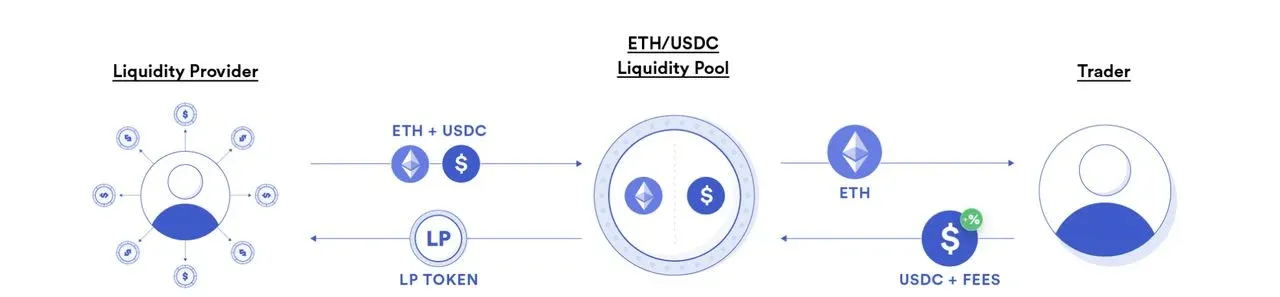
When tokens are deposited into the pool, the system issues liquidity provider (LP) tokens that represent the depositor’s share. Holders of LP tokens can redeem their principal at any time and claim the accumulated rewards, which primarily come from:
- Trading fees – fees paid by traders when they swap assets within the pool.
- Interest payments – interest collected by lending platforms from borrowers.
- Native or governance tokens – tokens distributed by the protocol to incentivize liquidity provision.
This mechanism both guarantees liquidity for decentralized markets and offers participants passive income, making it a cornerstone of DeFi.
Five Main Types of Liquidity Pools in DeFi and Their Operating Principles
Liquidity pools are the essential building blocks of DeFi, and different pool types serve distinct needs. The primary categories include:
- Automated Market Maker (AMM) Pools
- Representative platforms: Uniswap, Balancer, PancakeSwap.
- Principle: Use an algorithm to price assets automatically, eliminating the need for an order book; LPs earn trading fees.
- Stablecoin Pools
- Representative platform: Curve.
- Principle: Focus on low‑slippage swaps between assets of similar value (e.g., USDT, USDC, DAI), delivering relatively stable returns.
- Lending Pools
- Representative platforms: Aave, Compound.
- Principle: Depositors supply liquidity; borrowers provide collateral to draw funds, and depositors receive interest.
- Yield Aggregator Pools
- Representative platforms: Yearn Finance, Beefy Finance.
- Principle: Automatically allocate assets across multiple protocols to maximize yield, ideal for users who prefer a set‑and‑forget approach.
- Specialized or Incentivized Pools
- Common in emerging ecosystems or layer‑2 networks.
- Principle: In addition to base yields, they offer extra governance tokens, restaking incentives, or ecosystem‑specific perks to encourage long‑term liquidity provision.
Seven Leading Liquidity Mining Platforms for 2025
The following platforms, as of 2025, enjoy high adoption, solid security, and sustainable reward structures, making them suitable for a range of liquidity‑providing strategies.
1. Uniswap (UNI) – Multi‑Chain AMM Pools
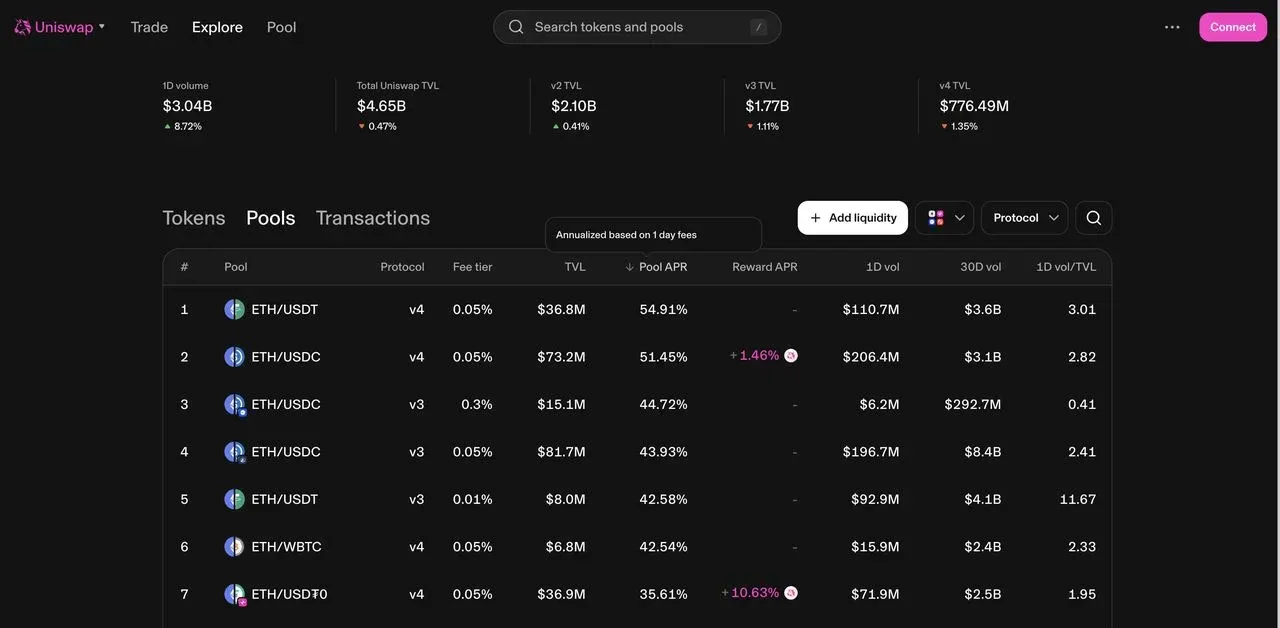
- Typical APY range: 5 %‑55 % (depends on trading volume and specific pool)
- Key metrics: TVL roughly $3‑5 billion; over 1,000 active pools; no major security incidents; daily volume $800 million‑$2 billion
Uniswap supports both standard pools and concentrated‑liquidity positions, allowing users to allocate capital within a chosen price range to boost fee earnings. Its cross‑chain deployment (Ethereum, Polygon, Arbitrum, Optimism) offers options with varying gas costs and depth. Since its 2018 launch, cumulative trading volume has exceeded $1 trillion, and the 2021 V3 upgrade introduced concentrated liquidity, markedly improving capital efficiency.
2. Curve Finance (CRV) – Multi‑Chain Stablecoin Pools
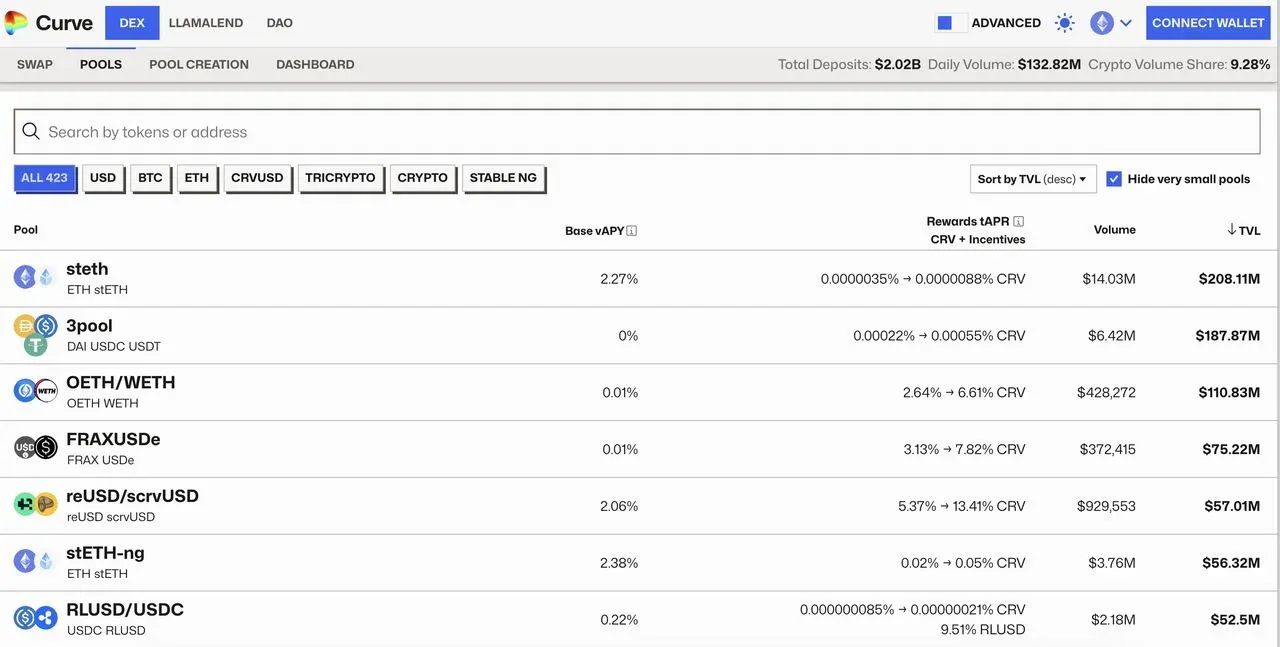
- Typical APY range: 3 %‑25 % (stablecoin pools 3 %‑8 %; crypto‑heavy pools up to 25 %)
- Key metrics: TVL roughly $1.5‑3 billion; over 200 active pools; solid security track record; daily volume $100 million‑$500 million
Curve’s proprietary algorithm enables low‑slippage swaps between assets of equal value, making it a go‑to choice for LPs seeking minimal impermanent loss. Its veCRV lock‑up voting mechanism rewards longer lock periods with higher yields and grants governance weight. Since its 2020 debut, Curve has expanded across multiple layer‑2 solutions and now underpins much of the stable‑asset trading in DeFi.
3. Aave (AAVE) – Multi‑Chain Lending Pools
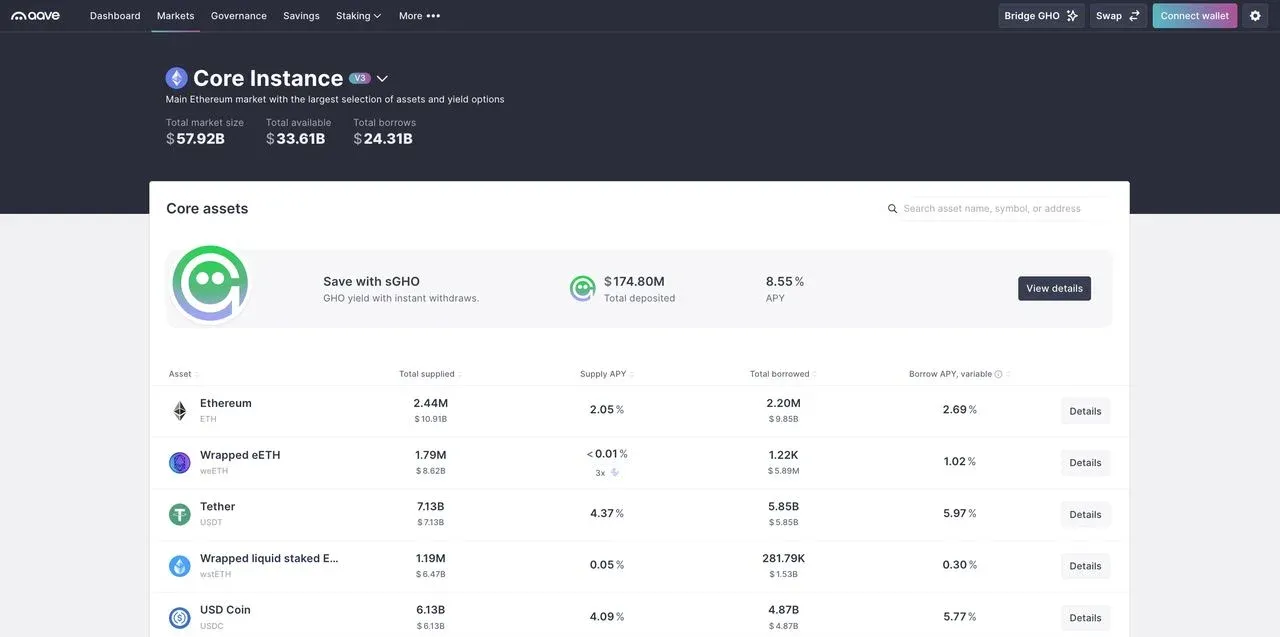
- Typical APY range: 2 %‑15 % (varies with asset utilization and safety incentives)
- Key metrics: TVL roughly $4‑8 billion; more than 30 active pools; robust security history; daily volume $50 million‑$200 million
Aave offers variable and stable interest rates, flash loans, and safety‑module staking, providing diversified revenue streams. Depositors earn interest and can boost returns through AAVE token incentives. The protocol runs on Ethereum, Polygon, Avalanche, and other chains, positioning it as a cornerstone of institutional‑grade DeFi lending.
4. Compound (COMP) – Ethereum Lending Pools
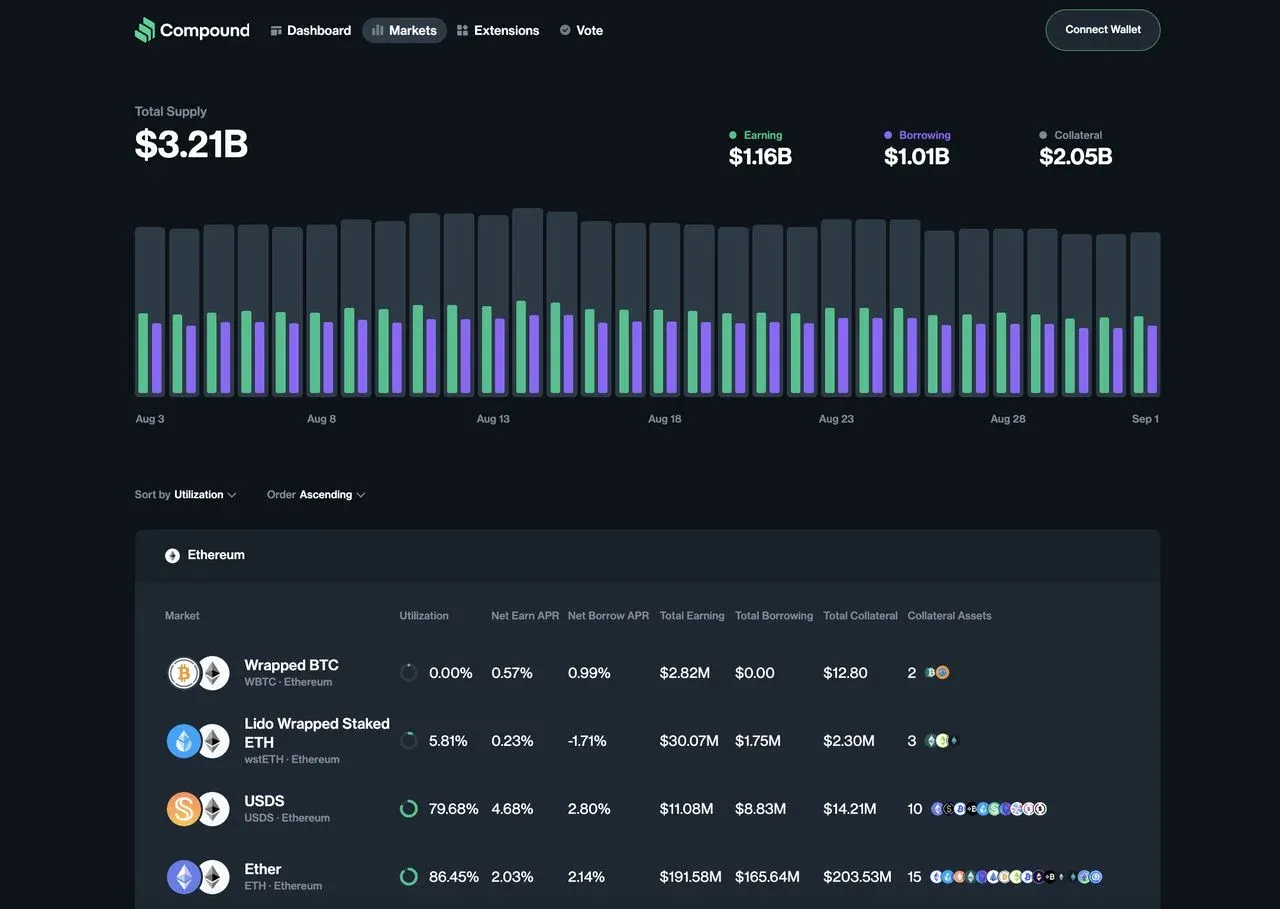
- Typical APY range: 1 %‑12 % (determined by supply‑demand algorithm)
- Key metrics: TVL roughly $1‑3 billion; over 15 active pools; excellent security record; daily volume $20 million‑$100 million
Compound’s algorithmic rate model automatically adjusts borrowing and lending rates. LPs receive interest instantly and hold COMP governance tokens, which can be used to vote on protocol upgrades. Launched in 2018 and issuing COMP in 2020, Compound pioneered the “liquidity mining” reward model in DeFi.
5. Balancer (BAL) – Multi‑Chain AMM Pools
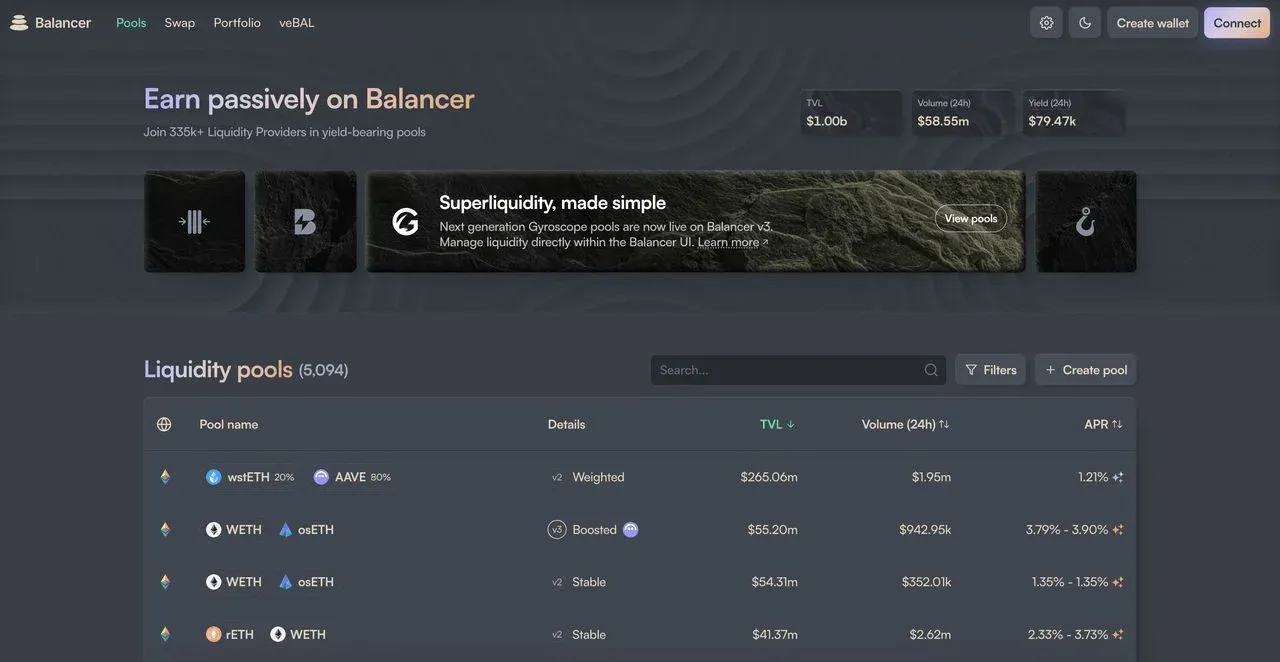
- Typical APY range: 8 %‑30 % (boosted pools and multi‑asset strategies can be higher)
- Key metrics: TVL roughly $800 million‑$1.5 billion; more than 300 active pools; solid security track record; daily volume $30 million‑$150 million
Balancer lets users create custom pools with up to eight tokens and arbitrary weightings, delivering portfolio‑like exposure while earning fees from automatic rebalancing. Its veBAL tokenomics grant long‑term LPs higher rewards and influence over protocol governance.
6. PancakeSwap (CAKE) – BNB Chain AMM Pools
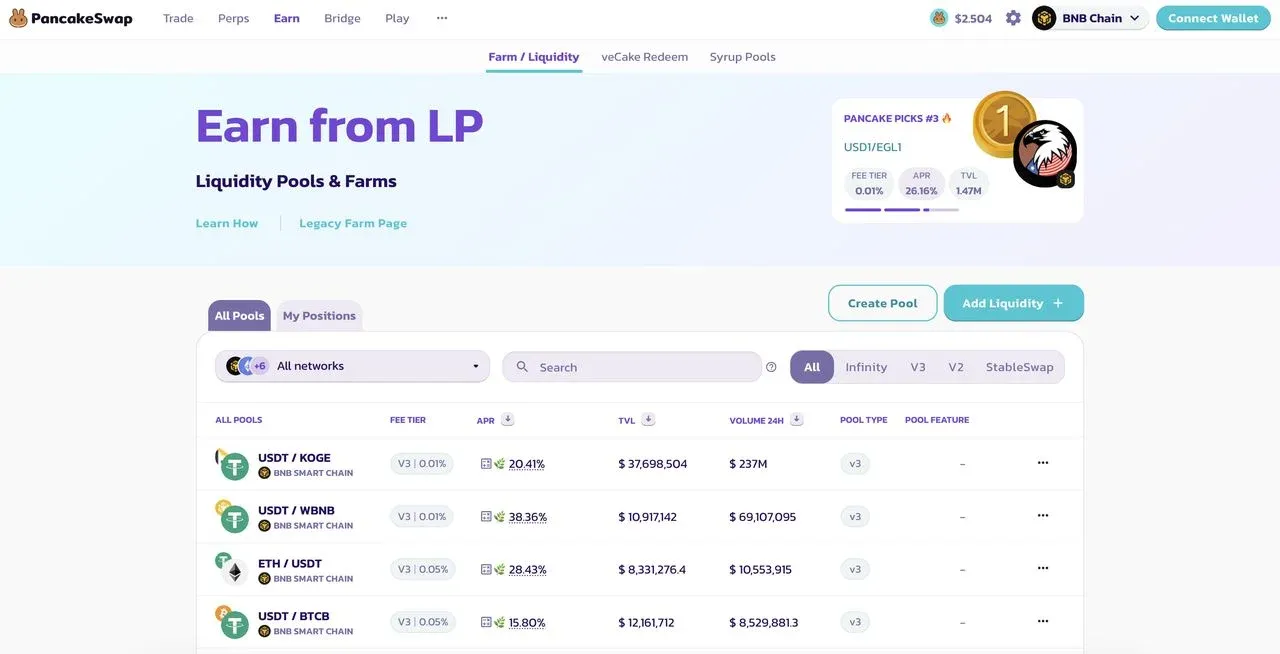
- Typical APY range: 10 %‑80 % (fluctuates with CAKE incentives and pool selection)
- Key metrics: TVL roughly $1‑2.5 billion; over 500 active pools; stable security record; daily volume $200 million‑$800 million
Built on BNB Chain’s low‑fee environment, PancakeSwap offers a user‑friendly entry point for retail liquidity miners. The platform blends AMM earnings with gamified features (prediction markets, lottery), and its CAKE token reward scheme is especially attractive in cost‑sensitive regions.
7. Yearn Finance (YFI) – Multi‑Chain Yield Aggregator Pools
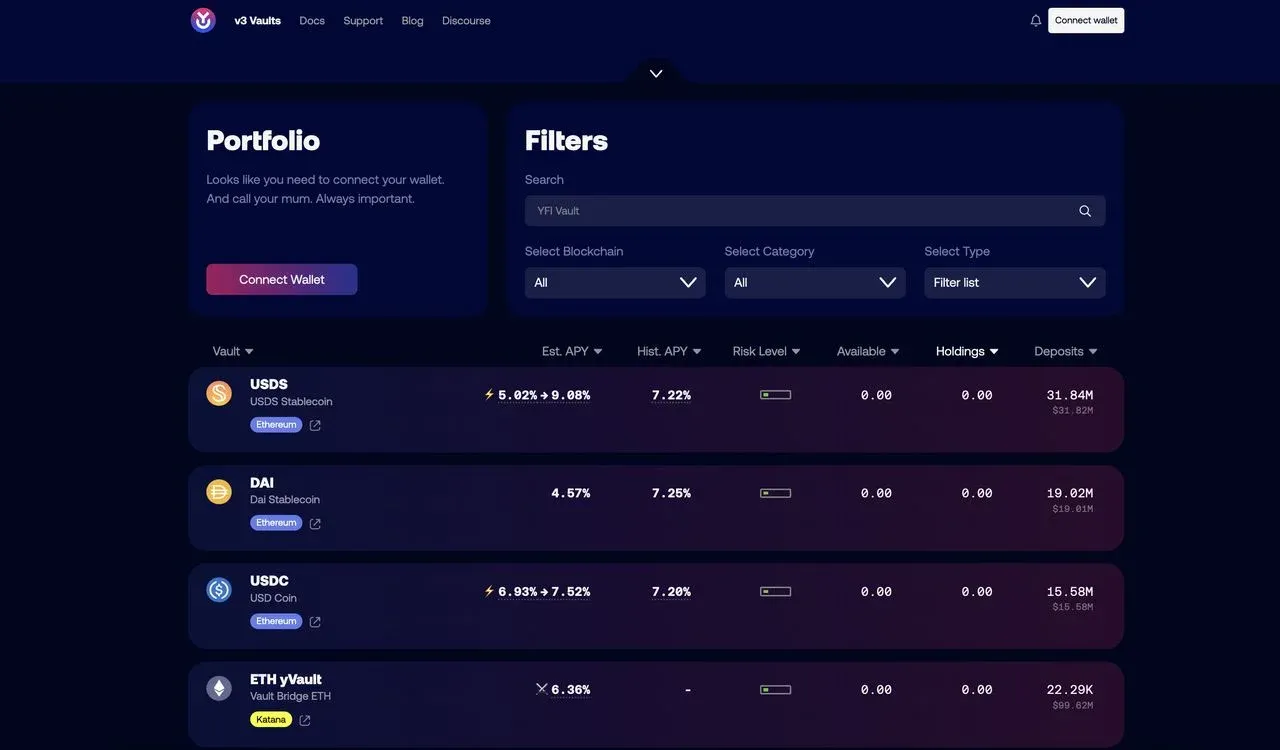
- Typical APY range: 5 %‑25 % (automatically optimized across multiple strategies)
- Key metrics: TVL roughly $300 million‑$1 billion; more than 50 active pools; steady security performance; daily volume $10 million‑$50 million
Yearn automates the deployment of assets across a suite of protocols, allowing users to earn continuously optimized returns with a single deposit. Its YFI token is distributed via a fair‑launch mining model and serves as a benchmark for decentralized governance. The platform operates on several chains, and the community can propose and submit new strategies.
What Is Impermanent Loss? The Primary Risk of Liquidity Mining
Impermanent loss originates from the pricing mechanics of automated market maker (AMM) pools. AMMs maintain balance using the constant‑product formula:
```
x × y = k
```
- x: quantity of token A
- y: quantity of token B
- k: a constant that never changes
When token prices move, the pool automatically re‑weights the asset ratio to keep k unchanged, which can generate impermanent loss for LPs.
Example: Suppose ETH is priced at $2,000 and you deposit 1 ETH + 2,000 USDC (a total value of $4,000). If ETH’s price rises to $3,000, the pool rebalances to roughly 0.816 ETH + 2,449 USDC, worth about $4,897. Holding the original assets would now be worth $5,000, so the $103 difference represents the impermanent loss.
Highly volatile token pairs suffer larger impermanent loss. Using stablecoin pools, concentrating liquidity on Uniswap V3, or diversifying across multiple pools can mitigate this risk.
Other Major Risks to Consider When Becoming a Liquidity Provider
- Smart‑contract risk – Code bugs or exploits may lead to irreversible loss of funds.
- Market volatility – Sharp price swings affect the pool’s asset composition and the effective APY.
- Reward dilution – As more participants join or token emissions halve, individual rewards can decline.
- Withdrawal risk – Pulling large amounts from thinly‑liquified pools may incur high slippage or delayed execution.
- Regulatory uncertainty – Policy changes in different jurisdictions can impact pool accessibility or token legality.
Prudent pool selection, diversification, and continuous risk monitoring are essential for capital protection.
Note: Crypto‑related gains may be subject to taxation in many jurisdictions. Participants should consult local tax regulations or a qualified professional to ensure compliance.
Summary
Liquidity mining has evolved from a short‑term experiment into a fundamental pillar of DeFi. In 2025, platforms such as Uniswap, Curve, Aave, Compound, Balancer, PancakeSwap, and Yearn Finance offer a spectrum ranging from low‑risk stablecoin pools to high‑yield, volatile pairings. While participants can earn transaction fees and token incentives, they also assume impermanent loss, smart‑contract vulnerabilities, and market‑driven risks. By thoughtfully selecting pools, diversifying assets, and applying robust risk‑management practices, liquidity providers can support the DeFi ecosystem while capturing meaningful passive income.
This article concludes here. For deeper analyses of liquidity‑mining platforms, please search Bitaigen’s (比特根) previous publications or continue browsing the related content below. Thank you for reading, and we look forward to your continued engagement with Bitaigen (比特根)!
Local‑currency considerations:
- When converting fiat to crypto, use USD as the reference currency and transfer via SEPA (for Euro‑zone users) or SWIFT for global payments.
- U.S. residents should access Binance services through Binance.US rather than the global Binance platform, in accordance with regulatory requirements.
Related Reading
- Liquidity Mining Guide: Earn Passive Income & Avoid Risks
- DeFi Liquidity Mining: Boost Capital Flow & Trade Efficiency
- 5 DeFi Trends & 14 Projects to Watch in 2024
💡 Register on Binance with referral code B2345 for the maximum trading fee discount. See Binance complete guide.



