
 Bitaigen Research
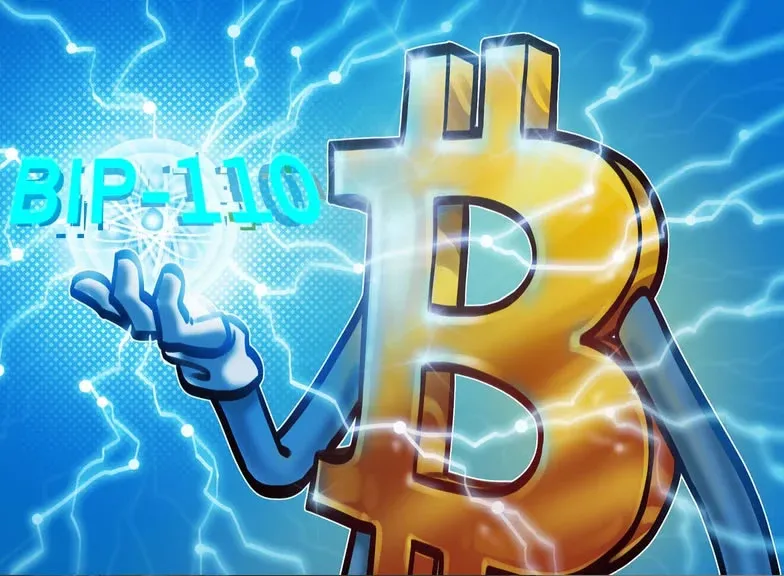
 BIP‑110 protocol protects node accessibility by limiting the embedding of non‑monetary data, restores block‑space efficiency, and ensures that decentralized verification is not overwhelmed. It is a critical pathway for Bitcoin to achieve a market capitalization measured in millions of USD.
We believe that the node‑accessibility and block‑space recovery solution proposed in BIP‑110 is a key technology for Bitcoin’s long‑term security and value expansion. This article will dissect the design logic behind the protocol, the existing risks, and why it is seen as a necessary route to higher market caps, helping readers grasp Bitcoin’s future technical direction.
1. The Fundamental Source of Bitcoin’s Value
All of Bitcoin’s value proposition stems from its monetary guarantee: a fixed supply of 21 million coins, enforced by a distributed network of nodes, with every transaction requiring independent verification. Ordinary users only need to run node software to participate in the monetary protocol without permission, without intermediaries, and without trusting any third party.
In contrast, centralized projects—Ethereum has a foundation, Solana relies on a handful of corporate validators, XRP is controlled by Ripple Labs—have rules that can change due to legal actions, sanctions, or internal decisions. Bitcoin depends solely on mathematics and node consensus.
Each node operator effectively holds one vote on monetary policy. The more nodes there are, the more distributed the verification becomes, and the greater the confidence that capital places in Bitcoin. Consequently, any factor that weakens node accessibility directly threatens Bitcoin’s value and existence.
2. How the Vulnerability Originated and Was Exploited
Since 2013, Bitcoin Core has limited the amount of non‑monetary data that can be embedded in a transaction via the `-datacarriersize` configuration option, preventing the blockchain from being abused as cheap storage. After a decade of operation, the Ordinals protocol in 2023 exploited a gap that the Taproot transaction format did not cover, bypassing the size restriction.
The technique disguises arbitrary data as code within the Tapscript witness space and wraps it with a never‑executed `OP_FALSE OP_IF` construct, thereby breaking the original data‑size limit. The result is that images, text, BRC‑20 tokens and other non‑monetary data can be permanently written to the Bitcoin blockchain at very low cost, benefiting from the SegWit witness discount.
In December 2023, @LukeDashjr logged this flaw as CVE‑2023‑50428, assigning a severity score of 5.3 (medium) and stating that the network impact is “massive and irreversible.” Subsequently, Bitcoin Knots patched the vulnerability in version 25.1 and deployed the fix on the Ocean mining pool. In contrast, Bitcoin Core has not yet adopted the patch.
3. The Counter‑Decision by Core 30
When BIP‑110 put forward a solution to shield nodes from data bloat, the Core 30 release completely removed the long‑standing OP_RETURN size limit, opening the door to unlimited arbitrary data. Developers argued that the original 80‑byte limit had already been circumvented, so retaining it no longer made sense.
However, this decision is equivalent to imposing a tax on every node operator: unrestricted OP_RETURN data forces nodes to download, verify, and store ever‑growing block data. The beneficiaries are a small group of developers building non‑monetary applications on Bitcoin, while ordinary users bear higher operating costs.
From the 2013 protective measure to the 2025 removal of the limit, the burden on nodes has continuously increased, jeopardizing the prospect of decentralized node operation. Two camps have become increasingly polarized: one insists that Bitcoin should remain a lightweight, Raspberry‑Pi‑runnable monetary protocol; the other leans toward evolving the network into a “better‑than‑Ethereum” platform that supports any creative use case. The former aligns better with Bitcoin’s long‑term goal of reaching a million‑USD market cap.
4. Real‑World Impact of BIP‑110
@CunyRenaud simulated BIP‑110 over a ten‑day window on mainnet (block heights 929,592‑931,032), covering 4,700,000 transactions. The results showed:
- 1,957,896 transactions filtered (≈ 41.5 %),
- 747.85 MB of block space reclaimed (≈ 36 %),
- Zero legitimate financial transactions blocked.
Among the nearly five million transactions, no payments, Lightning channels, CoinJoin operations, or multi‑signature spends were mistakenly rejected. Notably, Ordinals and OP_RETURN “trash” are not separate problems; 94.6 % of the captured inscription transactions also contained OP_RETURN outputs, so filtering them solves both garbage categories simultaneously.
5. The Pivotal Rule – Rule 7
BIP‑110 comprises several rules, with Rule 7 being the most critical: it prohibits the use of `OP_IF` and `OP_NOTIF` within Tapscript execution. This rule directly targets the `OP_FALSE OP_IF` mechanism exploited in CVE‑2023‑50428.
Simulation data indicate that Rule 7 alone captured 1,954,477 transactions, accounting for 99.8 % of the total filtered volume. Further inspection revealed that none of these transactions represented legitimate `OP_IF` use cases—current mainnet Tapscript does not employ such conditional branches or time‑lock contracts.
Rule 7 is set to be active for one year, serving as a temporary intervention to immediately curb the rapid spread of inscriptions while leaving room for future smart‑contract upgrades.
6. Bitcoin’s Essence Is Money
Some argue that because inscriptions pay market fees and miners voluntarily accept them, filtering them amounts to unfair censorship. In reality, Bitcoin’s censorship resistance is focused on monetary transactions. Its proof‑of‑work, difficulty adjustment, and block‑reward design are all intended to safeguard the usability of a peer‑to‑peer electronic cash system.
Non‑monetary data does not receive the same protocol‑level protection. When such data occupies a large share of block space and drives up node costs, the network is justified in prioritizing core monetary functionality. Filtering transactions that misuse old vulnerabilities for data storage is network maintenance, not political censorship.
7. The Road to a Million‑USD Market Cap
When presenting Bitcoin’s value to sovereign wealth funds or central banks, the core arguments are: fixed supply, censorship‑resistant transactions, decentralized verification. If any of these pillars is weakened, Bitcoin’s value proposition falters.
Ordinals‑induced UTXO bloat directly attacks the decentralization pillar by raising node operating costs and nudging verification toward centralization. By contrast, BIP‑110 removes about 41.5 % of garbage transactions within a year, reclaims 36 % of block space, and leaves all financial transactions untouched—precisely the kind of measure needed to preserve Bitcoin’s monetary attributes.
Consequently, the implementation of BIP‑110 is viewed as an indispensable step toward a million‑USD market capitalization. It secures node network accessibility and decentralization, thereby upholding the credibility of the monetary guarantee.
8. Actions the Community Can Take
- Read the BIP‑110 specification to understand each rule in detail.
- Review the simulation report from *Bitcoin Block Space Weekly* to verify the data’s authenticity.
- If you run a node, consider switching from Bitcoin Core to Bitcoin Knots, which already implements BIP‑110. On platforms such as Umbrel, Start9, MyNode, and RaspiBlitz, a single click in the app marketplace performs the migration; desktop or bare‑metal Linux users can also switch by transferring their blockchain data with a few simple commands.
Every node that migrates to Knots effectively casts an additional vote for Bitcoin’s monetary characteristics. The window is limited to one year; missing it will result in the permanent addition of gigabytes of data to the network each day.
Bitcoin is money, and BIP‑110 keeps it that way. If you agree that Bitcoin should remain a sovereign, censorship‑resistant monetary system, running and supporting a node that implements BIP‑110 is the most powerful contribution you can make to its future.
References: Follow Bitaigen (比特根) for deeper analysis of BIP‑110.
Related Reading
- OKX Security & Contract Copy‑Trading: Step‑by‑Step Guide
- Best Reliable Altcoin Exchanges 2024 – Secure Platforms
- Binance Safety 2026: In‑Depth Review of Top Crypto Exchange
💡 Register on Binance with referral code B2345 for the maximum trading fee discount. See Binance complete guide.



