
 Bitaigen Research
 As the digital currency market continues to evolve, an increasing number of investors are looking to enter the cryptocurrency space. Among the many trading platforms, Binance frequently appears at the top of search results. However, many novice investors still have doubts about Binance’s safety and legitimacy. This article analyses Binance exchange from multiple dimensions, helping investors gain a comprehensive understanding of the world’s largest cryptocurrency trading platform.
In 2026, Binance remains the global leader in trading volume, with transparent asset reserves, a full ADGM license, and additional protection through multi‑signature cold‑wallet storage and the SAFU fund.
We examine Binance’s security and compliance in 2026 from three major dimensions—regulation, technology, and asset protection—providing a panoramic analysis that helps newcomers quickly assess the platform’s credibility. The following sections reveal key details and practical recommendations. We combine the latest regulatory documents and industry cases to deeply explore the risk‑control mechanisms and user‑asset safety systems behind the platform.
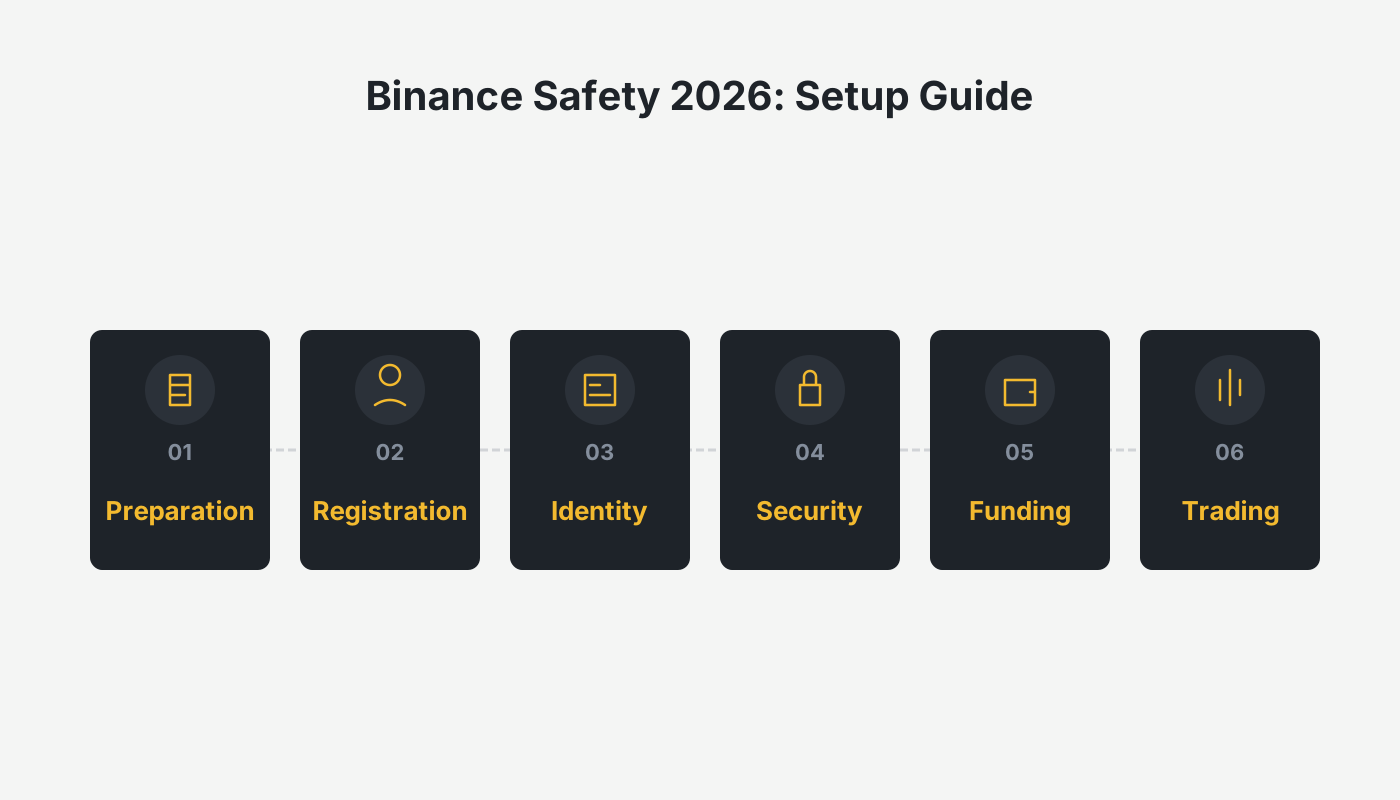
1. Binance (Binance) Exchange Overview (Latest 2026 Data)
Binance is often referred to as the “Nasdaq of digital assets,” maintaining the top global position in trading volume, user count, and liquidity.
- Founded: July 14 2017 by Changpeng Zhao (CZ).
- Current Scale: The world’s largest crypto exchange, with over 320 million users; spot trading accounts for about 42.3 % of activity, and derivatives trading leads in volume.
- Regulatory Structure: Since January 5 2026, the exchange is operated by three licensed entities in Abu Dhabi’s ADGM—Nest Exchange (trading), Nest Clearing (clearing), and Nest Trading (OTC).
- Asset Reserves: As of January 2026, total assets amount to $155.64 billion, including $47.47 billion in stablecoins and $49.84 billion in Bitcoin.
- Technical Capability: Processes roughly 1.4 million orders per second, supports 1,000+ token pairs, and offers low‑latency, high‑concurrency performance.
- Management Team: Dual‑CEO structure—Richard Teng (compliance & regulation) and He Yi (product & user growth).
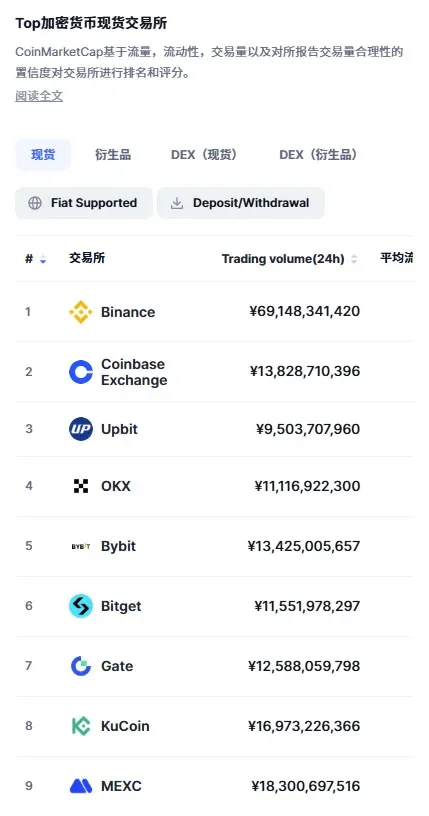
The data show that Binance’s daily transaction value is often several times that of the second‑largest exchange, underscoring its dominant market share and leadership role.
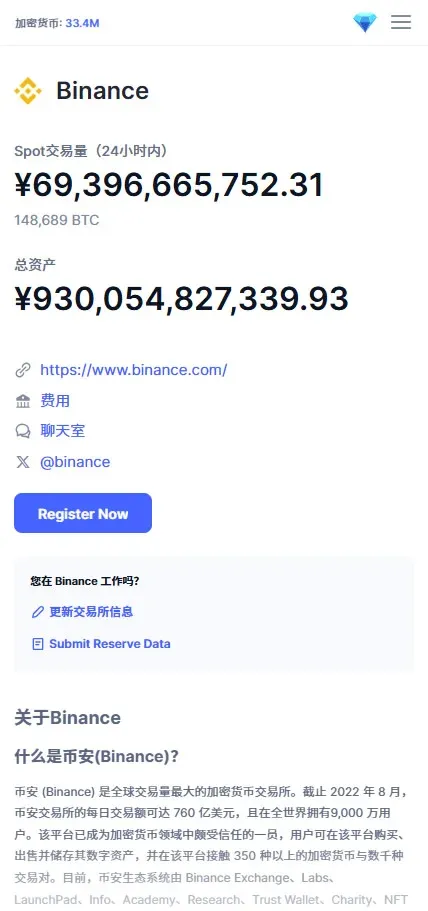
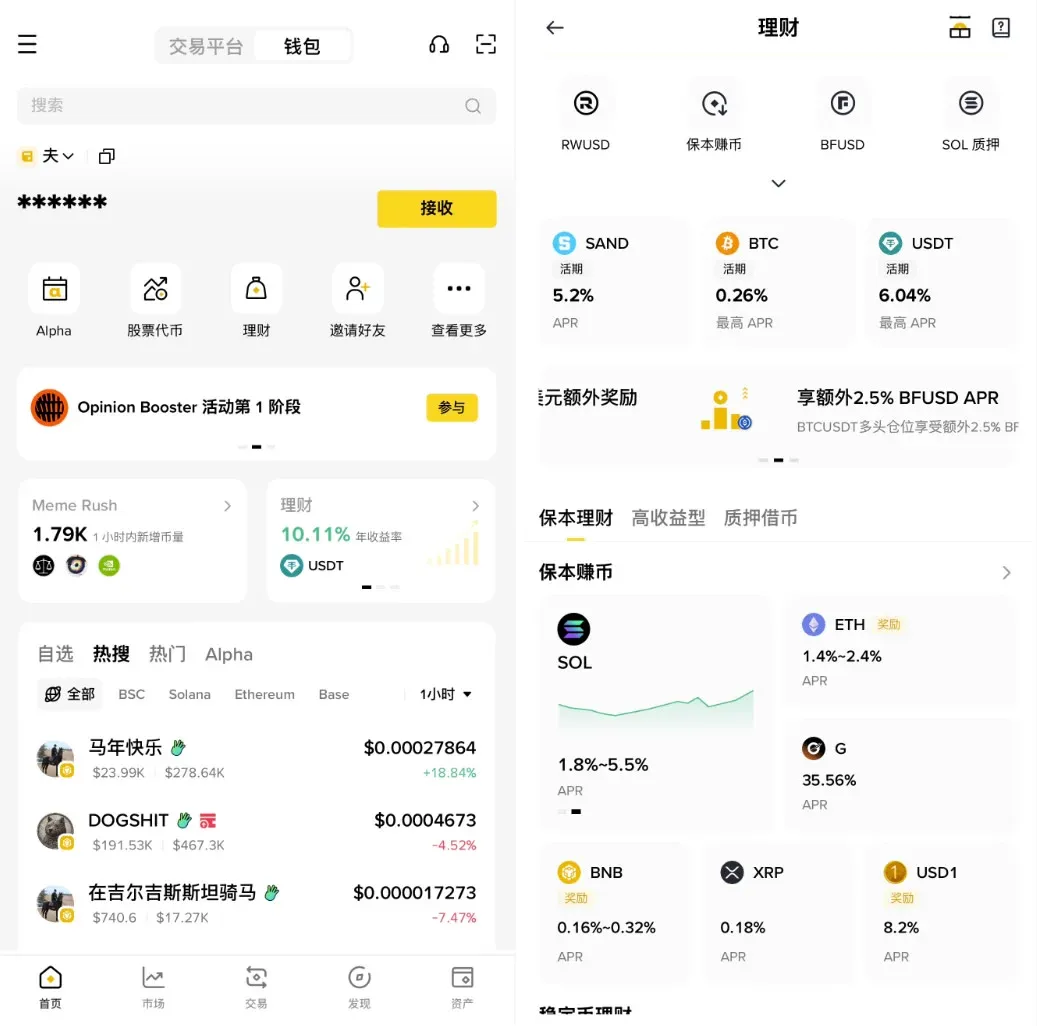
Binance has evolved from a simple buy‑sell venue into a comprehensive digital‑asset ecosystem. The platform includes a Web3 wallet, a range of wealth‑management products, and its own blockchain, the Binance Smart Chain (BSC), forming a key piece of infrastructure in the crypto space.
Reference Guides
- 2026 Updated Guide for Domestic Users to Register on Binance
- How to Download the Binance App? Mainland China Binance App Download and Installation Guide (Android/iOS)
- Detailed Binance Account Security Settings Guide (including Binance App download steps)
2. Binance’s Asset‑Protection Mechanisms (Five‑Star Safeguards)
Binance implements multi‑layer protection to secure user assets. The main measures and their protection ratings are listed below:
| Security Measure | Core Technology | Protection Rating |
|---|---|---|
| **Cold‑Wallet Storage** | > 98 % of assets kept offline, 2 % used for liquidity, employing TSS threshold signatures | ⭐⭐⭐⭐⭐ |
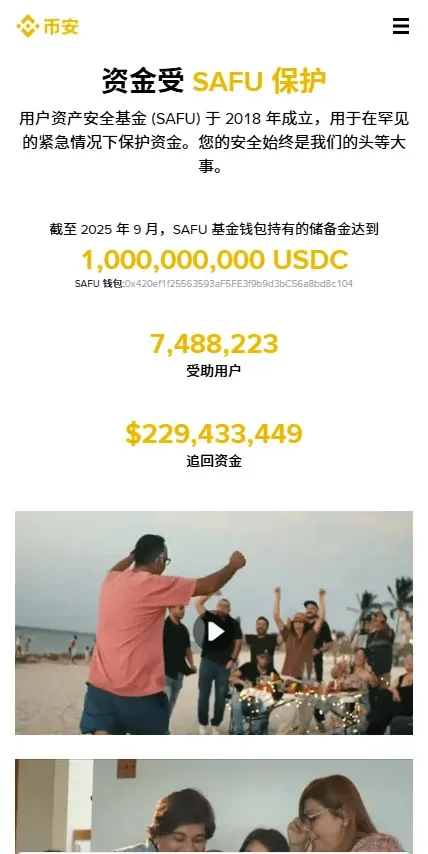
| **SAFU Fund** | $1 billion safety fund, fully converted to Bitcoin in January 2026 | ⭐⭐⭐⭐⭐ |
| **Multi‑Factor Authentication** | Supports Google Authenticator, YubiKey, SMS, etc.; non‑SMS methods are recommended | ⭐⭐⭐⭐⭐ |
| **Risk‑Control System** | Real‑time monitoring of anomalous trades, circuit‑breaker to limit extreme volatility, abnormal withdrawals frozen for 24‑48 hours | ⭐⭐⭐⭐ |
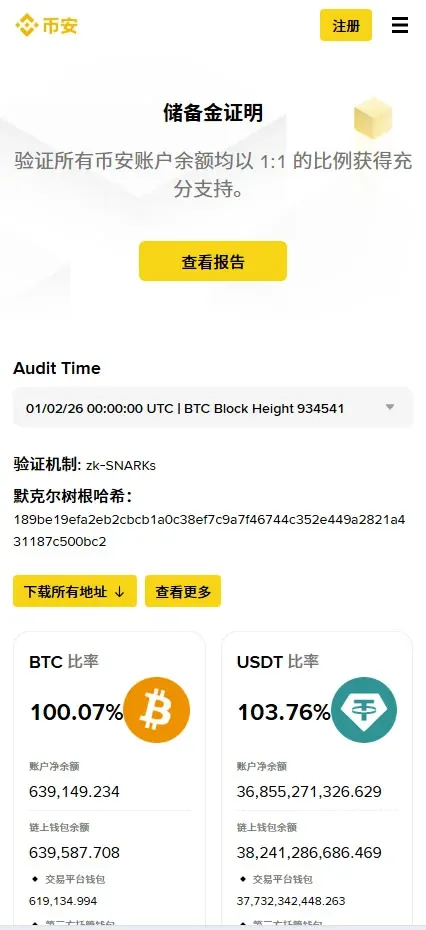
| **Asset‑Reserve Proof** | Utilises zk‑SNARK zero‑knowledge proofs for 1:1 asset coverage; regular third‑party audits published | ⭐⭐⭐⭐⭐ |
Transparency of Asset Reserves is at the core of Binance’s security. The exchange publishes a monthly asset‑reserve report, confirming that every deposited token is fully backed, eliminating the risk of misappropriation.
The SAFU (Secure Asset Fund for Users) is composed of trading fees, totaling roughly $1 billion, and is used to compensate users in the event of extreme incidents such as hacks.
On the technical side, Binance employs multi‑signature schemes, segregation of hot and cold wallets, and real‑time risk monitoring to ensure both asset‑storage safety and transaction reliability.
Reference Guides
- How to Deposit USDT via the Binance App? Step‑by‑step tutorial for buying, withdrawing, and managing crypto on the Binance App
- Complete 2026 Binance C2C USDT Selling Guide: From Zero to Successful Withdrawal
3. Binance’s Compliance Situation in China
Compliance must be examined from both the business‑operation perspective and the individual‑investor perspective:
- Business‑Operation Perspective: According to domestic regulations, crypto exchanges may not establish operating entities or conduct marketing within China. Binance does not have a subsidiary in China and does not run advertising campaigns, thus meeting current regulatory expectations.
- Individual‑Investor Perspective: Holding crypto assets is regarded as personal property freedom; the law does not expressly prohibit it. As long as the source of funds is legitimate, buying, selling, or holding tokens does not constitute a violation, providing domestic investors with a certain legal space.
ADGM Full License: A Milestone Breakthrough (High Value)
On December 8 2025, Binance received a full suite of regulatory authorizations from the Abu Dhabi Global Market (ADGM) Financial Services Regulatory Authority (FSRA), becoming the world’s first exchange to simultaneously hold:
- A crypto‑asset exchange license
- A clearing‑house license
- A custody‑service license
The authorization integrates Binance’s global operations into a traditional‑finance‑grade regulatory framework and took effect on January 5 2026.
Global Regulatory Footprint (Regional Differences)
| Region | Regulatory Status |
|---|---|
| **European Union** | Partially compliant; aligns with MiCA regulations and holds registered permissions in France, Italy, etc. |
| **United States** | Restricted operation; fined **$4.3 billion** in 2023 for violations, founder CZ stepped down, and U.S. users must access **Binance.US** (the separate, regulated U.S. platform). |
| **India** | Compliant after paying a **$2.25 million** fine; re‑entered the market and registered with the FIU as a reporting entity. |
| **United Arab Emirates** | Fully compliant; three entities are based in Abu Dhabi under the ADGM framework. |
Compliance Architecture Upgrade (Risk Isolation)
Binance employs a three‑entity separation model to strengthen compliance and isolate risk:
- Nest Exchange Services: Handles core trading activities and order matching.
- Nest Clearing and Custody: Manages derivatives settlement and asset custody, keeping user funds strictly separate from operational capital.
- Nest Trading Limited: Operates the OTC desk, supplementing the main order‑book market.
4. Binance’s Market Advantages and Unique Features
Binance’s industry‑leading status stems from several key strengths:
- Depth of Order Book: The deepest global order book ensures large orders are filled quickly with minimal price impact.
- Rich Product Ecosystem: Offers spot, futures, leveraged trading, staking, wealth‑management products, NFT marketplace, and decentralized exchange services.
- Technical Innovation: High‑performance trading engine and the self‑developed BSC blockchain support a thriving DeFi ecosystem.
- Global Footprint: Holds regulatory licences across multiple jurisdictions, enhancing resilience against regional shocks.
5. How to Use Binance Safely
The following steps help users operate securely on the Binance platform:
- Register via Official Channels: Use Binance’s official referral link (Official Registration | Official Download) to obtain a permanent 20 % fee discount.
*Note for U.S. residents: Access the platform through Binance.US instead of the global site.*
- Complete Security Settings: Immediately enable two‑factor authentication (2FA), set a strong password, and bind a secure email address and phone number.
- Gradually Explore Features: Beginners should start with spot trading; once comfortable, they can explore contracts, leveraged products, and other advanced services.
- Practice Sound Fund Management: Avoid keeping all assets on the exchange; consider transferring long‑term holdings to a hardware wallet or other cold‑storage solution.
- Continuous Learning: Stay informed about market developments and risk‑management techniques to improve investment literacy.
Binance excels in security, compliance, and feature richness, making it suitable for users who value deep liquidity and platform stability. Nevertheless, every investment carries risk; prospective participants should conduct thorough risk assessments and manage capital prudently.
6. Investment Appeal and Target Audience
1. Core Strengths (Investment Highlights)
- Global Liquidity Leader: Highest trading volume, user base, and asset reserves in the industry; deep liquidity reduces slippage.
- Comprehensive Product Suite: Covers spot, futures, leveraged, staking, and wealth‑management services across the full financial stack.
- Competitive Fee Structure: Base spot fee of 0.10 %, reducible to 0.075 % with BNB payment; VIP tiers can enjoy up to 80 % discount.
- Growing Institutional Recognition: Strategic investments from Citadel Securities, ARK Invest, and partnerships with ICE and DTCC enhance credibility.
2. Who Should Consider Using Binance (and Who Might Not)
Suitable for
- Long‑term investors located in compliant jurisdictions who need global liquidity and robust security.
- Professional traders seeking a wide array of trading pairs, high leverage (up to 125×), and deep order books.
- Ecosystem participants who wish to use Binance’s Web3 wallet, staking services, or other on‑chain features for additional yield.
Not suitable for
- Mainland China residents: face legal uncertainties, fund‑safety concerns, and potential account restrictions.
- Extremely risk‑averse investors: may find the volatility of the crypto market and regulatory ambiguity uncomfortable.
- Short‑term speculators: advised to avoid blind trading during periods of heightened regulatory news.
7. Frequently Asked Questions (FAQ)
Q1: Does Binance carry a “run‑away” (rug‑pull) risk?
A: Currently, the risk of Binance disappearing is considered low. The exchange publishes monthly asset‑reserve proofs, guaranteeing that each user’s deposit is fully backed. The $1 billion SAFU fund provides an extra layer of compensation, and the platform’s brand value and commercial interests make a walk‑away scenario highly costly.
Q2: Is it legal for domestic (Chinese) users to use Binance?
A: From an individual standpoint, holding and trading crypto assets falls under personal property rights, and the law does not explicitly prohibit it. As long as the source of funds is legitimate, normal buying, selling, or holding activities are not illegal. Regulatory policies can change, so users should stay updated on the latest developments.
Q3: How competitive are Binance’s fees?
A: Binance’s fees are within the industry‑standard range. Spot trading starts at 0.10 %, with discounts available when paying fees with BNB or achieving certain trading volumes. Registering through a referral link can grant a permanent fee reduction, offering cost advantages for frequent traders.
*Note: Crypto gains may be taxable in your jurisdiction; consult a tax professional for guidance.*
The above constitutes the complete translation of “Binance Exchange 2026 Review: Comprehensive Analysis of Security and Legitimacy.” For additional information, please follow Bitaigen (比特根) for more related articles!
Related Reading
- Binance Registration Guide: Secure Crypto Trading Platform
- Bitcoin Portfolio Allocation: How OKX & Binance Shape Crypto Investing
- How to Earn 11.83% on Binance USDC Earn – Step‑by‑Step Guide
💡 Register on Binance with referral code B2345 for the maximum trading fee discount. See Binance complete guide.



