
 Bitaigen Research
In this article we outline the recent pivotal turning points for Bitcoin, examine how equity‑market enthusiasm and interest‑rate expectations are challenging its “digital gold” positioning, and explore how traditional safe‑haven assets are influencing capital flows. To understand the underlying logic and the outlook, keep reading.
Key Takeaways
- Bitcoin has recently failed to break the $90,000 barrier, with capital flowing more toward gold and U.S. Treasury bonds—classic safe‑haven instruments.
- The S&P 500 has hit fresh all‑time highs, and expectations of Federal Reserve rate cuts have strengthened, reducing Bitcoin’s relative appeal as a hedge.
How a Strong Stock Market and the Rate Environment Pressurize Bitcoin
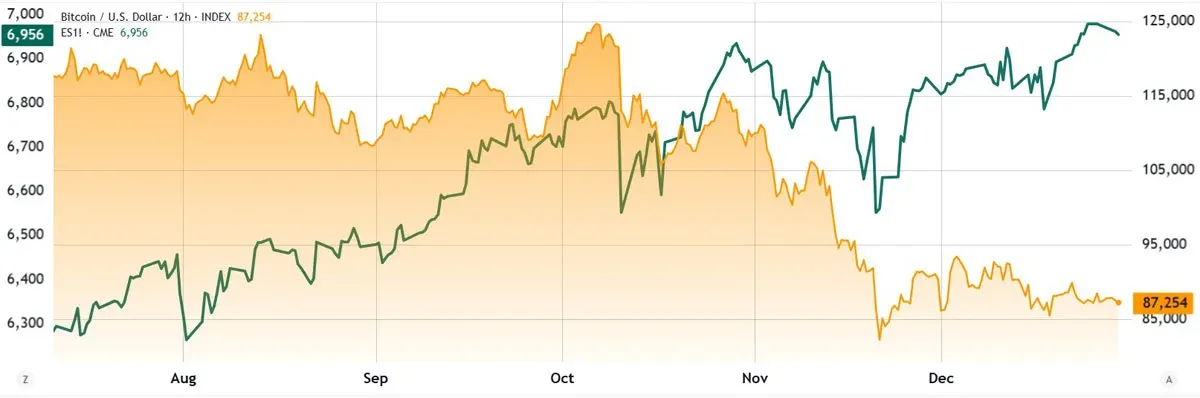
The U.S. Department of Labor reported a November unemployment rate of 4.6%, the highest in almost four years, which would normally increase market hopes for further Federal Reserve easing. However, persistent inflation risks have tempered those expectations. At the same time, the S&P 500 continued its climb in December, reaching a record peak and signaling optimism about corporate balance‑sheet improvements.
In this backdrop, if the Federal Reserve continues to lower its benchmark rate, cheap capital will further lift equity valuations, thereby weakening Bitcoin’s case as an independent safe‑haven asset.
Rising Demand for Traditional Safe‑Haven Assets
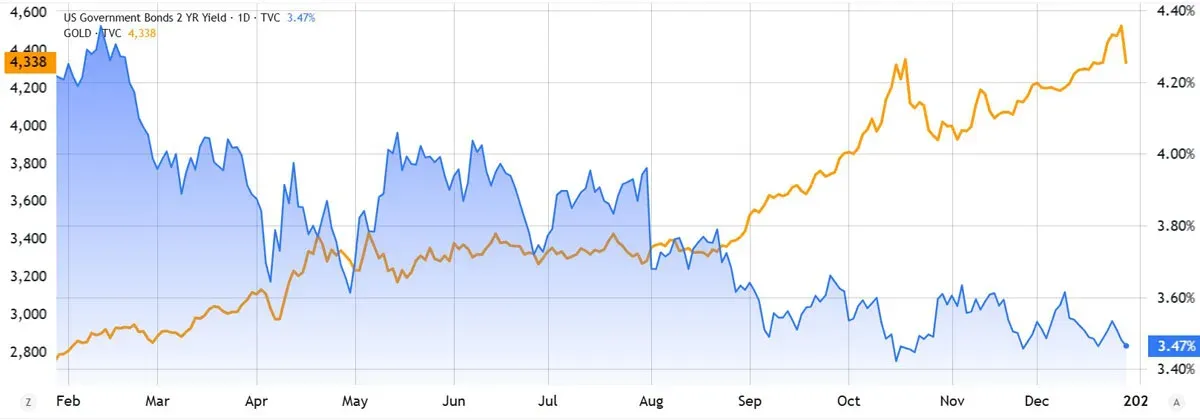
Gold held above $4,300 per ounce on Monday, while the two‑year U.S. Treasury yield fell to its lowest level since August 2022. The increased appetite for government‑backed assets reflects market concerns about global economic growth, especially given projections that the U.S. fiscal deficit will keep expanding in 2026, with roughly $10 trillion of debt needing to be rolled over over the year.
Jimmy Zhang, Chief Investment Officer of Rockefeller Global Family Office, told Reuters:
“We are living in an era of financial compression; governments worldwide are using every tool at their disposal to artificially depress bond yields.”
At the same time, a report cited by Yahoo Finance noted that massive investments in artificial‑intelligence infrastructure have already offset the negative impact of U.S. import tariffs on economic growth.
Bitcoin Falters Near the $90,000 Mark
On Monday, Bitcoin met significant sell‑side resistance as it approached the crucial $90,000 level, triggering the forced liquidation of nearly $100 million in leveraged positions. Faced with more stable alternatives such as gold and U.S. Treasuries, market participants began questioning whether Bitcoin has enough momentum to push toward $100,000 again.
The comparative chart of S&P 500 futures and Bitcoin/USD shows that the cryptocurrency struggled to hold key thresholds during this period, highlighting traders’ cautious stance on its store‑of‑value function amid global recession expectations.
Potential Implications of Declining Mining Hashrate
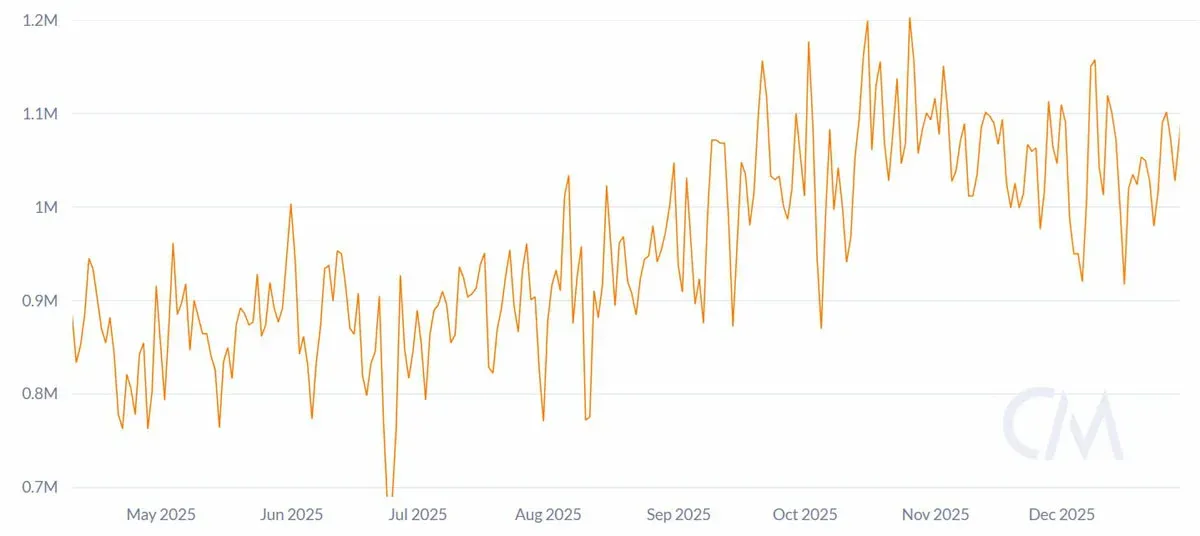
Bitcoin’s network hashrate peaked in late October and then slipped slightly, partly because a 1.3‑GW power facility—including Chinese mining capacity—was shut down. This contraction further squeezed miner margins, forcing some operations to take on additional debt or issue secondary equity to maintain liquidity.
Matt Siegel, Head of Crypto Research at VanEck, noted in a research note that historically, when hashrate declines for 30 consecutive days, Bitcoin’s 90‑day forward return remains positive about 65 % of the time, suggesting that the recent dip could be interpreted as a contrarian bullish signal.
Valuation Pressure on Digital‑Reserve Companies
With Bitcoin trading around $87,000, valuation multiples for publicly listed digital‑asset firms have noticeably compressed. According to data from BitcoinTreasuries, the market price of the MicroStrategy (MSTR US) strategy fund trades at roughly a 16 % discount to its net asset value, while Twenty One Capital (XXI US) is valued about 18 % below its reserve holdings. This valuation squeeze diminishes the incentive for these companies to raise capital through new share issuances.
Closing Thoughts: The Road Ahead for the Digital‑Gold Narrative
Whether Bitcoin can reclaim its “digital gold” status hinges on how investors reassess risk. At present, global worries about economic growth dominate, steering capital toward traditional safe‑haven tools. If this sentiment does not shift markedly over the medium to long term, Bitcoin’s upward trajectory may remain constrained.
For further analysis on the $90,000 barrier and the future of digital gold, follow the ongoing coverage from Bitaigen (比特根).
*Note for U.S. readers: when converting fiat to cryptocurrency on platforms that support both global and U.S. markets, be sure to use Binance.US rather than the international Binance site.*
*General reminder: cryptocurrency gains may be subject to tax in your jurisdiction; consult a tax professional for guidance.*
Related Reading
- Gold Prices Surge as Bitcoin Weakens: Safe‑Haven Shift Explained
- Bitcoin Price Jan 3 2024: Real‑Time $45,233 Chart, 24‑Hour Change & Weekly Trend
- 2026 Crypto Guide: Bitcoin Halving, Stablecoins & Tokens
💡 Register on Binance with referral code B2345 for the maximum trading fee discount. See Binance complete guide.



