
 Bitaigen Research
 Recently, Bitcoin's performance has been sluggish, and market sentiment has fluctuated violently alongside price swings. The Bitaigen editorial team believes that this current correction is a systemic digestion of multiple overlapping negative factors. By analyzing derivative market trends, the industrial transformation of miners, and shifts in the macro environment, we have summarized five core factors governing the current situation. This article aims to dig deeper into the underlying logic of the market decline, helping investors clear their minds amidst the fog and perceive the true nature of this adjustment.
Deep Analysis: Five Core Drivers Pressuring Bitcoin and Its Retracement to the $60,000 Level
Recently, Bitcoin (BTC) has shown weakness under the interplay of multiple bearish factors, with its price recording a significant 19% drop within a single week, at one point testing the critical psychological threshold of $60,000. Unlike previous crashes triggered by a single sudden event, this adjustment resembles a systemic digestion process driven by both internal market pressures and shifts in the macroeconomic landscape. For global investors managing portfolios in USD, whether through SEPA transfers in Europe or SWIFT for international settlements, understanding these drivers is essential.
The following are the five key factors contributing to Bitcoin's recent extreme volatility and downward pressure:
1. Intense Deleveraging in the Derivatives Market
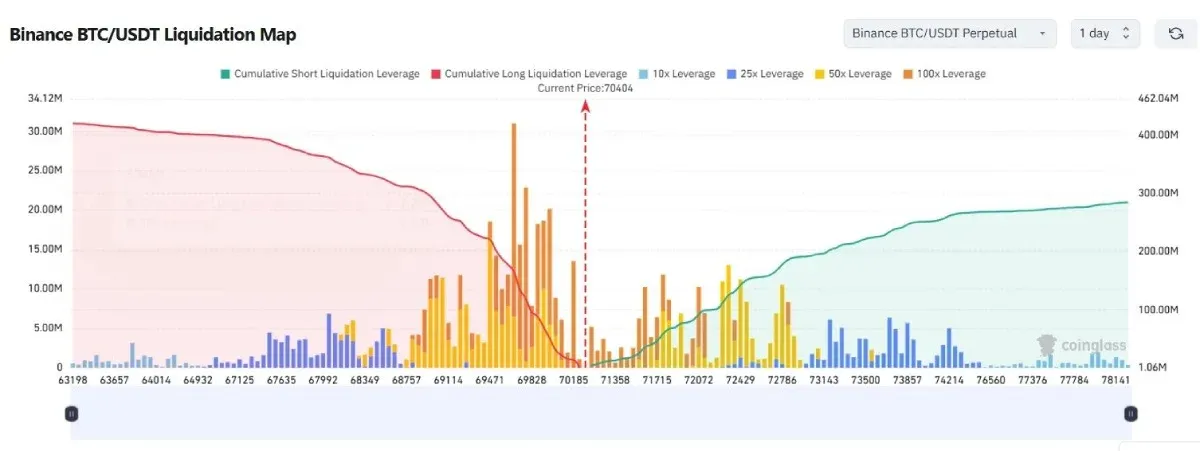
The primary driver putting pressure on the price is the large-scale exit of capital from the derivatives market. Data shows that Open Interest (OI) for Bitcoin futures contracted by more than 20% within seven days. If we look at a longer timeframe, current leverage levels have retreated by more than 45% from the peak of over $90 billion seen in October 2025.
During this period, Bitcoin futures positions valued at approximately $2 billion to $2.5 billion were either forcibly liquidated or voluntarily closed. This synchronized decline in price and leverage, while creating immense selling pressure in the short term, reflects a necessary "detoxification" of the market—stripping away excessive speculation rather than falling into a state of disordered panic. For traders in the United States, it is important to note that regulatory frameworks require the use of Binance.US rather than the global Binance platform to manage such volatility.
2. Miner Sell-offs Due to Underwhelming AI Returns on Investment
The second unfavorable factor stems from the intersection of the crypto mining industry and the Artificial Intelligence (AI) sector. To diversify their revenue streams, many large-scale Bitcoin mining firms previously shifted their business focus toward providing computing power infrastructure for AI.
However, as market skepticism regarding the Return on Investment (ROI) of AI has intensified, some of these transitioning mining firms have faced tightening cash flows. To maintain daily operations and optimize their balance sheets, these miners have had to tap into their inventories, selling significant amounts of Bitcoin on the spot market. This sudden increase in supply, coupled with fragile market sentiment, has dealt a direct blow to prices. Furthermore, investors should be aware that crypto gains realized from such sales may be taxable depending on local jurisdictions.
3. Trust Crisis Triggered by Project Governance Transparency
Recently, some crypto projects associated with U.S. political backgrounds have exposed issues regarding opaque governance. In particular, rumors involving internal private equity transfers have severely shaken investor confidence.
Institutional investors have become particularly cautious regarding assets that lack rigorous information disclosure standards. They fear that compliance risks at the governance level could trigger regulatory intervention or forced liquidations in the future. This uncertainty has hindered the inflow of new capital and weakened the market's support levels. For those moving large sums via SWIFT for institutional entry, these transparency concerns represent a significant barrier to entry.
4. The Potential Threat of Quantum Computing to Cryptographic Protocols
Although the threat of quantum computing to blockchain is still viewed as a long-term issue within the technical community, the psychological anxiety it triggers on the investment side cannot be ignored. Recently, discussions about the possibility of quantum computers cracking existing encryption algorithms have surged within tech-finance circles.

Some research reports suggest that if the technology achieves a breakthrough, approximately 20% to 50% of circulating Bitcoin could face security risks. This concern has permeated traditional financial sectors in the U.S. and Europe, leading some risk-averse capital to flow out of digital assets that rely on traditional cryptographic algorithms.
5. Profit-Taking Sentiment Under the Four-Year Cycle Law
From a historical perspective, Bitcoin has always been influenced by the psychology of the "four-year cycle." After the periodic gains brought about by the halving effect, the market typically enters a deep correction phase to rectify overheated indicators and establish a new price foundation.
When the price hits high-level resistance zones, a large number of long-term holders choose to "lock in" their profits. Although the market previously hoped that inflows from spot Bitcoin ETFs would break this cycle, current price action proves that periodic collective behavioral logic still dominates market pricing.
---
Current Market Volatility and Risk Assessment
Under the combined influence of the aforementioned factors, Bitcoin has continuously broken through multiple technical support levels over the past week.

On-chain activity shows that trading volume significantly expanded during the decline, indicating that both retail and institutional investors are undergoing a collective adjustment of their positions.
Currently, Bitcoin is attempting to find support after its sharp drop. A signal worth noting is that the total Open Interest on derivatives exchanges has plummeted from $61 billion to $49 billion. This $12 billion disappearance in positions means that speculative "hot money" in the market has been purged on a large scale.
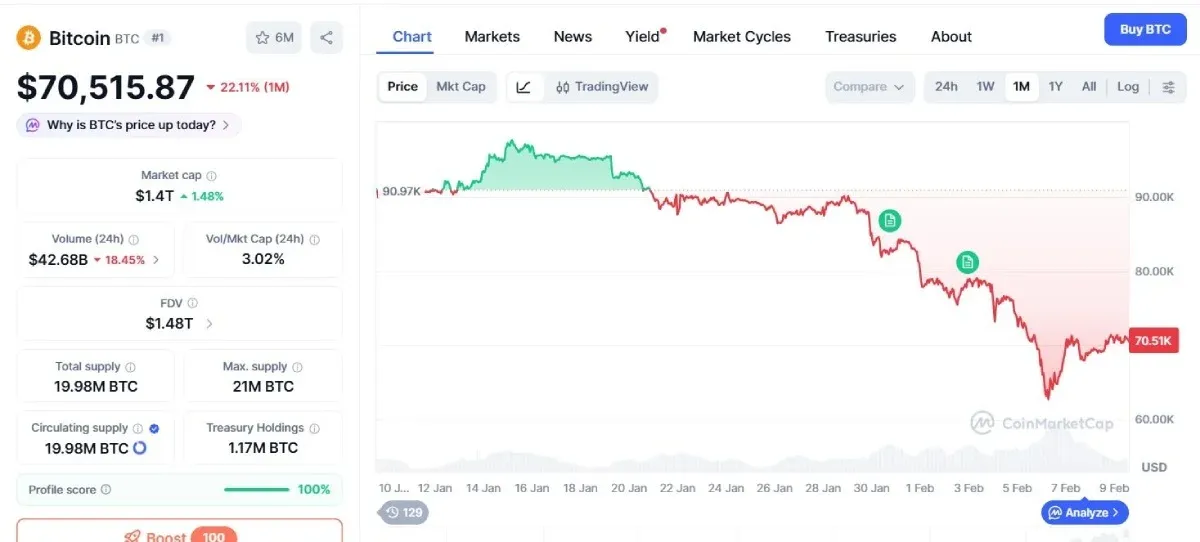
While market sentiment remains cautious, analysts generally believe that liquidating high-leverage positions is a necessary stage for the market to move toward a healthier state. However, if demand in the spot market fails to follow up in a timely manner, Bitcoin still faces the risk of further retracement in the short term.
Logical Outlook for Market Recovery in 2026
Bitcoin's retreat to the $60,000 range is the result of the combined forces of technical deleveraging and macroeconomic fundamental pressure. Although the long-term threat of quantum computing and the selling pressure from mining companies remain "swords of Damocles" hanging over the market, the significant decrease in leverage has built a more solid bottom for the market.
For long-term holders with an investment horizon of 1-2 years, the current adjustment provides a window to observe the market bottom. In the future, the stabilization of on-chain signals and the normalization of trading volumes will be key indicators for judging whether the market has begun the next phase of recovery. After stripping away the hot money, the crypto market is expected to meet the challenges and opportunities of 2026 on a more rational basis.
Related Reading
- Howard Lutnick Calls Bitcoin a Commodity Like Gold & Oil
- Crypto Market Deleveraging vs. RMB Asset Safe-Haven Rise
- Bitcoin $2.3B Crash: Largest BTC Market Capitulation Since 2021
💡 Register on Binance with referral code B2345 for the maximum trading fee discount. See Binance complete guide.



