
 Bitaigen Research
 With the sudden escalation of the Middle East situation and the high uncertainty surrounding U.S. macro‑policy, markets are once again focusing on safe‑haven assets.
In the current environment of overlapping global political and macro‑economic uncertainty, the Bitcoin safe‑haven narrative remains alive, but its price action has clearly underperformed gold. Therefore, when evaluating safe‑haven assets, investors need to consider the distinct risk‑return characteristics of each.
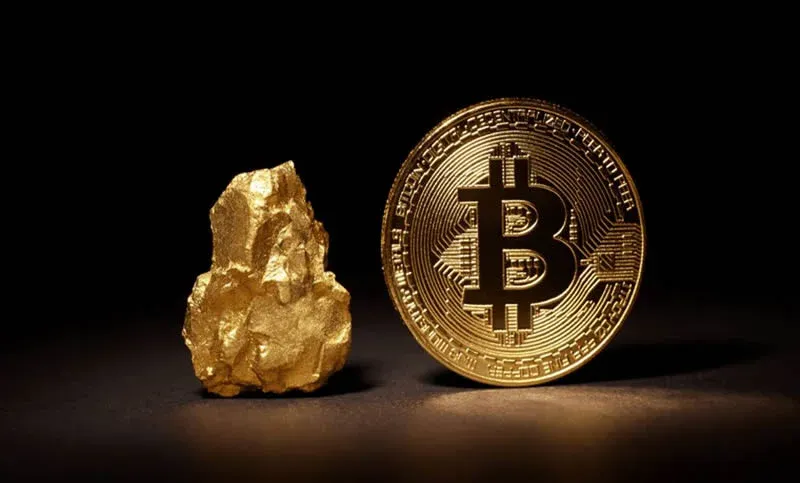
In this article we dissect the performance differences between gold and Bitcoin as safe‑haven assets amid current geopolitical tensions and Federal Reserve policy uncertainty. By comparing charts and conducting technical analysis, we help readers clarify the risk‑return profiles of the two and assess allocation ideas for turbulent periods.
Comparison of Gold and Bitcoin Markets
Bitcoin Market Analysis
Since breaking the $110,000 barrier, BTC’s short‑term momentum has weakened, and the asset has entered a high‑level consolidation phase. Volatility has broadened slightly, but the overall pattern remains range‑bound.
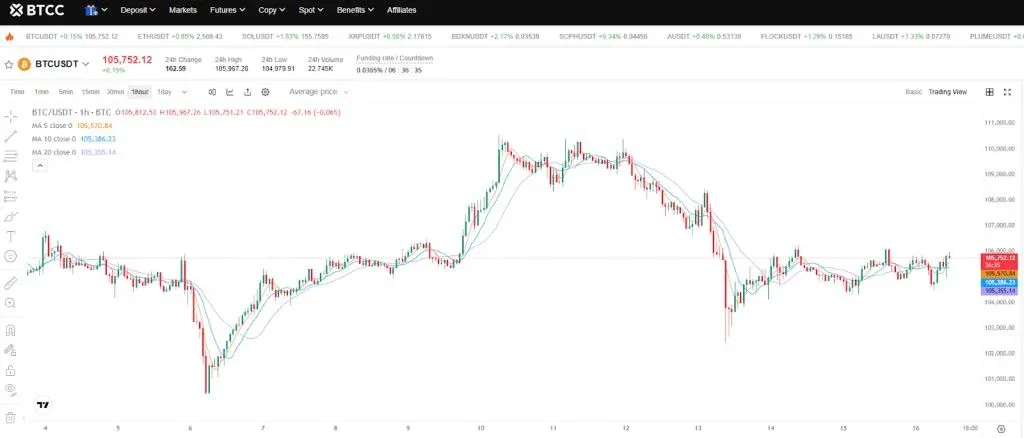
BTCUSDT price chart
Spot Gold
Gold has maintained a steady upward trajectory, currently hovering around $3,450 per ounce and has already touched this year’s high.
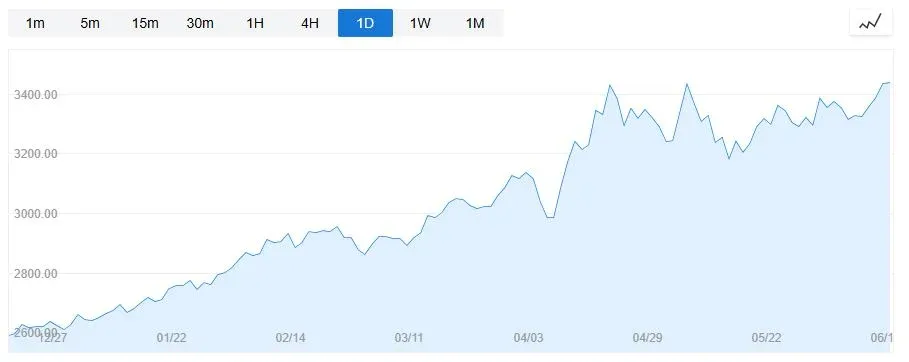
XAUUSD price chart
Does Bitcoin Still Have a Safe‑Haven Narrative?
The safe‑haven logic for gold stems from its traditional role as an anchor asset: buying pressure intensifies when geopolitical risk rises. Recently, Israel’s airstrikes on Iran sharply deteriorated the Middle‑East situation, and historical data show that such conflicts typically push gold prices higher. Gold’s status as a reserve asset for central banks worldwide remains solid. The European Central Bank’s report on the 11th noted that gold accounted for 20 % of global official reserves last year—second only to the U.S. dollar’s 46 %, ahead of the euro’s 16 %, and that total holdings are approaching the post‑World‑II Bretton Woods peak.
From an investor‑type perspective, gold demand comes mainly from central banks, pension funds and sovereign wealth funds, which tend to act rationally. Their buying and selling is relatively moderate, allowing gold prices to remain robust in most scenarios.
In contrast, crypto assets represented by Bitcoin derive their “safe‑haven” characteristic more from the macro‑monetary layer. The narrative can be framed as a “hedge against fiat‑currency depreciation” or an “inflation‑resistant asset.” In a globally accommodative monetary environment, this logic still retains some support.
Further reading: Who makes a better investment in 2025, Bitcoin or gold?
Outlook
The Federal Reserve has not yet signaled a clear rate‑cut path, and inflows into ETFs have slowed, leaving Bitcoin without strong short‑term buying momentum. After reaching a recent peak, the price has entered a pull‑back and consolidation phase.
Bitcoin’s market sentiment is primarily driven by exchange‑listed ETF flows and on‑chain activity; changes in risk appetite are transmitted quickly. Consequently, as long as the macro environment remains largely unchanged, profit‑taking by large‑scale holders is likely to rise, creating short‑term arbitrage dynamics.
On the macro side, May U.S. CPI came in below expectations, boosting optimism for rate cuts later in the year. Interest‑rate futures now embed an expectation of two cuts within the calendar year, with a 76.3 % probability of a September cut. As the first cut approaches, crypto assets positioned as “inflation‑resistant” may continue to benefit.
In addition, tariff‑driven price transmission to consumer goods is still ongoing. BTCC analysts forecast that the Middle‑East conflict could lift oil prices, thereby sustaining inflationary pressure in the United States. Should the U.S. economy drift into prolonged stagflation, the broader macro backdrop would be favorable for crypto assets.
The above provides the latest comparative analysis of gold and Bitcoin market movements as well as an update on Bitcoin’s safe‑haven narrative. For more comparative insights, follow the reports from Bitaigen (比特根).
Related Reading
- Crypto stress‑test slashes BTC & ETH, hurting balance sheets
- Iranian Rial Collapse Triggers Bitcoin Surge as Safe‑Haven
- Gold vs. Bitcoin 2026: Why Gold Leads as a Safe-Haven Asset
💡 Register on Binance with referral code B2345 for the maximum trading fee discount. See Binance complete guide.



