
 Bitaigen Research
 Currently, networks are mainly divided into decentralized networks and centralized networks, and this article focuses on the core features of the former.
The main characteristics of decentralized networks include traceable and immutable data, distributed control, disintermediation, consensus mechanisms, support for DApps, as well as resistance to censorship and failures.
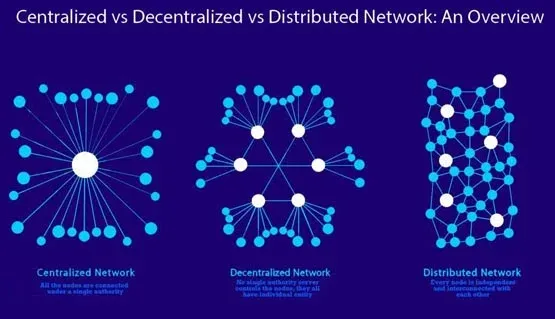
The Bitaigen editorial team believes that decentralized networks are the foundation of blockchain technology. This article systematically outlines its core features from the perspectives of data immutability, distributed control, disintermediation, and consensus mechanisms, helping readers quickly clarify concepts and understand real‑world use cases. We will combine case studies for an in‑depth analysis, making it worth a careful read.
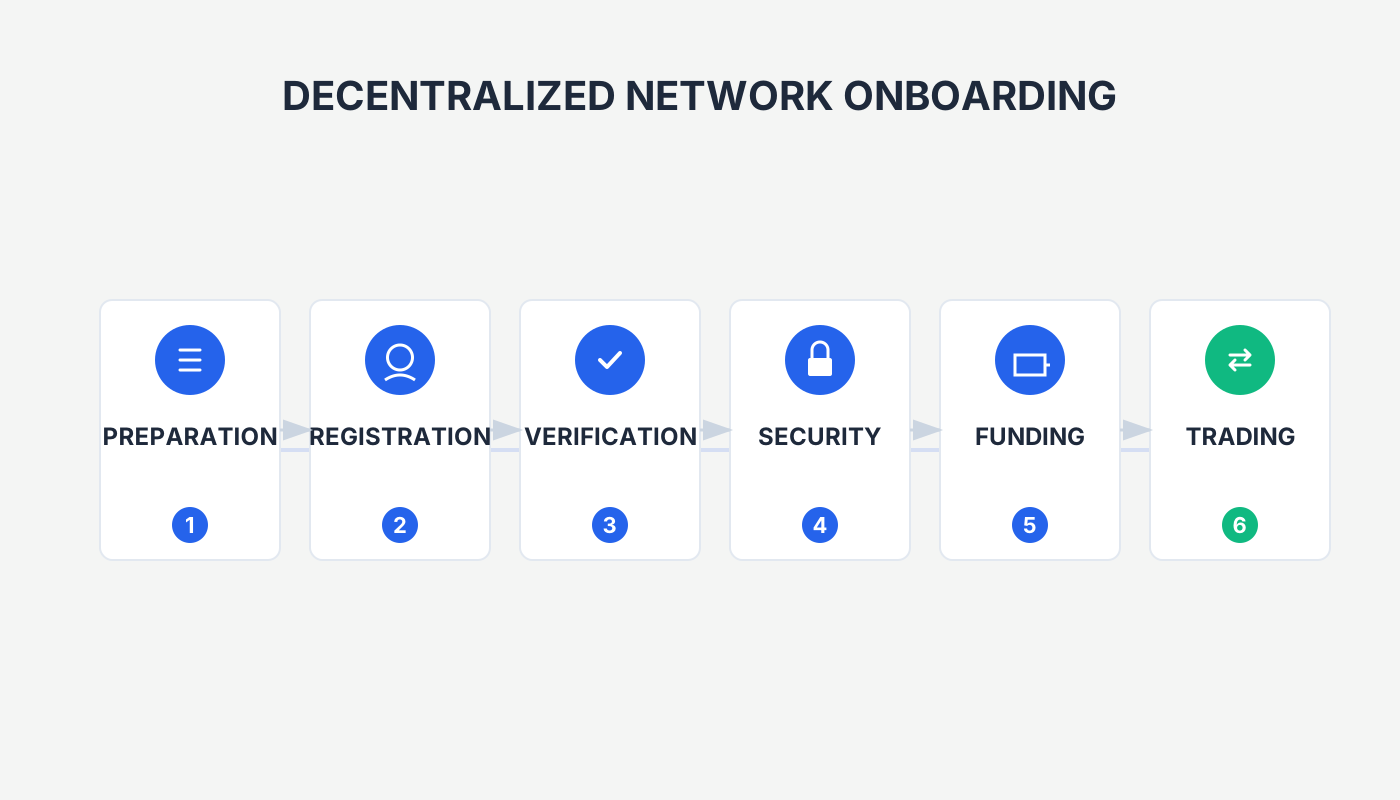
What are the characteristics of decentralized networks?
Different decentralized networks may adopt various consensus mechanisms, governance models, and design principles, but they generally share the following common traits:
- Traceable and immutable data
Decentralized networks use a distributed ledger (such as a blockchain) to store data. Every write operation creates an unchangeable record, providing transparent traceability and security guarantees.
- Distributed control
The network has no single central entity; multiple nodes jointly participate in management and decision‑making, and no single node possesses absolute control.
- Disintermediation
By connecting peers directly, traditional intermediaries are eliminated, lowering transaction costs and increasing efficiency while reducing reliance on trusted third parties.
- Consensus mechanism
The network relies on consensus algorithms to ensure that all nodes agree on the data state and ordering, maintaining consistency without a central authority.
- Decentralized applications (DApp)
Developers can deploy DApps on the network; these applications run on‑chain, interact directly with users, and do not require centralized service providers.
- Censorship‑ and fault‑resistance
Because there is no central control, governments or other institutions find it difficult to censor or intervene in the network. Redundant node designs also ensure that a single point of failure does not affect overall operation.
Application scenarios of decentralized networks
1. Social media
1) Ride‑hailing (e.g., Didi)
Unlike traditional public transport with fixed stops, ride‑hailing allows users to request a ride from any reachable location. The user becomes the “center” of the interaction, while each vehicle providing the service acts as a micro‑center.
2) Microblogging (e.g., Sina Weibo)
When users post content they act as the information hub; when they receive content they become the information receiver, illustrating a dynamic weakening of the central role.
2. Financial services
1) Bitcoin
As the first decentralized cryptocurrency, Bitcoin uses blockchain technology to enable secure transfers without any third‑party involvement, establishing a complete peer‑to‑peer monetary flow system.
2) Ethereum (Ether)
Ether is the native token of the Ethereum platform and is regarded as an upgraded version of Bitcoin. Building on Bitcoin’s foundation, Ethereum addresses scalability challenges; developers pay network resource fees with Ether to support the operation of various decentralized applications.
The above provides a systematic overview of the characteristics of decentralized networks. For deeper insights into additional use cases, please follow Bitaigen (比特根) and its related sections.
Related Reading
- Smart Contracts Explained: Concepts, Features, Uses & Risks
- Public Blockchain for Digital Currency: Core Concepts, Consensus Mechanisms & Ec
- Public vs Private Blockchains: Key Differences and Consortium hybrids
💡 Register on Binance with referral code B2345 for the maximum trading fee discount. See Binance complete guide.



