
 Bitaigen Research
 As scientific and technological progress continues, decentralized networks have drawn growing attention from companies and are increasingly employed to build secure and reliable network services. A decentralized network is an architecture that lacks a central governing entity or central server. Compared with traditional centralized networks, it is more secure, more reliable, and offers superior scalability, allowing effective data management and protection while boosting transmission efficiency.
In this article we systematically explain the core concepts, technical principles, and ecosystem advantages of decentralized social networks, helping readers grasp their fundamental differences from traditional platforms and understand how blockchain empowers data security and user autonomy. Through case studies and trend analysis, you will gain the key perspectives needed to build or participate in such platforms—worth a careful read.
What Is a Decentralized Social Network?
A decentralized social network is a peer‑to‑peer social platform built on blockchain technology. It has no central server; data are stored and transmitted by users’ own nodes, and cryptographic incentive mechanisms ensure security and privacy.
From an internet‑evolution standpoint, decentralization represents a new form of content production and social interaction that differs from the conventional centralized model. Its advantage lies in the presence of multiple participants forming a composite feedback loop within the network, including core protocol developers, complementary network developers, third‑party application developers, and service‑operation providers. Token‑based incentive schemes amplify these loops—much like the ecosystems of Bitcoin and Ethereum—accelerating the growth of crypto communities (though they can also bring downsides, such as Bitcoin mining’s high electricity consumption).
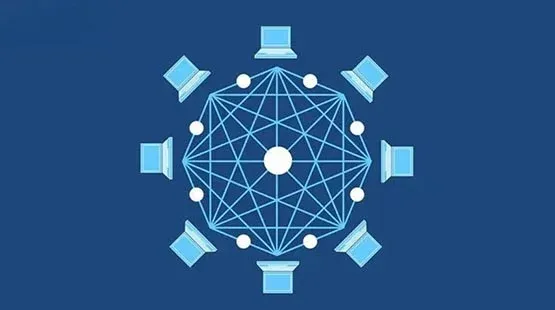
Decentralized networks use specific protocols to construct a peer‑to‑peer topology. All nodes handle data transmission and communication autonomously, without a central authority’s scheduling. This architecture reshapes how traditional centralized networks operate, making the network more secure, reliable, and scalable, which is why it has attracted considerable interest amid rapid technological advancement.
Application Analysis of Decentralized Social Networks
Typical applications of decentralized social networks are most evident in social media and financial services. Below are several common examples:
- Didi Ride‑Hailing
- Traditional public transport requires passengers to go to fixed stations, whereas Didi enables “user‑as‑center” via mobile devices. Any reachable location can initiate a ride request, and the vehicle acts as a service‑providing node, embodying a decentralized travel model.
- Sina Weibo
- On the Weibo platform, the sender and receiver of information alternate as the “center.” Users can publish content anytime, anywhere, and the dissemination does not rely on a single server but is completed through distributed forwarding by user nodes, illustrating a weakened central point.
- Bitcoin
- As the first decentralized cryptocurrency, Bitcoin’s blockchain is a distributed ledger where transactions are directly verified and recorded by network nodes, eliminating the need for third‑party intermediaries and forming a complete monetary transfer system.
- Ethereum (Ether)
- Ethereum addresses scalability limitations of Bitcoin and provides a smart‑contract platform. Developers building applications on this platform must pay Ether to cover computational resource costs, creating a decentralized application ecosystem.
The above content summarizes “What is a decentralized social network?” and provides a detailed overview of its primary use cases. For more information on decentralized social networks, feel free to follow Bitaigen’s (比特根) other related articles!
Related Reading
- Features of Decentralized Networks: Traceability & Resilience
- Public vs Private Blockchains: Key Differences and Consortium hybrids
- Blockchain Impossible Triangle: Balancing Decentralization, Security & Scalabili
💡 Register on Binance with referral code B2345 for the maximum trading fee discount. See Binance complete guide.



