
 Bitaigen Research
 Bitcoin Market Outlook for 2026: Bear‑Market Bounce or the Dawn of a New Bull Run?
The Bitcoin market in 2026 sits at a pivotal crossroads where technical, on‑chain, institutional, and regulatory forces intersect. After a roughly 30 % correction at the end of 2025, the price has been hovering around $90,000, and both market sentiment and capital flows are showing subtle shifts. Investors are debating whether this reflects a brief respite in the bear market or the first signs of a new upward swing.
In this article we break down Bitcoin’s current technical landscape, on‑chain metrics, institutional positioning, and regulatory developments. We also dive deep into the nuanced changes in market sentiment to help you judge whether we are witnessing a short‑term rebound or the prelude to a fresh rally. We combine indicators from multiple data platforms to present a panoramic view of on‑chain activity, options positions, and fund flows.
1. Market Situation and Core Controversy
Bitcoin is currently trading at roughly $92,000, down about 26 % from its October 2025 peak of $126,000. The nature of this bounce is hotly contested: Is it a “dead‑cat” rebound in a bear market, or the starting point of a new bull cycle?
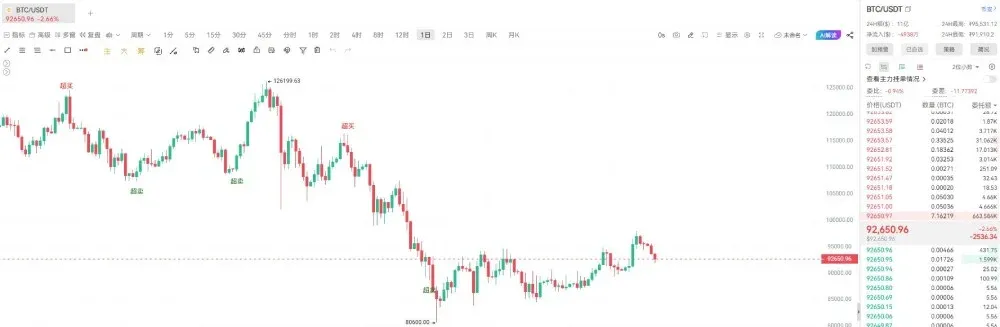
CryptoQuant analyst Julio Moreno notes that, according to the firm’s “Bull‑Market Score Index”—which aggregates network activity, investor profit‑and‑loss, and asset demand—the cryptocurrency entered bear‑market territory in early November. Conversely, Glassnode’s report dated January 9 indicated that the market showed structurally stable signs at the start of 2026, with the pressure from profit‑taking noticeably easing. By the end of December 2025, realized profits had dropped from over $1 billion per day in Q4 to $183.8 million per day.
At the same time, options market dynamics are revealing a subtle shift in sentiment. At the beginning of the year, the proportion of systematic volatility‑selling contracts weakened, while exposure to upside volatility grew. Call‑option purchases accounted for 30.8 % of total activity, suggesting that part of the trading community is moving from defensive hedging toward a more optimistic, bullish stance.
2. Key Points of Divergence: Five Battlegrounds
Technical Watershed
The 365‑day moving average remains the focal point of the long/short battle. Bitcoin’s price is edging toward this long‑term average, and historical experience shows that whether the price can hold above the line is crucial for distinguishing a technical bounce from a genuine trend reversal.
On‑Chain Supply‑Demand
Profit‑taking pressure has eased, but selling power remains significant. A short‑term holder cost‑basis model shows that the current price is near the model’s mean—about $99,100—a level that carries interpretive weight for future price direction.
Institutional Behavior
In November 2025, U.S. spot Bitcoin ETFs recorded a net outflow of $3.4 billion. However, in recent weeks ETF cash flows have turned clearly net‑in, indicating that institutional participants are shifting from net distributors to marginal accumulators.
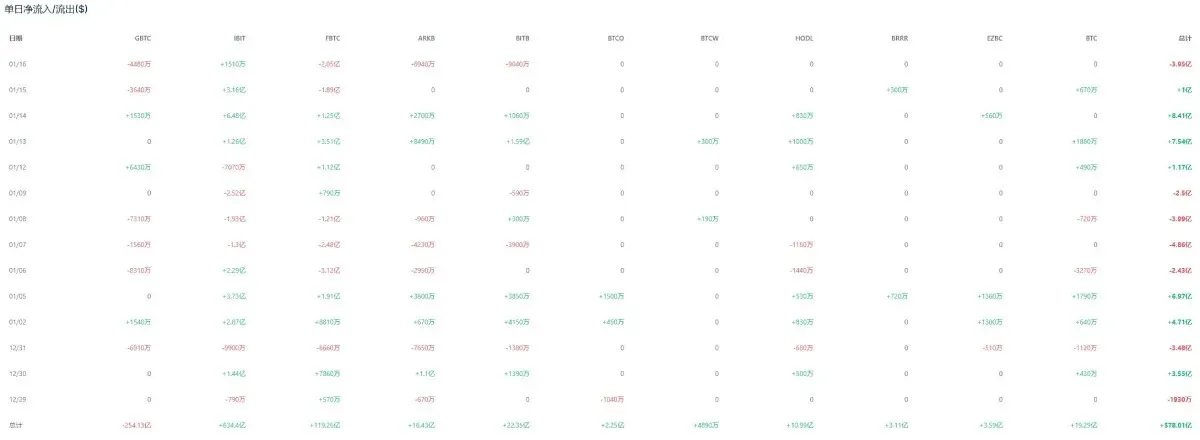
Cycle Theory
The traditional four‑year halving‑cycle model is being questioned. Tiger Research senior analyst Ryan Yoon argues that price drivers have moved beyond pure supply metrics toward a “latent monetary expansion” battle involving policy expectations and liquidity conditions.
Regulatory Policy
In Q1 2026 the United States is expected to pass the Clarity Act, with broader crypto legislation anticipated to be signed early in the year. This would provide the market with unprecedented regulatory certainty.
3. Bear‑Side Argument: Data Pointing to Continued Downtrend
CryptoQuant’s research supplies systematic bearish evidence. Their model forecasts that the bear‑market bottom could settle in the $56,000‑$60,000 range, a zone derived from realized price levels and historical cycle patterns. Although the decline would still be sizable, the drawdown is narrower than the typical 70‑80 % corrections seen in past bear markets, possibly indicating a maturing market.
On‑chain data from ChainCatcher (compiled on December 22) raised alerts across all five of its key metrics: demand growth is driven mainly by leverage rather than spot buying, ETF inflows are slowing, and medium‑size holders (100‑1,000 BTC) are trimming positions. Should Bitcoin stay below the short‑term holder cost‑basis, confidence‑driven demand could weaken further, raising the risk of a deeper bearish extension.
4. Bull‑Side Argument: Structural Support and Long‑Term Tailwinds
Contrasting the caution of the bearish camp, K33 Research took an upbeat stance in its *2025 Year‑In‑Review* report, forecasting that Bitcoin could outperform equity indices and gold in 2026. Their optimism rests on several structural pillars:
- Macro Outlook: Market consensus anticipates that after the 2024 U.S. presidential re‑election, a dovish Federal Reserve chair will be appointed, sustaining accommodative monetary policy.
- Regulatory Outlook: The first‑quarter Clarity Act is expected to be approved, complemented by broader crypto legislation that could clear the path for large‑scale institutional entry.
- Institutional Front: Morgan Stanley plans to allow investment advisors to allocate 0‑4 % of client portfolios to Bitcoin ETFs starting January 1 2026; retail broker **E*Trade** aims to launch crypto trading services in the first half of the year. These moves are viewed as core drivers for 2026.
5. Potential Catalysts and Risk Outlook
Looking ahead, if U.S. 401(k) retirement plans open a Bitcoin allocation window, the market could absorb a substantial new demand stream weighted between 1 % and 5 % of plan assets, representing a direct bullish catalyst. Simultaneously, corporate treasuries are shifting from sporadic, opportunistic purchases toward more structural demand. Glassnode notes that while current corporate holdings remain fragmented and event‑driven, the net corporate treasury absorption for the year could reach 150,000 BTC.
Downside risks remain pronounced. CryptoQuant highlights critical support zones around $70,000 and $56,000. Moreover, a large concentration of positions sits between $92,100 and $117,400, forming a natural upward resistance barrier.
6. Finding Clear Signals in a Foggy Landscape
The 2026 Bitcoin price action may no longer exhibit the clear‑cut bull‑bear alternation of previous cycles; instead, we could see intense volatility within a key range, with bulls and bears repeatedly pulling the price back and forth. A Binance report describes the current environment as “financially repressed,” noting that U.S. policy is shifting from traditional monetary tightening to a blend of fiscal expansion and regulatory tools aimed at easing borrowing costs.
For investors, decision‑making now requires patience and granularity. Relying solely on the historic “post‑halving rally” narrative is insufficient. Focus should be placed on two pivotal signals:
- Can Bitcoin consistently stay above the short‑term holder cost‑basis and the 365‑day moving average?
- Are ETF net inflows forming a steady, upward trend?
Analyst Peter Chung observes: “While market narratives evolve, one of the key determinants of long‑term industry growth is the Clarity Act. Policy will be the ultimate key to unlocking today’s market riddles.” Until regulatory clarity arrives, the market is likely to continue oscillating between doubt and optimism, technical rebounds and structural buying. Each successful breach—or fallback—from the critical moving averages could serve as the starting point for the next price leg.
Note for U.S. readers: When accessing cryptocurrency exchanges, U.S. residents should use Binance.US rather than the global Binance platform.
Tax reminder: Gains from cryptocurrency transactions may be subject to tax in your jurisdiction; consult a tax professional for advice relevant to your local laws.
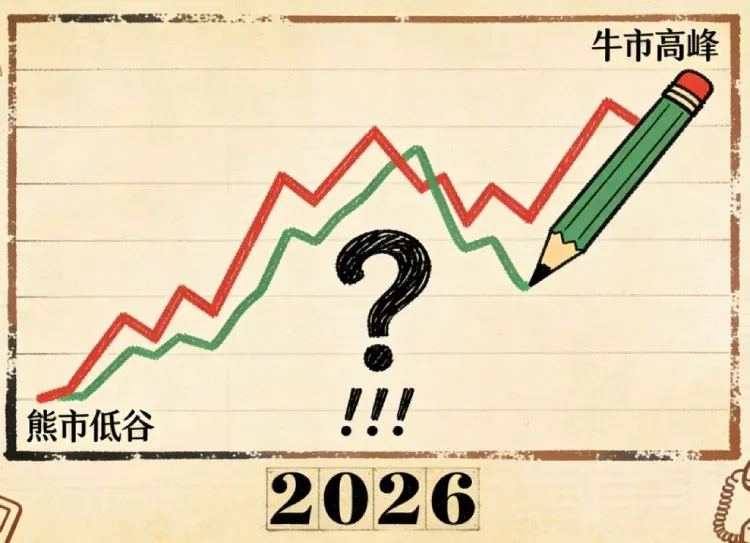
Bitcoin is once again approaching a technical threshold reminiscent of 2022, but the fundamentals have shifted: exchange‑held balances sit at multi‑year lows, while a larger share of Bitcoin is locked in ETFs and long‑term holder wallets. Perpetual‑contract funding rates have fallen to their lowest level since December 2023, indicating a sharp cooling of derivatives market enthusiasm. The market structure has transitioned from a retail‑driven sentiment cycle to a new paradigm dominated by institutions, policy, and macro‑liquidity.
That concludes the comprehensive overview of “2026 Bitcoin (BTC) Market Analysis: Bear‑Market Bounce or Bull‑Market Eve?” For more Bitcoin‑related insights, search for past articles by Bitaigen (比特根) or continue browsing the related pieces below. We appreciate your ongoing interest and support!
Related Reading
- Bitcoin Sharpe Ratio Hits Historic Lows as Bear Market Turns
- Why Bitcoin Struggles to Break the $100,000 Resistance Level
- Bitcoin Wallets Explained: Keys, Security & Address Generation
💡 Register on Binance with referral code B2345 for the maximum trading fee discount. See Binance complete guide.



