
 Bitaigen Research
 January 26 — The global cryptocurrency market continued its sluggish trajectory. Bitcoin slipped from $88,000 to roughly $86,000, and after reaching its September 8 peak it has now posted six consecutive bearish days, marking the longest losing streak since November 2024. At the same time, Ethereum also corrected, slipping below the $2,800 threshold after hovering around $3,000, while altcoins overall displayed a downward bias.
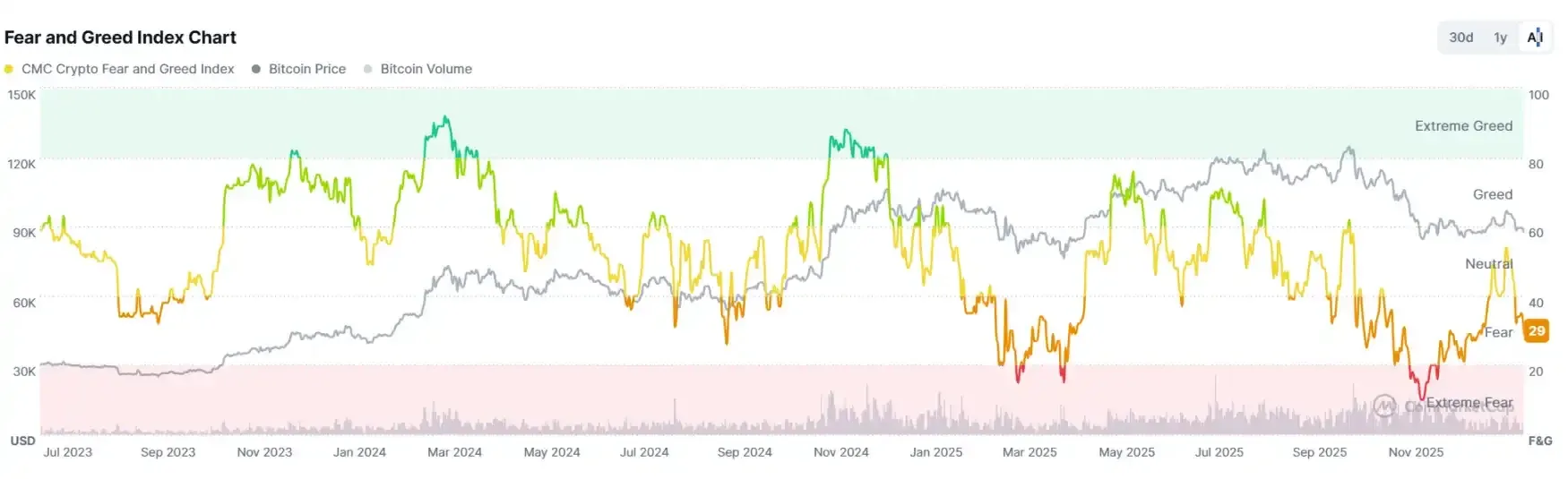
On the macro side, traditional financial markets are under pressure as well. All three major U.S. equity indices closed lower this week: the Dow Jones Industrial Average fell 285.30 points (about 0.58 %) to 49,098.71; the S&P 500 edged up 2.26 points (0.03 %) to 6,915.61; and the Nasdaq gained 65.23 points (0.28 %) to 23,501.24. Nevertheless, the weekly trend remains negative: the S&P 500 slipped 0.36 % for the week, the Dow 0.53 %, and the Nasdaq 0.06 %. The U.S. Dollar Index also weakened, posting a single‑day decline of 0.91 %. In contrast, precious metals rallied against the backdrop of risk aversion, with gold quoted at $5,041.39 per ounce and silver at $107.8 per ounce—both setting fresh all‑time highs. Gold‑backed ETFs saw a 2.5 % increase in holdings over the week.
In this article we dissect the drivers behind Bitcoin’s recent breach of a key support level, dive deep into retail sentiment versus whale activity, and, by weaving in the broader macro‑financial environment, evaluate whether the current market conditions support a “buy‑the‑dip” rationale. The full text provides data‑driven perspectives and risk warnings to help readers reach a more measured judgment.
BTC and ETH Spot ETFs Experience Heavy Net Outflows
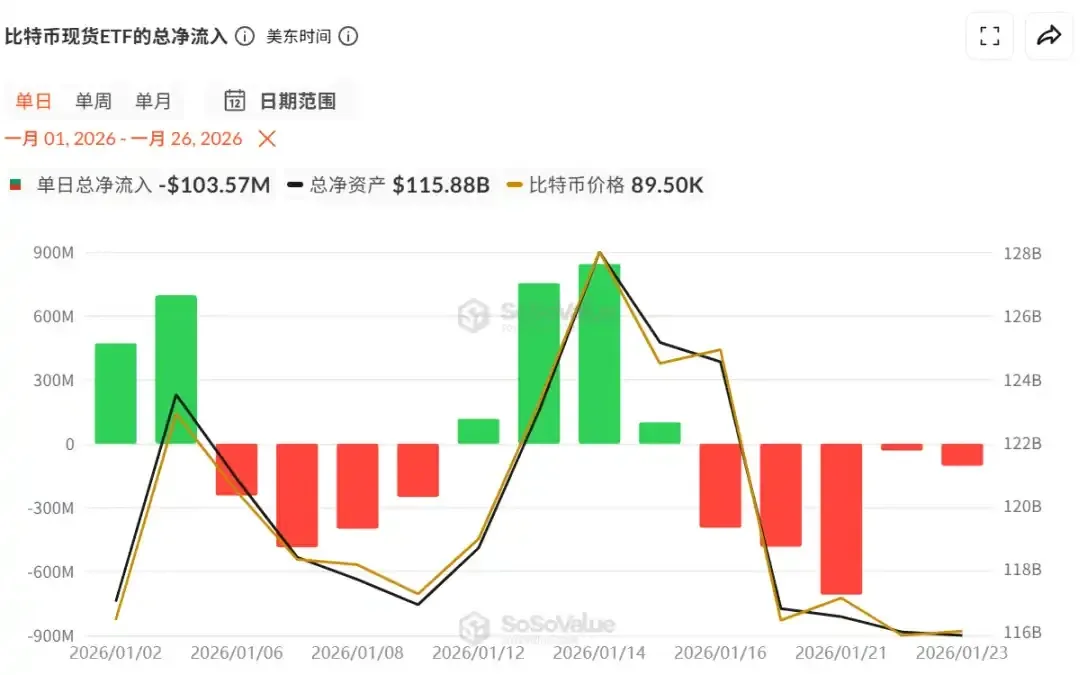
Looking at ETF cash flows, spot Bitcoin ETFs have shown a mixed pattern of inflows and outflows since the start of January. Beginning on January 16, a five‑day streak of net outflows emerged, highlighted by a single‑day net outflow of $700 million on January 21. Between January 16 and 23, the only day with a relatively modest outflow was January 22, when $32.11 million left the fund; on all other days the net outflow exceeded $100 million.
Ethereum’s spot ETF performed similarly poorly. Starting January 20, it recorded four consecutive days of net outflows, with the largest single‑day outflow reaching $229.95 million.
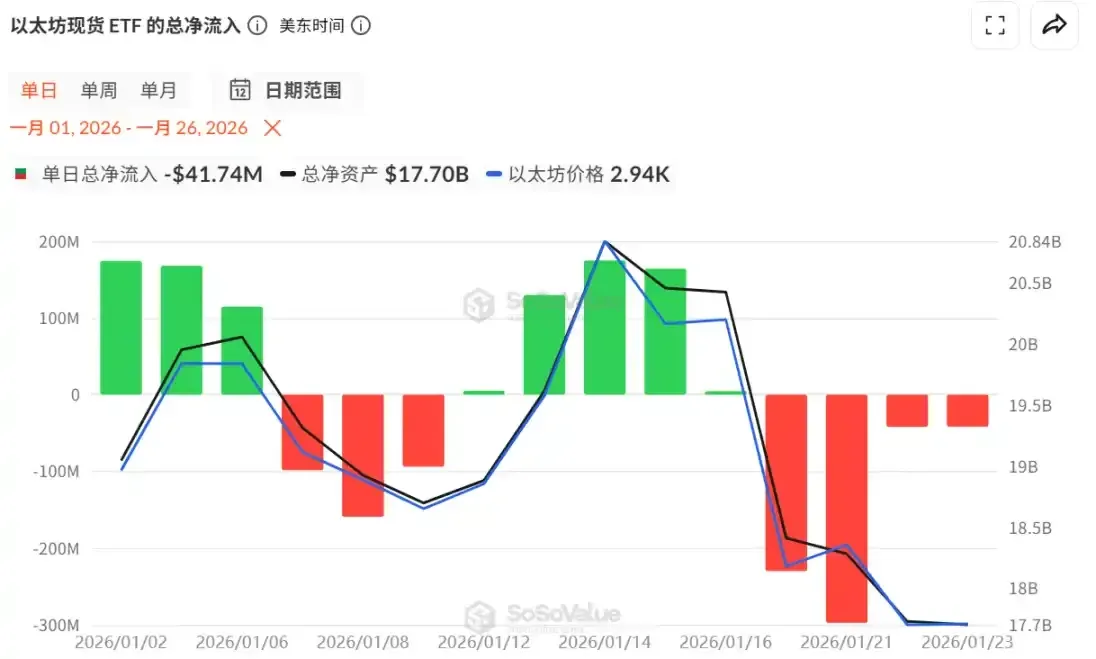
Overall, the pronounced withdrawal of capital from these ETFs adds further downward pressure on the price momentum of both BTC and ETH.
Unstable Middle‑East Situation and Tech‑Giant Earnings Roll Out This Week
Geopolitically, on January 23 former U.S. President Donald Trump announced aboard Air Force One that a 25 % tariff would be levied on all nations conducting trade with Iran—a move that functions effectively as a monetary sanction. Two days later, on January 26, the U.S. Navy’s USS Abraham Lincoln carrier strike group arrived in the Middle East and began operations under the direction of United States Central Command; the U.S. Air Force also scheduled a multi‑day readiness exercise in the region to showcase aerial combat capabilities.
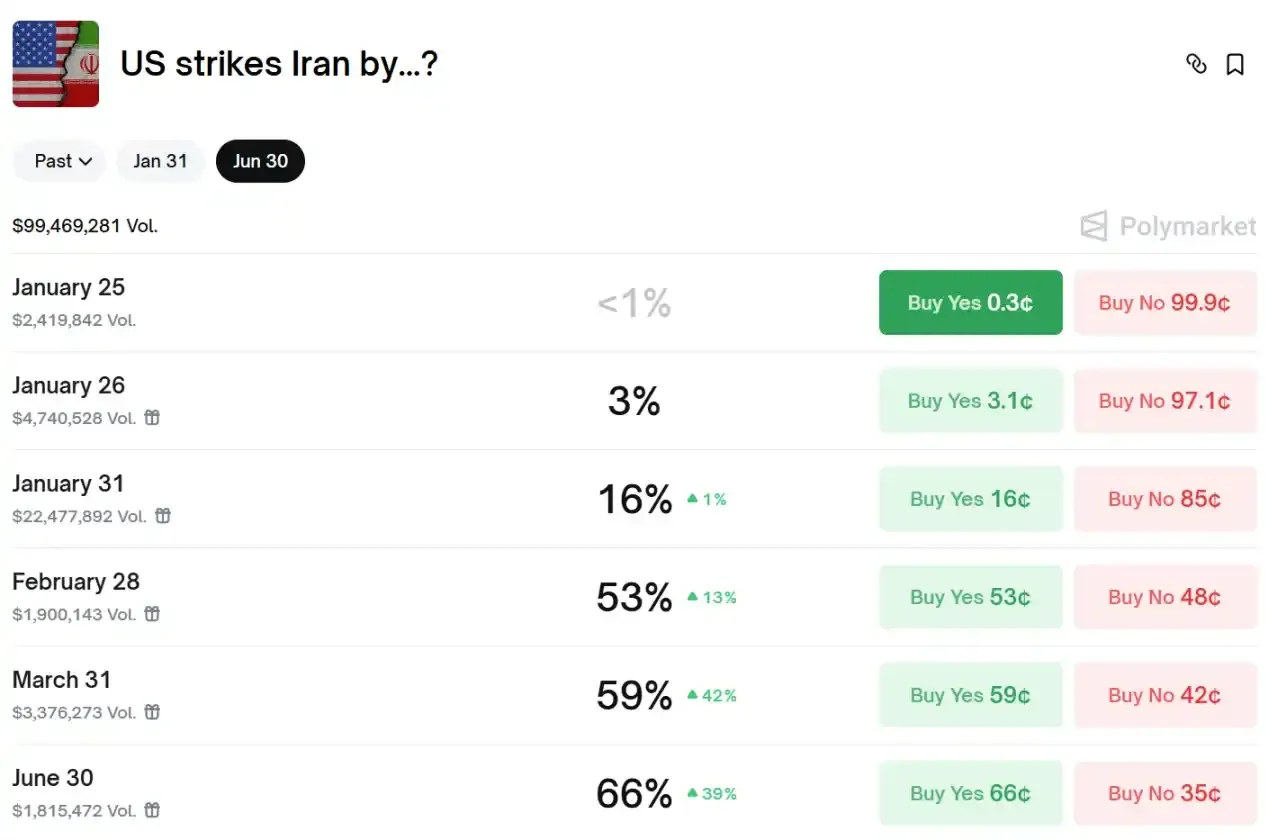
Data from Polymarket indicate that the market’s implied probability of the United States taking military action against Iran before February 28 has risen to 53 %, with total betting volume approaching $100 million.
Iran responded with a hard‑line posture, placing its armed forces on high alert and threatening to close the Strait of Hormuz—a chokepoint that carries roughly 20 % of global oil shipments. Any disruption there would likely push energy prices higher and intensify inflationary pressures. Although Bitcoin is often dubbed “digital gold” and could theoretically benefit from such geopolitical risk, investors in the short term appear to be shifting toward physical gold, prompting a capital outflow from crypto assets.
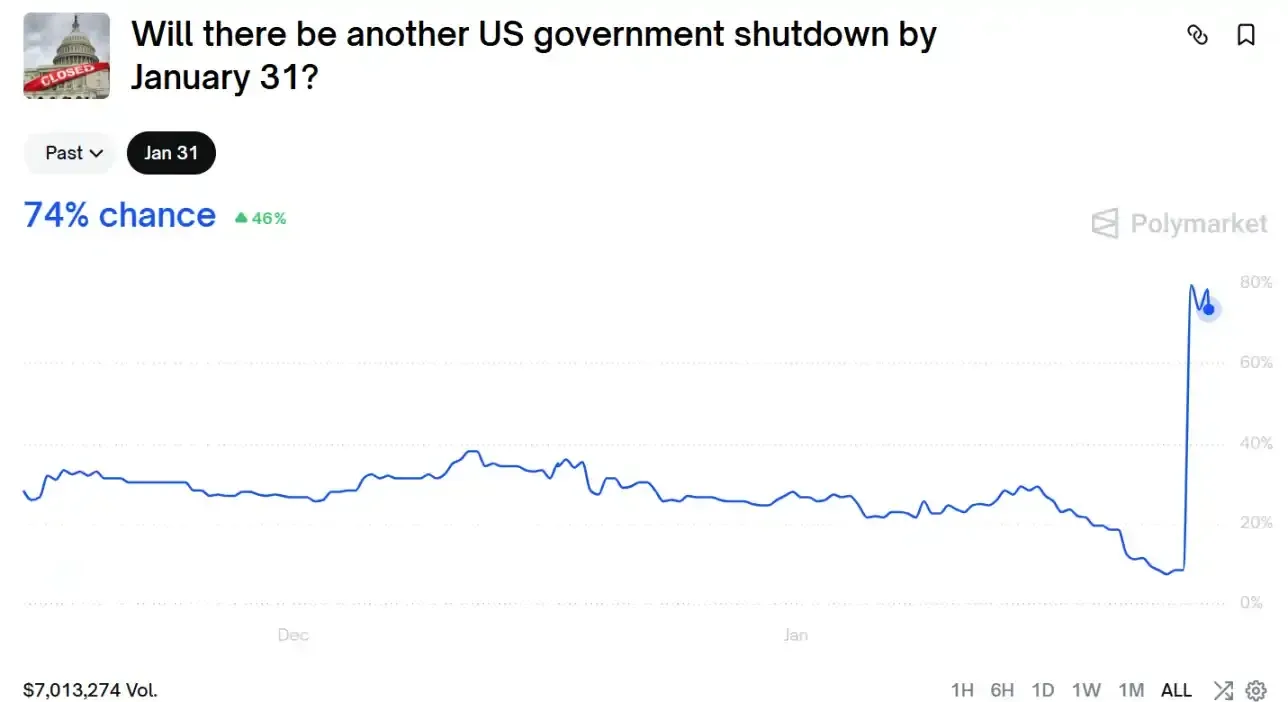
At the same time, betting on a U.S. government shutdown on Polymarket surged dramatically, climbing from 8 % to 80 %, thereby amplifying downside pressure on risk assets.
The technology‑sector earnings season kicked off this week, with heavyweight names such as Microsoft, Meta, Tesla, and Apple slated to disclose Q4 2024 and full‑year results. Market participants are focusing on AI return on investment, cloud‑service growth, and Tesla’s delivery numbers. Because these companies together account for more than 25 % of the S&P 500’s market‑cap weighting, their performance directly influences the Nasdaq index and overall market sentiment. Disappointing results could trigger a wave of tech‑stock selling, which historically tends to spill over into the cryptocurrency market.
Outlook and Subsequent Market Moves
Data released by Santiment on social platforms show that, despite the pullback in Bitcoin’s price, gold and silver continue to climb. Notably, the so‑called “whales” (addresses holding between 10 and 10,000 BTC) accumulated an additional 36,322 BTC over the past nine days, raising the total supply by roughly 0.27 %. Conversely, “small‑fish” addresses holding less than 0.01 BTC collectively sold 132 BTC, a decline of about 0.28 %.
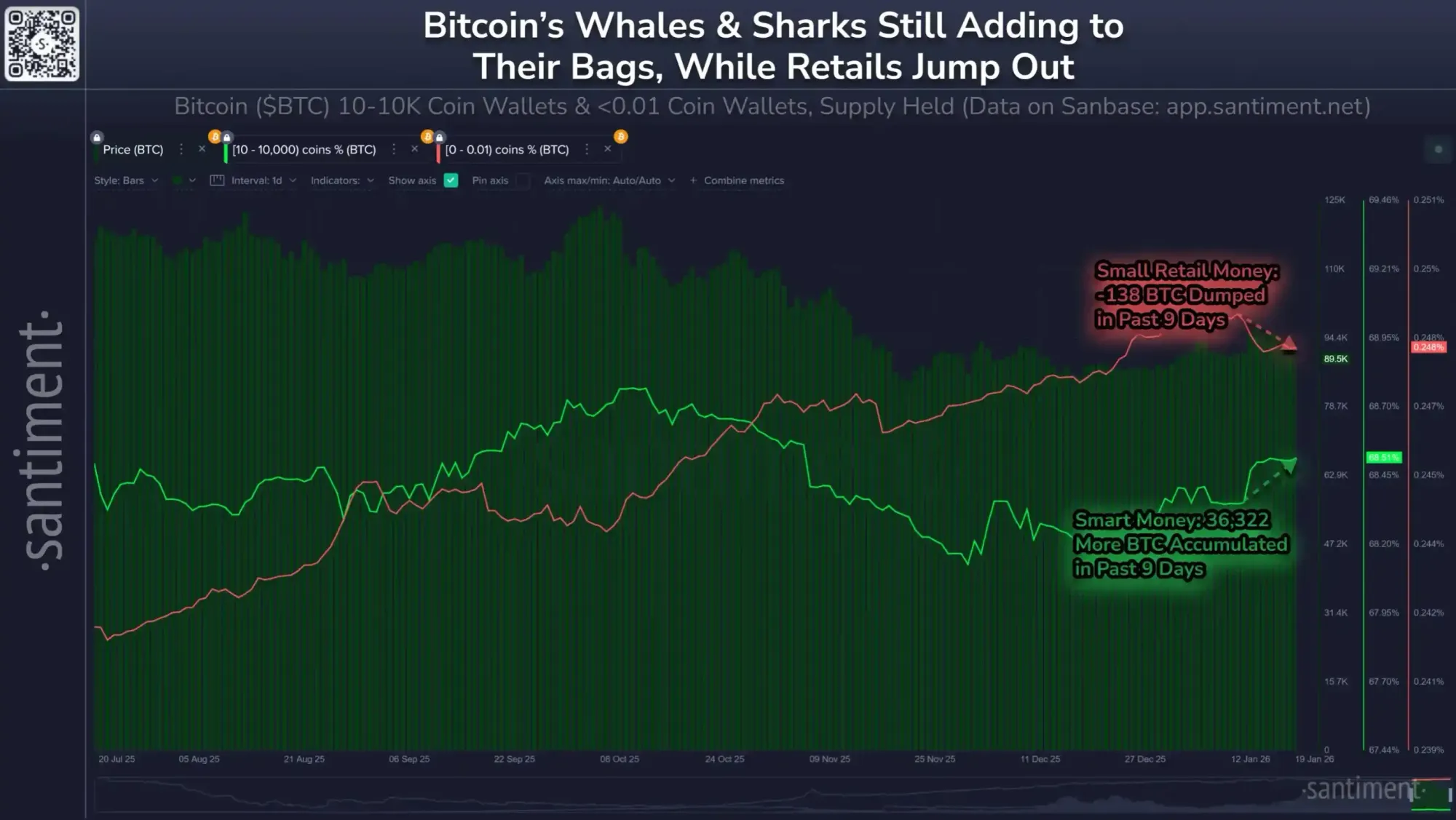
Santiment further notes that historically, periods when “smart money” accumulates while retail participants sell often precede a breakout for crypto assets. The current flow dynamics have already created a technical divergence, hinting at a potentially bullish outlook over the medium to long term.
A partner from the Placeholder group posted on Twitter that they will be watching key buying zones around $80,000, $74,000 and $70,000. They added, “Regardless of the ultimate direction, if the market rebounds from here I will keep holding and diversify; if another pull‑back materialises, I will add further positions in BTC and other crypto assets.”

That concludes the full analysis titled “Bitcoin Falls Below $86,000: Retail Selling, Whale Accumulation – Is This a Buying Opportunity?”. For more in‑depth Bitcoin coverage, stay tuned.
Note: Crypto gains may be subject to tax in many jurisdictions. Readers should consult local tax regulations or a qualified professional to understand their obligations. U.S. residents wishing to trade on Binance should use Binance.US, which complies with domestic regulatory requirements, while the global Binance platform is intended for users outside the United States. All fiat transactions referenced assume the use of USD or SEPA/SWIFT channels where applicable.
Related Reading
- Bitcoin Breaks Key Support: Is Its “Digital Gold” Status at Risk?
- Bitcoin Surges Past $71,000, Nearing $72,000 Monthly High
- Bitcoin Falls Below $60K – 52% Drop from 2025 $126K Peak
💡 Register on Binance with referral code B2345 for the maximum trading fee discount. See Binance complete guide.



