
 Bitaigen Research
 Fluctuations in market prices often obscure the true fundamental value of an underlying asset. Amidst the recent waves of market volatility, we have observed that the global adoption of Bitcoin is undergoing a qualitative metamorphosis—transforming from a "niche experimental asset" into a "foundational pillar of the modern financial system." This article provides an in-depth analysis of the underlying logic behind the entry of sovereign nations and top-tier institutional players. By examining eight core dimensions, we reveal how Bitcoin is becoming deeply embedded within the global financial infrastructure. We hope these forward-looking insights will help you look past the "price noise" and clearly see the expanding trajectory of Bitcoin’s intrinsic value.
Peering Beneath the Surface: Eight Deep Trends in Global Bitcoin Adoption
Even though Bitcoin's market price has experienced significant drawdowns of up to 50% from its cyclical peaks, the global adoption rate is climbing at an unprecedented pace behind the fog of price volatility. This expansion of underlying value is not always immediately reflected on the trading charts. The following eight key trends reveal how Bitcoin is systematically and deeply penetrating the global financial system.

The Strategic Entry of Sovereign States and Top-Tier Institutions
The year 2025 has witnessed a collective explosion of institutional power. Institutional investors—including sovereign wealth funds, national governments, various private funds, and Spot ETFs—have cumulatively increased their holdings by 829,000 BTC within a single year.
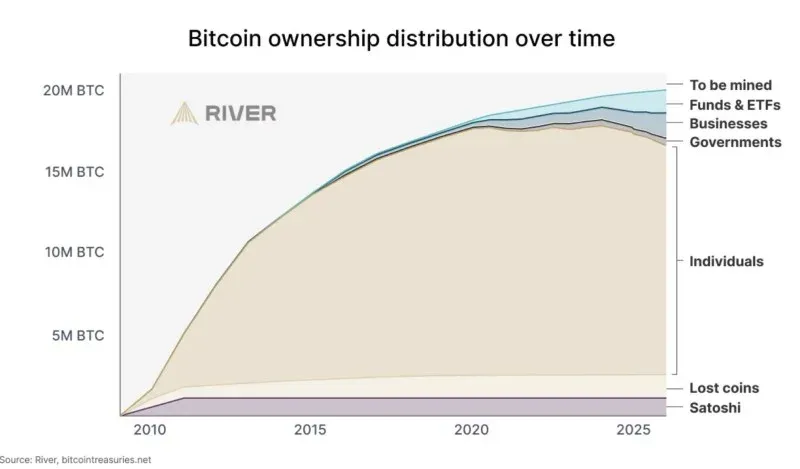
The core significance of this data lies in the fact that these institutions act as proxies for millions of ordinary investors. Through pension funds, corporate balance sheets, and traditional brokerage accounts, the average person is now indirectly holding Bitcoin. For global participants, these assets are typically managed via USD-denominated accounts, with funding often moving through international rails like SEPA for European users or SWIFT for global wire transfers.
A critical question arises: who is providing the supply to these giants? In 2025, the "chips" were primarily provided by early "whales" and long-term holders. As market liquidity enhanced, these early participants began an orderly reduction of their positions. While individual investors still hold approximately two-thirds of the total supply, if this trend continues, institutions could control the majority of the circulating supply within the next decade. The intervention of institutions is not intended to crowd out individuals; rather, it broadens the entry points. Many of today’s ETF users are highly likely to transition into "power users" who eventually opt for self-custody solutions.
The Comprehensive Opening of Traditional Financial Channels
1. Sustained Allocation by Registered Investment Advisors (RIAs)
As a massive group managing approximately $146 trillion in assets globally, Registered Investment Advisors (RIAs) are seeing their interest in Bitcoin steadily warm up. Since the approval of Bitcoin Spot ETFs in early 2024, this group has maintained a net buying position for eight consecutive quarters.
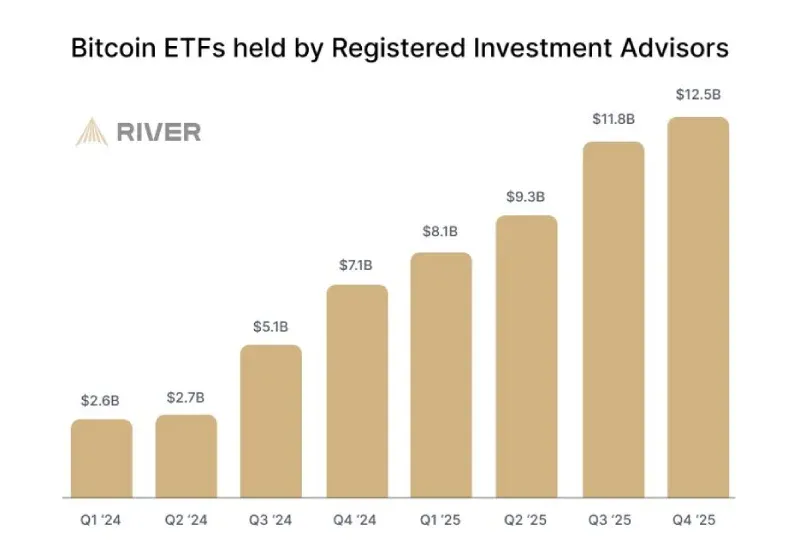
Data indicates that RIAs contribute an average of approximately $1.5 billion in capital inflows to Bitcoin ETFs every quarter. Among the top 30 RIAs in the United States, 29 have already completed their initial allocations. Although the current average portfolio weight is only 0.008%, this "zero to one" breakthrough is of landmark significance for the asset class.
2. Deep Integration into Banking Services
With the gradual improvement of the regulatory environment, the banking sector is actively embracing crypto-assets. Currently, 60% of the top banks in the United States are either developing or have already launched Bitcoin custody services and related financial products. This infrastructure paves the way for compliant, large-scale capital to enter the market. It is important to note for users in the United States that regulatory compliance is paramount; while global users may access various exchanges, US residents must utilize localized platforms such as Binance.US to ensure adherence to domestic financial regulations.
Explosive Growth at the Corporate and Commercial Levels
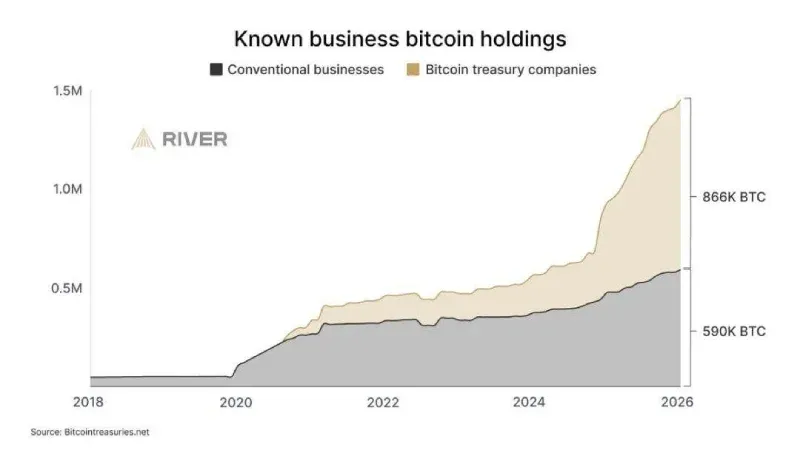
1. Transformation of Public Company Treasuries
In 2025, the adoption rate of Bitcoin by corporations increased by 2.5 times. Beyond specialized crypto-asset reserve companies, an increasing number of S&P 500 component companies have begun experimenting with adding small amounts of Bitcoin to their balance sheets as a hedge against traditional fiat currency debasement and systemic risk.
2. Natural Expansion of the Payment Ecosystem
The penetration of Bitcoin into physical commerce is equally impressive. In 2025, global merchant acceptance of Bitcoin rose by 74%, while the number of Bitcoin-related businesses in the United States tripled.
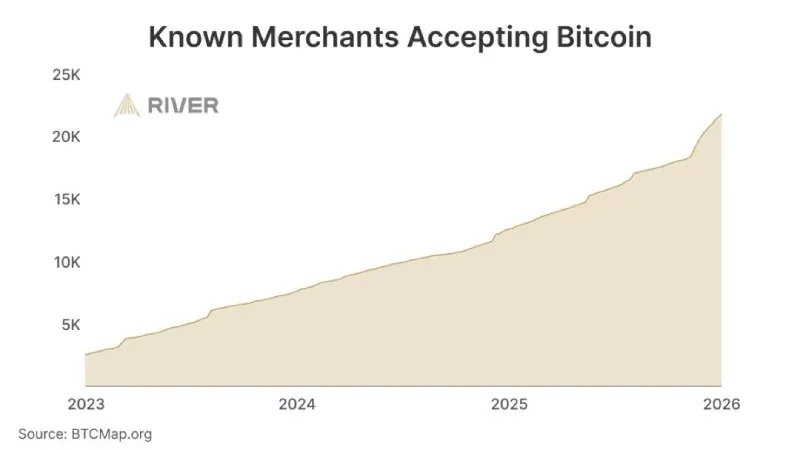
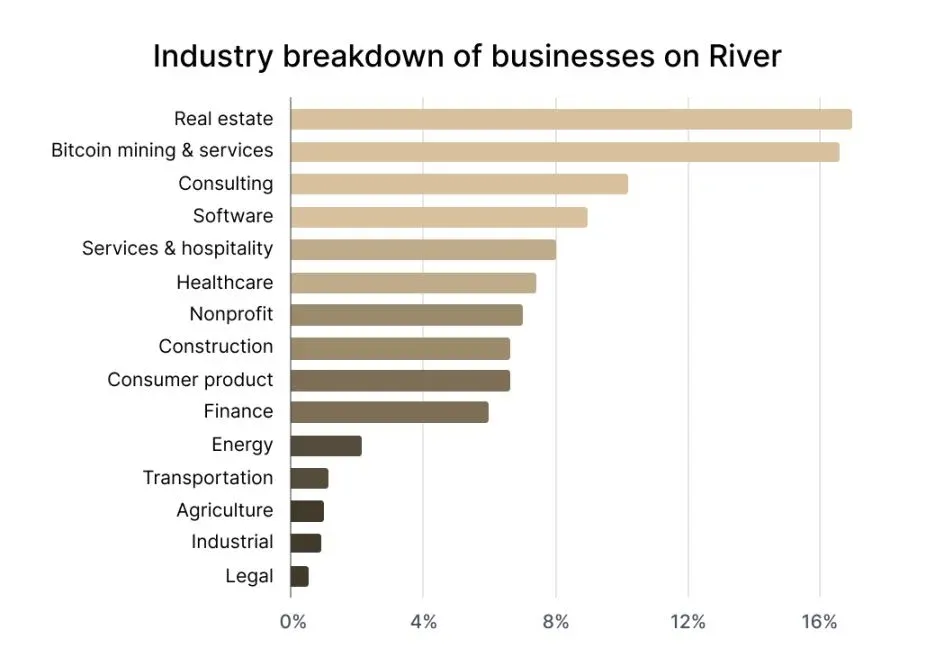
This trend is particularly evident among small and medium-sized private enterprises. For instance, companies like Steak 'n Shake have successfully reduced settlement costs by integrating Bitcoin payments. Data from River reveals that among the 3,000+ businesses they serve, the growth momentum for adoption is strongest within the small business sector.
Technical Infrastructure and the Reconfiguration of the Global Map
1. The Exponential Leap of the Lightning Network
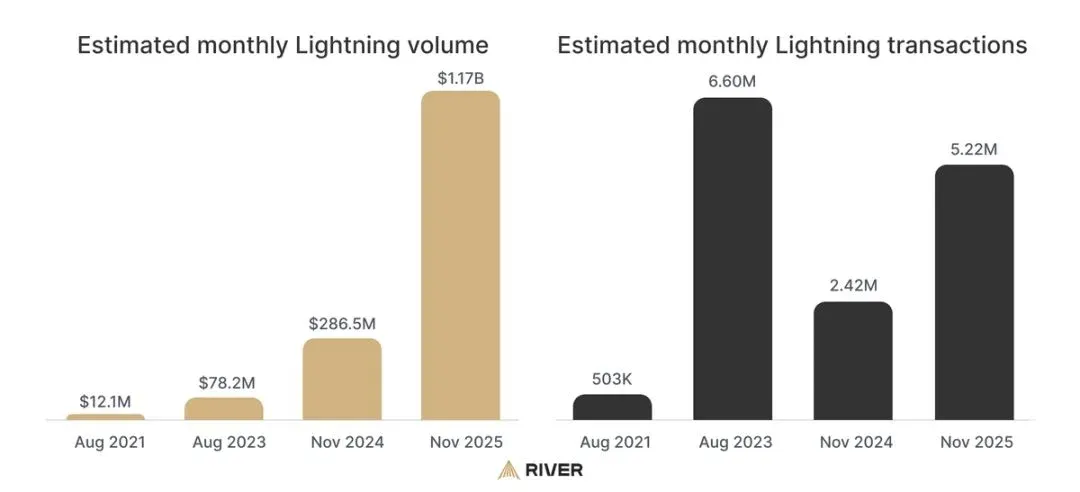
As Bitcoin’s Layer 2 scaling solution, the Lightning Network achieved a staggering 300% growth in 2025. Currently, its monthly transaction volume has surpassed $1.1 billion USD. This growth is primarily driven by the organic integration of the network into major exchanges and retail payment scenarios, enabling near-instant and low-cost transfers globally.
2. New Members of the Sovereign Holdings Club
In 2025, the list of "National Teams" holding Bitcoin added five new members. These include the sovereign wealth funds of Luxembourg and Saudi Arabia, as well as the Czech National Bank.
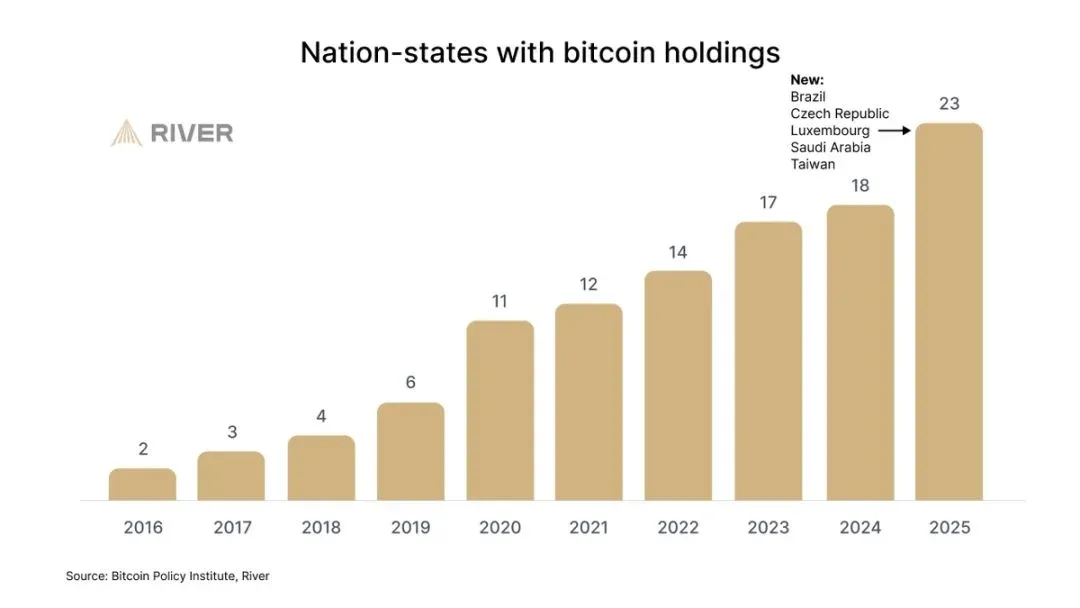
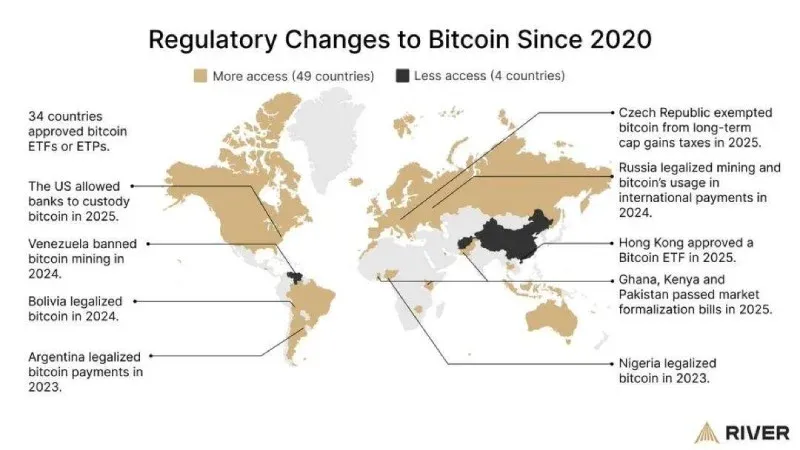
These nations accumulate Bitcoin through various channels, including mining operations, direct purchases, receiving donations, or the recovery of hacked assets. Notably, in the four years since 2022, no country has introduced a new ban on Bitcoin. Embracing digitally scarce assets is rapidly becoming a global consensus.
The Return of Volatility: Metamorphosis into a Mature Asset
For a long time, Bitcoin was criticized for its "extreme volatility." However, data from the past decade shows that its volatility is on a consistent downward trajectory. Currently, Bitcoin's volatility is gradually approaching the levels of Gold and the S&P 500 Index.
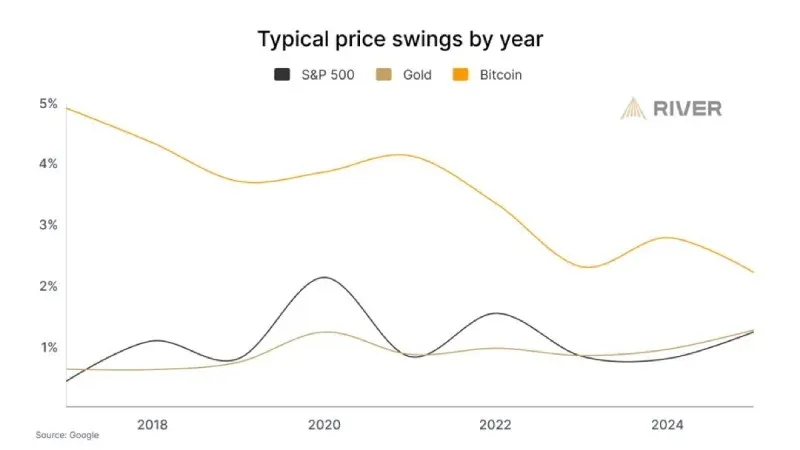
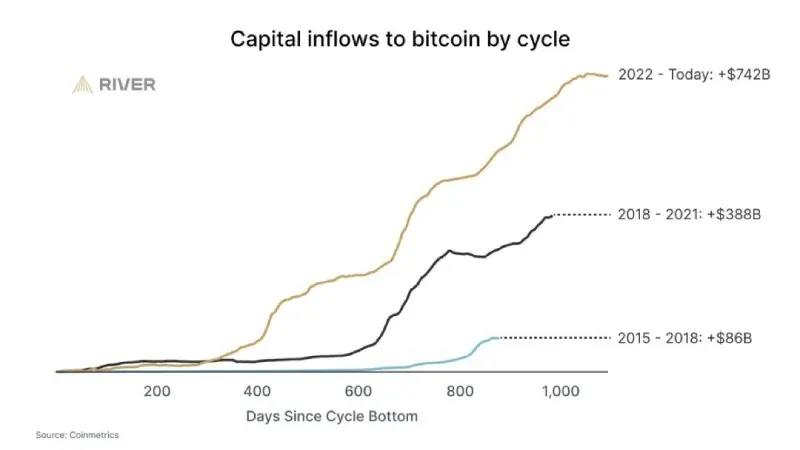
The convergence of volatility is a hallmark of an asset's maturation. This significantly lowers the barrier to entry for risk-averse capital. The previous market cycle proved that the incremental capital Bitcoin attracted in just three years exceeded the total sum of its entire prior history.
Summary and Outlook
Despite the relatively quiet price action over the past year, the underlying adoption curve presents a starkly different picture of prosperity. This deep-seated penetration may not result in explosive short-term gains, but its significance is far more profound than speculative price increases.
From individuals to institutions and onward to sovereign states, the trust in Bitcoin as the "world's only scarce and immutable digital currency" is solidifying. As infrastructure matures and consensus spreads, Bitcoin adoption will not only continue but is expected to enter an accelerated phase in the coming years.
As Bitcoin becomes more integrated into personal and corporate wealth management, investors must remain mindful of the regulatory landscape. Depending on your local jurisdiction, capital gains from cryptocurrency transactions may be subject to taxation. It is recommended to consult with a local tax professional to ensure compliance with your region's specific tax laws. While the trajectory of adoption is clear, the path remains one of long-term evolution rather than overnight transformation.
Related Reading
- Bitcoin On-chain Analysis: MVRV Ratio and NUPL Guide
- BlackRock Puts Bitcoin ETF Beside Treasuries & Tech Giants
- Bitcoin Adoption: 6,300+ Merchants Accept BTC via BTC Map
💡 Register on Binance with referral code B2345 for the maximum trading fee discount. See Binance complete guide.



