
 Bitaigen Research
Bitcoin has shown a recent rebound, but the lack of buying‑side liquidity and the absence of key liquidity metrics mean the upward move is difficult to maintain. Market participants will likely have to wait for liquidity to come back before the rally can gain momentum. Consequently, short‑term downside pressure remains.
Glassnode’s analysis points out that although bulls managed to hold the support zone between $80,700 – $83,400, the price is unlikely to generate a stronger recovery unless the critical liquidity indicators reach their respective thresholds. Futures data suggest that a liquidity contest could emerge around $93,500 in the near term.
In this article we break down the main drivers behind Bitcoin’s recent bounce, focusing especially on whether the available liquidity is sufficient to underpin further gains. By deeply interpreting on‑chain data and futures positions, readers can assess the sustainability of the short‑term trend and track the core metrics that matter for future observations. A careful read is recommended.
Key Takeaways
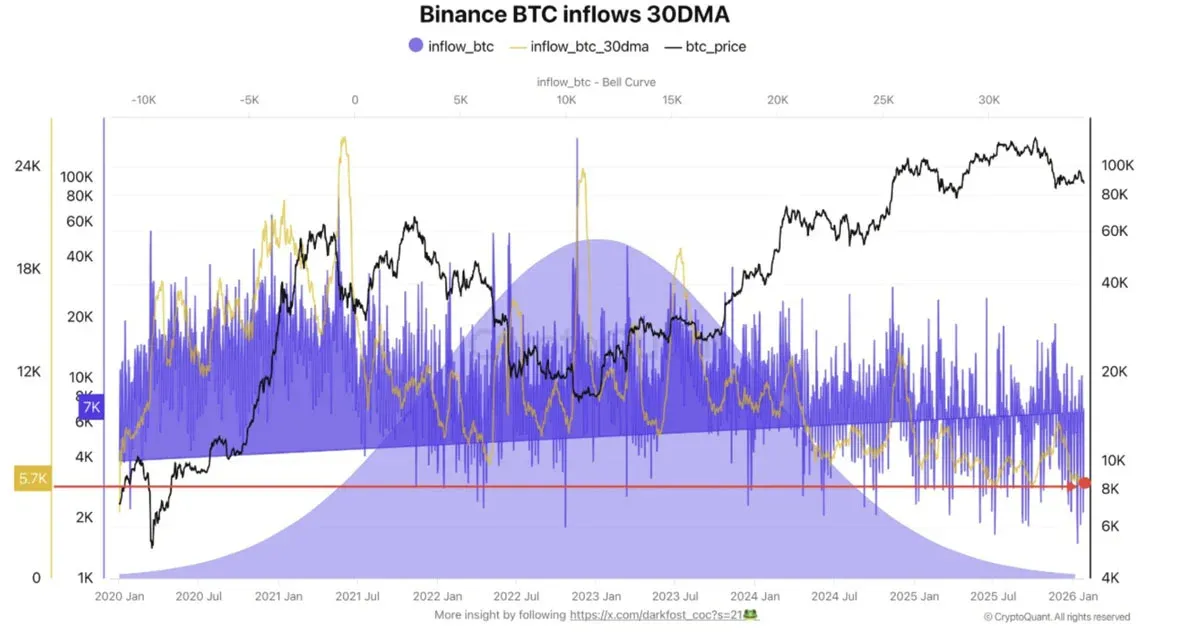
- More than 22 % of the circulating Bitcoin supply is currently in loss, increasing the sensitivity of support‑break events.
- The amount of Bitcoin flowing into Binance remains close to the low levels seen in 2020, limiting short‑term sell pressure.
Liquidity Becomes the Focal Point
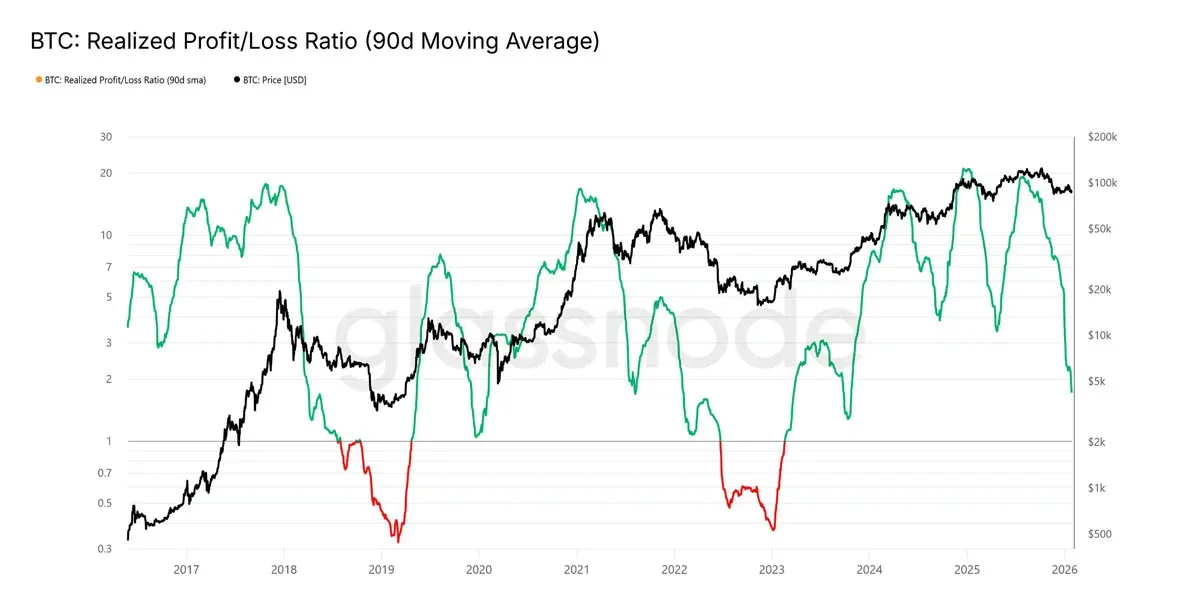
In a post on platform X, Glassnode noted that after Bitcoin defended the $80,700 – $83,400 range, market attention shifted to liquidity. To judge whether the rebound can persist, one must monitor highly sensitive liquidity gauges, especially the 90‑day moving average of the Realized Profit‑Loss Ratio (90 DMA).
Realized Profit‑Loss Ratio (90 DMA)
| Indicator | Meaning |
|---|---|
| **Realized Profit‑Loss Ratio** (90 DMA) | Historically, when the ratio stays above **5**, it is often accompanied by capital inflows and a recovery of liquidity. |
Every past price recovery—including the mid‑cycle rallies of the last two years—occurred while this ratio was above 5, indicating that capital was flowing back into the Bitcoin market. Glassnode also highlighted that currently over 22 % of circulating Bitcoin is underwater, a trait that also appeared in Q1 2022 and Q2 2018, suggesting that downside risk has not vanished.
If Bitcoin fails to hold the key support zones—particularly the region defined by the ‑1 σ (one standard deviation) cost‑basis band for short‑term holders and the realized market average—selling pressure from long‑term holders could re‑emerge.
Exchange Flows Skew Toward Holding
Data from CryptoQuant shows that the current Bitcoin sell‑off is limited. Monthly inflows to Binance amount to roughly 5,700 BTC, which is only about 45 % of the long‑term average of 12,000 BTC—the lowest level recorded since 2020.
Important for U.S. readers: U.S. residents should use Binance.US rather than the global Binance platform to comply with local regulations.
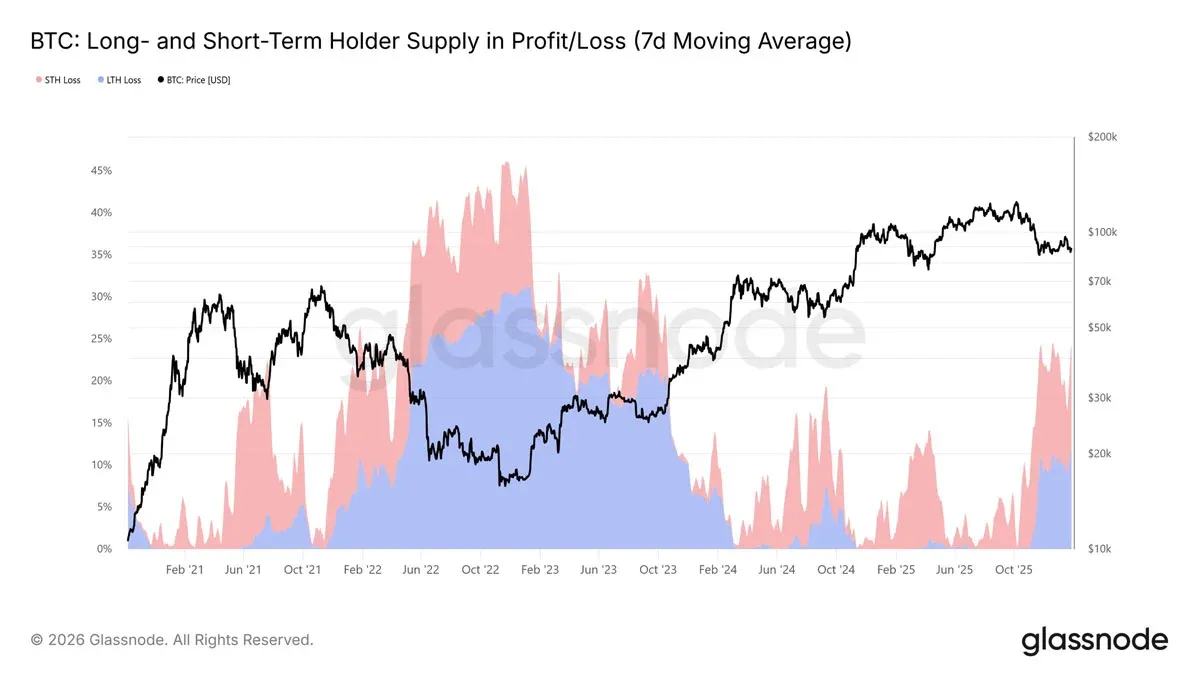
30‑Day DMA Inflows (Source: CryptoQuant)
| Time Window | BTC Inflow to Binance |
|---|---|
| Past 30 days | **5,700 BTC** (≈ 45 % of the long‑term average) |
Exchange inflows are typically linked to sell‑side activity; a persistently low level suggests that investors are more inclined to hold their positions rather than prepare to sell. This environment helps to mitigate short‑term downward risk, but a return of liquidity will still be needed to confirm the durability of any upward trend.
Crypto analyst Darkfost added:
“The historically low BTC inflow into Binance reflects a fairly positive signal. Even though Bitcoin is in a consolidation phase and macro‑economic uncertainty is rising, investors are currently leaning toward holding their BTC rather than exiting.”
The above provides a detailed analysis of why the Bitcoin (BTC) rebound may find it hard to sustain and why market participants should wait for liquidity to come back. For more information on Bitcoin’s pressured rebound and pending liquidity, please follow other articles on Bitaigen (比特根).
Tax reminder: Crypto gains may be taxable in your jurisdiction. Be sure to consult local tax regulations and consider reporting requirements for any realized profits or losses.
Related Reading
- Federal Reserve Liquidity Injection Set to Boost Bitcoin in 2026
- Bitcoin & Ethereum Falter in Final Crypto Deleveraging Phase
- Bitcoin Whales Add 236K BTC in V‑Shaped Bottom‑Fishing
💡 Register on Binance with referral code B2345 for the maximum trading fee discount. See Binance complete guide.



