
 Bitaigen Research
 In many new blockchain projects we encounter the term Oracle, which is translated into Chinese as 预言机. It is not a device that predicts the future; rather, it is an intermediary tool that securely and reliably transports real‑world data onto a blockchain so that smart contracts can read and use it. By means of APIs, signatures, or zero‑knowledge proofs, it ensures the authenticity and immutability of the data.
In this article we outline the core principles and use‑cases of oracles, and we hand‑pick a number of projects that enjoy the best reputation in the industry. This helps readers quickly understand how to securely obtain off‑chain data within smart contracts, grasp the key points for selecting an oracle, and prepares the ground for the detailed analysis in the following sections. It is worth a careful read.
What Is an Oracle?
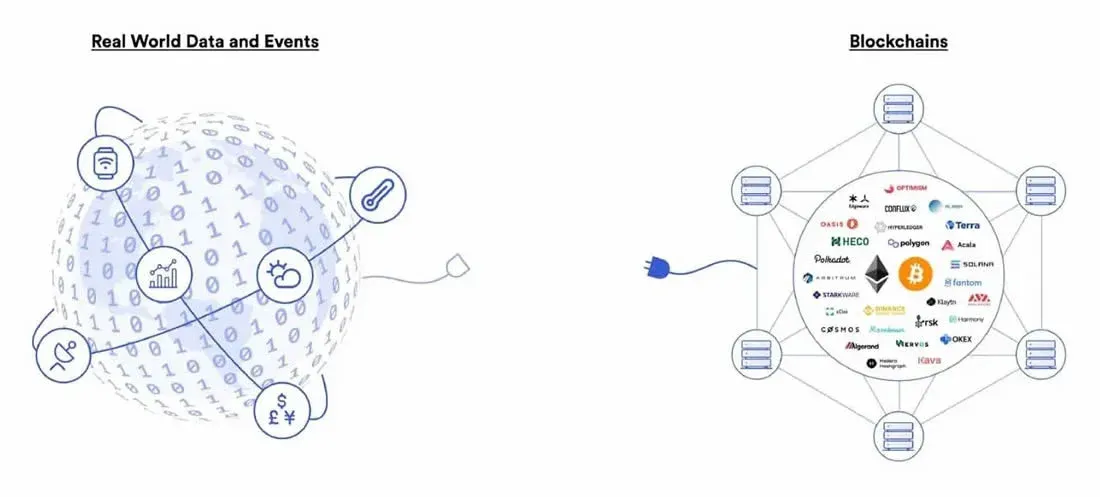
An oracle (English: Oracle) is a tool that enables a blockchain to read external information, such as token prices, exchange rates, voting results, etc., usually for use by smart contracts. You can think of it as a sports commentator: even if you are not present at the stadium, you can still receive real‑time updates on scores, attacks, fouls, and other details. An oracle acts as a dedicated commentator for smart contracts, converting off‑chain data like the latest price or exchange rate into a format that can be interpreted on‑chain.
The core value of an oracle lies in expanding the application scope of smart contracts—moving from the ability to read only on‑chain data to the ability to incorporate off‑chain information such as exchange rates, stock prices, interest rates, temperature, and more. For example, if you wish to offer a product on‑chain that mirrors U.S. Treasury yields, or you need the latest risk‑free rate for a risk‑assessment model, you must write those external data points onto the blockchain via an oracle.
Any smart contract that requires off‑chain information relies on an oracle, including Real‑World Asset (RWA) platforms, crypto lending, decentralized derivatives exchanges, decentralized prediction markets (e.g., Polymarket), and others.
Key Functions of an Oracle
| Function | Description |
|---|---|
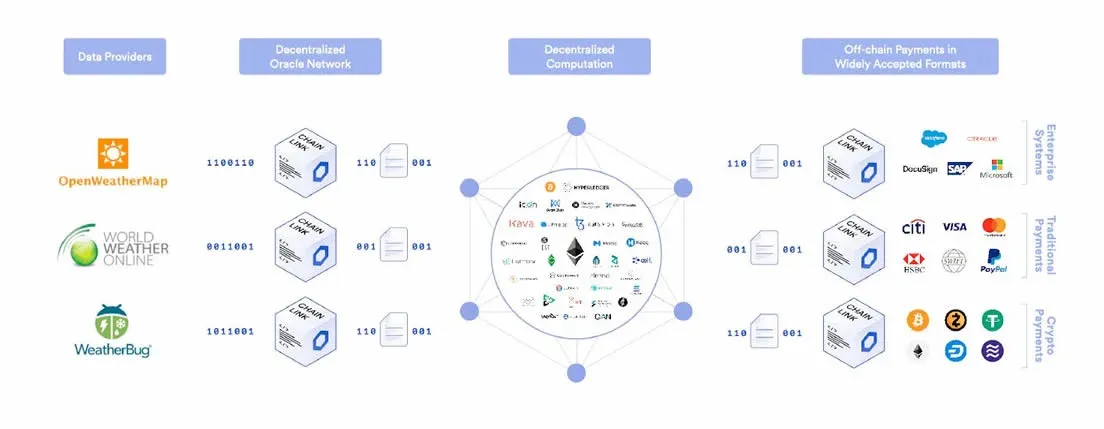
| **Listen** | Receives requests from smart contracts for off‑chain data |
| **Extract** | Reads information from multiple external data sources |
| **Compute** | Calculates statistical values such as median, weighted average, etc. |
| **Format** | Converts off‑chain data into an on‑chain readable input format |
| **Validate** | Generates cryptographic proofs using zero‑knowledge proofs, digital signatures, etc. |
| **Broadcast** | Sends the cryptographic proof to the blockchain for contract consumption |
An oracle is essentially a bidirectional intermediary: it fetches data off‑chain and provides trusted proofs on‑chain, thereby preserving the security and privacy of smart contracts.
Why Oracles Are Needed: Safely Supplying External Data to Smart Contracts
- Smart contracts need external data to operate, but blockchains are closed systems that cannot directly read off‑chain information.
- If off‑chain data is to be used by a smart contract, it must possess the same level of security and reliability as the blockchain itself.
A common question is: *Can’t we just call an external API directly?* The answer is no, because a plain API call lacks tamper‑proofing and verifiability.
The Core Value of Oracles Is Security and Reliability
Take the price of Bitcoin (BTC) as an example. If a smart contract depends on a human manually entering the price each minute or on a single data source, it becomes highly susceptible to price manipulation. Should the price feed be tampered with, the contract may make erroneous decisions, leading to fund loss. Oracles generate repeatable, verifiable “proofs” using digital signatures or zero‑knowledge proofs (ZKP) and write those proofs on‑chain, thereby maintaining the blockchain’s public, immutable nature.
Supplying external data is the basic function of an oracle; the true value lies in guaranteeing data accuracy, verifiability, and a security level that matches the blockchain, which is what makes the oracle indispensable.
Top 10 Oracle Projects (Ranked by Total Value Secured)
The table below is ordered by Total Value Secured (TVS), i.e., the total value of smart contracts that rely on each oracle, from highest to lowest. Data sourced from DefiLlama (as of 2025‑08).
| Rank | Project | TVS (USD Hundreds Millions) | Supported Blockchains | Main Features |
|---|---|---|---|---|
| 1 | **Chainlink** | 567.12 | Multi‑chain | Decentralized, wide variety of data types, largest ecosystem |
| 2 | **Chronicle** | 80.01 | Multi‑chain | Decentralized, supports many data types, largest market share |
| 3 | **RedStone** | 59.57 | Multi‑chain | Officially supported by MakerDAO, focuses on DeFi price feeds |
| 4 | **Pyth Network** | 58.88 | Multi‑chain | Partners with financial institutions, provides high‑frequency low‑latency market data |
| 5 | **Edge Oracle** | 26.55 | Multi‑chain | Fast, low‑cost data transmission, lightweight open‑source |
| 6 | **Switchboard** | 21.59 | Solana | Tailored to the Solana ecosystem, fast and reliable price feeds |
| 7 | **Supra** | 7.90 | Multi‑chain | Cross‑chain service, low latency, high security |
| 8 | **Stork** | 5.89 | Multi‑chain | Targets DeFi and GameFi scenarios, collaborates with many projects |
| 9 | **API3** | 34.36 | Multi‑chain | Directly connects native APIs, emphasizes a decentralized data‑provider ecosystem |
| 10 | **UMA** | 2.30 | Multi‑chain | Optimistic Oracle mechanism, supports synthetic assets, reward system ensures data authenticity |
Total Value Secured (TVS) measures the dollar value of smart contracts that receive data from a given oracle. A higher TVS indicates larger contract usage and, generally, a higher degree of security assurance.
In addition to the decentralized oracles listed above, several large exchanges also provide their own oracle services. For example, Binance Oracle runs not only on BNB Smart Chain but also supports multiple chains, offering professional data sources and security guarantees. It has become an important data provider for many DeFi projects.
Brief Overview of Binance
- Global Users: 260 million registered accounts as of 2025
- Asset Coverage: Supports more than 300 cryptocurrencies
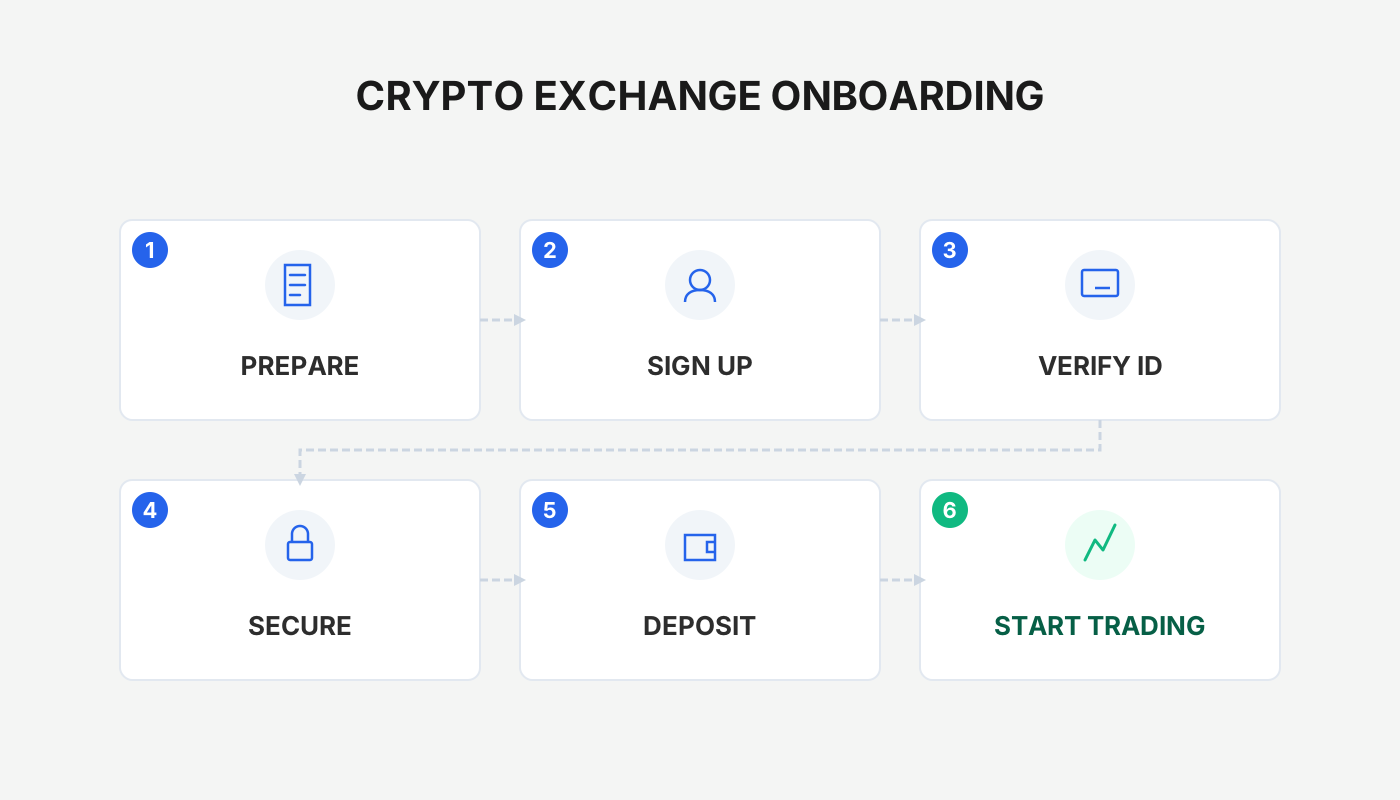
To sign up, you can use the following links:
- Binance Official Registration: `https://accounts.binance.com/register?ref=B2345` (copy into a browser)
- Binance Android App Download: `https://www.bitaigen.com/binance/download`
Important for U.S. residents: Use Binance.US instead of the global Binance platform.
Common Use Cases for Oracles
Oracles form the infrastructure backbone for many blockchain applications. The table below lists typical scenarios grouped by the type of data supplied.
| Data Type Provided by Oracle | On‑Chain Application (Example) |
|---|---|
| Real‑time crypto prices | Lending platforms (Aave, Compound), decentralized derivatives exchanges, synthetic assets |
| Real‑world asset prices | RWA tokenization (e.g., PAXG, OUSG) |
| Weather and climate data | Parametric insurance contracts (e.g., Arbol) |
| Sports and real‑world event outcomes | Decentralized prediction markets (e.g., Polymarket) |
| Cross‑chain information | Cross‑chain asset transfers, cross‑chain governance |
1. Real‑Time Crypto Prices — The Bloodstream of DeFi
Price feeds are the most common oracle function. Lending platforms need to continuously monitor collateral values; derivatives exchanges rely on price feeds for contract execution; synthetic assets use feeds to map real‑world assets onto the blockchain. Prominent decentralized oracles for this purpose include Chainlink, Pyth Network, and RedStone.
2. Real‑World Asset Prices — RWA Tokenization
Tokenizing Real‑World Assets requires off‑chain quotations such as asset prices and interest rates. For instance, the gold token PAXG needs the live gold spot price, while the bond token OUSG requires U.S. Treasury yields. Oracles guarantee that these data points are transmitted securely and accurately, with Chainlink and RedStone being the most widely used providers.
3. Weather Data — Automated Insurance Contracts
Parametric insurance triggers payouts based on predefined weather or natural‑disaster metrics. Arbol, for example, uses Chainlink to fetch temperature, precipitation, and wind‑speed data in real time, enabling automatic claim settlement without manual verification.
4. Sports and Real‑World Events — Decentralized Prediction Markets
Prediction markets must write the final outcome of an event onto the blockchain after it concludes. Polymarket employs the UMA Optimistic Oracle to upload the results of sports, political, and economic events, allowing smart contracts to settle automatically.
5. Cross‑Chain Information — Asset Interoperability and Governance
Cross‑chain oracles enable different blockchains to share state. Synthetix uses an oracle to move synthetic assets between Ethereum and Optimism; Aave utilizes an oracle to synchronize governance voting results across multiple chains. Leading cross‑chain oracle providers include Chainlink CCIP, LayerZero, and Axelar.
Six Common Oracle Classifications
1. Decentralized Oracle vs. Centralized Oracle
- Decentralized Oracle: Multiple nodes and data sources collectively provide information; the flagship example is Chainlink. A distributed network reduces single‑point‑of‑failure and data‑manipulation risks.
- Centralized Oracle: A single entity supplies data. Deployment is simpler but introduces trust risks, and any service outage can render dependent contracts inoperative.
2. Software Oracle vs. Hardware Oracle
- Software Oracle: Pulls data such as exchange rates, prices, or weather from online APIs. This is the most common and versatile approach today.
- Hardware Oracle: Directly reads sensor data (e.g., temperature probes, barcode scanners) to bring physical‑world measurements on‑chain. While offering real‑time physical data, hardware oracles have higher deployment costs and typically a narrower range of data sources.
3. Cross‑Chain Oracle
Cross‑chain oracles allow distinct blockchains to read each other’s state. Chainlink CCIP is already deployed on Ethereum, Avalanche, BNB Chain, Polygon, Base, and other networks, supporting cross‑chain asset movement and inter‑contract communication.
4. Human Oracle
Human oracles rely on community members to provide answers for events that are difficult to automate (e.g., election results). They are often paired with incentive mechanisms; for instance, UMA Optimistic Oracle requires respondents to post a bond, and if no one disputes the answer, it becomes final. Challengers can trigger a decentralized voting mechanism (DVM) to resolve disputes.
5. Compute‑Enabled Oracle
Compute‑enabled oracles perform complex off‑chain calculations before writing the result back on‑chain, helping to reduce gas costs. Chainlink Automation 2.0 exemplifies this class by executing off‑chain logic and submitting the outcome to the blockchain.
6. Contract‑Specific Oracle
A contract‑specific oracle is custom‑built for a single smart contract, offering a streamlined and highly secure data pipeline. The downside is reduced flexibility and difficulty scaling to many contracts.
Risks Associated with Oracles
Although oracles are a cornerstone of on‑chain applications, they can also become a weak link in the overall system.
1. Vulnerabilities Within the Oracle Itself
- Software bugs: In 2022, Inverse Finance suffered an oracle attack that resulted in a loss of roughly $15 million.
- Node private‑key leakage: If a private key is stolen, an attacker can feed malicious data directly.
- Infrastructure attacks: DDoS attacks can take nodes offline, causing data delays or interruptions.
Open‑source oracle projects benefit from community audits, which help mitigate these risks.
2. Data‑Source Quality and Centralization
Free APIs may suffer from latency, errors, or missing data. If an oracle relies heavily on a few high‑quality sources, it creates a single‑point‑of‑data risk. The best practice is to aggregate multiple sources and apply weighted mechanisms to filter out anomalies.
3. Insufficient Market Price Representation
Price disparities across exchanges can cause a weighted average to diverge from the true market. Projects like Chainlink employ volume‑weighted averages and outlier removal to improve accuracy.
4. Mis‑designed Incentive Schemes (Human Oracles)
If rewards are too low or challenges are not sufficiently incentivized, incorrect answers may persist for a long time. UMA’s optimistic model depends on bonds and voting incentives; poor design can erode system reliability.
Quick Reference Summary
- An oracle is a tool that enables a blockchain to read external information, commonly used by smart contracts.
- Its core function is to widen a contract’s applicability by extending from on‑chain data to off‑chain information.
- Typical data includes token prices, real‑world asset prices, weather, sports results, etc., serving DeFi, RWA, insurance, prediction markets, and more.
- Common categories are decentralized, software, cross‑chain, human, compute‑enabled, and contract‑specific oracles.
- While essential, oracles can be a systemic weak point; attention must be paid to code bugs, data‑source quality, price representativeness, and incentive design.
Conclusion
Oracles are a critical piece of infrastructure in the evolution of blockchain technology. They act as the bridge between the real world and the on‑chain environment, allowing smart contracts to consume trustworthy external data. By understanding how oracles work, the variety of services they provide, and the risks they entail, developers and users can make more informed decisions when building or interacting with decentralized applications.
*Note: Gains from cryptocurrency transactions may be taxable in many jurisdictions. Users should consult local tax regulations and, where appropriate, report gains via SEPA, SWIFT, or other relevant fiat‑transfer mechanisms.*
Related Reading
- Ethereum Smart Contracts: Benefits, Risks, and Challenges
- What Is a Smart Contract? Definition, How It Works & Benefits
- Grayscale: Q3 2025 ‘Special’ Altcoin Season, Bitcoin Lags
💡 Register on Binance with referral code B2345 for the maximum trading fee discount. See Binance complete guide.



