
 Bitaigen Research
 Author: Lorenzo Sicilia
Translation: Bitaigen

Decentralized social networks are beginning to deliver portable user identities, self‑controlled data, and permission‑less innovation platforms for developers through projects such as Lens and Farcaster.
At Outlier Ventures we have observed that Farcaster and Lens Protocol are attracting genuine users. As cryptographic technology becomes increasingly practical, the old barriers of private‑key management and the lack of mobile‑first experiences are no longer entry hurdles. This article systematically analyses the main competitors’ features, architecture, and the opportunities they present for Web3 founders.
In this piece we map the latest developments in decentralized social networking, focusing on the technical stacks and user experiences of core projects like Lens and Farcaster, and we explore the potential openings for Web3 entrepreneurs. By contrasting the limitations of traditional platforms, readers can grasp the real value and trajectory of decentralized social, making this a worthwhile read.
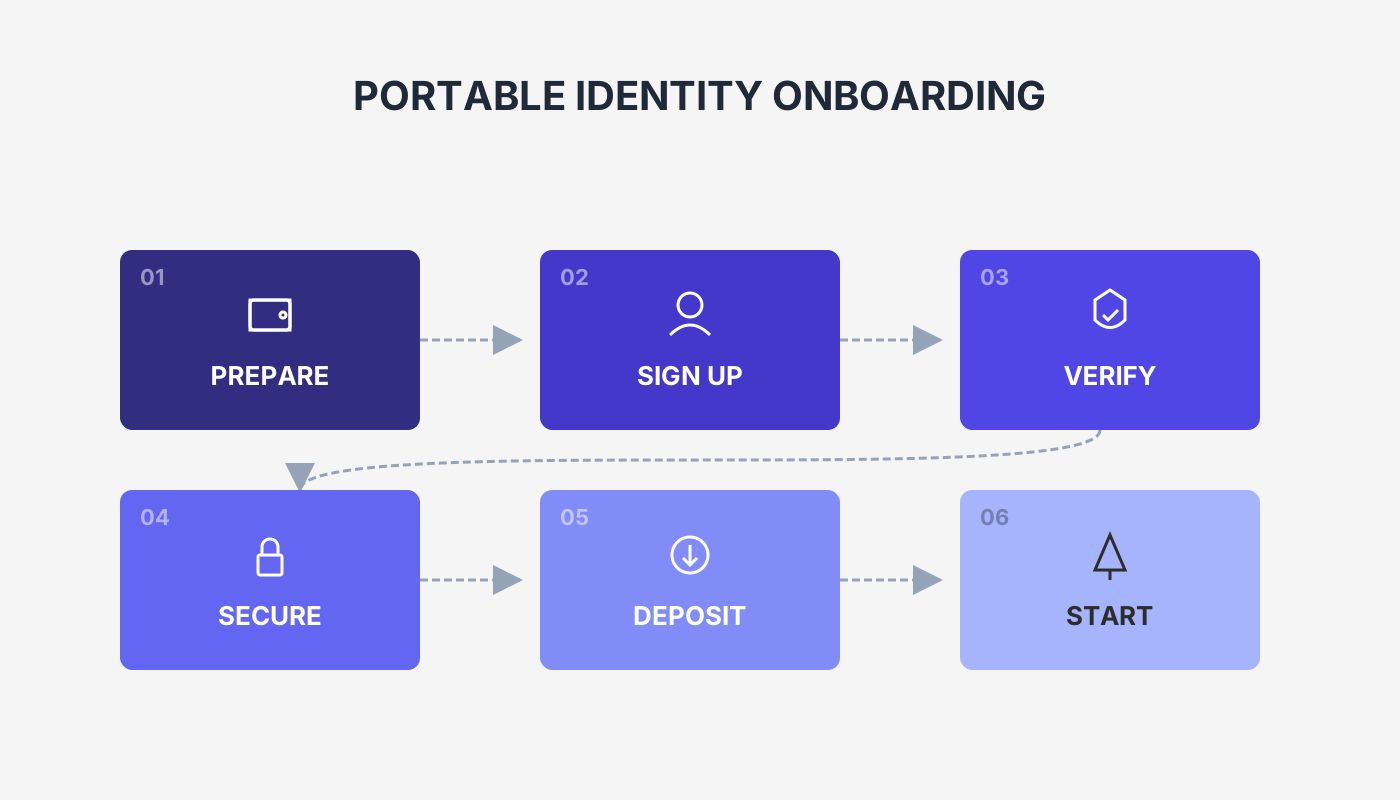
1. Social Networks
After more than a decade of using Instagram, Facebook, Twitter and the like, most people are familiar with the basic workflow of a social network: users fill out a profile, follow accounts they find interesting, and the system generates a real‑time, customized content feed.
Decentralized social networks aim to break the existing monopolies by enabling portable user identities, so that users can switch platforms without having to rebuild their preferences, while also enhancing privacy control. Much like permission‑less transactions in cryptocurrency, they provide permission‑less communication and uncensorable broadcasting.
For developers, this permission‑less nature means they can build new applications on top of existing protocols, mirroring the success of the DeFi “building‑block” model.
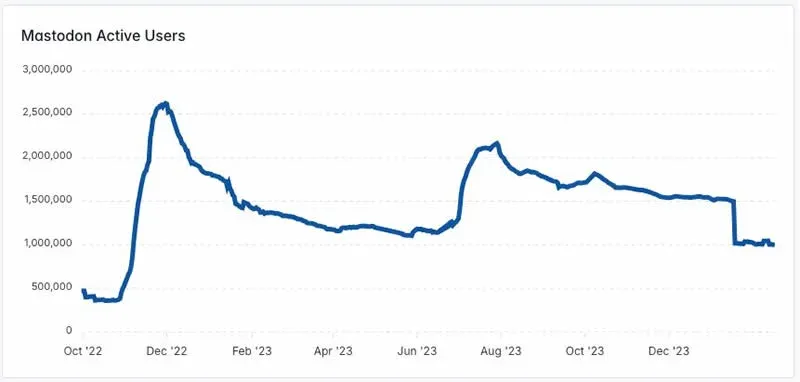
Before Web3, the only noteworthy attempt at decentralized social was Mastodon. Even after Elon Musk’s acquisition of Twitter, Mastodon was briefly seen as a possible beneficiary, but usability issues and a fragmented experience kept daily active users capped at roughly 1 million.
Today, projects like Farcaster and Lens employ brand‑new Web3 infrastructure, injecting fresh energy into the social networking space.
2. SocialFi
SocialFi embeds the core functionalities of Web3 into the decentralized finance (DeFi) layer of the social graph. Participants include content creators, influencers and ordinary users who seek to:
- Gain better control over personal data
- Achieve true freedom of expression
- Convert social influence into cryptocurrency income
Identity management is carried out via private‑key combinations, and many projects plan to use DAOs to provide censorship resistance, though a universal consensus has not yet emerged.
Main Differences Compared with Traditional Social Networks
- Token‑gated zones: Only users holding a creator’s token can access certain features.
- Tips: Small‑scale tipping using the platform’s native token or other cryptocurrencies.
- Subscriptions: One‑off or recurring crypto payments for digital goods or services.
- Platform incentives: Rewards distributed in the platform token based on user and creator activity.
These concepts have existed for years, but they only entered mainstream discussion after Friend Tech highlighted token‑gated chat. Friend Tech peaked at 800 k unique users before experiencing a sharp drop in retention.
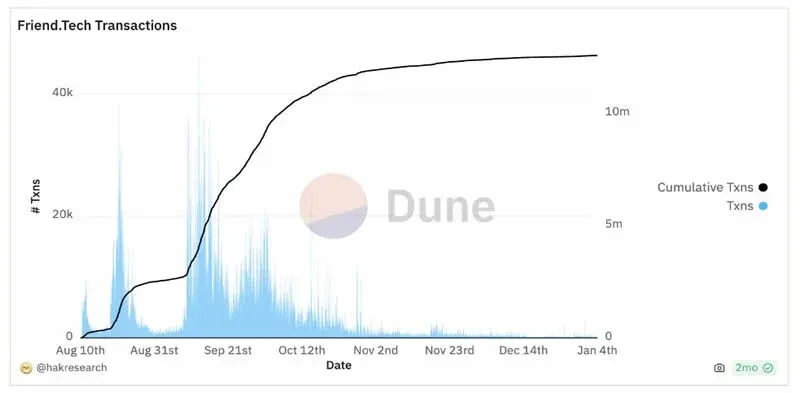
Long‑term user stickiness requires two pillars: network effects (the more users, the higher the platform’s value) and significant lasting utility (benefits that go beyond short‑term monetary gains).
3. Web3 Social Graph
A social graph maps relationships between entities such as people, organizations, and locations. Compared with legacy platforms (Facebook, Twitter, Instagram, TikTok), a Web3 graph lowers the friction of moving between services by exposing open data.
Projects like Lens and Farcaster are building open graphs that feed the same underlying data to a variety of user experiences. However, Facebook alone generates about 4 Petabytes of data per day, a volume that current blockchains cannot directly handle. Blockchains are optimized for permission‑less value exchange, not for high‑throughput content distribution.
4. Lens
The Lens protocol, created by Stani Kulechov (founder of Aave) and deployed on Polygon, is a composable social graph. Its core consists of several smart contracts, notably:
- Profile NFTs: Each NFT represents a user identity; the holder controls the associated social graph and the entire content history.
- Publications: Categorized as posts, comments, mirrors and quotes. Every publication includes a `ContentURI` that points to decentralized storage such as IPFS, Arweave or AWS S3; only the reference is stored on‑chain.
- Interaction model: Mirrors, comments and quotes follow a unified rule set (e.g., only followers may interact).
- Open actions: Developers can hook into protocol events (e.g., receiving a tip) to trigger custom logic.
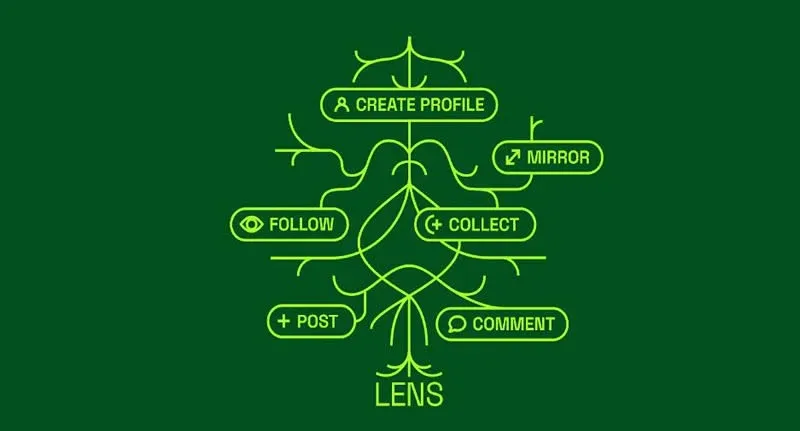
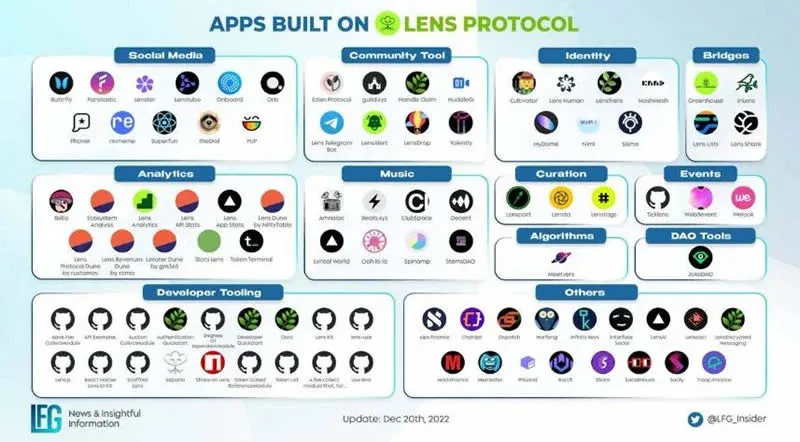
From day one Lens delegated front‑end development to the community, resulting in a variety of user interfaces. The ecosystem resembles a “marketplace” with projects like buttrfly, hey.xyz, and orb already attracting attention.
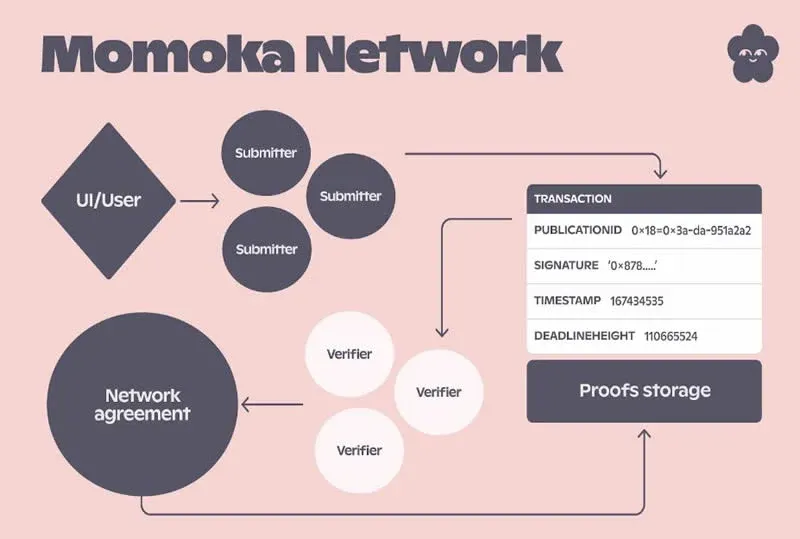
After Lens v1 had been running for a while, the team introduced Momoka—an optimistic Layer‑3 solution. Momoka uses a data‑availability (DA) layer that writes data to Arweave, thereby reducing storage costs on Polygon.
5. Farcaster
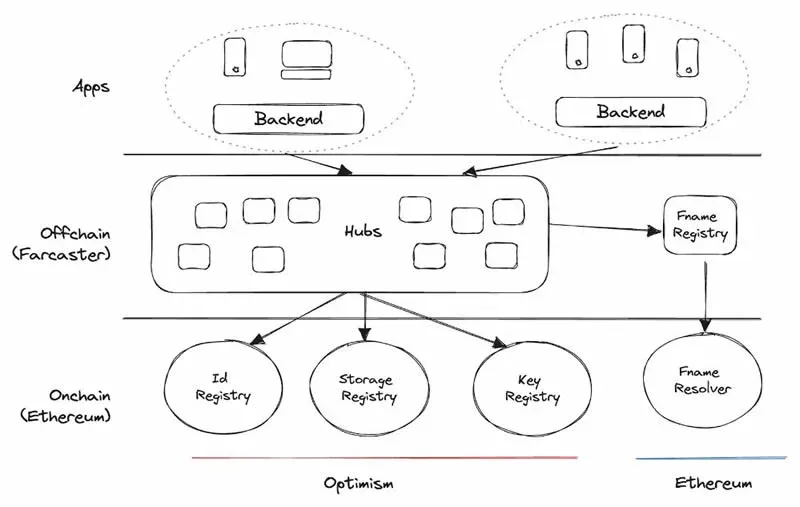
Farcaster runs on Ethereum and a peer‑to‑peer network called the “Hub,” employing a hybrid smart‑contract architecture. The most popular client is the official Warpcast, with paid‑feature alternatives such as Supercast and cross‑platform publishing tool Yup.
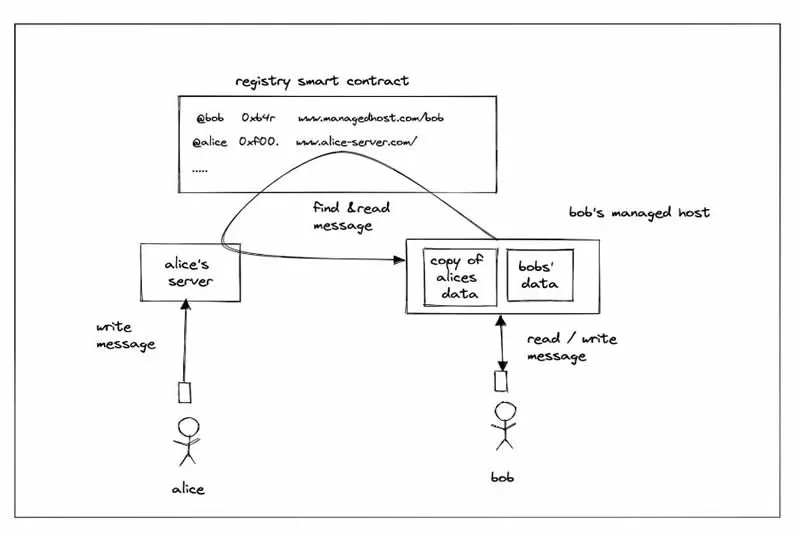
In 2022, Varun Srinivasan articulated the core idea in his “Sufficiently Decentralized” essay: a network can be considered “sufficiently decentralized” as long as no other part of the system can prevent two users from discovering each other and communicating. The key steps to achieve this are:
- Claim a unique username
- Publish content under that username
- Allow any valid username to read the content
Core Smart Contracts
- IdRegistry: Creates and manages accounts, supports transfers and recovery, and integrates with ENS for username registration.
- StorageRegistry: Lets accounts lease storage space; pricing is quoted in USD and converted to ETH via an oracle, with rates subject to supply‑and‑demand dynamics. *(US users should use Binance.US or other SEPA/SWIFT‑compatible on‑ramps to acquire USD‑denominated crypto.)*
- KeyRegistry: Issues application keys that allow delegated posting on behalf of an account.
These contracts do not handle the messages themselves. Message routing and storage are delegated to the Hub. The Hub consists of multiple “Hubble” nodes written in TypeScript and Rust, responsible for:
- Verifying message signatures
- Storing messages asynchronously using CRDTs (Conflict‑Free Replicated Data Types)
- Synchronizing differences via libp2p and Gossip‑based replication
- Performing random peer Merkle‑tree comparisons to guarantee eventual consistency
Nodes rate each other; those that behave anomalously (e.g., failing to forward valid messages) are pruned from the network.
Frames: Permission‑less Interaction Layer
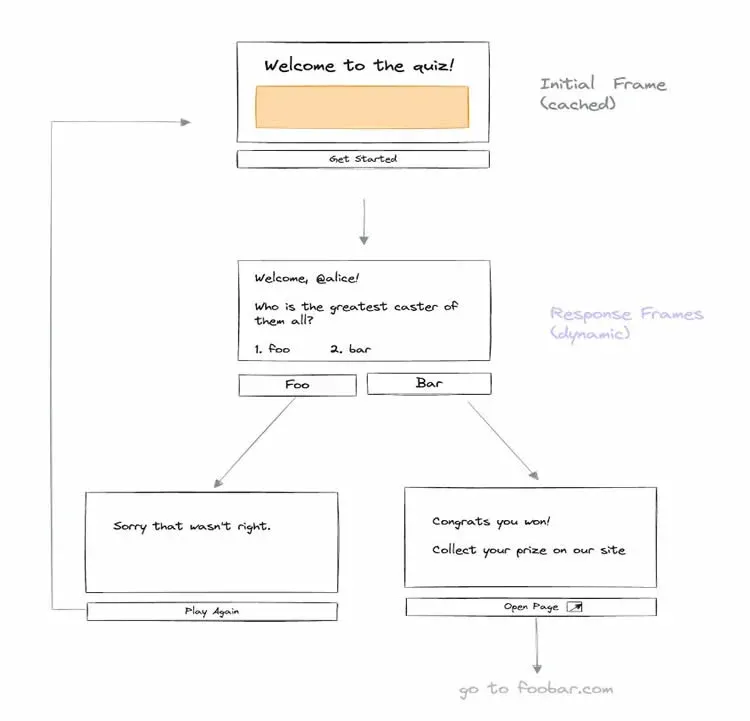
Frames extend the Open Graph protocol, allowing up to four interactive buttons to be overlaid on a static image. When a user clicks a button, the server returns a new image based on the button pressed and the user’s metadata, creating an interactive experience.
Any server capable of returning HTML can generate Frames; frameworks such as framesjs.org and frog.fm simplify development. After Farcaster’s successful launch, Lens also began experimenting with Frames, demonstrating the strong pull of standardisation.
6. Conclusion
Decentralized social networks still face critical challenges, including scaling infrastructure to support larger user bases, simplifying the onboarding process for new digital‑wallet users, and minimizing or eliminating gas fees wherever possible.
Nevertheless, the overall user experience has improved markedly. Taking Farcaster as an example, it reports roughly 50 000 daily active users and about 350 000 registered accounts, with a mobile experience that feels comparable to legacy social apps—an essential factor for user adoption.
The permission‑less nature of these protocols offers fertile ground for developers, spurring a wave of innovation such as aggregation platform yup.io, short‑video app drakula.app, and the SaaS suite neynar.com built specifically for Farcaster.
Founders can leverage local Web3 distribution channels, start from niche interest entry points, and expand the ecosystem through embedded features like Frames. At the same time, front‑end applications designed for onboarding new users can feed traffic back into the decentralized network, creating a virtuous feedback loop.
Note: Crypto gains may be taxable in many jurisdictions. Participants should consult local tax regulations and consider professional advice to ensure compliance.
[[IMGMARK_9]]
*Translation by Bitaigen*
💡 Register on Binance with referral code B2345 for the maximum trading fee discount. See Binance complete guide.



