
 Bitaigen Research
We examine the core differences among the four perpetual‑contract DEXes on Sui from both a technical and an ecosystem perspective, focusing on innovative features such as parallel transaction processing, object‑oriented data models, zkLogin, and sponsored transactions, as well as each project’s design philosophy. Reading the following sections will help you quickly grasp the competitive advantages of perpetual trading on Sui and the roadmap ahead.
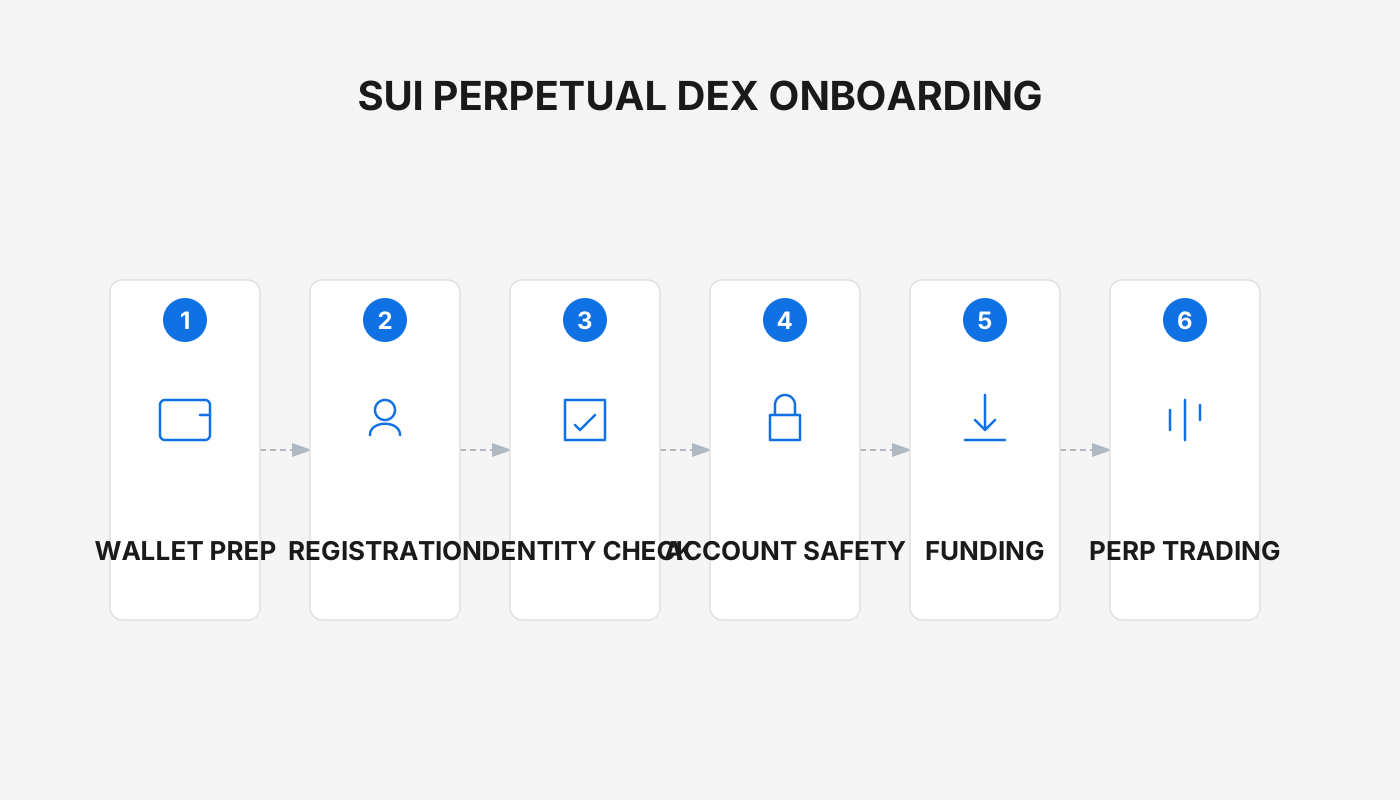
Sui’s Competitive Edge in the Perpetual‑Contract DEX Space
Compared with “traditional” blockchains, Sui offers several standout characteristics when building decentralized perpetual‑contract exchanges:
- Parallel transaction processing – Enables high throughput while keeping latency low, ensuring rapid order matching and a smooth trading experience.
- Object‑oriented data model – A storage approach centered on objects that allows account and asset information to be read and written efficiently in parallel.
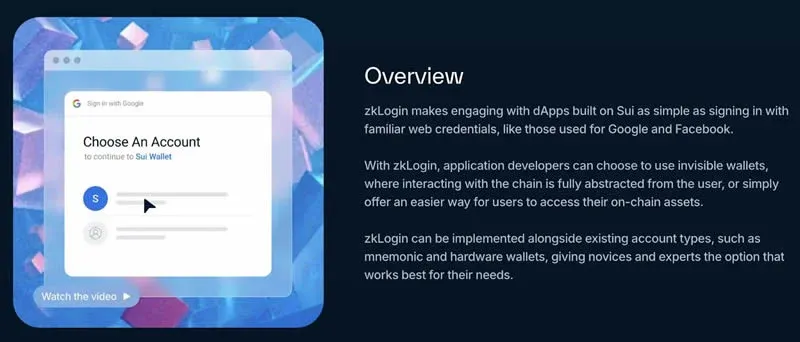
- zkLogin – Users can log in directly with familiar Web2 accounts, eliminating the need to create a wallet and manage mnemonic phrases, thereby lowering the entry barrier for newcomers.
- Sponsored transactions – The platform’s sponsorship mechanism can partially offset users’ fee costs, improving the overall user experience.
These technical building blocks lay a solid foundation for perpetual DEXes on Sui and have attracted several early‑stage project teams to join the ecosystem.
Early Builders and Projects Soon to Launch
- Bluefin
- Astros (backed by NAVI Protocol)
- Aftermath Finance
- Typus Finance (utilizing a GLP trading model)
In addition, Kriya is preparing its own perpetual‑contract DEX and is expected to go live in the near future.
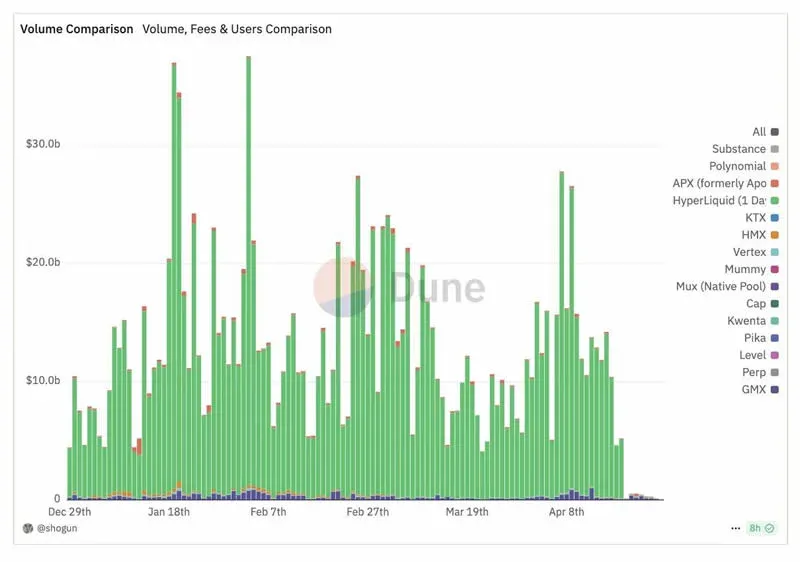
Market Background: The Shift from Centralized to Decentralized
Since the FTX incident, the trading landscape has undergone a fundamental transformation, with a large number of users migrating to decentralized perpetual‑contract exchanges (Perp DEXes). These platforms frequently record daily trading volumes exceeding $30 billion USD, underscoring the strong demand for derivatives in the decentralized sector.
However, early‑stage Perp DEXes tended to be fragmented and were constrained by UI/UX usability, liquidity depth, and price‑feed reliability, which limited large‑scale adoption. By 2024, the emergence of innovative models such as GMX’s PVP and dYdX’s order‑book design sparked new market trends. At the same time, lending, DEX, and yield‑trading protocol teams on the Sui network began releasing perpetual‑contract products, further enriching the ecosystem’s value chain.
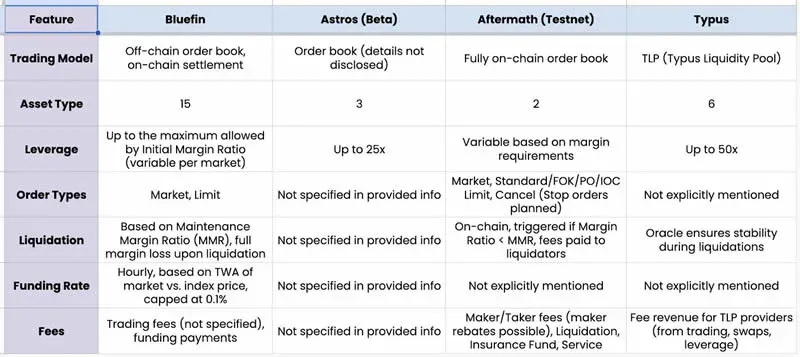
High‑Level Comparative Overview
Before diving into a detailed analysis of each protocol, the table below provides a consolidated snapshot to help you quickly capture their core distinctions.
In‑Depth Protocol Analyses
Bluefin
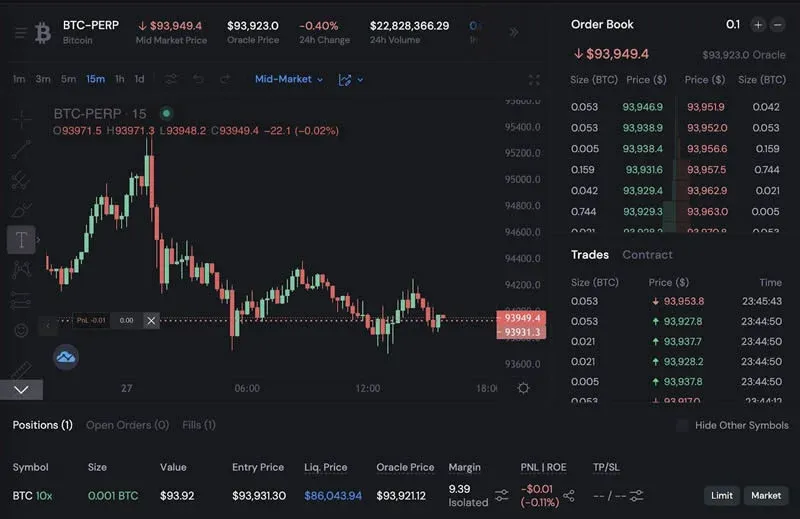
Bluefin is the earliest deployed perpetual‑contract DEX on Sui. It employs a hybrid model that combines an off‑chain order book with on‑chain settlement, with liquidity supplied by professional market makers (MMs).
- Leveraging Sui’s parallel transaction capability, order‑execution latency stays below 500 ms, and on‑chain finality is equally swift.
- Supports virtually every perpetual‑contract asset available on Sui, offering the broadest coverage, including $DEEP, $WAL, $TRUMP, and others.
- 24‑hour trading volume ranges from $40 million to $70 million USD, indicating active market participation.
- The BTC‑PERP pair accounts for roughly 60 % of daily volume, followed by SUI‑PERP and ETH‑PERP.
- According to Defi Llama, annualized fees amount to about $4 million USD.
The UI/UX is clean and intuitive, with the trading view clearly presenting all necessary information. Bluefin also integrates Sui’s zkLogin natively, allowing users to log in without managing mnemonic phrases, which markedly reduces the onboarding friction.
Aftermath (Testnet)
Aftermath launched its Perp DEX testnet in November 2024, opting for a fully on‑chain order‑book structure—a clear departure from the majority of DEXes that rely on off‑chain matching. The project is still in testing, and publicly available on‑chain statistics are limited. Its primary focus is to boost both the DEX’s own liquidity and the TVL of existing pools, with potential incentive programs slated for the mainnet rollout.
Astros (Beta)
Astros, built by NAVI Protocol, functions as both a DEX aggregator and a perpetual‑contract platform. Like Bluefin and Aftermatter, Astros utilizes an order‑book mechanism. Because it remains in beta, details about partnered market makers and exact matching logic have not yet been disclosed. Nevertheless, its 24‑hour trading volume has already reached $300 million USD, driven largely by an ongoing trader‑incentive campaign.
Typus Perp
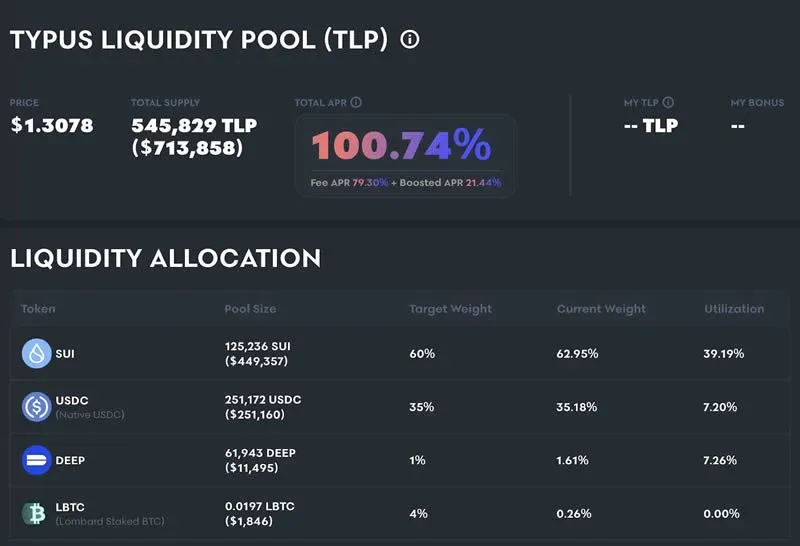
Typus Finance introduced a GMX‑style perpetual‑contract DEX roughly two weeks ago. Defi Llama reports a 24‑hour turnover of about $200 k USD, while the TLP (Token‑Liquidity‑Provider) pool holds a TVL exceeding $700 k USD. The pool’s assets include $SUI, $USDC, $DEEP, $LBTC, and the current APR has surpassed 100 %.
Observations and Conclusions
- Order‑book dominance – The perpetual‑contract DEXes within the Sui ecosystem predominantly adopt an order‑book architecture, which aligns well with the platform’s technical strengths and enjoys user approval.
- Scarcity of assets and meme‑coin potential – While the range of supported assets is currently limited, a protocol that can quickly tap into high‑volatility, high‑profit‑potential meme‑coins could markedly boost trading activity.
- Incentive requirements during the early stage – Compared with mature Perp DEXes on EVM‑compatible chains and Solana, Sui’s cumulative trading volume and liquidity are still nascent, making incentive programs crucial for attracting both liquidity providers and traders.
Regulatory note: Crypto gains may be taxable in your local jurisdiction; be sure to consult a tax professional.
Localization note: All fiat references use United States Dollars (USD). For cross‑border fiat transfers, SEPA (for Euro‑zone participants) and SWIFT (global) are the typical settlement networks. Users residing in the United States should access Binance services through Binance.US rather than the global Binance platform.
Related Reading
💡 Register on Binance with referral code B2345 for the maximum trading fee discount. See Binance complete guide.



