
 Bitaigen Research
 XRP Ledger (XRPL) – The Decentralized Blockchain Powering the XRP Token
Key Takeaways
- XRP Ledger processes up to 1,500 transactions per second, settles in 3‑5 seconds, and fees start at roughly $0.0002 USD.
- Its Federated Consensus consumes less energy than a typical email server, enabling a carbon‑neutral operation.
- Countries such as Bhutan and Palau are building Central Bank Digital Currencies (CBDCs) on XRPL.
- A built‑in decentralized exchange (DEX) natively supports fungible tokens and NFTs.
- The network eliminates the latency and high fees of traditional banks, operating 24/7 all year round.
- Each account must retain a minimum balance of 1 XRP, and since 2012 the ledger has closed over 70 million ledger versions.
This article walks XRPL newcomers through core concepts and practical usage points, explains the relationship between the ledger and the XRP token, highlights the advantages of its consensus mechanism, and showcases real‑world use cases in cross‑border payments and digital assets. With this beginner’s guide you can quickly master the basics of XRPL and start enjoying fast, low‑cost blockchain payments.
What Is the XRP Ledger?
XRP Ledger (XRPL) is a decentralized blockchain launched in 2012 that focuses on rapid, inexpensive payments while supporting a variety of digital assets. Think of it as a digital superhighway built for moving money: transfers complete in seconds instead of days.
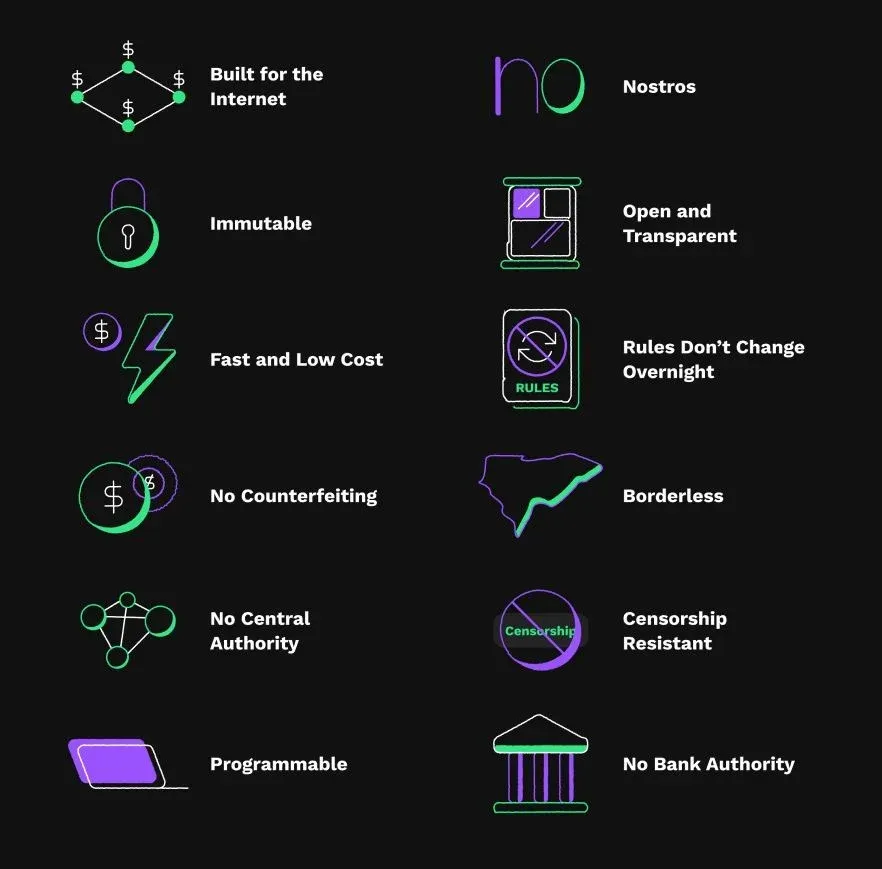
Unlike traditional blockchains that rely on energy‑intensive mining, the XRPL network uses a unique Federated Consensus model, where a trusted validator network verifies transactions. The result is an eco‑friendly, ultra‑fast system: transactions settle in 3‑5 seconds, fees start at just $0.0002 USD, and the network can handle up to 1,500 transactions per second.
The core advantage of XRPL is its carbon‑neutral design: its power consumption is comparable to running a single ordinary email server, completely avoiding the high energy draw of competitive proof‑of‑work mining.
XRP vs. XRP Ledger: The Fundamental Difference
- XRP – The native digital currency that circulates on the network, used for value transfer and as a bridge asset.
- XRP Ledger – The underlying blockchain infrastructure that supports XRP and other assets, handling transaction processing and validation.
An easy analogy is email (XRP) and the Internet (XRPL): without the Internet you can’t send email; similarly, without the XRP Ledger you can’t move XRP.
When the network launched in 2012, 10 billion XRP were created in a single issuance, with no further minting. The founding team allocated 8 billion to Ripple Labs to fund ecosystem development.
The Birth of the XRP Ledger
In 2011, engineers David Schwartz, Jed McCaleb, and Arthur Britto proposed a “Bitcoin without mining” to address Bitcoin’s massive energy consumption. In June 2012 the XRP Ledger went live, offering higher speed, lower energy use, and greater scalability. In September of the same year they founded Ripple Labs, building commercial applications on the open‑source XRPL.
Since then XRPL has run continuously, closing more than 70 million ledger versions without any major outage, earning the trust of financial institutions and developers alike.
How Does the XRP Ledger Operate?
1. XRPL Consensus Protocol
The XRP Ledger consensus protocol differs sharply from Bitcoin’s proof‑of‑work mining or Ethereum’s proof‑of‑stake. It employs Federated Consensus: a group of trusted validators collect transactions, propose a new ledger version, and share it with one another. After multiple voting rounds, if ≥ 80 % of validators agree, the ledger is finalized. The system tolerates up to 20 % of validators being offline or faulty while still maintaining security.
2. Transaction Flow
- The user enters a destination address and amount in a wallet, then signs the transaction with their private key.
- The signed transaction propagates to the network, where validators check the sender’s balance and verify formatting.
- Validators bundle valid transactions into a proposed ledger and submit it for the next consensus round.
- Once 80 % of validators accept the proposal, the transaction is permanently recorded, with settlement taking 3‑5 seconds.
- Typical fees are about 0.00001 XRP (≈ $0.00001 USD), making the ledger ideal for both micro‑payments and large cross‑border transfers.
3. Energy Efficiency & Green Blockchain
XRPL’s energy draw equals that of a standard email server because it completely discards competitive mining. Validators reach consensus through communication, not massive computation, and there is no block‑reward incentive tied to newly minted coins. Consequently, XRPL is regarded as a “green” blockchain, attracting institutions that prioritize sustainability.
Trade XRP on MEXC right now
Core Features of XRPL
1. Built‑In DEX & AMM
The XRPL DEX is a native decentralized exchange; users can swap assets without relying on a centralized platform. A recent upgrade introduced an Automated Market Maker (AMM), allowing participants to provide liquidity pairs, earn transaction fees, and enable instant price discovery.
2. Tokenization & Smart‑Contract‑Like Capabilities
- Fungible tokens (e.g., stablecoins) – Natively supported without complex contracts.
- NFTs – Built‑in royalty mechanisms make minting and trading extremely cheap.
- Escrow – Funds can be locked until predefined conditions are met, enabling conditional payments that function similarly to smart contracts.

3. Stablecoins & CBDC Integration
XRPL has become a preferred platform for numerous CBDC projects. For instance, the Royal Monetary Authority of Bhutan, Palau, as well as Montenegro and Colombia are exploring or deploying digital currencies on XRPL. Ripple’s RLUSD stablecoin is already live on the ledger and leverages the AMM for instant liquidity.
Typical Use Cases for XRPL
1. Cross‑Border Payments
Traditional bank wire transfers can take 3‑5 business days, cost $25‑$50 USD, and are limited to banking hours. XRPL settles in 3‑5 seconds with a flat fee of about $0.0002 USD regardless of amount, providing a 24/7, low‑cost alternative. For fiat transfers, users typically employ SEPA (Europe) or SWIFT (global) corridors, but the underlying blockchain fees remain negligible.
2. DeFi & Algorithmic Trading
Low fees and real‑time order‑book data create fertile ground for algorithmic trading. Traders can execute arbitrage, market‑making, and other strategies on the XRPL DEX, benefitting from rapid settlement that prevents capital from being locked up.
3. Asset Tokenization
- Real‑Estate Tokenization – The Dubai government issued property‑share tokens on XRPL.
- Sovereign‑Bond Tokenization – Ondo Finance tokenized U.S. Treasury bonds, allowing global investors to trade them on‑chain.
- NFTs – Minimal fees and built‑in royalty splits encourage artists to launch and trade NFTs on XRPL.
Getting Started with XRPL: Wallets & Setup
Recommended Wallets
- Xaman – A mobile‑first, non‑custodial wallet built specifically for XRPL, giving you full control of your private keys.
- Hardware Wallets – Ledger Nano S/X support XRPL, providing offline key storage for maximum security.
- Exchange Wallets – Platforms such as MEXC (or Binance.US for U.S. residents) are convenient for beginners testing small amounts.
Account Setup Essentials
- Minimum Reserve – Each account must retain 1 XRP as a reserve to deter spam.
- Destination Tag – Required when sending XRP to an exchange; it ensures the funds are credited to the correct user account.
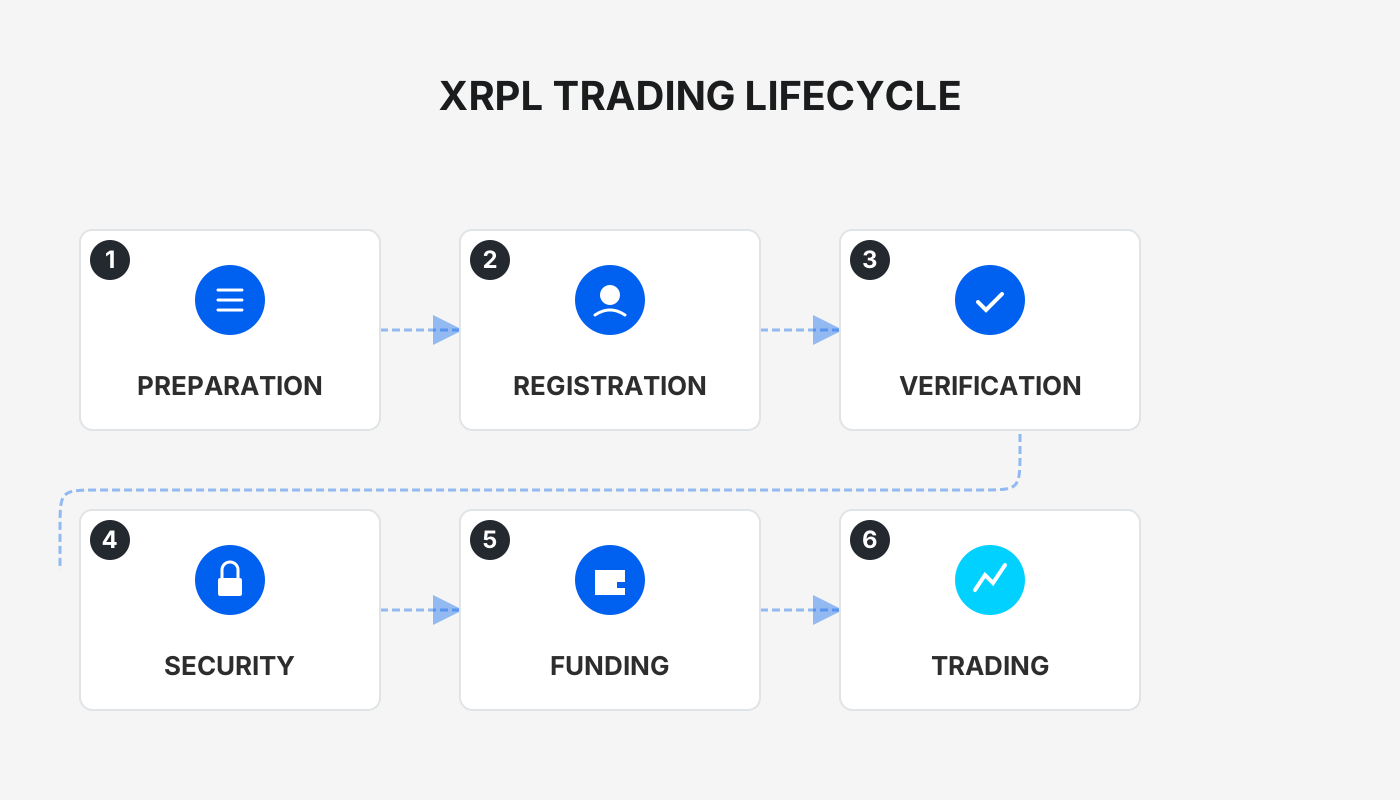
First‑Time Transaction Steps
- Verify the destination address (a string beginning with “r”).
- Confirm the fee (about 0.00001 XRP ≈ $0.0001 USD).
- Submit the transaction; settlement occurs within 3‑5 seconds.
XRPL vs. Ethereum vs. Traditional Banks
| Feature | XRPL | Ethereum | Traditional Banks |
|---|---|---|---|
| Transaction finality | 3‑5 seconds | 12 seconds+ (depends on congestion) | 3‑5 days |
| Typical fee | $0.0002 USD (starting) | Up to $50 USD during peaks | $25‑$50 USD |
| Primary use case | Fast payments, built‑in DEX, tokenization | Rich smart‑contract ecosystem | Account transfers, credit services |
| Operating model | 24/7 continuous | 24/7 continuous | Business days / hours |
The Roadmap Ahead for XRPL
- EVM Sidechain – Introduce Ethereum‑compatible smart contracts while preserving XRPL’s speed advantage.
- Enhanced AMM – Offer more flexible liquidity pools and improved capital efficiency.
- CBDC Expansion – Additional sovereigns plan to launch digital fiat on XRPL.
- Regulatory Clarity – The 2023 court ruling that clarified XRP’s regulatory status is encouraging broader institutional adoption.
Frequently Asked Questions
Q1: Is the XRP Ledger the same as Ripple?
A: No. The XRP Ledger is an open public blockchain anyone can use; Ripple is a company that builds products on top of the ledger and does not control the network itself.
Q2: Can I stake XRP?
A: No. XRP does not employ a staking mechanism; network security comes from the Federated Consensus of validators.
Q3: Are there private versions of the XRP Ledger?
A: Only one public XRPL exists. Ripple’s private banking solutions may use XRP as a bridge currency, but they are not separate ledgers.
Q4: How secure is the XRP Ledger?
A: Since its launch in 2012 the ledger has not suffered any major security breach. Its consensus tolerates up to 20 % of validators being offline or malicious.
Q5: What are the transaction fees?
A: Roughly 0.00001 XRP per transaction (≈ $0.0001 USD). Fees may rise slightly under heavy load but generally stay well below one cent.
Tax note: Crypto‑related gains, including those from XRP, may be taxable in your jurisdiction. Please consult a qualified tax professional to understand your local obligations.
Conclusion
The XRP Ledger combines speed, ultra‑low cost, and a carbon‑neutral footprint, delivering a blockchain solution that traditional finance struggles to match. Since its 2012 debut it has processed over 70 million ledger versions, consistently offering 3‑5 second settlement and negligible fees. New users can start by downloading the Xaman wallet, loading a modest amount of XRP, and experimenting with payments or the built‑in DEX. As the ecosystem expands—with EVM sidechains, richer AMM features, and growing CBDC interest—XRPL is poised to play an increasingly pivotal role in digital finance.
For a deeper dive into XRP itself, see “What Is XRP? The Complete Guide to Ripple’s Cryptocurrency and Its Outlook.”
That’s the end of this article. For more XRPL‑related content, search Bitaigen (比特根) archives or continue browsing the articles below. Thanks for reading and for your support!
Related Reading
- XRPL(XRP账本)概览:技术框架、生态与跨境支付优势
- Ethereum Layer 2 Explained: Scalability, Low Fees & Speed
- Binance & OKX Tokenize US Stocks: Apple, Tesla on Chain
💡 Register on Binance with referral code B2345 for the maximum trading fee discount. See Binance complete guide.



