
 Bitaigen Research
 In this article we conduct an in‑depth analysis of Atomic Wallet’s core features and security mechanisms, helping users understand its decentralized management, multi‑chain support, and how atomic swaps operate in practice. Through a comprehensive evaluation of the technology and user experience, we aim to help you determine whether this wallet meets your asset‑management needs. Continue reading for details.
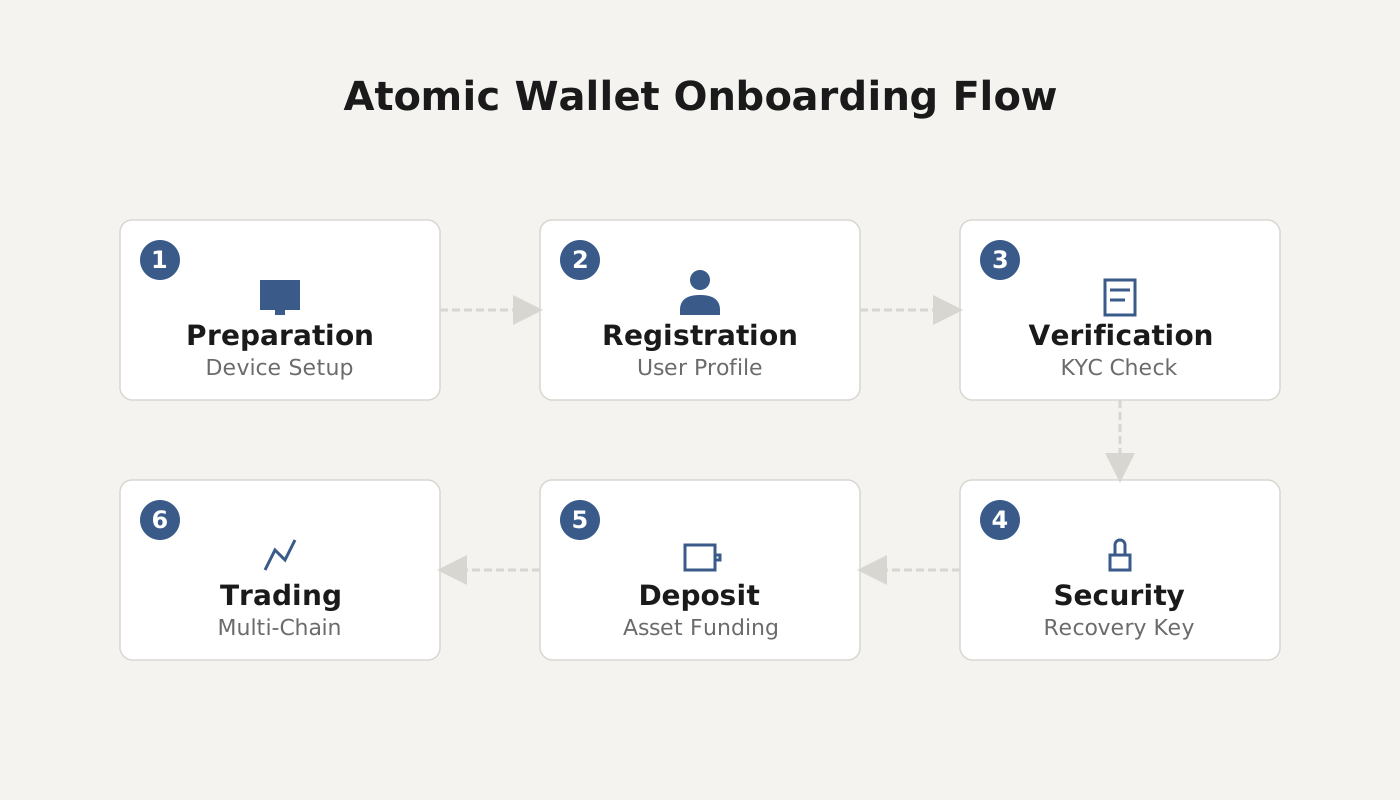
What is Atomic Wallet? Is Atomic Wallet Secure?
Atomic Wallet is a decentralized digital wallet built on cross‑chain technology. Private keys are encrypted and stored locally, giving users full control over security. The wallet supports assets across multiple blockchains and offers Atomic Swaps as well as zero‑fee staking capabilities.
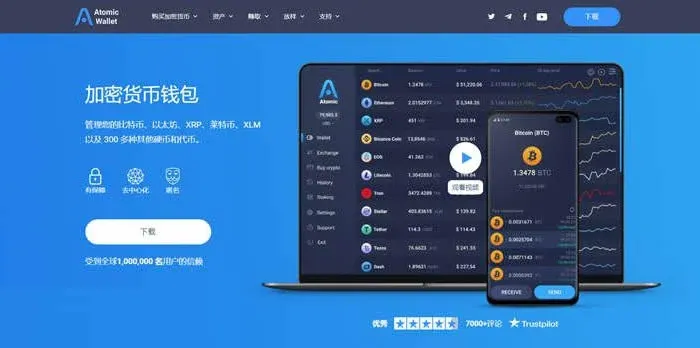

Overview
- Type: Decentralized finance (DeFi) wallet
- Size: 14.49 MB
- Language: Simplified Chinese (the app also offers English and other languages)
- Release date: 2021‑08‑25
Atomic Wallet was officially launched in 2018. Leveraging cross‑chain technology, it provides unified management of assets on many networks. By the end of 2020 the wallet supported more than 20 blockchains and listed over 500 different assets. If a particular ERC‑20 token does not appear automatically, users can manually add it by entering the token’s contract address.
Main Features
- One‑stop asset management
- Purchase, swap, stake and view balances all within a single application.
- Direct purchases are possible with credit or debit cards; the offering now includes 18 cryptocurrencies and a fixed 2 % fee quoted in USD.
- After a purchase, funds can only be sent to on‑chain addresses; fiat withdrawals (e.g., via SEPA or SWIFT) are not supported at this time.
- Two swap methods
- Instant swap: Liquidity is provided by third‑party aggregators such as ChangeNow and Changelly, enabling second‑level exchanges.
- Atomic Swap: Users may place their own orders or fulfill existing ones, with the ability to set minimum/maximum amounts and collateral ratios. This method is limited to currency pairs that have already been launched on the platform.
- Zero‑fee staking
- Supports 11 assets for staking, including ATOM, XTZ, TRX, NEO, GAS and the native token AWC.
- Annual percentage yields (APY) depend on the specific asset, ranging from 1.4 % (NEO) up to 23 % (AWC). Staking is performed by delegating to validator nodes.
Security Analysis
- Locally encrypted private keys: All private keys and mnemonic phrases remain on the user’s device and are never uploaded to any server.
- Strong password protection: Access to the wallet and any critical operation requires entry of a password or biometric verification.
- Decentralized architecture: Atomic Wallet functions only as an interface to the underlying blockchains; it does not custody user funds.
To maintain security, users should follow these basic practices:
- Keep the operating system and security software on the device up to date.
- Safely back up the 12‑word mnemonic seed and never expose it in an online environment.
- Use a complex password and enable two‑factor authentication wherever it is available.
Usage Recommendations
- Before downloading the latest official version, verify the application’s signature to avoid malicious tampering.
- For large holdings, consider using a hardware wallet for offline storage; Atomic Wallet can serve as a convenient tool for everyday transactions.
- Periodically review the asset list inside the wallet and manually add any missing token contract addresses.
---
The above outlines the core characteristics and security assessment of Atomic Wallet. For a deeper dive into this wallet, stay tuned to Bitaigen’s upcoming specialist articles.
Related Reading
- Infinito Wallet Review: Features, Positioning, and User Experience
- OKX Web3 Wallet Review: Secure Multi‑Chain Crypto Management
- Symbiosis & Uniswap v4 Hooks: Atomic Swaps for Crypto 2025
💡 Register on Binance with referral code B2345 for the maximum trading fee discount. See Binance complete guide.



