
 Bitaigen Research
 How to Choose? 2026 Best Liquid Staking Platforms Review
In the DeFi ecosystem, liquid staking enables token holders to earn network rewards while keeping their assets tradable. Unlike traditional locked staking, these protocols issue a receipt token that represents a share of the staked assets (LST). Holders can freely trade the receipt token on secondary markets or use it in other financial activities. With yield volatility, contract security, and technical barriers all posing challenges, selecting a platform that balances high returns with robust safety becomes especially critical. Below, the Bitaigen team has systematically examined 40 leading platforms based on decentralisation level, yield performance, user experience, fee structure, and ecosystem integration, helping you quickly pinpoint the most suitable solution.

The Bitaigen editorial team conducts a comprehensive evaluation of liquid staking platforms on the market, focusing on safety, yield, fee structure, and ecosystem integration. Core concepts are clarified and selection guidance is provided to help you quickly lock in the most appropriate option. This article will take you through the strengths and potential risks of each platform; continue reading for practical references.
1. Core Concepts and Advantages of Liquid Staking
What Is Liquid Staking
Liquid staking is a mechanism that keeps assets tradable while they are staked. After a user deposits a token (e.g., ETH) into a protocol, they immediately receive an equivalent Liquid Staking Token (LST) (such as stETH, JitoSOL). The LST behaves like a regular token on‑chain—it can be traded, used as collateral, or supplied as liquidity—while the underlying asset continues to earn staking rewards on the base network.
Differences From Traditional Staking
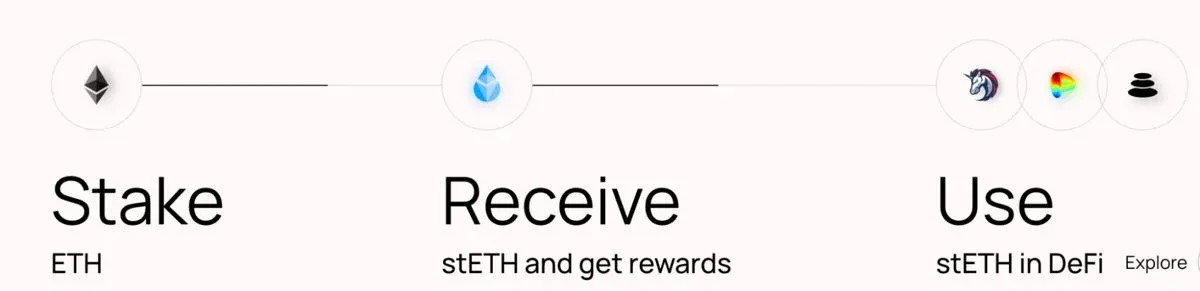
Traditional staking locks assets for a set period; the classic example is the 32 ETH minimum to run an Ethereum validator node. When the market swings sharply, stakers can only watch passively. Liquid staking breaks this limitation through the following steps:
- Deposit assets into a protocol (e.g., Lido).
- The protocol instantly mints an equivalent amount of LST.
- The original assets keep accruing roughly 4.8%‑15.5% annual staking rewards on the underlying chain.
- The LST can be employed in any DeFi scenario, generating additional returns.
Think of it as issuing a “checking‑account draft” against a staked asset: the principal keeps earning interest in the background, while the draft can circulate freely in the crypto market.
Main Advantages
- Enhanced Liquidity: Once tokenised, the staked value can be used directly on decentralized exchanges or lending platforms.
- DeFi Interoperability: LSTs can serve as collateral, provide liquidity, or participate in yield farms, enabling stacked multi‑chain earnings.
- Reduced Opportunity Cost: No need to wait for an unlock period before chasing other investment opportunities.
- No Need to Build Own Infrastructure: Even users who cannot meet the minimum requirement for a solo validator can share block rewards via LSTs.
Potential Drawbacks
- Slashing Risk: If the chosen validator is removed for malicious behaviour, the staking token may be partially or fully confiscated.
- Centralisation Tendencies: Concentrating large amounts of assets in a few protocols or validator pools can weaken the decentralisation of PoS networks.
- Regulatory Uncertainty: Jurisdictions worldwide differ in how they treat staking receipts; participants should verify local compliance requirements before engaging.
2. Key Steps for Selecting a Liquid Staking Platform
Step 1: Review Protocol Security and Audits
- Audit Reports: Verify whether recent audits have been performed by reputable firms such as Trail of Bits, Quantstamp, or others.
- Bug‑Bounty Programs: Check if the platform offers incentives for security researchers to disclose critical vulnerabilities.
- Operator Reputation: Investigate the historical performance and exit mechanisms of the validator set.
Step 2: Compare Yields and Fee Structures
- Management Fee: Understand what percentage of rewards the platform takes (commonly 5%‑10%).
- Yield Sources: Distinguish between base block rewards, MEV tips, and protocol‑specific incentives.
- Reward Distribution Frequency: Confirm whether rewards accrue daily, weekly, or per‑block automatically.
Step 3: Assess Token Liquidity and Ecosystem Integration
- DEX Liquidity: Look at depth and slippage on major decentralized exchanges for the receipt token.
- DeFi Usability: Determine if mainstream lending or derivatives platforms accept the token as collateral.
- Exit Latency: Measure the time required to withdraw the LST from the protocol and redeem it for the original asset.
Composite Evaluation Dimensions
- Security: Prioritise protocols that have undergone multiple audits and employ a non‑custodial architecture.
- Yield vs. Cost: While chasing high APY, keep an eye on the proportion of fees taken by the service.
- Liquidity Depth: LSTs deeply integrated into primary DeFi markets (e.g., stETH, rETH) provide greater practical utility.
- User Experience: For newcomers, “one‑click stake” options offered by centralized exchanges often feel smoother and usually come with customer support.
3. Centralised vs Decentralised Liquid Staking
Centralised platforms (e.g., Binance, Bybit) typically custody user assets, provide a unified trading account, and credit staking rewards directly to the account balance. The entry barrier is low, but users inherit the platform’s concentration risk. Decentralised protocols (e.g., Lido, Rocket Pool) adopt a non‑custodial model where assets are locked in smart contracts; security depends on code audits, and they are more exposed to contract‑level bugs. The core distinction lies in asset custody and risk distribution; investors should align their choice with personal risk tolerance.
Note for U.S. users: When accessing Binance services, you must use Binance.US, which complies with U.S. regulatory requirements, rather than the global Binance platform.
4. Liquidity Re‑Staking vs Ordinary Liquid Staking
- Liquid Staking: Assets are tokenised into an LST to improve liquidity while still earning the base staking reward.
- Liquidity Re‑Staking: On top of ordinary liquid staking, the LST is further staked into contracts such as EigenLayer to capture additional re‑staking rewards. This stacks primary staking yield with secondary incentives, potentially raising returns but also layering contract‑level risk.
5. Top‑Tier Platform Comparison Table
| Platform | Trust Score | TVL (USD) | Supported Chains | Annual Yield | Notable Features |
|---|---|---|---|---|---|
| Lido | 4.9/5 | $27.5 B | Ethereum | 2.39% | Deep integration of stETH across major DeFi |
| Binance | 4.8/5 | $12 B | ETH, SOL | 2.46%‑5.31% | Unified account; usable as margin collateral |
| Jito | 4.8/5 | $1.8 B | Solana | 5.89% | Optimised MEV tip capture |
| Bybit | 4.8/5 | $230 M | SOL, ETH | 5.8% | Zero management fee; supports instant spot |
| DoubleZero | 4.6/5 | $1.62 B | Solana | 7.41% | High‑speed N1 network layer |
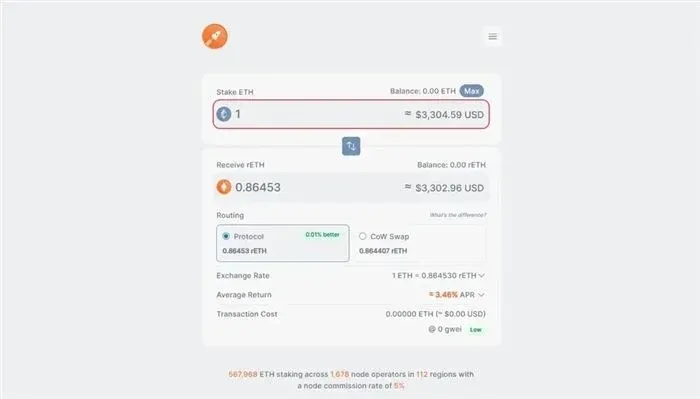
| Rocket Pool | 4.6/5 | $1.67 B | Ethereum | 3.46% | Decentralised, community‑governed |
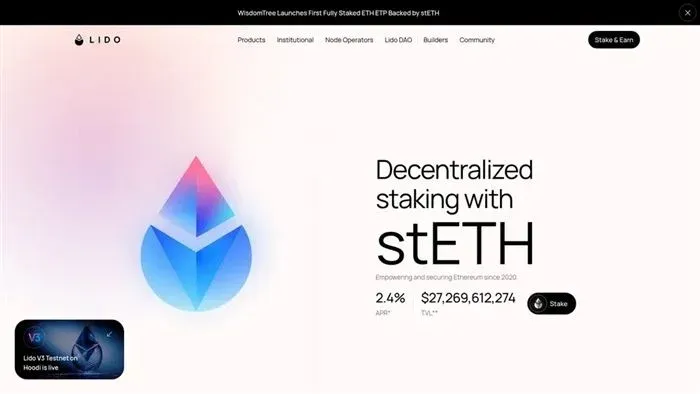
5.1 Lido (Ethereum)
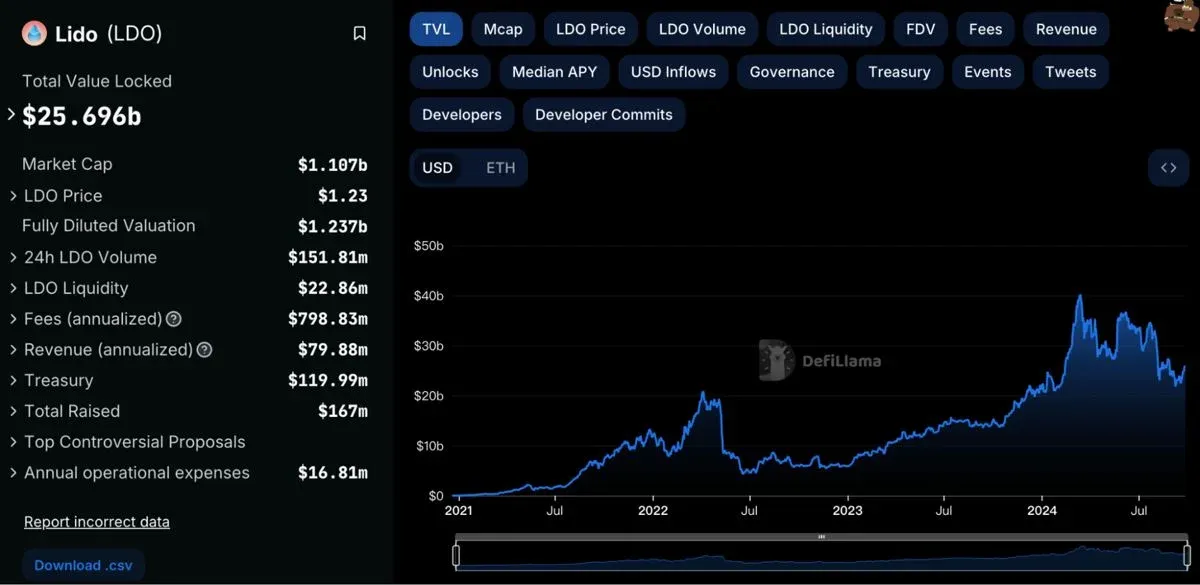
- Strengths: The world’s largest liquid staking protocol with $27.5 B TVL and excellent liquidity; the native token stETH is widely accepted across DeFi.
- Weaknesses: Charges a 10% fee on staking rewards; heavy concentration on Ethereum raises centralisation concerns.
- Latest Update: Lido V3 launched in 2024, adding institution‑grade “stVaults” that let large participants select their own node operators.
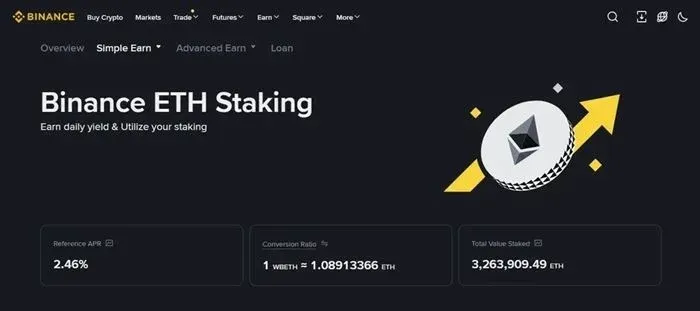
5.2 Binance (Centralised)
- Strengths: Highest liquidity among all centralised exchanges; WBETH and BNSOL can be directly used for lending and margin trading.
- Weaknesses: Assets are custodied by a central entity; regulatory transparency and internal governance are limited.
- Fees: Rewards are influenced by internal validator performance and the exchange’s fee schedule.
Fiat Considerations: When moving fiat into or out of Binance, users can employ USD via SEPA/SWIFT transfers, depending on their jurisdiction.
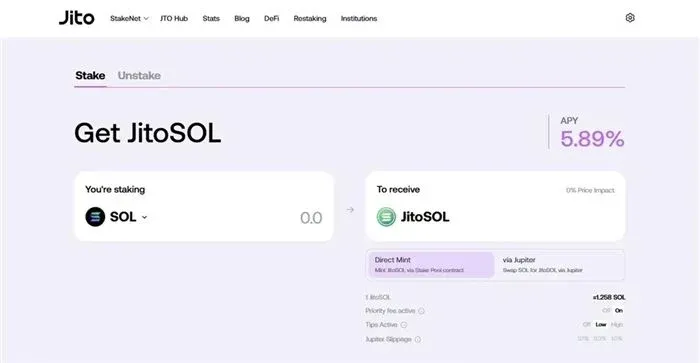
5.3 Jito (Solana)
- Strengths: Boosts MEV revenue through validator tip optimisation, delivering a 5.89% annualised return.
- Weaknesses: Imposes a 5% management fee; yields are sensitive to Solana network health.
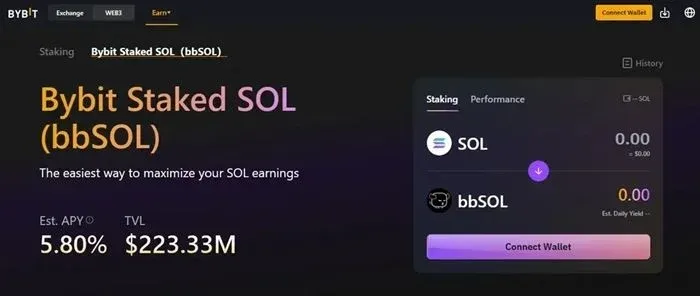
5.4 Bybit (Centralised)
- Strengths: bbSOL carries zero management fee and only a 0.1% deposit fee; can be pledged directly within a unified account.
- Weaknesses: Users must entrust private keys to the exchange; bbETH’s on‑chain utility is comparatively limited.
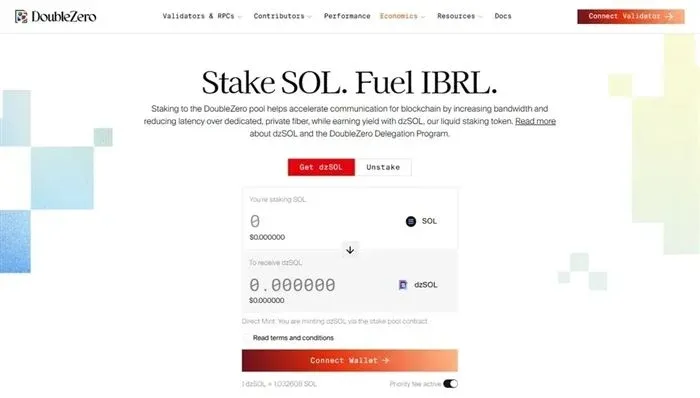
5.5 DoubleZero (Solana)
- Strengths: Proprietary 2Z network layer reduces validator latency and lifts MEV earnings.
- Weaknesses: Higher technical barrier; the 2Z ecosystem is still expanding.
5.6 Rocket Pool (Ethereum)
- Strengths: Decentralised node network that does not require the 32 ETH minimum; the “Saturn” upgrade introduced a massive pool to lower entry thresholds.
- Weaknesses: Relatively higher fees; rETH liquidity trails behind centralised products.
6. Quick Look at the Top Ten Liquid Staking Tokens
| Rank | Token | TVL (USD) | Notes |
|---|---|---|---|
| 1 | Lido stETH | $25.737 B | Deepest market, 4%‑6% yield |
| 2 | Binance WBETH | $3.738 B | Supports spot and lending |
| 3 | Rocket Pool rETH | $3.189 B | Decentralised validator network |
| 4 | Mantle mETH | $1.332 B | Non‑custodial protocol built on Ethereum L1 |
| 5 | Coinbase cbETH | $528.18 M | Cross‑chain support, strong liquidity |
| 6 | StakeStone STONE | $428.61 M | LayerZero cross‑chain compatible |
| 7 | Frax frxETH | $362.15 M | Deeply tied to the Frax stablecoin system |
| 8 | StakeWise osETH | $345.3 M | Multi‑Vault design |
| 9 | Stader ETHx | $345.25 M | Multi‑chain, deployed on Hedera |
| 10 | Swell swETH | $308.52 M | Also offers liquid re‑staking LRT |
6.1 Lido stETH Details
- Founded: 2020, by a team from P2P Validator.
- Funding: Roughly $1.7 B total, with backers such as Paradigm, a16z, Dragonfly, among others.
- Yield: 4%‑6% annualised; can be swapped for wETH on Curve, Uniswap, etc.
- Cross‑Chain: Supports Solana, Polygon, Polkadot, Kusama, and more.
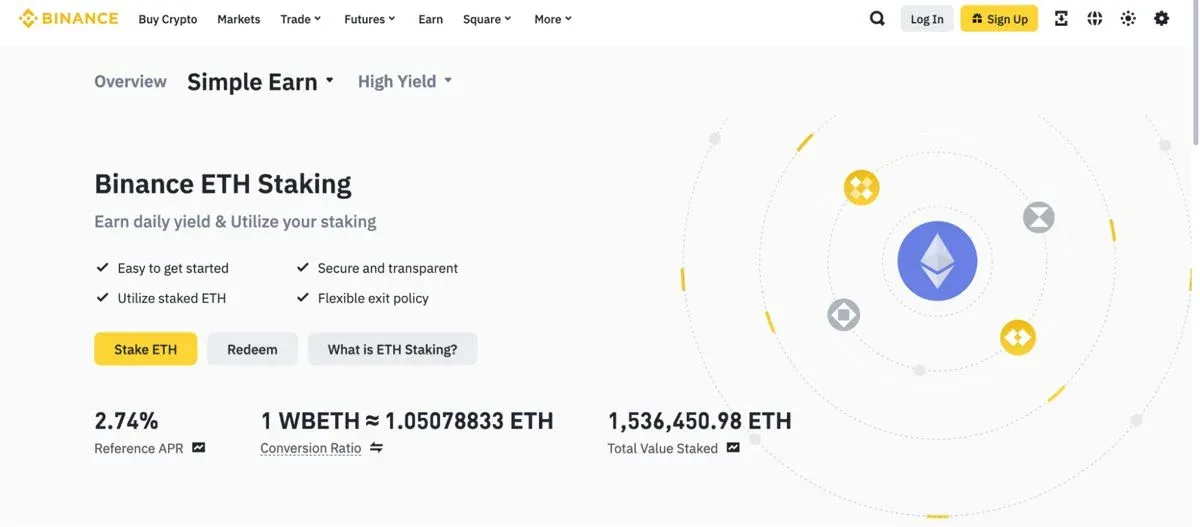
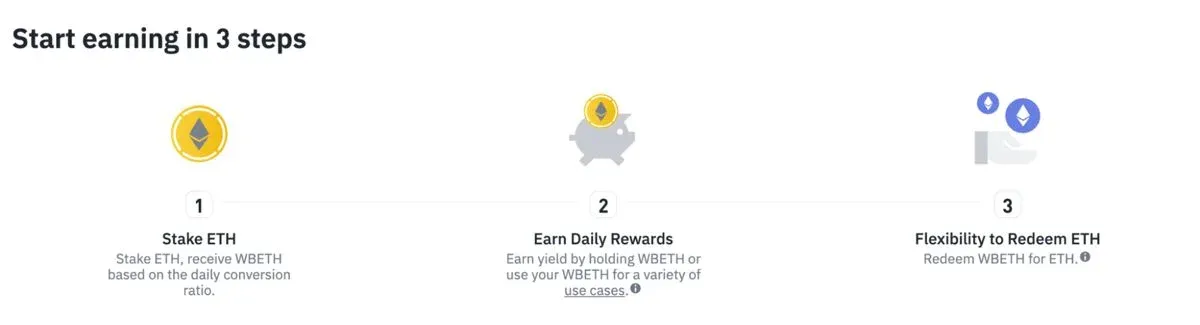
6.2 Binance WBETH
- Minimum: As low as 0.0001 ETH.
- Reward: Current APR around 2.74%, fluctuating with on‑chain staking returns.
- Ecosystem: WBETH can be used for spot trading, lending collateral, and is compatible with many DeFi scenarios.
Fiat Note: Binance allows fiat deposits and withdrawals in USD via SEPA (for European users) or SWIFT (for global users). Always confirm the applicable fees and processing times.
6.3 Rocket Pool rETH
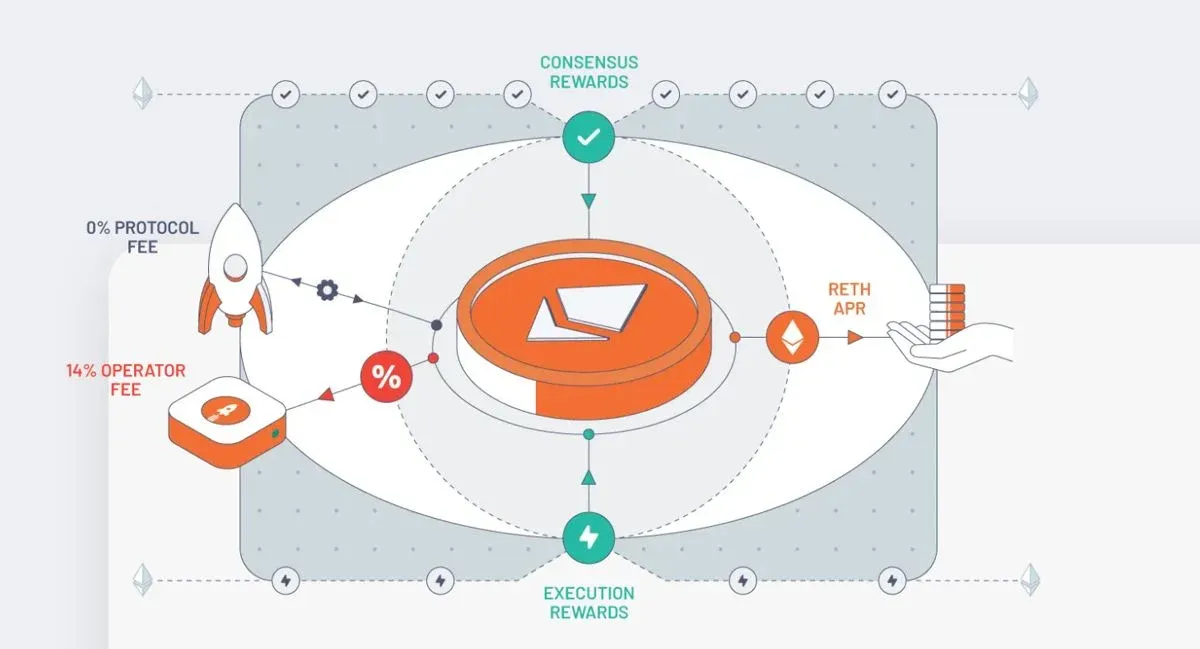
- Nodes: 3,753 operators, staking over 721,000 ETH, representing 8.59% of the total ETH staking market.
- Yield: Liquid staking APR ≈ 2.58%; node‑operator staking APR ≈ 5.01%.
- Feature: Permission‑less node network governed by the community.
6.4 Mantle mETH
- Backing: DAO project led by BitDAO, with a fund size of about $3.4 B.
- Yield: 3.39% annualised; total staked ETH amounts to 500,722.
- Process: Users receive mETH after staking; redemption returns ETH plus accrued rewards.


