
 Bitaigen Research
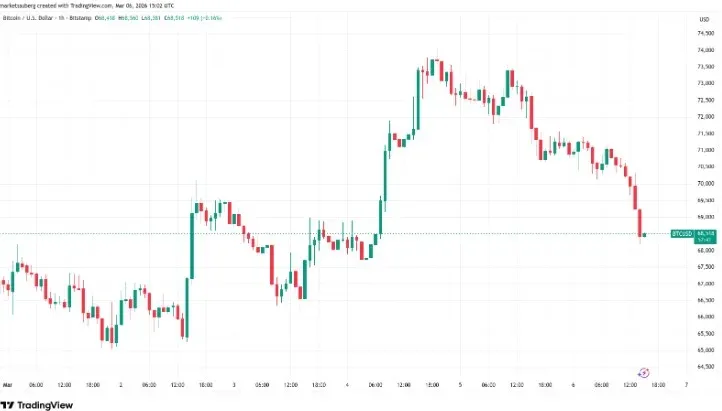
 Bitcoin briefly touched the $74,000 level before losing further upward momentum. The United States’ February non‑farm payroll data came in surprisingly weak, failing to support crypto assets or other high‑risk instruments, and as a result Bitcoin (BTC) slipped below the $70,000 threshold when Wall Street opened on Friday. Below we analyse the situation from three angles: the labour‑market performance, market expectations, and Bitcoin’s price action.

Starting from the latest performance of the US labour market, we dissect its potential impact on Bitcoin’s price and combine it with the Federal Reserve’s policy outlook, helping readers understand the logic behind the recent market move. If you want to know why Bitcoin retreated at a critical juncture, keep reading for our view on possible future direction.
Key Takeaways
- The February US non‑farm payroll report missed expectations, causing both Bitcoin and equities to move lower.
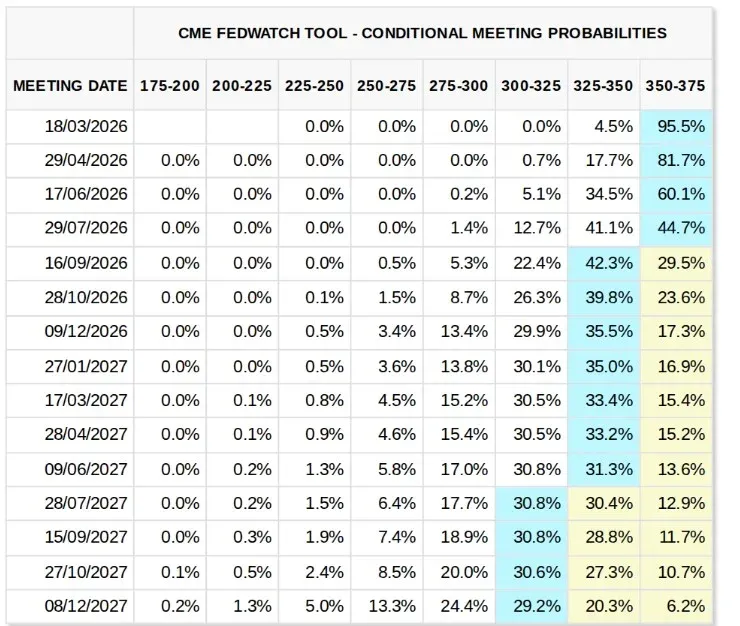
- The Federal Reserve’s rate stance remains hawkish, with the market broadly expecting only one rate cut this year.
- BTC’s price has retraced again recently, continuing the overall downtrend that has persisted since early 2026.
Weak Labour Market and Market Expectations
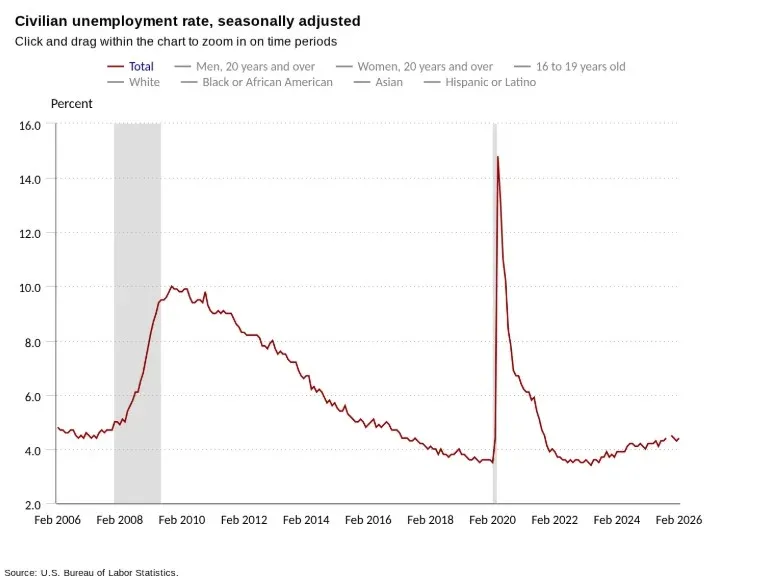
Data released by the US Bureau of Labor Statistics show that February saw a loss of 92,000 jobs, far below the previously forecast +58,000. The unemployment rate rose to 4.4 %, also exceeding expectations. The *Kobeissi Letter* on X noted that this marks the second month since the pandemic’s onset in 2020 that a net loss of jobs was recorded, indicating a waning resilience in the US labour market.
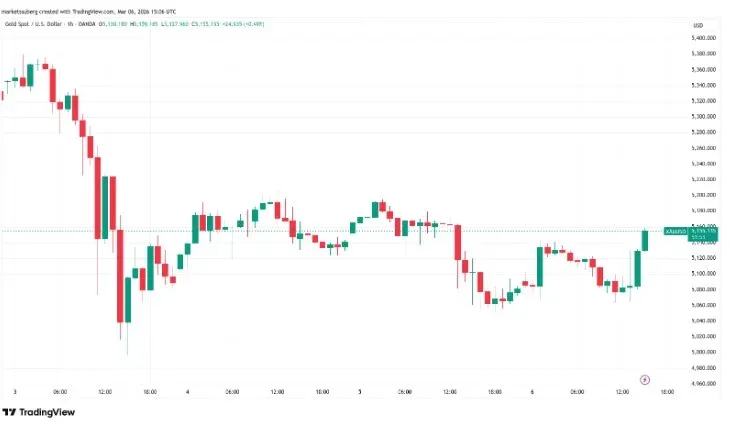
Under normal circumstances, labour‑market weakness would raise expectations of a rate cut, which is generally bullish for risk assets such as cryptocurrencies. However, the CME Group’s FedWatch Tool indicates that the probability of a Federal Reserve rate reduction at the March 18 meeting remains extremely low, and markets still project only a single cut for the entire 2026 calendar year. Consequently, the soft jobs data failed to spark buying in risk assets, and Bitcoin fell in tandem with the S&P 500 and Nasdaq Composite, which closed down 1.5 % and 1.3 %, respectively. By contrast, gold held up relatively well, gaining about 1.5 % to $5,155 per ounce.
Overview of US Non‑Farm Payroll Data

*Source: BLS*
Federal Reserve Rate Expectations

*Source: CME Group*
Gold Price Movement

*Source: Cointelegraph/TradingView*
Bitcoin’s Pullback and Technical Signals
Data from TradingView show that BTC fell more than 3 % during the day, touching a low of $68,176 on the Bitstamp exchange. The move indicates that after breaking out of its recent range, Bitcoin was pushed back down, further cooling market sentiment.
On‑chain analytics platform CryptoQuant’s Maartunn observed that over the past several months Bitcoin has repeatedly attempted to breach key resistance levels only to be met with selling pressure, with the most recent pull‑back occurring around the $71,000 mark. He warned that this price zone could turn into a trap for traders chasing higher‑priced positions.

*Source: J. A. Maartunn/X*
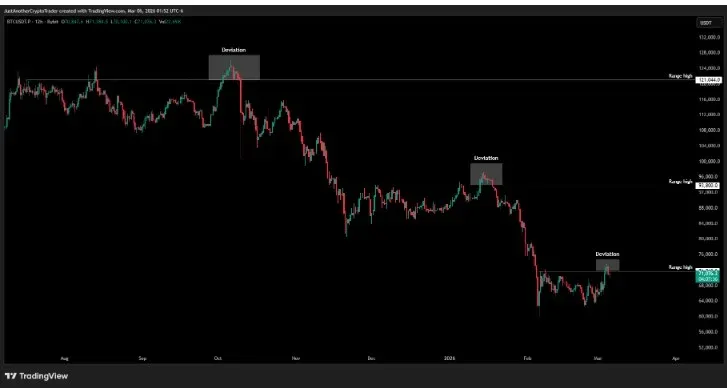
In addition, the 12‑hour chart of the BTC/USDT perpetual contract shows the price re‑testing long‑term support zones, including the 200‑week exponential moving average (EMA) and the 2021 historical high. Material Indicators co‑founder Keith Alan added that Bitcoin appears to be sliding back into its former consolidation block, creating a “replay” pattern.
Summary
Bitcoin’s recent slide toward $68,000 was shaped by a combination of a weakening US labour market and hawkish expectations from the Federal Reserve. While traditional safe‑haven assets such as gold posted gains, the broader risk‑asset class continued its downward trajectory. Future deterioration in employment figures or a shift in Fed policy could further influence Bitcoin’s price volatility.
For more Bitcoin‑related information, search for Bitaigen (比特根) or continue reading the articles linked below. We appreciate your ongoing interest and support.
💡 Register on Binance with referral code B2345 for the maximum trading fee discount. See Binance complete guide.



