
 Bitaigen Research
 In this article we outline the recent decline in Solana network activity, examine how competing blockchains are affecting its ecosystem, and focus on the “flash” indicator favored by traders to understand its impact on SOL price movements. By presenting multi‑dimensional data and case studies, we aim to help readers spot potential opportunities. Continue reading for a full perspective.
Weakening Solana Network Activity Amid Intensifying Competition
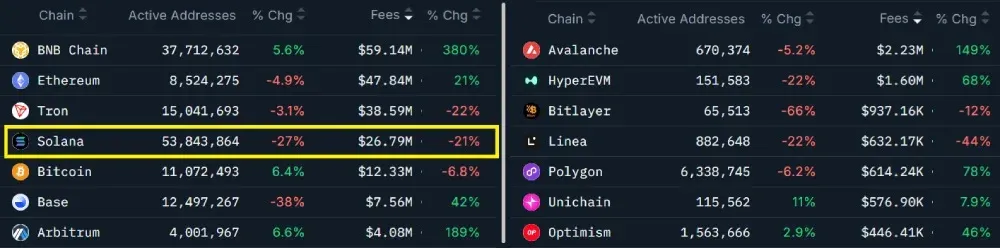
On‑chain data shows that while the price of SOL has climbed back above $200, overall network activity continues to slide. Since the meme‑coin boom of 2025, the volume of on‑chain transactions and DApp usage on Solana has failed to resume growth, and the rise of newer chains has eroded its leading position in the decentralized exchange (DEX) space.
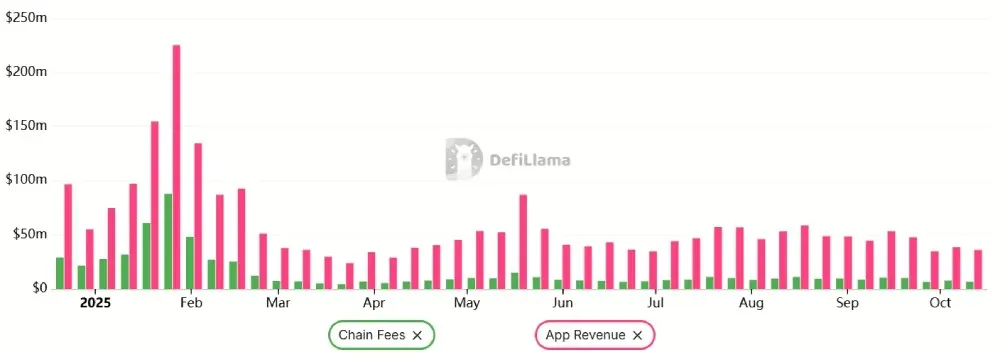
- Weekly revenue: Decentralized applications on Solana generate roughly $35.9 million in revenue per week, while network fees amount to about $6.5 million, a 35 % decline from the previous month.
- Competitors: Fees on BNB Chain, Ethereum, and Hyperliquid have risen sharply; BNB Chain alone now records weekly fees of $59.1 million, underscoring the loss of market share for Solana.
By contrast, Layer‑2 networks (Base, Arbitrum, Polygon) and Uniswap have each posted over 40 % growth in weekly fees this week, with Uniswap’s weekly fees surpassing $83.8 million, driven largely by active trading on Ethereum and the Base chain. Hyperliquid also saw a notable fee surge following market volatility last Friday.
Note for U.S. users: When accessing cryptocurrency exchanges, be sure to use Binance.US rather than the global Binance platform.
---
SOL Price Rebound and Bullish Momentum Considerations
On Tuesday this week, SOL again broke the $200 barrier, recovering from the $167 low that followed last Friday’s flash crash. Earlier, a record $1.73 billion long‑position liquidation had a profound effect on SOL derivatives, prompting the market to reassess whether bullish momentum remains sustainable.
Key takeaways
- Although the price has risen above $200, weak on‑chain activity and heightened competition limit the upside potential.
- Traders’ bearish sentiment has softened somewhat, yet stagnant network growth and the shift of market share continue to suppress SOL’s upward trajectory.
Tax reminder: Gains from cryptocurrency trading may be taxable in your jurisdiction; consult a tax professional for guidance.
---
Funding‑Rate Signals from Perpetual Contracts
The annualized funding rate for SOL perpetual contracts is currently hovering around 0 %, far below the typical 6 %–12 % range seen in a healthy market. Notably, the rate stood at roughly 4 % before last Friday’s collapse and has since slipped into neutral or slightly negative territory.
- When the funding rate turns negative, it generally indicates that short‑sellers hold the advantage, although such a condition is hard to sustain when carrying costs are high.
- The present near‑zero or negative rate reflects lingering pressure from last week’s liquidations in the derivatives market, which could further amplify the overall impact on SOL.
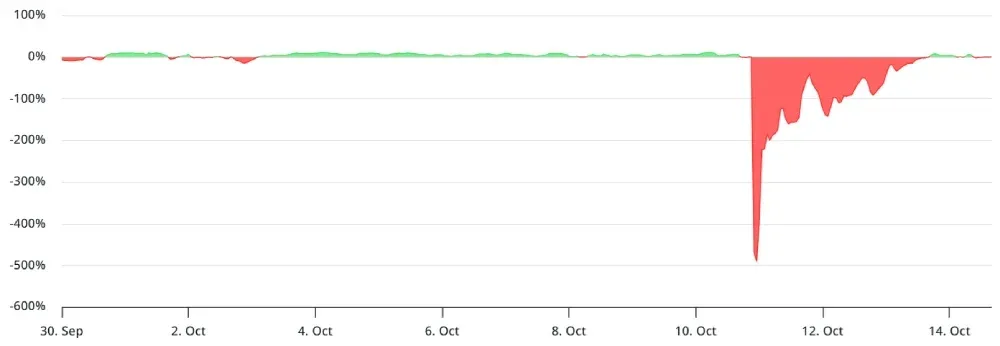
*SOL perpetual futures funding rate, annualized. Source: Laevitas.ch*
---
Options Market Positioning
Deribit’s options trade‑volume ratio offers insight into trader sentiment. Over the past week, the volume ratio of SOL put (bearish) options to call (bullish) options stayed below 90 %, indicating limited demand for either strongly neutral or bearish positions. Historically, when the market anticipates a correction, this ratio often climbs above 180 %—the last time such a high was observed was on September 20, after which SOL surged 26.7 % within eleven days.
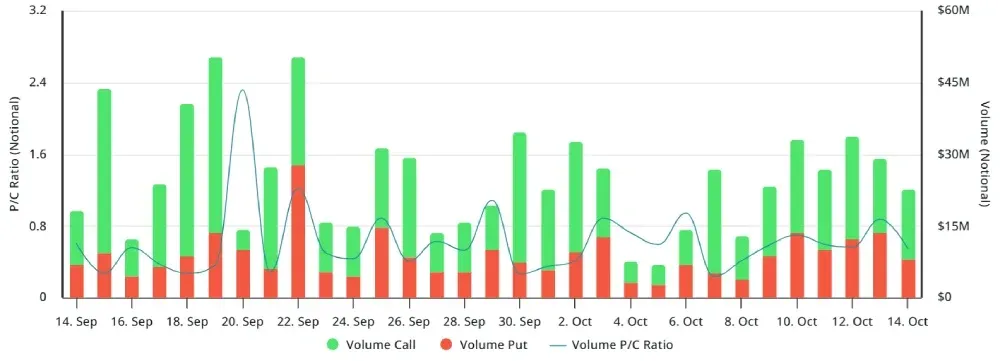
*Ratio of SOL put‑option to call‑option volume on Deribit. Source: Laevitas.ch*
Although last Friday’s flash crash may have introduced short‑term distortion to this metric, the continued strength of competing chains and the persistent lull in on‑chain activity remain warning signs. The rise of platforms such as Aster, Hyperliquid, and Uniswap further compresses Solana’s upside room.
---
Conclusion and Outlook
Even though bearish sentiment toward SOL has not intensified dramatically, a single catalyst—such as a potential U.S. approval of a spot Solana exchange‑traded fund (ETF)—is unlikely to push the price toward the $300 mark in the short term. Considering on‑chain activity levels, fee competition, and the balance of long and short forces in the derivatives market, the probability of SOL breaking $300 by the end of the year remains constrained.
That concludes our analysis of the “flash” indicator favored by Solana traders and the prospects for SOL reaching $300 before December. For more SOL‑related content, you can search for prior articles from Bitaigen or continue reading the related pieces below. Thank you for your ongoing interest and support of Bitaigen!
💡 Register on Binance with referral code B2345 for the maximum trading fee discount. See Binance complete guide.
⚠️ Risk Disclaimer: Crypto prices are highly volatile. This is not investment advice.



