
 Bitaigen Research
 In this article we outline the operational logic of the Time.fun project under the endorsement of the Solana official team, assess whether it can inject fresh capital into the ecosystem after Pump.fun siphoned liquidity, and conduct an in‑depth analysis of the core on‑chain risks currently faced. The piece presents a multi‑dimensional view to help readers discern the potential opportunities and challenges of the project; it is worth a careful read.
Back‑stabbing Pump.fun: Can the Solana‑official‑backed Time.fun Restore Liquidity?
With repeated endorsements from the Solana team, Time.fun leverages a MEME mechanism that could help recover part of the liquidity in the short term, but the overall ecosystem pressure remains a key challenge.
On February 24, after Time.fun officially launched on Solana, the Solana core team quickly offered strong support, and even Solana co‑founder Toly mentioned the project by name in a tweet, boosting market visibility. This move served as a direct response to the liquidity drain caused by Pump.fun and signaled that, after a wave of celebrity‑token scandals that battered the Solana ecosystem, the platform is again searching for a growth path.
Pump.fun Intends to “Flip the Table”, Deepening Solana’s Ecological Crisis
Following the celebrity‑coin scandals such as Libra, Solana saw its liquidity evaporate rapidly and market sentiment stay depressed. As the current cycle’s traffic engine and on‑chain “money printer”, Pump.fun can no longer provide sufficient liquidity. Its self‑built AMM, token‑issuance rumors, continuous token sell‑offs, and regulatory lawsuits have generated multiple uncertainties, prompting clear discontent from Solana officials.
- January lawsuit: Bloomberg Law reported that Pump.fun faces a class‑action suit alleging violations of U.S. securities law for issuing unregistered, highly volatile Meme tokens, exposing investors to massive financial risk and collecting nearly $500 million in fees. The case was filed in the Southern District of New York, with plaintiffs labeling it a “Ponzi scheme and a new‑type pump‑and‑dump”.
- Intellectual‑property dispute: U.S. law firm Burwick Law together with Wolf Popper also sued Pump.fun, demanding removal of infringing tokens and accusing the platform of using their logo and name without authorization.
- Performance decline: As the Meme hype faded, Pump.fun’s graduation rate and trading volume both dropped sharply, directly hurting overall activity in the Solana ecosystem.
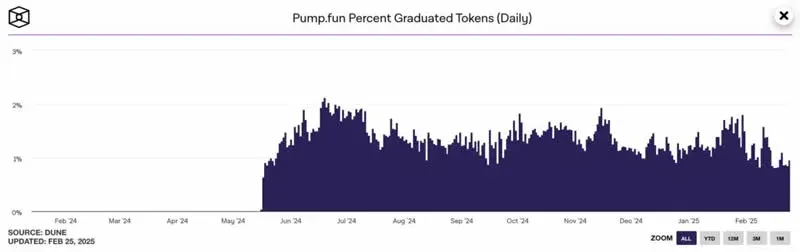
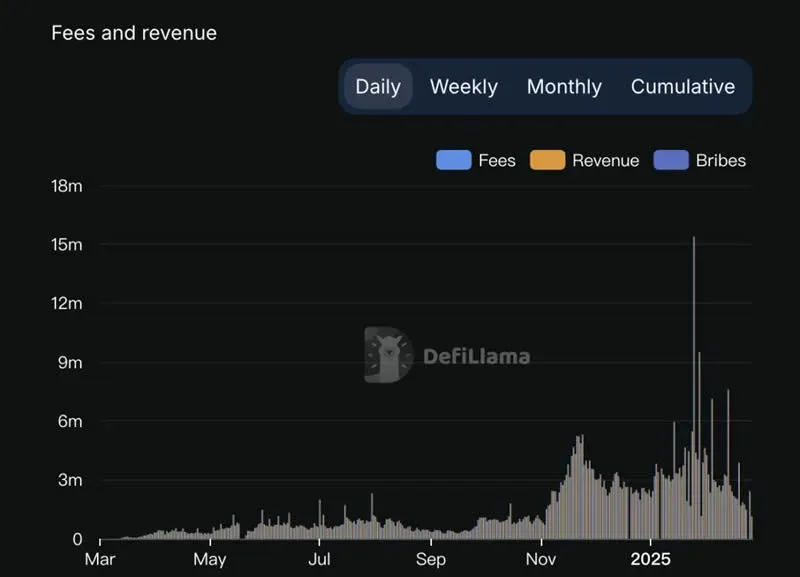
Data from The Block shows that by February 24, the graduation rate of Pump.fun tokens that migrated to Raydium was only 0.96 % (a 54.7 % decline from the historic peak of 2.12 %). On the same day, average daily on‑chain transaction volume fell from the $3.13 billion peak in January to $190 million, a drop of 93.9 %. DefiLlama recorded protocol fee revenue decreasing from $15.38 million on January 25 to $2.45 million on February 25, a fall of roughly 84.1 %.
Potential Shockwaves from Pump.fun’s Business Pivot
The downturn forced Pump.fun to explore new products. In early April, crypto influencer He Bi (@hebi555) revealed on X that Pump.fun plans to conduct a public offering on several centralized exchanges (CEX) using a Dutch‑auction model. Although co‑founder Alon denied the rumor, multiple CEXs have confirmed that a listing plan is in discussion and said they will publish relevant documentation once approved.
- Revenue streams: On‑chain analytics firm Onchain Lens shows that Pump.fun has accumulated roughly 2.99 million SOL, valued at about $431 million. Its annual revenue has already surpassed $1 billion, placing it among the top ten global betting operators for 2024.
- Proprietary AMM: On February 24, rumors surfaced that Pump.fun was internally testing a self‑developed AMM liquidity pool. Community speculation suggests the platform may launch its own swap service to replace Raydium and capture a larger share of transaction fees. If true, this would impact DEXs such as Raydium and Jupiter, which currently host a large portion of Pump.fun’s liquidity.
- Market reaction: Data from CoinGecko indicates that after the AMM rumor emerged, the price of Raydium’s token RAY fell 40.9 %, although broader market weakness also contributed to the decline.
Core contributor InfraRAY labeled the move a “strategic mis‑step”, warning that a shift to a new AMM could encounter infrastructure shortfalls, low migration demand, and insufficient trading volume during the early launch phase. Notably, the Solana Foundation invested in Raydium (October 2020) and Jupiter (March 2021); Pump.fun’s “going solo” directly touches the foundation’s interests, adding further uncertainty to the ecosystem.
In a recent tweet, Toly criticized Pump.fun’s behavior, implying that market disruptors will eventually face the consequences, while companies that provide transparent fees and quality products deserve to compete.
MEME‑Powered Backing: Time.fun Receives Strong Support from Solana Officials
After the backlash against Pump.fun, Time.fun emerged as the Solana‑official‑endorsed newcomer of a similar class. Like Friend.tech, Time.fun is a time‑tokenization platform that allows creators to package personal time into tradable tokens.
- Project origin: The platform also originates from AllianceDAO, initially built on the Base network before announcing a migration to Solana in November 2024.
- Official endorsement: Following the February 24 migration, founder 0xKawz posted a MEME token titled “toly’s minutes” on X. Toly promptly replied, saying “Time is fun, and business communication is my favorite crypto use‑case,” which helped the token’s market cap surge quickly. Subsequently, Solana co‑founder Raj Gokal, Helius CEO Mert Mumtaz, and other ecosystem leaders continued to promote Time.fun.
Both Time.fun and Pump.fun share a MEME‑centric gameplay, but Time.fun introduces a verification‑based celebrity‑token model that, to some extent, reduces the typical rug‑pull risk associated with earlier celebrity MEME tokens.
The Block reported that founder Kawz hinted at a future platform token to enable interoperability among different time‑token platforms. He also admitted that product‑market fit still needs validation, emphasizing the goal of making tokenized time composable so it can serve as a base asset for other projects.
Ecosystem Slippage, Yet Core Metrics Remain Competitive
Recently, the Solana ecosystem has faced multiple challenges, with FUD (fear, uncertainty, doubt) voices growing louder.
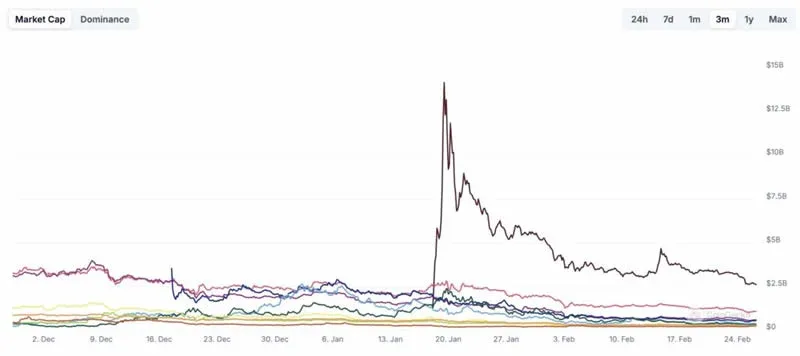
- MEME market‑cap decline: CoinGecko data shows that as of February 26, the total market cap of MEME tokens on Solana stood at $8.64 billion, roughly half of the $15 billion peak reached in January.
- SOL unlocking pressure: On March 1, 11.2 million SOL (approximately $2 billion) will unlock—the largest single‑event unlock in history. Analysts estimate that over the next three months more than 15 million SOL (about $2.5 billion) will enter circulation, primarily held by institutions such as Galaxy Digital, Pantera Capital, and Figure.
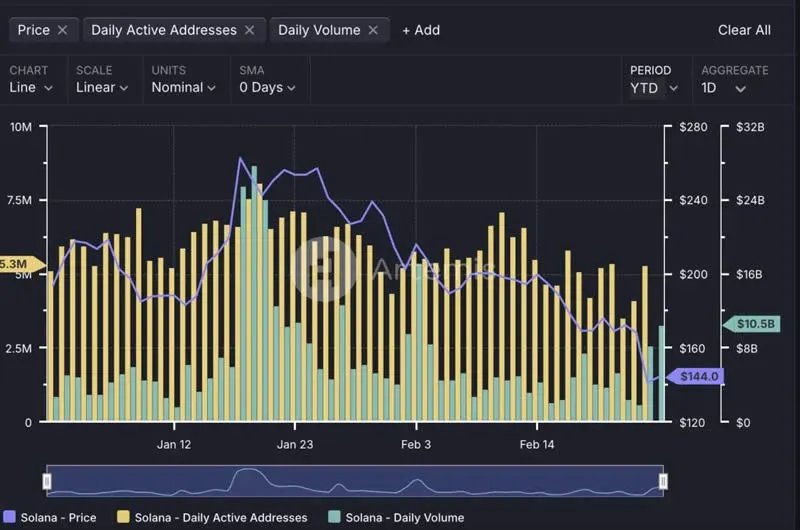
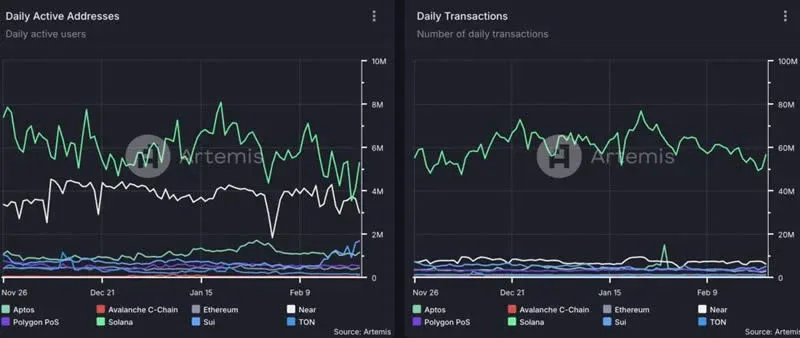
- Activity drop: Artemis data indicates that as of February 24, daily active addresses on Solana numbered 5.3 million, a 34.5 % decline from the intra‑year peak. Daily transaction volume fell from a high of $27.7 billion to $10.5 billion (a 62.1 % drop), with DEX volume decreasing 89.9 %, yet Solana still ranks second among all chains for DEX activity.
Despite the overall slowdown, Solana continues to lead on several key indicators:
| Metric | Solana | Competing Chains |
|---|---|---|
| Daily active addresses | **5.3 million** (rank 1) | Below Solana |
| Daily transaction count | **56.5 million** (far ahead) | Only a few million |
| TVL (Total Value Locked) | **$7.3 billion** (second only to Ethereum) | Slightly lower than Solana |
| Potential ecosystem catalysts | SOL spot‑ETF filing, SIMD‑0228 inflation‑model amendment proposal | — |
These figures demonstrate that, even under liquidity and sentiment pressure, Solana retains a competitive edge in address activity, transaction frequency, and locked value. Looking ahead, the anticipated approval of an ETF and refinements to the inflation model could bring fresh capital inflows and renewed confidence to the ecosystem.
Note: Crypto gains may be subject to taxation in your jurisdiction. Users should consult local tax regulations and consider filing obligations accordingly.
Related Reading
- Pump.fun Plans Token Launch & Airdrop for Advanced Users
- PUMP Token Analysis: Allocation, Functionality & Solana Risks
- Pump.fun: One-Click Meme Token Issuance & Trading on Solana
💡 Register on Binance with referral code B2345 for the maximum trading fee discount. See Binance complete guide.
⚠️ Risk Disclaimer: Crypto prices are highly volatile. This is not investment advice.



