
 Bitaigen Research
On Friday, Bitcoin slipped below $65,500, erasing the gains it had made over the previous three days. The pull‑back coincided with the release of the U.S. Producer Price Index (PPI) for January, which unexpectedly rose 0.5%, dampening market expectations that the Federal Reserve might cut rates. At the same time, S&P 500 futures moved in near‑perfect lockstep with Bitcoin, underscoring how the two asset classes can become tightly linked when risk sentiment shifts.
A recent UBS report downgraded its overall rating on the U.S. equity market to “Neutral.” The analysis notes that, despite strong earnings growth in artificial‑intelligence‑related companies, U.S. stocks are broadly over‑valued, the dollar is weakening, and policy uncertainty creates significant downside pressure. Analysts argue that the upside potential for the S&P 500 is now constrained, which could push some capital toward alternative safe‑haven or value‑preserving vehicles.
Potential Institutional Demand for Bitcoin
UBS’s Global Equity Strategy team points out that U.S. equities trade at roughly a 35% premium to other global markets, whereas the historical average premium since 2010 has been only about 4%. A softer dollar and policy volatility in the United States—such as caps on credit‑card interest rates, additional import tariffs, and restrictions on private‑equity investment in housing—further amplify structural downside risks. The report does not treat the United States’ $70 trillion market capitalization as a direct shock to assets like Bitcoin, but it does caution investors to watch for possible capital rotations.
If large corporations or sovereign wealth funds announce that they will hold Bitcoin reserves through mechanisms such as a Bitcoin ETF, market sentiment could turn more bullish. Historically, public disclosures of Bitcoin holdings by companies like Tesla have lifted risk appetite noticeably. Although the correlation between blockchain assets and U.S. equities remains relatively high today, a substantial institutional entry could reshape that relationship.
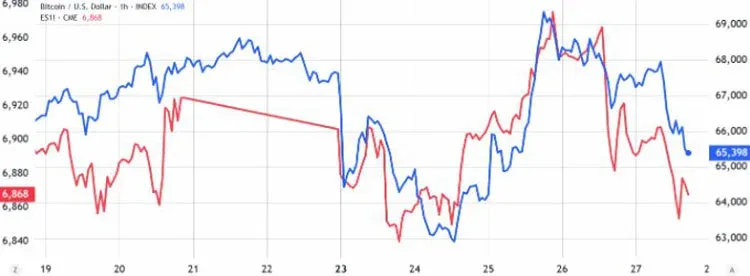
S&P 500 Futures vs. BTC/USD (left)
Source: TradingView
In this article we map UBS’s latest U.S. equity rating to Bitcoin flow data, explain why institutions may look at digital assets when equity valuations appear stretched, and examine the synchronized performance of Bitcoin and traditional market sentiment. By dissecting the report’s key points, readers can better assess whether traders truly pivot to Bitcoin under current conditions—worth a read.
Key Takeaways
- Analysts have lowered the U.S. equity rating to Neutral, citing overvaluation, a weakening dollar, and policy risk as primary concerns, even though AI‑related earnings remain robust.
- The upside ceiling for the S&P 500 appears limited, which could trigger a flow of capital toward Bitcoin, especially if sovereign funds or large institutions publicly commit to Bitcoin reserves.
Inflation and Bond‑Market Signals
The January U.S. PPI uptick revived inflation expectations, making market participants less certain about a Fed rate cut. At the same time, the yield on the 10‑year U.S. Treasury fell from 4.21 % three weeks ago to 3.97 %, indicating that investors are gravitating toward government bonds as a risk‑off haven during periods of uncertainty. Even though corporate earnings have broadly outperformed forecasts, the S&P 500 remains lackluster, further validating UBS’s view that U.S. equities are over‑priced.
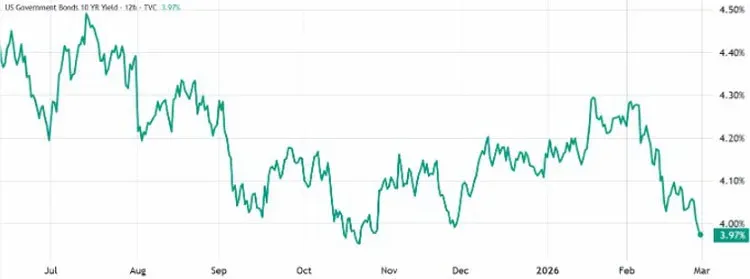
U.S. 10‑year Treasury yield. Source: TradingView
Market‑Cap Comparisons and Potential Capital Rotation
From a macro perspective, gold now commands a market cap of roughly $36.5 trillion, surpassing the combined market value of the world’s ten largest technology firms (about $24.2 trillion). Should Bitcoin rally 52 % to reach $100,000, its market cap would approach $2 trillion. Unless fixed‑income or real‑estate assets can capture a sizable share of any capital shift, Bitcoin remains a viable option for investors looking to diversify their portfolios.
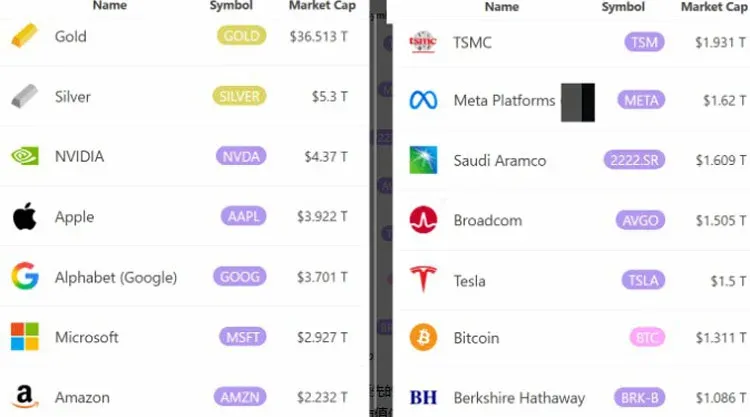
Largest tradable assets by market cap, denominated in USD. Source: 8marketcap
In summary, UBS’s downgrade of the U.S. equity market is not a doomsday prophecy but rather a cautious appraisal of current valuation levels and policy dynamics. If the S&P 500’s upside becomes constrained and institutional Bitcoin allocations materialize, capital may rotate among fixed‑income, gold, and Bitcoin. Whether a large‑scale Bitcoin reserve will emerge remains uncertain, yet historical patterns suggest that institutional participation often lifts market sentiment.
*Note for U.S. readers:* When converting fiat to cryptocurrency, U.S. residents should use Binance.US (or another regulated U.S. exchange) rather than the global Binance platform. International users may employ SEPA, SWIFT, or other standard fiat‑on‑ramp methods.
This analysis dives deep into “UBS bearish on US equities, will traders really shift to Bitcoin (BTC)?” For further insights on UBS’s outlook and Bitcoin‑related topics, feel free to explore additional articles on Bitaigen (比特根).
Related Reading
- Gold & Silver Reach All‑Time Highs; Bitcoin Near $90K
- Bitcoin Decline Explained: Macro, Policy & On‑Chain Factors
- Bitcoin Forecast: Will BTC Break $70K in Consolidation?
💡 Register on Binance with referral code B2345 for the maximum trading fee discount. See Binance complete guide.
⚠️ Risk Disclaimer: Crypto prices are highly volatile. This is not investment advice.



