
 Bitaigen Research
In the crypto world, the term “crypto whale” is both mysterious and highly influential. This article delves into the concept of whales, the techniques used to spot them, and the concrete ways in which they shape market prices and trends. By the end, readers should have a clearer picture of how these large‑scale participants move the market.
The Bitaigen editorial team believes that this piece systematically outlines the definition and detection tactics for “crypto whales,” parses how their trading behavior can sway market volatility, and evaluates the potential impact on liquidity and price trajectories. Through case studies, readers can capture key signals, sharpen analytical skills, and gain insights worth a careful read.
What Is a Crypto Whale?
A crypto whale refers to an individual or institution that holds enough digital assets to move market prices in a noticeable way. Their holdings can range from a few thousand to several million tokens, making them major players in the ecosystem. Traders, investors, and enthusiasts often keep a close eye on whale activity because it can foreshadow short‑term price swings or longer‑term market shifts.
Why Are Crypto Whales Important?
Whales possess the capacity to influence markets through large‑scale trades, which frequently trigger pronounced price movements. Their decisions add depth to market liquidity, a factor that is essential for the efficient operation of exchanges worldwide. Historically, some whales have been accused of manipulating prices to inflate the value of specific coins for personal gain. Monitoring whale behavior therefore helps analysts spot emerging market patterns and serves as an additional sentiment indicator.
Short‑Term Price Surges
Because whales control massive amounts of digital assets, they can execute sizable market‑order trades in a single transaction, creating a strong price shock. For example, if a whale places a large buy order for a particular cryptocurrency, the market’s perception of rising demand can push the price upward rapidly.
The “pump‑and‑dump” scheme describes a scenario where a whale artificially raises a coin’s price to attract inexperienced investors. Once the price peaks, the whale sells its holdings at the inflated level, locking in profit. The 2017 Bitconnect incident is a textbook case: aggressive marketing inflated the token’s price, after which the insiders sold at the top, causing the price to collapse and leaving many investors with heavy losses. Such episodes remind participants to stay vigilant.
When market price diverges from a trader’s position, stop‑loss orders are often set to limit downside risk. If a whale wishes to acquire more of the same asset at a lower price, it may flood the market with sell orders, driving the price down quickly and triggering a cascade of stop‑losses. Once those orders are executed, the whale can repurchase the asset at a cheaper level, profiting from the spread—a practice known as “stop hunting.”
Long‑Term Price Influence
Whales also engage in long‑term positioning. When a cryptocurrency is trading at a relatively low level, a whale may accumulate a substantial stake, effectively “buying the dip” during bear markets or periods of low activity. When the price later recovers, the whale can gradually unwind the position, realizing significant gains.
Early investors in Ethereum (ETH) exemplify this behavior: during the initial coin offering (ICO), a group of participants bought ETH for only a few cents each. Over the ensuing years, as Ethereum’s price surged, these early holders became whales. Their eventual sales have contributed to noticeable price volatility during upward moves.
The actions of whales can both boost community confidence and raise skepticism. Positive endorsements, strategic partnerships, or sizable investments from whales often enhance market trust, attract additional capital, and accelerate broader adoption.
A recent illustration involves large financial institutions partnering with Ripple Labs (the company behind XRP). Many investors interpreted such collaborations as a bullish signal for XRP’s long‑term prospects. However, at the end of 2020 the U.S. Securities and Exchange Commission (SEC) filed a lawsuit alleging that XRP was an unregistered security. The lawsuit dented market confidence, leading several exchanges to delist XRP. Whales holding XRP were forced to choose between holding through the legal uncertainty or liquidating, a decision that directly affected the token’s longer‑term price trajectory.
How to Identify Crypto Whales?
Directly pinpointing whale identities is difficult, but a combination of tools and on‑chain analytics can reveal the presence of large participants.
- Tracking wallet addresses that hold unusually large token balances and monitoring their transaction activity can flag potential whales.
- Platforms such as Whale Alert aggregate massive‑holdings and transaction data from multiple sources, making it easier to spot big moves.
- Some exchanges publish large‑trade data feeds, providing retail traders with insight into whale activity in real time.
- Following influential voices on social media platforms (e.g., X, formerly Twitter) can also surface occasional disclosures of holdings and strategic intentions.
Should Investors Pay Attention to Crypto Whales?
Observing whale behavior can offer clues about market sentiment and emerging trends, which may inform trading decisions. However, blindly mimicking whale actions can lead to misjudgments. Because the capital under a whale’s control dwarfs that of the average retail participant, replicating their strategies is often impractical. Novice traders are advised to first master the fundamentals of crypto trading, engage in systematic study, and treat whale‑derived signals as supplementary information rather than definitive guidance.
Who Are the Biggest Crypto Whales?
Due to the pseudonymous nature of blockchain, the exact identities of the largest whales remain opaque. Nevertheless, several high‑profile figures are widely recognized:
- Satoshi Nakamoto – The anonymous creator of Bitcoin, believed to control a substantial, yet undisclosed, number of BTC.
- Vitalik Buterin – Founder of Ethereum, reported to hold roughly 355,000 ETH along with sizable positions in other tokens.
- Michael Saylor – U.S. entrepreneur and co‑founder of MicroStrategy, whose treasury holds over 17,732 BTC, valued at more than $1.14 billion USD.
- Barry Silbert – Founder of Digital Currency Group, whose portfolio includes equity stakes in numerous crypto‑related companies.
Tracking Whale Activity
Blockchain’s transparent ledger makes transaction data publicly accessible. By analyzing on‑chain data, analysts can monitor the flow of funds associated with whale wallets and infer behavioral patterns. For instance, a large transfer of tokens from a whale’s private address to an exchange often signals an imminent sizable sell‑off; conversely, moving tokens from an exchange back to a whale address may indicate that the holder does not plan to liquidate in the short term.
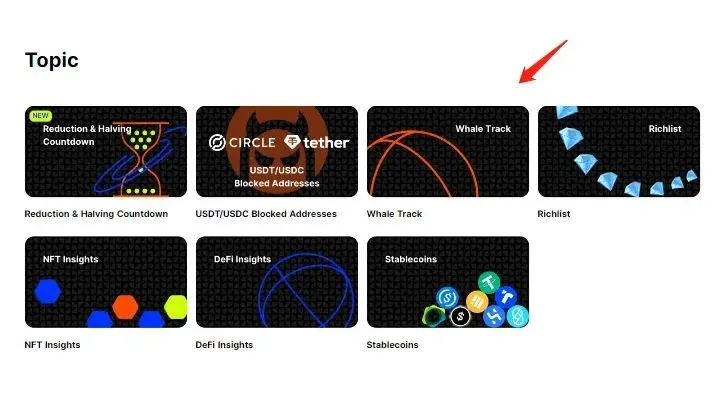
The Tokenview blockchain explorer simplifies whale tracking. Tokenview supports more than 120 networks and offers a dedicated whale‑tracking service. Below are the basic steps:
- Visit Tokenview.io, click the “Topic” menu at the top, and select Whale Track. Similar functionality can also be found in dedicated Bitcoin block explorers under sections that list large‑transfer details, showing the sender address, receiver address, and transaction size.
- Choose the token you wish to monitor (e.g., Bitcoin). The platform will display a list of that token’s high‑value transactions.
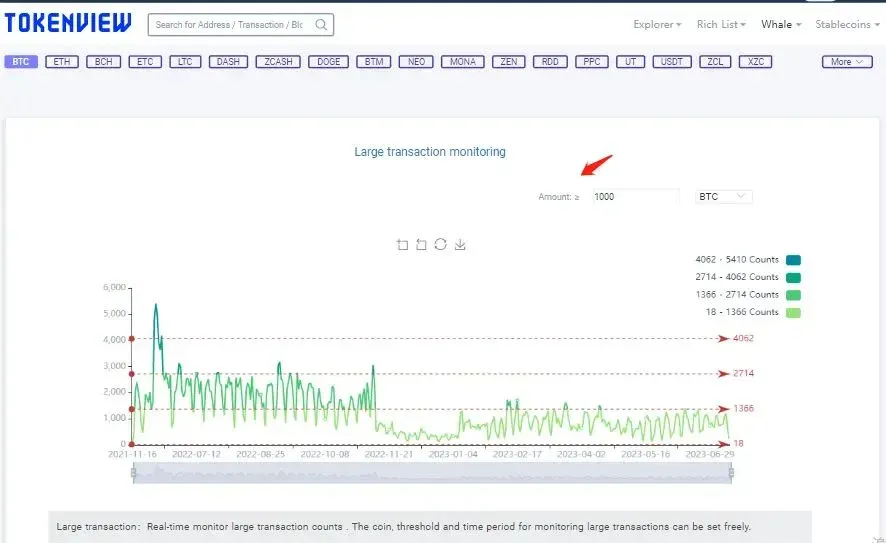
- At the top of the page, a daily chart visualizes large‑transaction volume; users can adjust the monetary threshold and time window to suit their analysis.
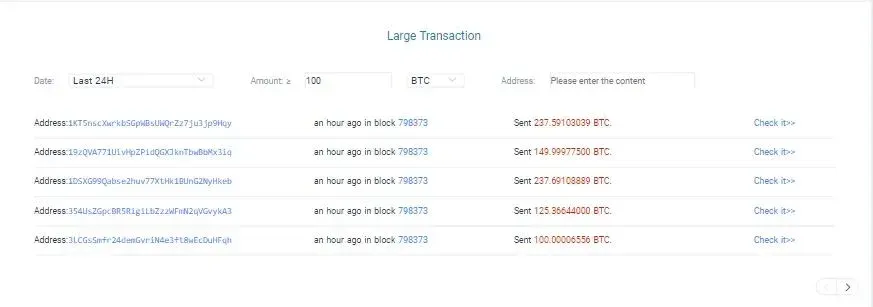
- The bottom section continuously updates with transaction details, including whale addresses and transferred amounts. Clicking “Check it” opens a deeper view of the fund flow and destination addresses.
Although whales often conceal their true identities, patterns such as the size of holdings, frequency of transfers, and destination of funds can still reveal potential whales and allow observers to track their activities.
Are Crypto Whales Good or Bad?
The impact of whales is not one‑dimensional. On the positive side, they provide essential liquidity, helping markets stay active and reducing price slippage for ordinary traders. Early whales also contributed capital that seeded the development of many blockchain ecosystems. On the downside, the sheer scale of their resources creates the potential for market manipulation, which can harm smaller participants and raise concerns about wealth concentration.
Do I Need to Follow Whales?
The answer depends on personal objectives. For active traders or analysts who require a granular view of market dynamics, whale monitoring can add a valuable layer of information. For retail investors focused on long‑term holdings, fundamental analysis, project research, and robust risk management may prove more effective than trying to chase whale moves.
This article has dissected “What Is a Crypto Whale? Definition, Identification Methods and Market Impact.” For further reading, feel free to search for previous Bitaigen (比特根) articles or continue exploring the related links below. We appreciate your continued interest and support of Bitaigen (比特根)!
*Note: When converting fiat to crypto, most global platforms accept USD via SEPA or SWIFT transfers. U.S. residents should use Binance.US rather than the international Binance platform. Additionally, crypto gains may be taxable in your jurisdiction; consult a tax professional to understand local obligations.*
💡 Register on Binance with referral code B2345 for the maximum trading fee discount. See Binance complete guide.



