
 Bitaigen Research
 We examine the recent decline of Bitcoin from three perspectives—macroeconomic conditions, policy developments, and on‑chain metrics. The article will uncover shifts in institutional holdings, ETF fund flows, and subtle technical‑indicator signals, assisting readers in judging the next possible support and breakout points; it is worth a close read.
Bitcoin’s recent price swings are still largely driven by the broader macro environment. Recent U.S. tariff policies, adjustments in the global trade landscape, and the ongoing escalation of geopolitical risks are all dampening investors’ risk appetite for digital assets.
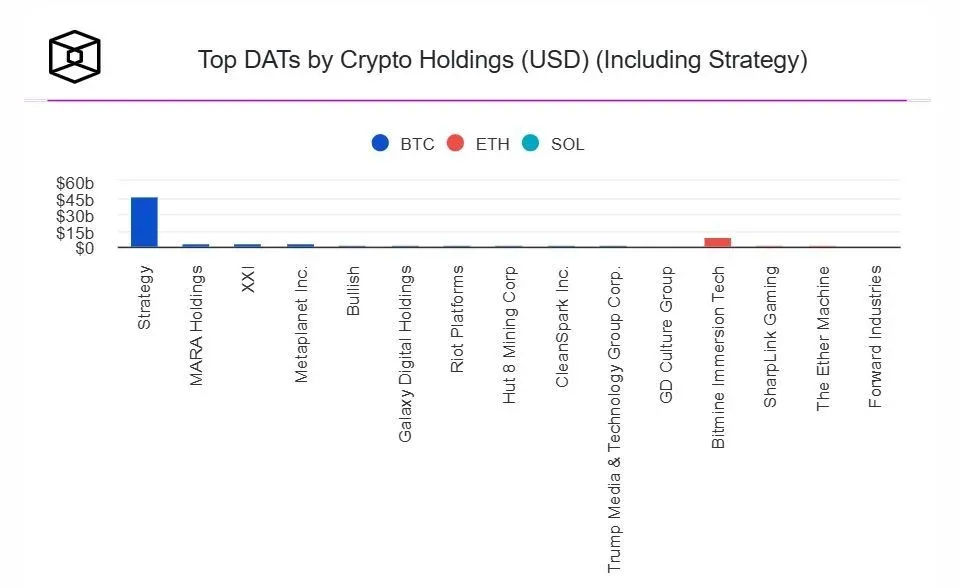
At the same time, several institutions that hold large quantities of Bitcoin are confronting significant unrealized losses, which further intensifies market caution. Nevertheless, more than 400,000 BTC have been re‑accumulated in the $60,000‑$70,000 range, indicating that buying on dips remains active even during the correction.
Mining difficulty, after a sharp decline earlier, has started to rise again. Historically, such an uptick is often interpreted as a signal that a sell‑off cycle is winding down. The Relative Strength Index (RSI) remains below bullish thresholds but has edged upward from the oversold zone, suggesting that the market may be stabilising rather than undergoing a clear reversal. If the critical $60,000 level can hold, there is still upside potential; if it breaks, the mid‑range around $50,000—close to the average on‑chain purchase price—could become a sturdier support.
---
U.S. spot Bitcoin ETFs have recorded net outflows for five consecutive weeks, and global crypto‑linked ETP products have seen cumulative withdrawals of roughly $4 billion. Since the peak in October last year, Bitcoin holdings in U.S. ETFs have declined by about 100,000 coins.
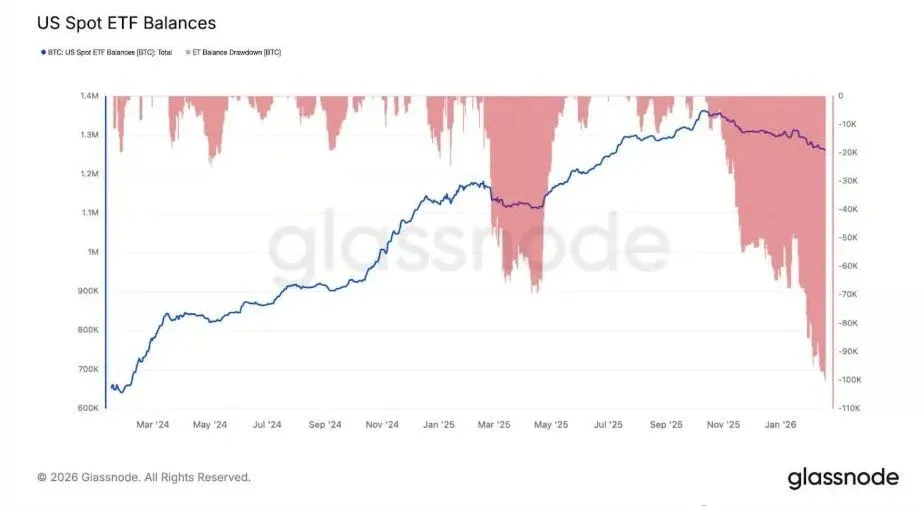
On‑chain data shows a defensive market structure: the number of active addresses has fallen below its average, realized market cap continues to contract, and unrealized losses dominate. Spot trading volume has dropped markedly, and the derivatives market also exhibits a steady decline in open‑interest over the past 90 days, indicating reduced leverage usage and weaker speculative sentiment. Analysts note that although sell‑pressure has eased somewhat, the lack of fresh buying interest keeps the price vulnerable to further declines.
---
Selling pressure on Bitcoin is intensifying alongside capital outflows. Analysts believe Bitcoin has completed its accumulation phase and is now entering a new bear market. On February 24, the price briefly fell below $62,900 before rebounding to around $66,000, creating a short‑lived bounce that reflected a risk‑off mood among traders.
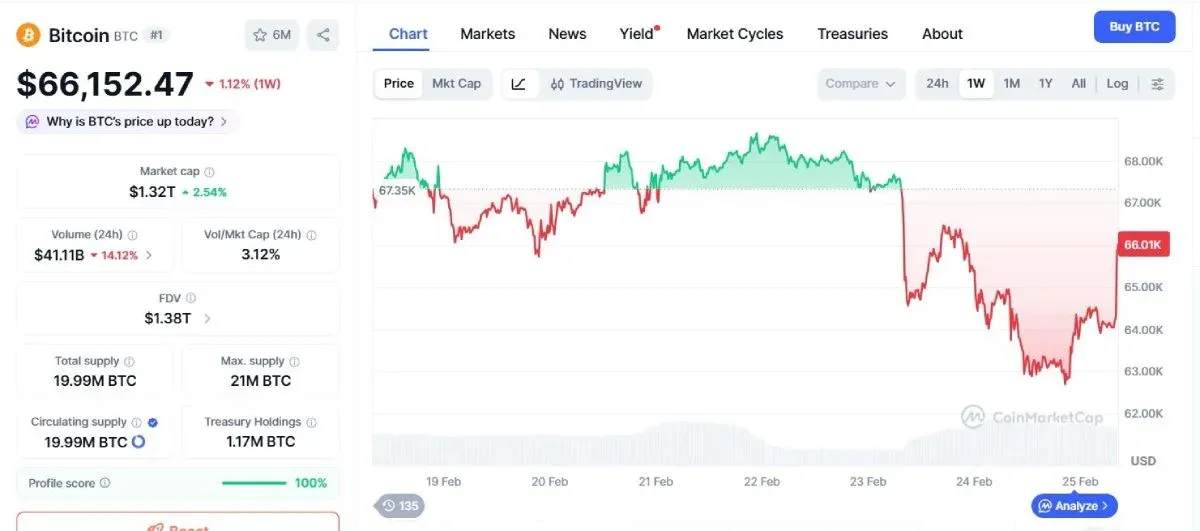
Buyers are currently focusing on the key support level at $60,000; a break of that level could push the price further down into the $53,000‑$55,000 corridor. Market sentiment is extremely tense, with capital continuously exiting Bitcoin‑related investment products, adding to the downward pressure.

Bitcoin briefly slipped below $63,000, and analysts warn that accelerating capital withdrawals could trigger large‑scale liquidations.
---
This concludes the analysis of Bitcoin (BTC) pricing. For further Bitcoin price forecasts, feel free to search for past articles from Bitaigen (比特根) or continue reading the related content below. We appreciate your ongoing attention and support for Bitaigen (比特根)!
*Note: Cryptocurrency gains may be taxable in your jurisdiction; consult a local tax professional for advice. U.S. readers should use Binance.US for any trading activity, while other regions may use Binance’s global platform via SEPA, SWIFT, or other fiat on‑ramps.*
Related Reading
- Bitcoin Forecast: Will BTC Break $70K in Consolidation?
- Tesla & SpaceX Bitcoin Play: Musk Calls It Digital Gold
- Michael Saylor Urges Buying Bitcoin, Price Falls Below $125K
💡 Register on Binance with referral code B2345 for the maximum trading fee discount. See Binance complete guide.



