
 Bitaigen Research
 Bitcoin Halving 2024 Has Completed – When Is the Next Halving?
From Historical Review to Market Impact, This Guide Explains the Bitcoin Halving Price Trend and Helps You Fully Prepare for the Cyclical Halving.
A Bitcoin halving means that the miner reward is cut in half every 210,000 blocks. The mechanism aims to control supply and increase scarcity. Historically, halvings have often been accompanied by price appreciation, and investors may monitor the countdown, holding‑distribution structure, and mining‑cost factors.
In this article we systematically outline the core concepts of Bitcoin halving, each market cycle’s performance, and practical ideas for investors. By understanding the supply‑tightening effect, you can spot potential opportunities and receive actionable guidance on position sizing and risk management. Read on for the complete framework.
What Does “Bitcoin Halving” Mean?
If you’re new to the crypto world, have you ever heard veterans talk about a “Bitcoin halving”?
A “Bitcoin halving” does not halve the existing number of Bitcoins; instead, it reduces the block reward (the newly minted Bitcoins miners receive) by 50 %, slowing the rate at which new coins are created.
When Satoshi Nakamoto designed Bitcoin, the total supply was capped at 21 million coins. Once miners have generated that amount, no new Bitcoins will ever be issued. To prevent miners from exhausting the supply too quickly, the halving mechanism was built in. Industry consensus estimates that the final Bitcoin will be mined around the year 2140.
According to Satoshi’s design, every time the network reaches 210,000 blocks, the block reward is halved. By the end of 2024, Bitcoin has already undergone four halvings.
What Is a Block Reward?
The block reward incentivizes miners to provide computational power and secure the network. At launch, miners earned 50 BTC for each mined block. With each halving, that reward has been reduced step‑by‑step.
Why Is Bitcoin Halving Important?
The core purpose of the halving mechanism is to preserve Bitcoin’s scarcity and deflationary nature. Each halving cuts the miner’s block reward by 50 %, slowing the growth of new supply—much like the scarcity of gold—preventing over‑issuance and curbing inflation, which helps stabilize long‑term value. Basic supply‑and‑demand economics suggest that tighter supply tends to push prices higher, bolstering market confidence in Bitcoin.
Bitcoin Halving Timing and Cycle
Satoshi set the halving trigger at every 210,000 blocks, roughly every four years.
Historical Halving Timeline
- First Halving – 28 Nov 2012: Reward dropped from 50 BTC to 25 BTC.
- Second Halving – 9 Jul 2016: Reward dropped from 25 BTC to 12.5 BTC; about six months later the price rose to roughly $900.
- Third Halving – 11 May 2020: Reward dropped from 12.5 BTC to 6.25 BTC; about six months later the price broke the $15,000 level.
- Fourth Halving – 20 Apr 2024: Reward dropped from 6.25 BTC to 3.125 BTC; on the halving day the price was around $64,262.
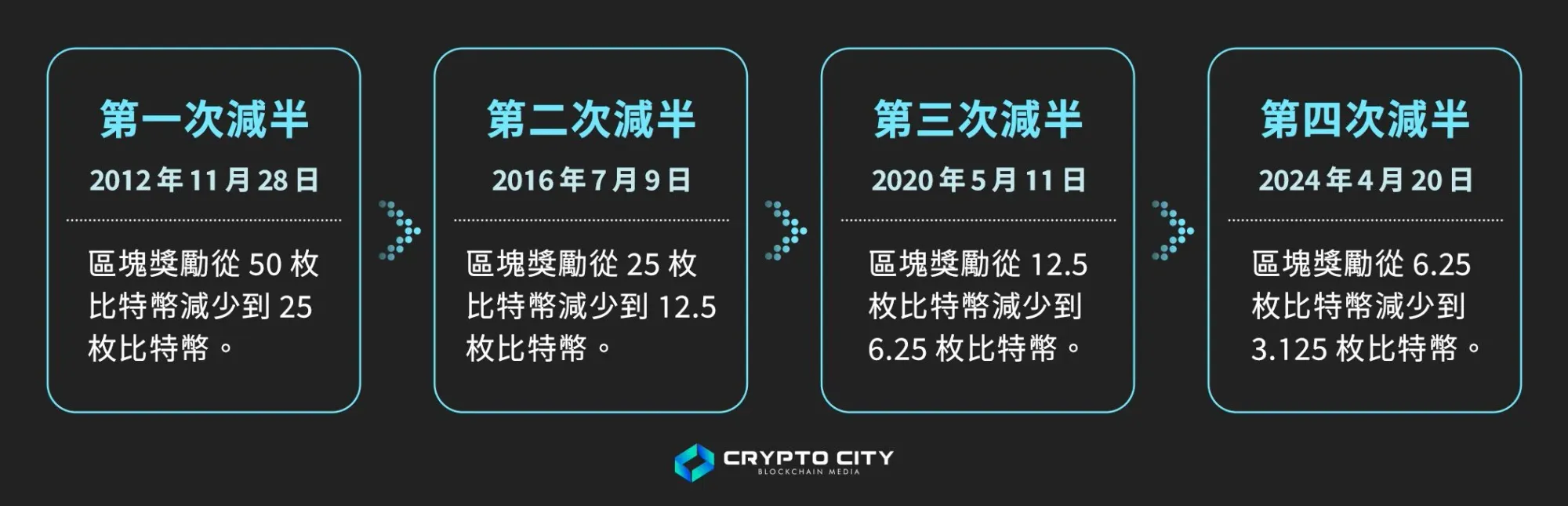
*Source: “Crypto City” – Chart of Bitcoin’s First Four Halvings and Block‑Reward Evolution*
Bitcoin Halving Impact on Market Trends
Historical data show that each halving has been followed by a bull market. The industry often refers to this recurring rise as a “halving cycle.” Below we examine the effect from three angles: supply‑demand dynamics, volatility, and long‑term investment outlook.
Supply‑Demand Effects
A halving directly slows Bitcoin’s production rate, tightening supply. Investors typically anticipate tighter supply and assume demand will stay steady or increase (institutional and retail buying), prompting holders to keep their coins longer and reducing exchange liquidity.
Data Point: Chainalysis research indicates that the proportion of Bitcoin held for the long term (over three years) consistently rises after a halving. Roughly one year after the first halving, the share of long‑term holders grew by about 73 %; the subsequent two halvings also showed modest increases.
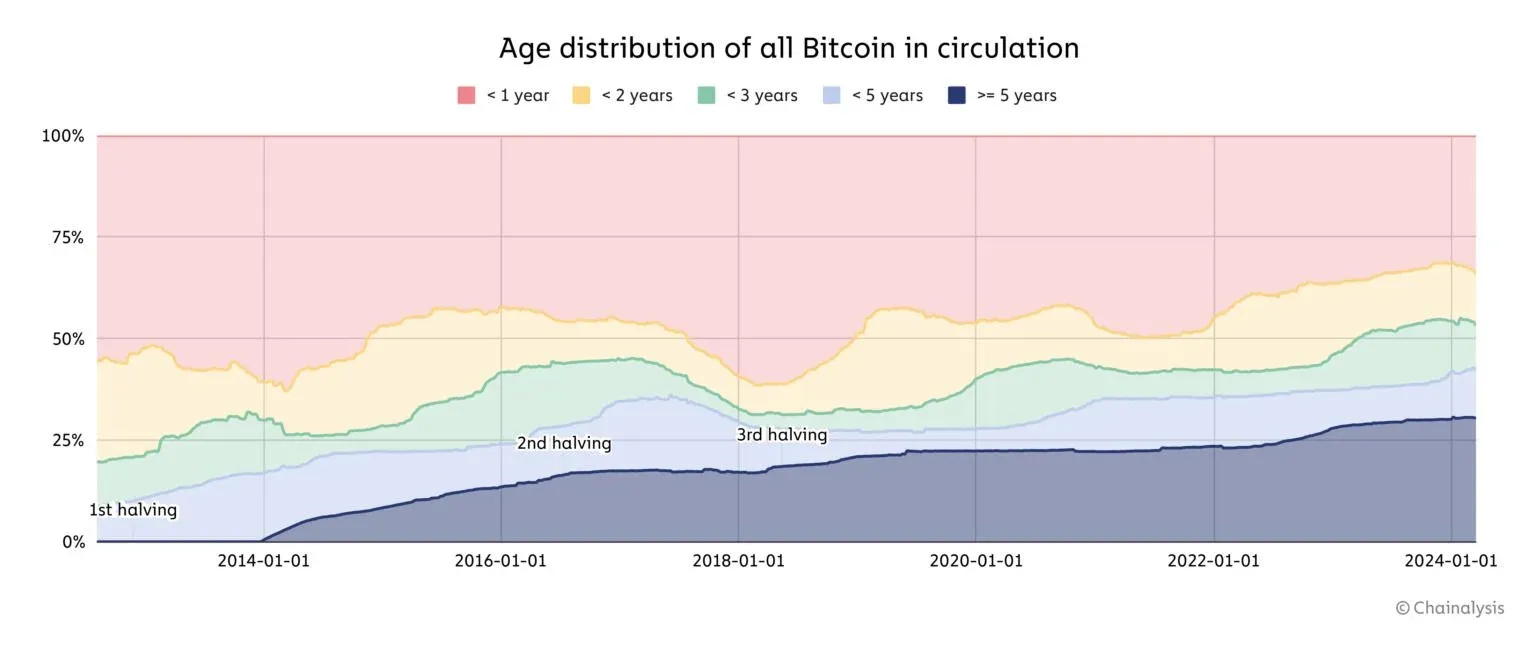
*Source: Chainalysis – Distribution of Bitcoin Holding Periods*
Volatility Effects
In the months leading up to a halving, market participants commonly expect price gains, fueling speculative sentiment and raising volatility. On the halving day—or shortly thereafter—prices often experience a “buy the rumor, sell the news” correction, known as a Sell‑The‑News move.
Long‑Term Investment Effects
If an investor had bought Bitcoin around the first halving (approximately $12) and held it to the present, the cumulative gain approaches 6,000 × the original price, illustrating the long‑term value lift associated with halvings. However, past performance does not guarantee identical future returns.
Mining Impact
Miners rely primarily on block rewards for revenue. When the reward halves, profit margins tighten in the short term. NYDIG analysis suggests that after a halving the Bitcoin mining difficulty (hashrate) may initially dip, but typically climbs sharply again within a year. During bear markets, price and difficulty can fall together, potentially triggering “miner‑shutdown” thresholds where operating becomes unprofitable.
Bitcoin Halving Historical Review
Since the genesis block in 2009, Bitcoin has experienced four halvings. CoinWarz estimates that the 33rd halving will occur around 2140, at which point the block reward will fall to zero.
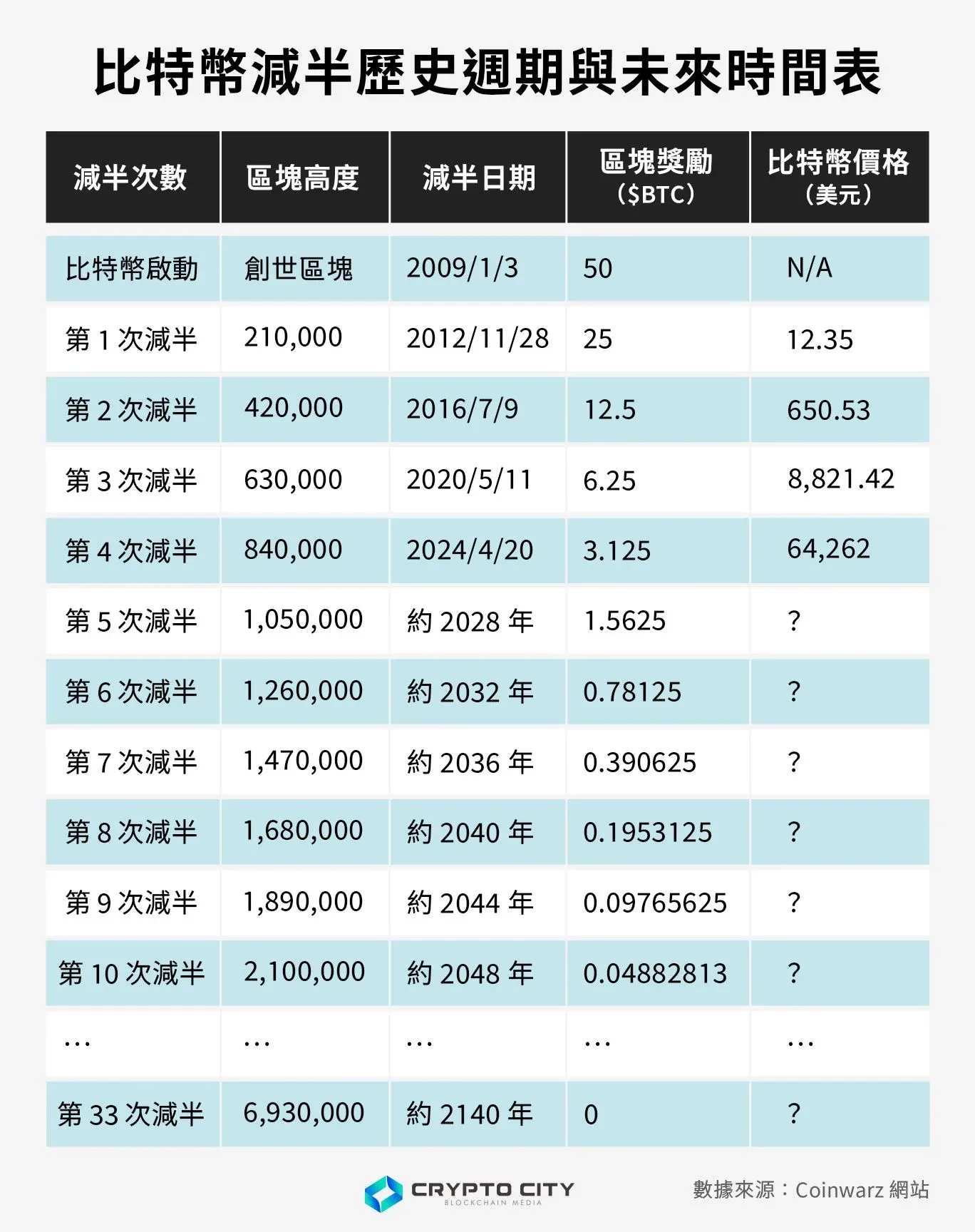
*Source: “Crypto City” – Historical Halving Cycle and Future Schedule*
Key Points Investors Should Watch During a Bitcoin Halving
CoinGecko statistics show that, on average, the price has risen about 3,230 % within one year after each of the four halvings. This figure is heavily influenced by the extreme volatility of early years and should not be used as the sole reference.
Year‑Over‑Year Price Performance Around Halvings (Cumulative Returns)
| Halving # | Date | 1 Year Before | 1 Year After |
|---|---|---|---|
| 1st | 2012/11/28 | +385 % | +8,069 % |
| 2nd | 2016/07/09 | +142 % | +284 % |
| 3rd | 2020/05/11 | +17 % | +559 % |
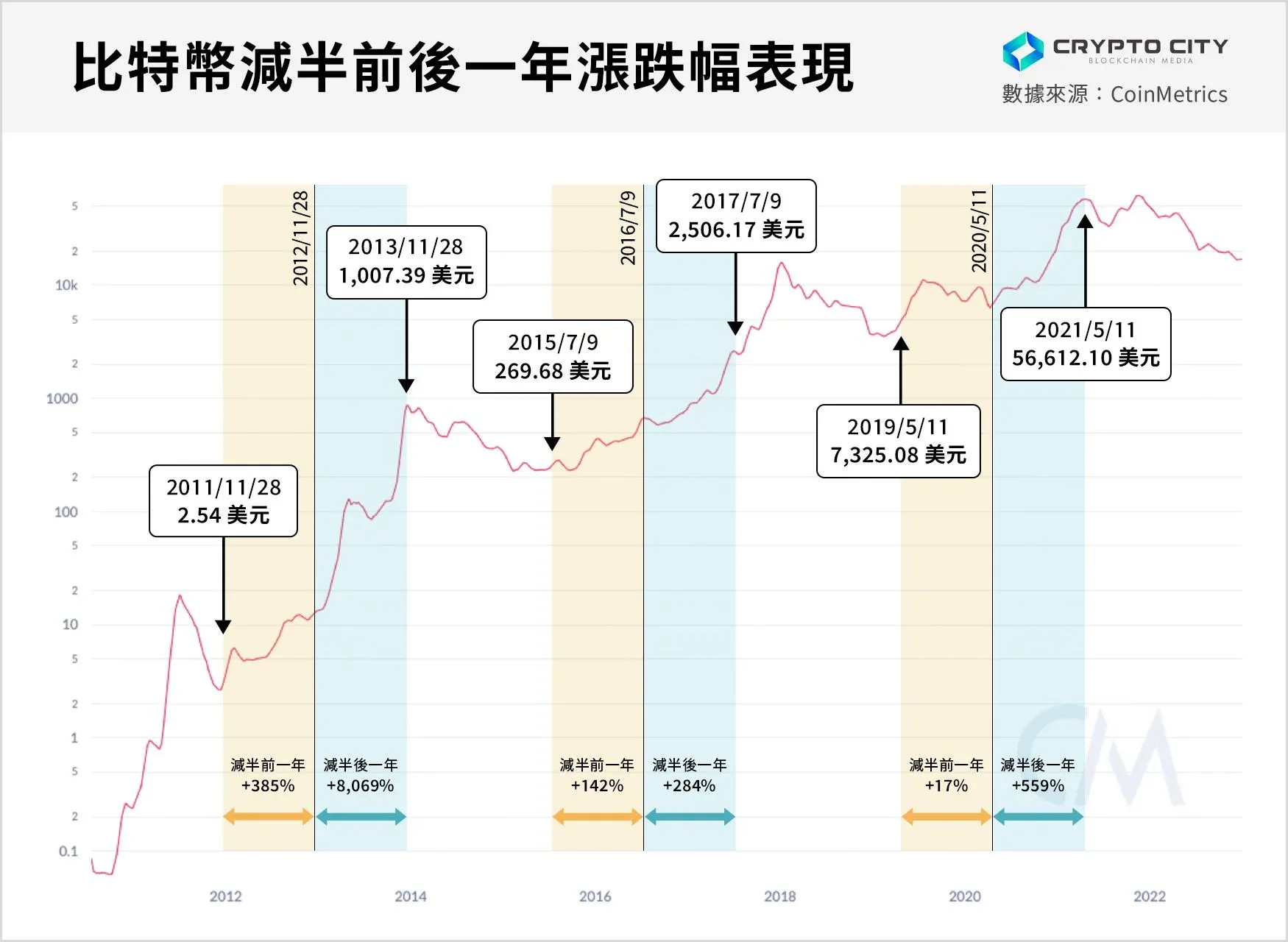
*Source: “Crypto City” – Price Performance One Year Before & After Each Halving*
The data reveal that the year following a halving usually outperforms the preceding year, yet the magnitude varies. Six major factors shape post‑halving price action:
- Sell‑off pressure
- Bitcoin adoption level
- Global market liquidity (including SEPA and SWIFT fiat channels)
- Regulatory environment for crypto
- Macro‑economic conditions
- Key market events
During 2020‑2024 these variables interacted in complex ways. For example, the COVID‑19 pandemic prompted expansive Federal Reserve policies and massive money printing, boosting liquidity; Tesla’s acceptance of Bitcoin spurred a price surge, later reversed amid environmental concerns; the 2022 Fed rate hikes and the FTX collapse triggered a bear market; and the 2023 regional bank turmoil in the United States sparked a modest recovery.
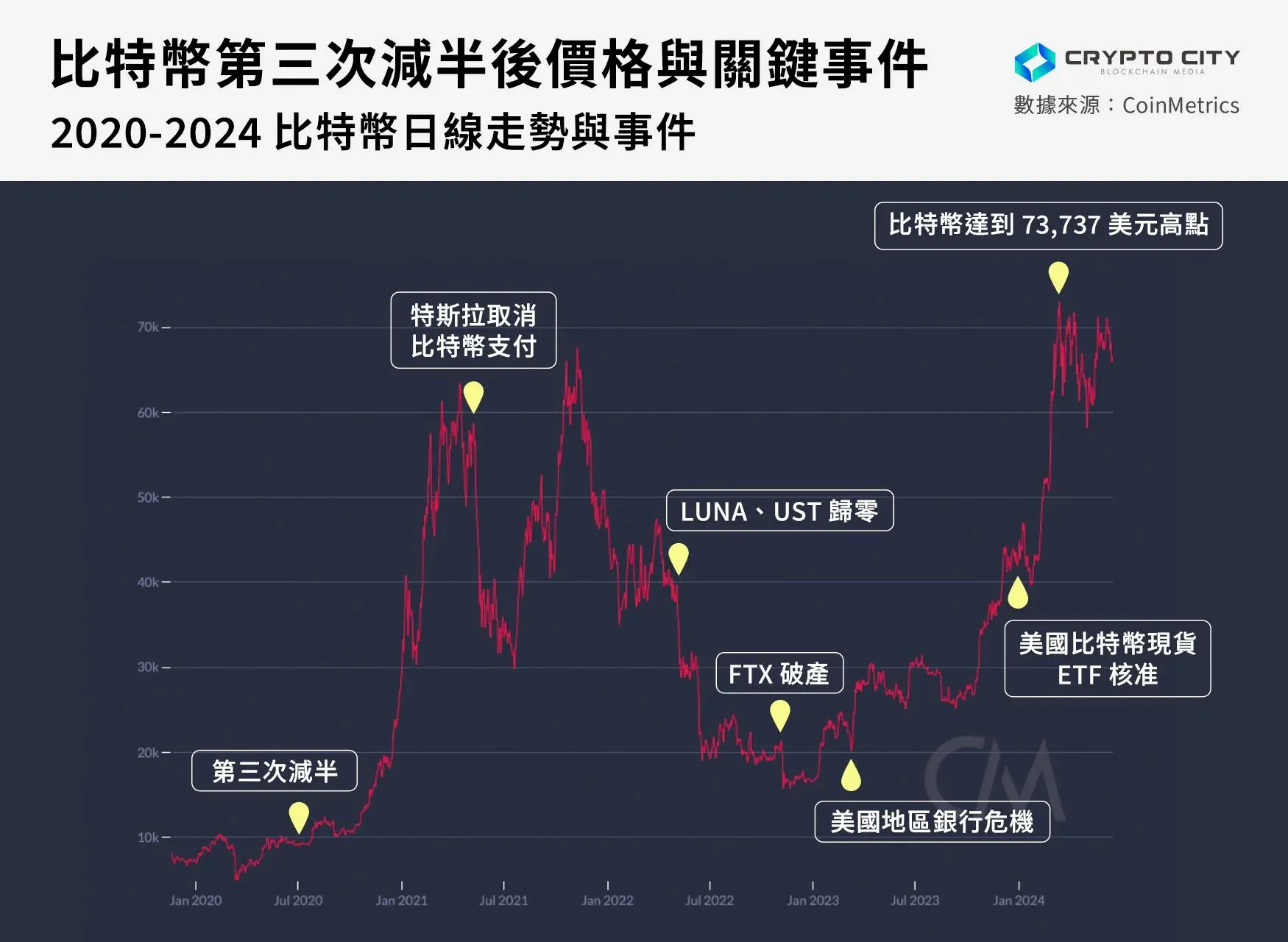
*Source: “Crypto City” – Price & Key Events After the Third Halving*
Bitcoin Halving Countdown: How to Get Ready
Practical tools for tracking the halving countdown:
- CoinGecko’s Bitcoin Halving page – shows the remaining block count and estimated halving date in real time.
- Bitbocharts – provides current Bitcoin price, mining difficulty, and other essential metrics.
- “Crypto City” – a Chinese‑language news hub that curates halving‑related stories and updates.
Note for U.S. Residents: When purchasing or trading Bitcoin, use Binance.US (or another U.S.-compliant exchange) rather than the global Binance platform.
Tax Reminder: Crypto gains may be taxable in your jurisdiction. Consult a local tax professional to ensure compliance with applicable laws.
That concludes the full translation of “Bitcoin Halving Full Analysis: Meaning, Historical Impact, and Investor Response Strategies.” For more details, search for previous articles by Bitaigen (比特根) or continue reading the related content below. Thank you for your continued interest and support!
Related Reading
- Bitcoin Scarcity: Supply, Halving Mechanism & Market Cap
- Bitcoin Funding Rate Turns Negative Ahead of 2024 Halving
- Bitcoin Halving Explained: Impact on Supply and Markets
💡 Register on Binance with referral code B2345 for the maximum trading fee discount. See Binance complete guide.



