
 Bitaigen Research
Only by breaking the parallelism bottleneck can blockchain projects find a new way forward.
In the past few years, a flood of scaling research has emerged—Ethereum 2.0’s homogeneous sharding, Polkadot’s heterogeneous sharding, Plasma side‑chains, zkSync, Optimistic Rollups, StarkWare and other Layer‑2 solutions, as well as Cosmos’s cross‑chain architecture (cross‑chain scaling). All of them are trying to discover the most suitable scaling path for base layers such as Ethereum and Bitcoin.
Ethereum 2.0 enjoys the greatest hype; its core idea is to transition from PoW to PoS, compress transaction data (roll‑up) and build sharding (non‑data sharding). Although this road is long and is regarded as the ultimate solution for crypto networks, its necessity is undeniable.
Fundamentally, the very advantage of blockchain comes with a ceiling. To achieve a breakthrough, we must look beyond the existing structure for fresh ideas. Borrowing design principles from mature industries—especially cloud‑computing platforms—may be the key to unlocking new possibilities.
The Bitaigen editorial team outlines the core concept of merging blockchain with cloud computing in this article, explains why traditional scaling approaches can no longer satisfy parallelism demands, and explores how adopting mature cloud‑platform architectures could bring breakthroughs. If you want to understand the technical roadmap and ecosystem outlook of the next‑generation decentralized compute network, keep reading for a systematic perspective.
The Core Bottleneck of Blockchains
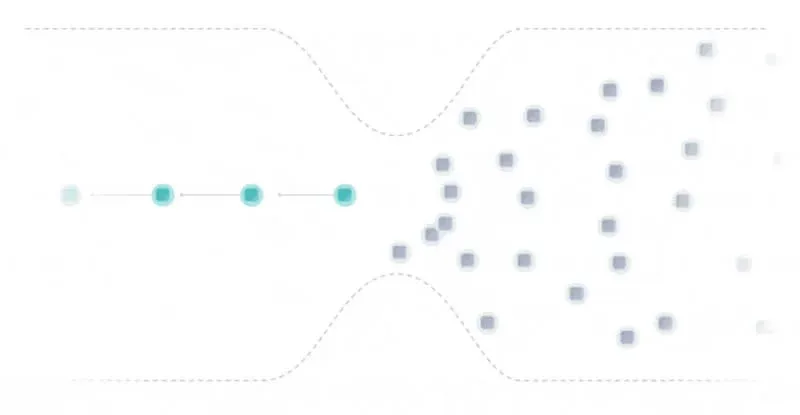
The bottleneck stems directly from the network’s greatest strength—consensus.
Consensus is essentially a synchronized operation where many nodes compute and store the same block. For example, when a Bitcoin node creates a block, it broadcasts the block to the whole network; every node must store that block. Even if Ethereum 2.0 replaces PoW with PoS, it can only accelerate a single round of consensus and increase the amount of work processed per unit time. Faced with massive compute demand, the gains from PoS remain limited, and the ceiling stays evident.
In a traditional chain architecture, all compute tasks compete for the resources of a single set of compute nodes, forming the narrow channel shown in the diagram. If a use case does not require high concurrency, congestion can be alleviated by boosting the power of individual nodes, adopting faster consensus algorithms, and time‑scheduling resource‑contending tasks. In high‑concurrency scenarios (blockchains should not be confined to finance or a single application), the network often experiences bottlenecks, latency spikes, and even security risks.
To overcome this limitation, the system must achieve sufficient parallelism at the task‑processing level, thereby raising overall throughput per unit time. The scaling and parallelism concepts of cloud computing provide a viable reference path.
Parallel Scaling Strategies in Cloud Computing
The basic requirement of a cloud platform is that the accessible network resources are not limited to the capacity of a single machine, but instead to the combined processing power of *N* machines, delivering *N*‑fold capability. For crypto networks, the underlying blockchain structure is hard to modify, yet there is still room for parallelism outside the consensus layer.
Traditional cloud computing offers two scaling modalities:
- Horizontal scaling (parallelism) – split a workload into multiple subtasks and distribute them across different nodes for concurrent execution.
- Vertical scaling – increase the compute power of a single machine, analogous to “making the block bigger.”
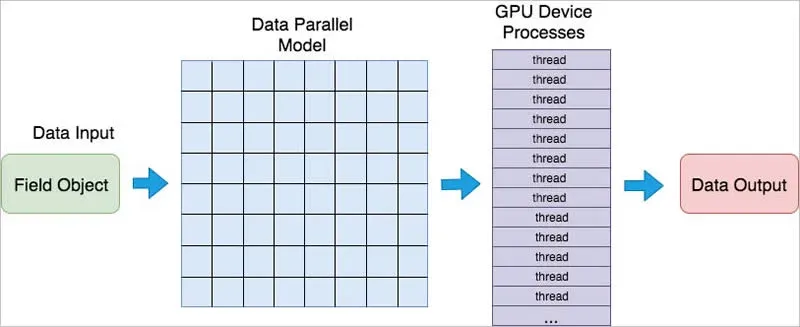
In blockchain, if the block structure cannot be altered, existing parallel implementations have mainly evolved into the two approaches described above. This article uses six projects—Oasis, Phala, PlatON, Dfinity, Filecoin and IOTA—as case studies to illustrate concrete implementations of each approach. (The ordering distinguishes “hardware‑trusted parallelism” from “algorithmic‑driven parallelism.”)
The Two Main Parallel Implementation Models
1. Parallel Networks Built on Trusted Hardware
Projects such as Oasis, Phala and PlatON fall into this category. Their core idea is to bring hardware capable of secure computation (e.g., Trusted Execution Environments, TEE) into the network, delivering both high compute power and strong security guarantees. Each hardware node (or cluster of nodes) can independently handle compute tasks, achieving parallel processing beyond the consensus layer and forming “independent trusted compute.”
a) Constructing a Robust Consensus Layer
All three projects first require a reliable ledger layer. Oasis, Phala and PlatON separate the consensus layer from the compute layer: the consensus layer is only responsible for writing and validating the ledger, while the compute layer runs off‑chain or on a Layer‑2.
- Oasis relies on trusted organizations and enterprises to run nodes; the nodes use the Tendermint protocol to reach consensus quickly.
- PlatON also sources its nodes from partners and employs an improved CBFT (class‑BFT) algorithm to boost efficiency.
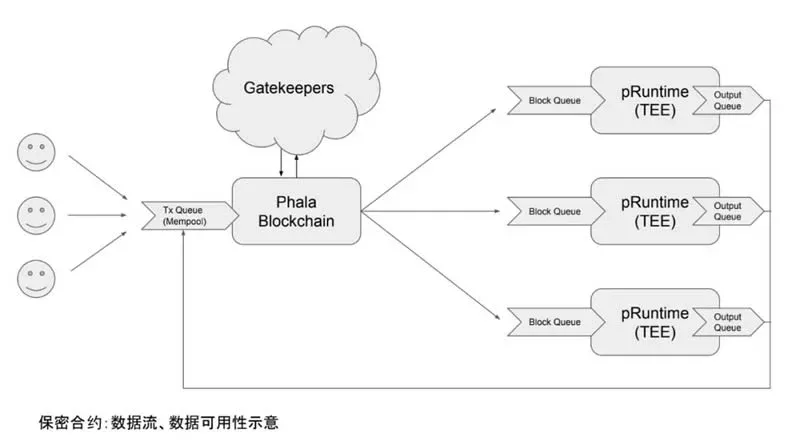
- Phala incorporates Gatekeeper nodes equipped with TEEs; the Gatekeeper’s secure execution environment maintains the ledger and adopts the same NPOS consensus used by Polkadot to achieve rapid block production.
b) Parallel Realisation in the Compute Layer
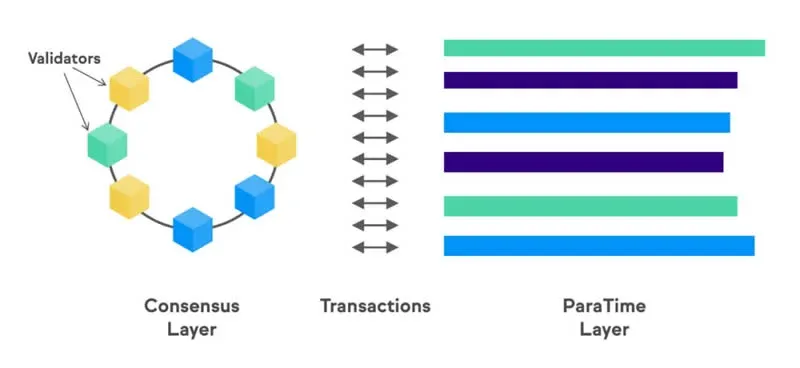
- Oasis calls its compute layer *Paratime*. In essence, a Paratime is a set of independent chains or runtime clusters. Initially Paratime runs in the cloud; as the project progresses, all nodes will gradually acquire TEE capabilities to guarantee both security and parallelism.
- Phala runs a *pRuntime* inside each connected TEE. pRuntime’s communication with the consensus layer is isolated, preventing conflicts; each TEE behaves like an individual “shard,” so the more nodes that join, the higher the aggregate throughput.
- PlatON executes its compute workload on a designated Layer‑2 that aggregates a large pool of trusted compute devices, including programmable circuits for multi‑party computation, zero‑knowledge proofs, homomorphic encryption and other privacy‑preserving technologies, thereby enabling both confidential and parallel processing.
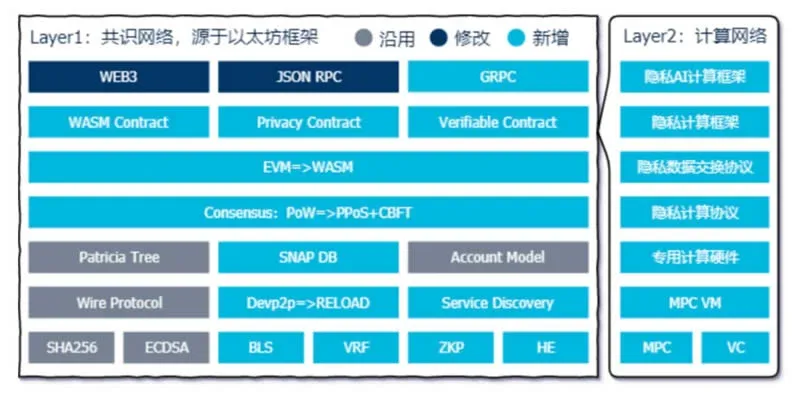
These solutions achieve cloud‑like horizontal scaling by moving computation onto trusted hardware. Unlike Ethereum 2.0’s sharding, Oasis, Phala and PlatON let secure hardware directly shoulder the sharding‑type compute responsibilities, completing parallelism outside the consensus tier.
---
2. Parallel Processing Powered by Algorithmic Innovation
The second group—Dfinity, IOTA and Filecoin—focuses on novel consensus or data‑structure algorithms that parallelise block‑confirmation processes, thereby increasing on‑chain task throughput.
a) Dfinity – Random Sampling & Non‑Interactive Signatures
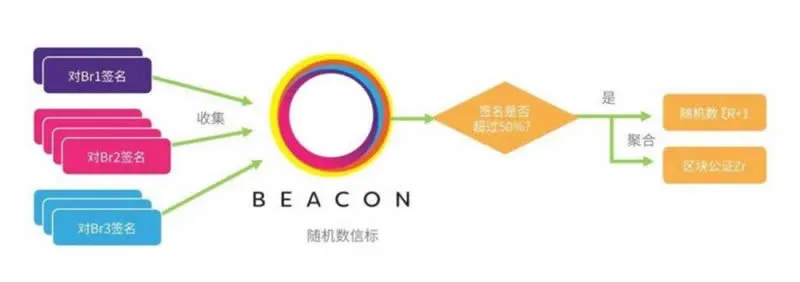
Dfinity introduces a random sampling mechanism at the consensus layer, allowing only a subset of nodes to participate in consensus computation. Those selected nodes employ a non‑interactive BSL (Signature Feedback Loop) algorithm to sign transactions independently, eliminating the multi‑round message exchanges typical of traditional BFT protocols and creating a de‑facto parallel acceleration.
b) IOTA – The Tangle DAG
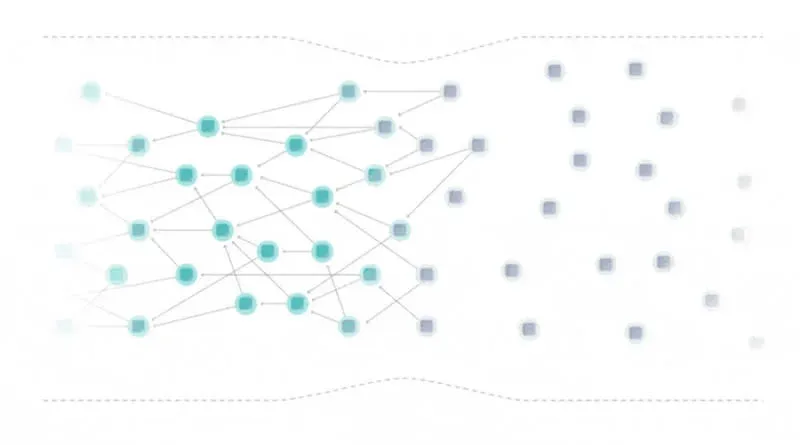
IOTA discards the conventional linear blockchain in favor of a Directed Acyclic Graph (DAG) called the Tangle. Each transaction references two previous transactions, removing the need for a block‑time window and enabling truly parallel confirmation of new transactions.
c) Filecoin – NSE Parallel Storage Tasks
Filecoin’s primary service is decentralized storage, a process that can be extremely compute‑intensive. By adopting the updated NSE (Nested Sub‑Epoch) algorithm, data is divided into multiple *windows* and *layers* that operate independently. These layers can be processed in parallel before being assembled for storage and space‑time proof generation, dramatically boosting storage‑task throughput.
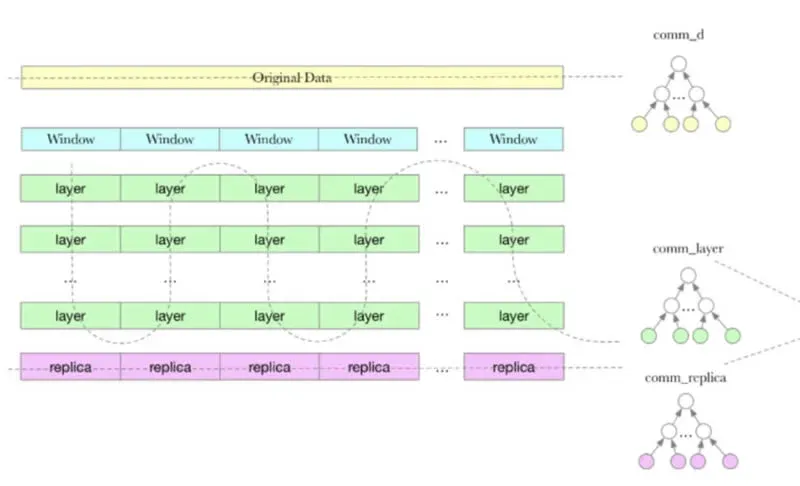
d) Supporting Components
- IOTA’s Tangle, lacking a block‑time constraint, still relies on a Coordinator (a transaction validator) to help achieve consensus.
- Dfinity’s sub‑nets, data centres and containers supply the underlying compute power; sub‑nets act like shards, while containers resemble execution units for smart contracts.
- Filecoin, after NSE‑based parallel processing, must still perform replication and space‑time proof verification to guarantee ledger consistency; the necessary tooling is provided by the core team and the broader ecosystem.
---
What Comes After Cloud‑Style Parallelism?
The six projects discussed have, at least theoretically, broken through the performance ceiling of classic blockchains. Yet the real value hinges on how developers can harness these high‑performance networks to build decentralized applications (DApps) and broader business scenarios.
Even the most powerful underlying infrastructure will remain underutilised without a vibrant ecosystem and developer‑friendly tooling. Just as the early internet evolved from a raw infrastructure layer to a cloud‑computing era, the improvement of developer experience is what truly drives innovation and commercial adoption.
Consequently, borrowing the “service‑oriented architecture” model of cloud platforms—offering easy‑to‑use development frameworks and scalable service models for blockchains—will be pivotal for the next wave of growth. Cloud‑style parallelism has opened the “well‑head”; whether it can rise to a higher “sky” depends on ecosystem maturity and continuous innovation.
This concludes an in‑depth analysis of the “cloud computing” concept built on blockchain technology. For more content on blockchain cloud computing, follow Bitaigen and explore the rest of their articles!
*Note: Crypto‑related gains may be taxable in your jurisdiction. Users in the United States should transact on Binance.US rather than the global Binance platform. For fiat on‑ramps, USD transfers typically use SEPA or SWIFT channels.*
Related Reading
- Blockchain Scaling Techniques: Boost Throughput & Reduce Fees
- Top Layer 2 Tokens: Polygon, Elrond, NEAR & Other Leading L2 Cryptos
- Layer 1 & Layer 2 Blockchain: Security vs Scalability
💡 Register on Binance with referral code B2345 for the maximum trading fee discount. See Binance complete guide.



