
 Bitaigen Research
 We will give you a comprehensive overview of the core concepts, key functions, and ecosystem roles of public blockchains for digital currencies, helping readers quickly identify the technical characteristics and consensus mechanisms of mainstream public chains. The following sections go deeper and are worth a careful read. We also compare the ecosystem layouts of different chains to provide references for investment and technical selection.
1. What Is a Public Blockchain for Digital Currency?
A public blockchain for digital currency is an open, transparent distributed ledger maintained and validated collectively by numerous nodes, featuring decentralization and no need for institutional intervention.
This structure allows every participant to view, verify, and record transaction data, thereby creating an open and fair trading environment. Compared with private blockchains, public blockchains place a stronger emphasis on decentralization, avoiding single‑point control and building a trustworthy distributed system.
2. Functions of Public Blockchains for Digital Currency
Public blockchains for digital currency ensure the safety and reliability of transactions through smart contracts and consensus mechanisms, driving the continuous development of the cryptocurrency ecosystem. Their main functions include:
- Decentralized Transaction Method
- Provides a fast, secure, trust‑less transaction channel, eliminating the reliance on intermediaries that characterizes traditional finance.
- Distributed Application Platform
- Beyond supporting the native digital currency, a public blockchain can run a variety of decentralized applications (DApps), offering developers a foundational infrastructure.
- Data Transparency and Tamper‑Resistance
- All transaction and ledger records are publicly queryable; the heightened transparency improves fairness and effectively deters fraudulent activity.
- Financial Innovation and Opportunities
- Supplies the technical backbone for emerging fields such as decentralized finance (DeFi) and stablecoins, fostering overall progress in the blockchain industry.
3. Major Types of Public Blockchains
Below are several representative public blockchains that have gained prominence in the industry:
| No. | Public Blockchain | Key Features | Consensus Mechanism |
|---|---|---|---|
| 1 | **Bitcoin** | First digital currency, high security, strong decentralization | Proof‑of‑Work (PoW) |
| 2 | **Ethereum** | Smart‑contract platform, supports custom contract development | Proof‑of‑Stake (PoS) |
| 3 | **Polkadot** | Cross‑chain interoperability, connects different blockchain networks | Nominated Proof‑of‑Stake (NPoS) |
| 4 | **Cosmos** | Blockchain interconnection, provides cross‑chain transactions and asset transfer | Tendermint BFT |
| 5 | **Monero** | Focuses on privacy protection, uses ring signatures and stealth addresses | Proof‑of‑Work (PoW) |
- Bitcoin uses PoW mining to ensure a highly secure network.
- Ethereum has transitioned from PoW to PoS, improving energy efficiency and advancing the DeFi ecosystem.
- Polkadot achieves seamless communication between disparate chains via its relay chain, addressing the “blockchain islands” problem.
- Cosmos offers a scalable cross‑chain solution through its Hub‑Zone architecture.
- Monero prioritizes anonymity, catering to users with strong privacy requirements.
These public blockchains each bring distinct advantages in technical implementation, ecosystem scale, and use‑case scenarios, forming the core pillars of today’s blockchain landscape.
4. More Virtual Currency Market Data for Today
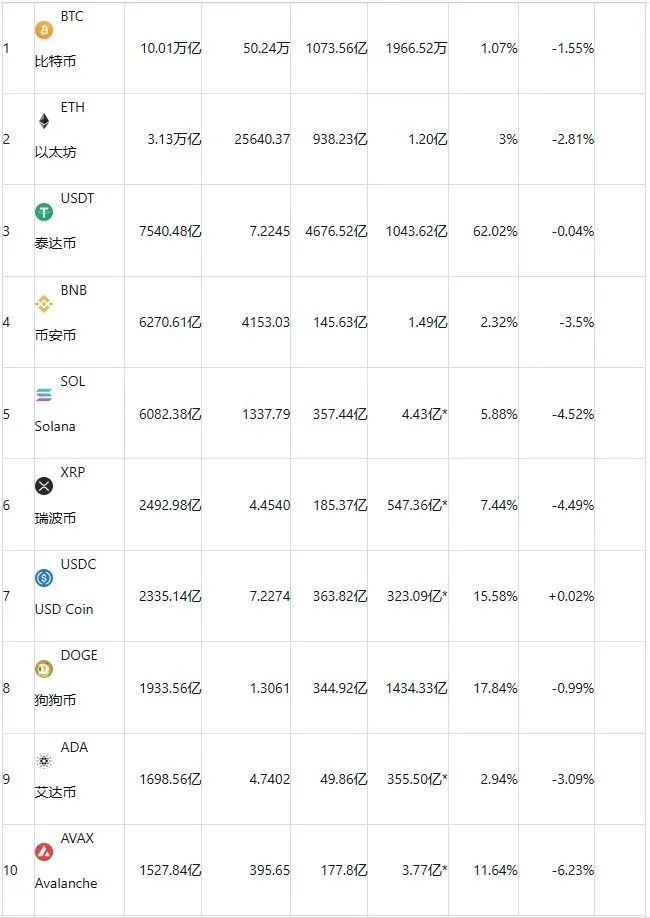
The above provides a complete answer to “What is a public blockchain for digital currency? Which public blockchains are the main ones?” For additional information on public blockchains for digital currency, feel free to follow Bitaigen (比特根) and explore its other related articles!
Related Reading
- Public vs Private Blockchains: Key Differences and Consortium hybrids
- OKChain: Transaction-Optimized Public Blockchain Design
- PKT Playkey: Decentralized Cloud Gaming Currency Explained
💡 Register on Binance with referral code B2345 for the maximum trading fee discount. See Binance complete guide.



