
 Bitaigen Research
 Understanding USDT Withdrawal Methods Across Different Blockchains Helps Choose the Most Suitable Network
The differences between USDT withdrawals on TRC‑20 and ERC‑20 mainly lie in the underlying blockchain network, address format, fee source, as well as security and settlement speed.
In this article we systematically outline the withdrawal differences for USDT on the two mainstream chains—TRC‑20 and ERC‑20—covering address formats, network characteristics, fee composition, and security and settlement time‑frames. By contrasting these key points, readers can quickly decide which chain best matches their own requirements. Subsequent sections will also provide practical guidance, so a careful read is recommended.
*Note: Cryptocurrency gains may be subject to tax in your local jurisdiction; consult a tax professional for advice.*
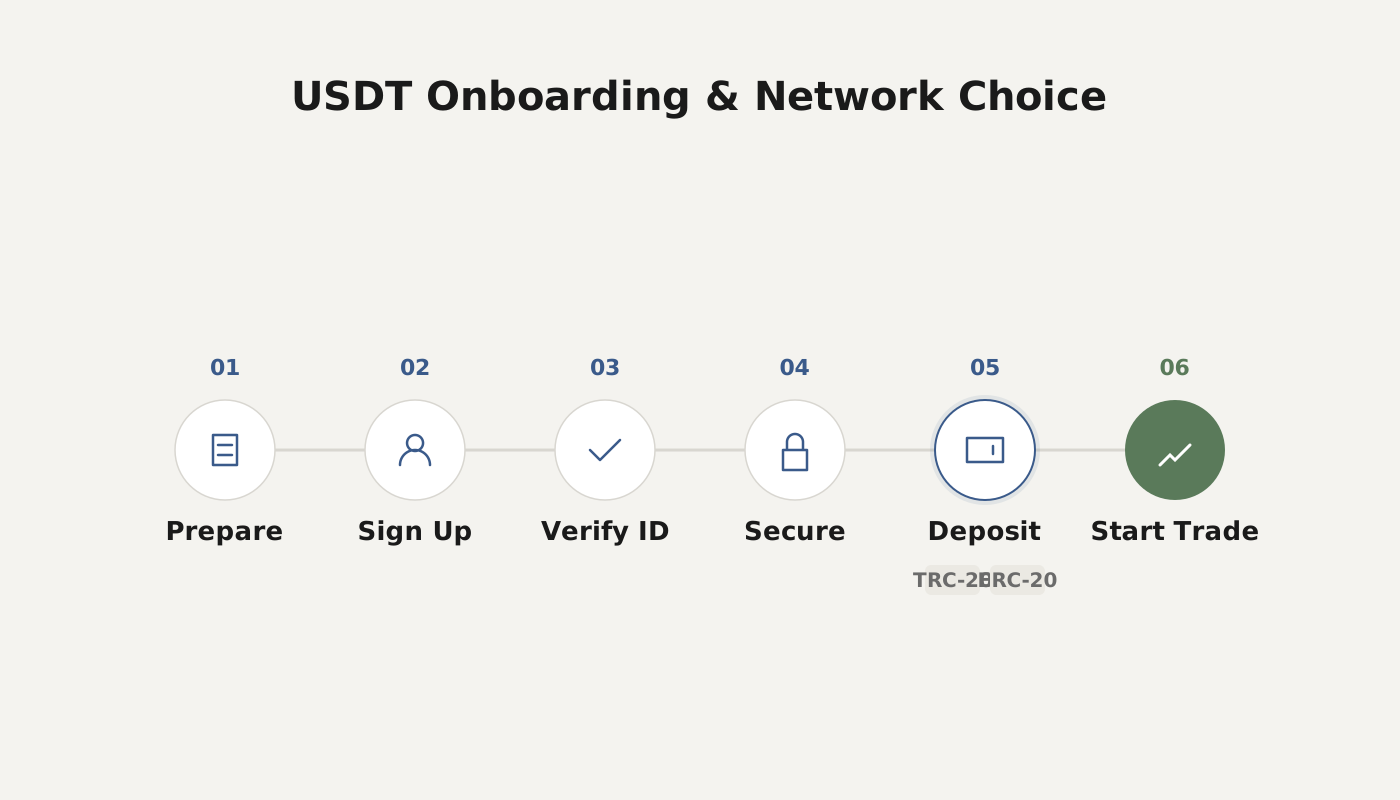
What Are the Differences Between USDT Withdrawals on TRC‑20 and ERC‑20?
- Address style: ERC‑20 addresses start with `0x`, while TRC‑20 addresses begin with an uppercase T.
- Underlying network: ERC‑20 is built on the Ethereum network, whereas TRC‑20 runs on the TRON network.
- Security: Generally, ERC‑20 is considered to have a higher security level, while TRC‑20 is viewed as slightly less secure.
1. Features of TRC‑20
- Fees: Transferring USDT on the TRON network does not incur a blockchain fee, although exchanges still charge a withdrawal fee set by the platform (often expressed in USD or deducted via SEPA/SWIFT).
- Example address (TRC‑20 contract): `TR7NHqjeKQxGTCi8q8ZY4pL8otSzgjLj6t`
- Current status: Most exchanges have added support for TRC‑USDT deposits, but because the implementation is still in a testing phase, some platforms may temporarily disable deposit or withdrawal functions for this chain.
2. Features of ERC‑20
- Fee type: Withdrawals require payment of ETH to cover the native Ethereum gas costs.
- Example address (ERC‑20 contract): `0xdac17f958d2ee523a2206206994597c13d831ec7`
- Deposits and withdrawals: Leading exchanges widely support ERC‑USDT deposits and withdrawals. Minimum withdrawal thresholds are usually low (e.g., Huobi’s minimum is 2 USDT), and users can send to either a BTC‑compatible address or an ETH‑compatible address, depending on the exchange’s options.
- Smart‑contract support: ERC‑USDT is compatible with Ethereum smart contracts and can be easily inspected on block explorers such as Tokenview, which display on‑chain transaction details.
What Do ERC‑20 and TRC‑20 Stand For?
1. ERC‑20
USDT‑ERC20 is the version of Tether (USDT) issued by the Tether company on the Ethereum network, adhering to the ERC‑20 token standard. Deposit addresses are standard Ethereum addresses, and all deposit/withdrawal operations are processed through the Ethereum blockchain. Since the widespread adoption of Ethereum smart contracts in 2018, ERC‑20 USDT—offering faster transaction speeds and higher security compared with the older Omni‑USDT—has become the market mainstream.
2. TRC‑20
USDT‑TRC20 is the version of Tether issued on the TRON network, following the TRC‑20 token standard. Deposit addresses are TRON addresses, and all deposit/withdrawal actions are executed on the TRON blockchain. Launched in April 2019 with the promise of “zero transfer fees and second‑level settlement,” its fee‑free characteristic made it popular in certain use‑cases, although the overall ecosystem is still less mature and its security profile is considered to be evolving.
Choosing Between the Two
- TRC‑20 USDT is suitable for users who need rapid settlement and are moving relatively small amounts; transfers typically complete within a few minutes.
- ERC‑20 USDT is better suited for traders who engage in frequent market activity, especially short‑term strategies, as they can leverage the mature Ethereum ecosystem of tools, wallets, and DeFi services.
This article provides a comprehensive analysis of the differences between USDT withdrawals on TRC‑20 and ERC‑20. For deeper insights into the nuances of each chain, please follow additional articles published by Bitaigen (比特根).
Related Reading
- ADX Token: AdEx Advertising Ecosystem on Ethereum ERC‑20
- ENJ Token Deep Dive: Tech Mechanics & Gaming Interoperability
- Check USDT Arrival on TRC‑20 Explorers
💡 Register on Binance with referral code B2345 for the maximum trading fee discount. See Binance complete guide.



