
 Bitaigen Research
Based on the latest on‑chain data, we dissect the liquidity signal behind Binance’s stablecoin reserve contraction and compare it with historical volatility to judge whether it is a short‑term adjustment or a potential structural risk. Multidimensional indicators are used to help readers grasp the market pulse; detailed analysis follows.
Persistent depletion of cryptocurrency liquidity
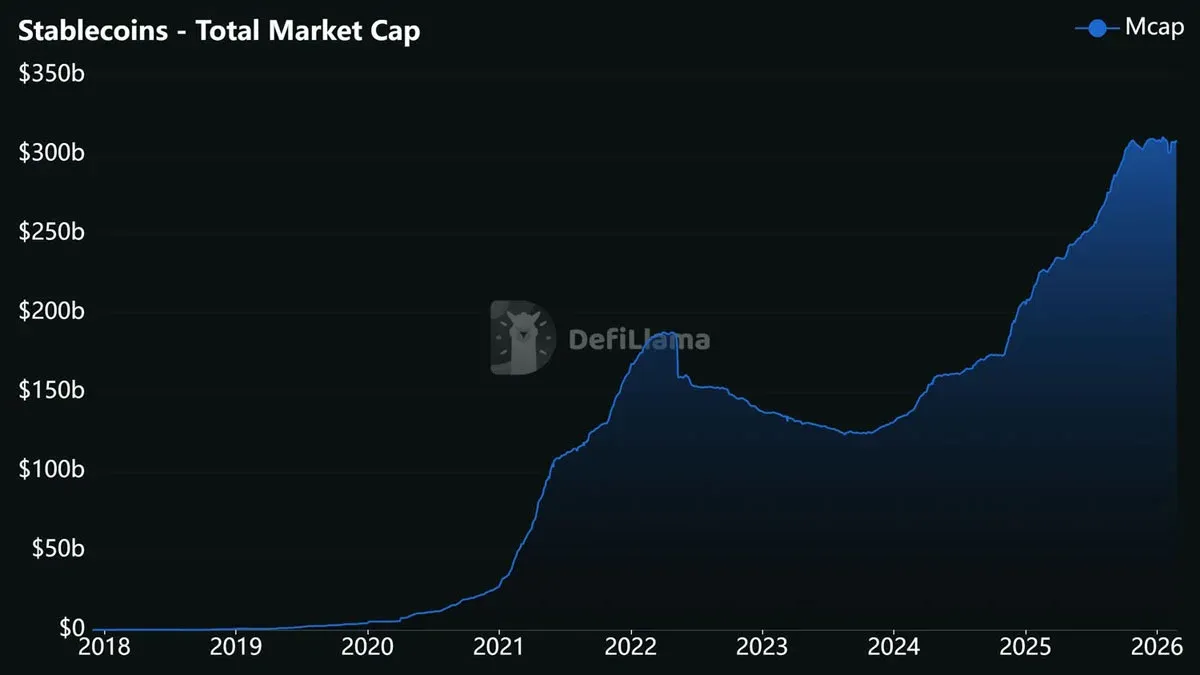
Data from DeFiLlama shows that the total market cap of stablecoins has hovered around $300 billion since October. Over the past two years the stablecoin market experienced roughly a 150 % increase in circulation, after which it entered a relatively stable phase.
When an exchange’s stablecoin reserves tighten, it usually signals that investors are pulling liquidity out of the crypto ecosystem and converting it to fiat—rather than parking the stablecoins off‑chain and waiting for a re‑entry. CryptoQuant analyst *Darkfost* considers this phenomenon an effective window for assessing cross‑market liquidity conditions.
“The main bottleneck limiting the sector right now is the lack of fresh inflows,” Darkfost wrote in his comment on Monday, warning that from a broader cross‑market perspective the probability of liquidity improvement in the short term remains limited.
The last time stablecoin market cap saw a pronounced decline was in mid‑2022, coinciding with the Terra/Luna collapse and the ensuing bear market. That market cap only began to recover gradually 18 months later, in November 2023.
Binance (BINANCE) stablecoin reserves shrink sharply
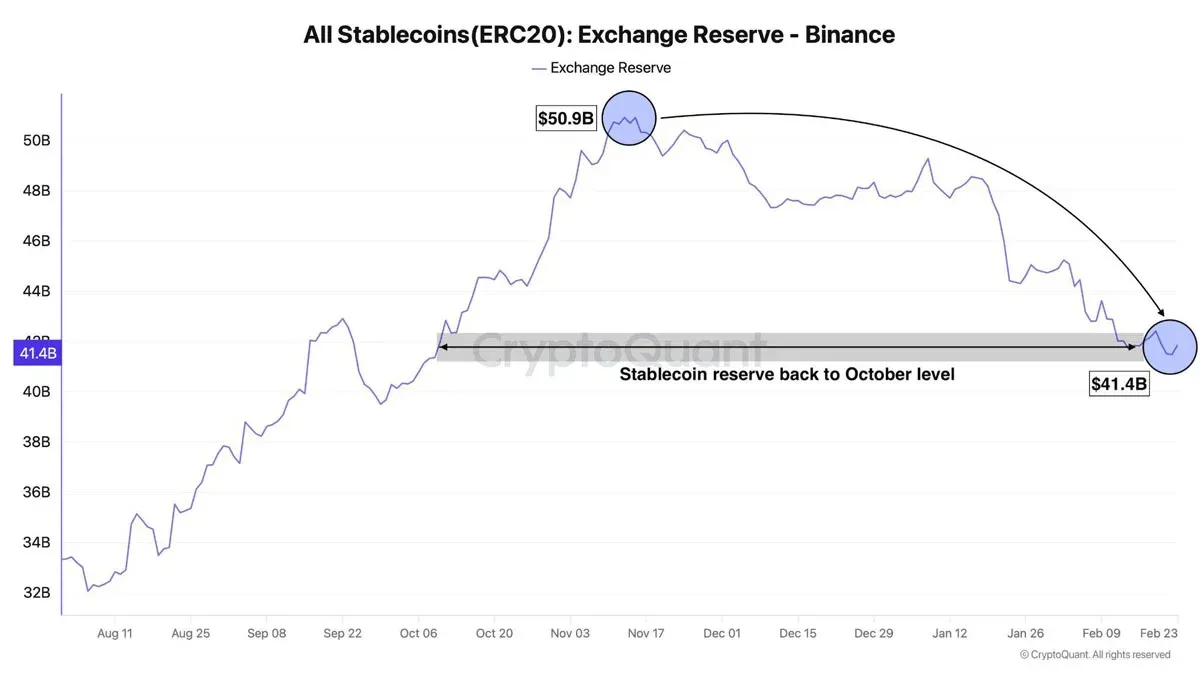
Affected by the Federal Reserve’s tightening policy and a slowdown in capital inflows, overall crypto market liquidity has remained subdued. A CryptoQuant report states that the world’s largest exchange, Binance, saw its stablecoin reserves drop 18.6 % over the past three months, falling from $50.9 billion to roughly $41.4 billion—a reduction of about $10 billion.
Analysts explain that exchange‑level stablecoin reserves typically fluctuate with investor demand, and this pronounced decline reflects a significant shift in investor behavior. Nevertheless, Binance still controls about 64 % of the total exchange‑held stablecoin pool.
They caution: “When a platform of this scale trims its reserves, it may indicate a change in market participant sentiment and warrants close monitoring.”
Restoring market stability may require a fresh inflow of stablecoins to reverse the current downward liquidity trend.
Low probability of a Fed rate cut in March
The direction of U.S. interest rates has deep implications for crypto market liquidity. Reuters cited Federal Reserve Governor Christopher Waller, who said that if the upcoming February labor data show the economy moving toward a more solid foundation, he would lean toward keeping rates unchanged at the March meeting.
At the same time, CME futures data indicate a 95.5 % probability that rates will remain steady in March. This expectation further intensifies liquidity pressure on crypto assets.
Note for U.S. readers: Residents of the United States must use Binance.US rather than the global Binance platform.
Tax reminder: Gains from cryptocurrency transactions may be taxable in your jurisdiction; consult a local tax professional for guidance.
---
The above discussion focuses on the roughly 19 % shrinkage of Binance’s stablecoin reserves in November, examining whether it represents a short‑term wobble or a deeper, longer‑term risk. For more details on the November reserve decline, follow the related reports from Bitaigen.
💡 Register on Binance with referral code B2345 for the maximum trading fee discount. See Binance complete guide.
⚠️ Risk Disclaimer: Crypto prices are highly volatile. This is not investment advice.



