
 Bitaigen Research
 We examine Ethereum reorg attacks from both technical and security perspectives, outlining the underlying mechanics and analyzing how the post‑Merge Proof‑of‑Stake (PoS) and Gasper consensus improve finality and markedly suppress the feasibility of such attacks. By reading this article you will understand the technical barriers attackers face, the potential risk mitigations for the DeFi ecosystem, and obtain reference points for future on‑chain security planning.
What is an Ethereum reorg attack? Recently, discussions have surfaced about miners potentially using a deliberately altered Ethereum client that permits them to accept bribes and reorder transactions within selected blocks. (The primary use case for such bribery is to attack DeFi protocols.)
An Ethereum reorg attack refers to an adversary leveraging a blockchain reorganization to reorder or replace already‑confirmed transactions for illicit gain. After the Merge, the PoS and Gasper consensus mechanisms raise the difficulty of executing this attack dramatically.
In this article we explain why this attack vector becomes considerably harder after the Ethereum 2.0 Merge.
1. What is the fork‑choice rule, and why does it matter?
The fork‑choice rule is a function evaluated by a client that takes as input the set of blocks and other messages it has observed and outputs the chain that should currently be regarded as the canonical chain. This rule is indispensable because, when multiple valid chains exist (for example, two competing blocks that share the same parent are published simultaneously), nodes must decide which chain to adopt.
- Reorg: the process by which a block that once belonged to the canonical chain is discarded because a competing block (or chain) overtakes it.
- Finality: a state in which the fork‑choice rule strongly prefers a particular block, making it mathematically or economically infeasible to be reorganized.
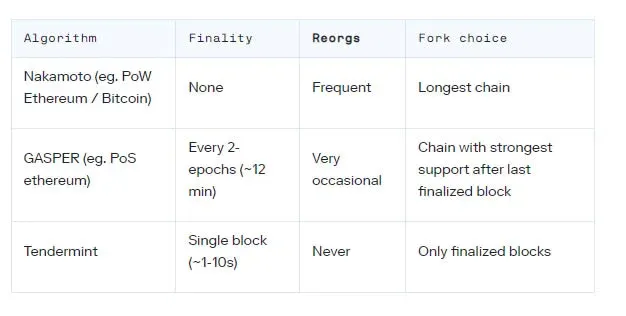
Different fork‑choice rules tolerate reorgs to varying degrees. For instance, Tendermint guarantees zero reorgs through its Byzantine‑fault‑tolerant (BFT) consensus, whereas in the Nakamoto Proof‑of‑Work (PoW) model reorgs are a commonplace occurrence.
2. How Ethereum currently operates
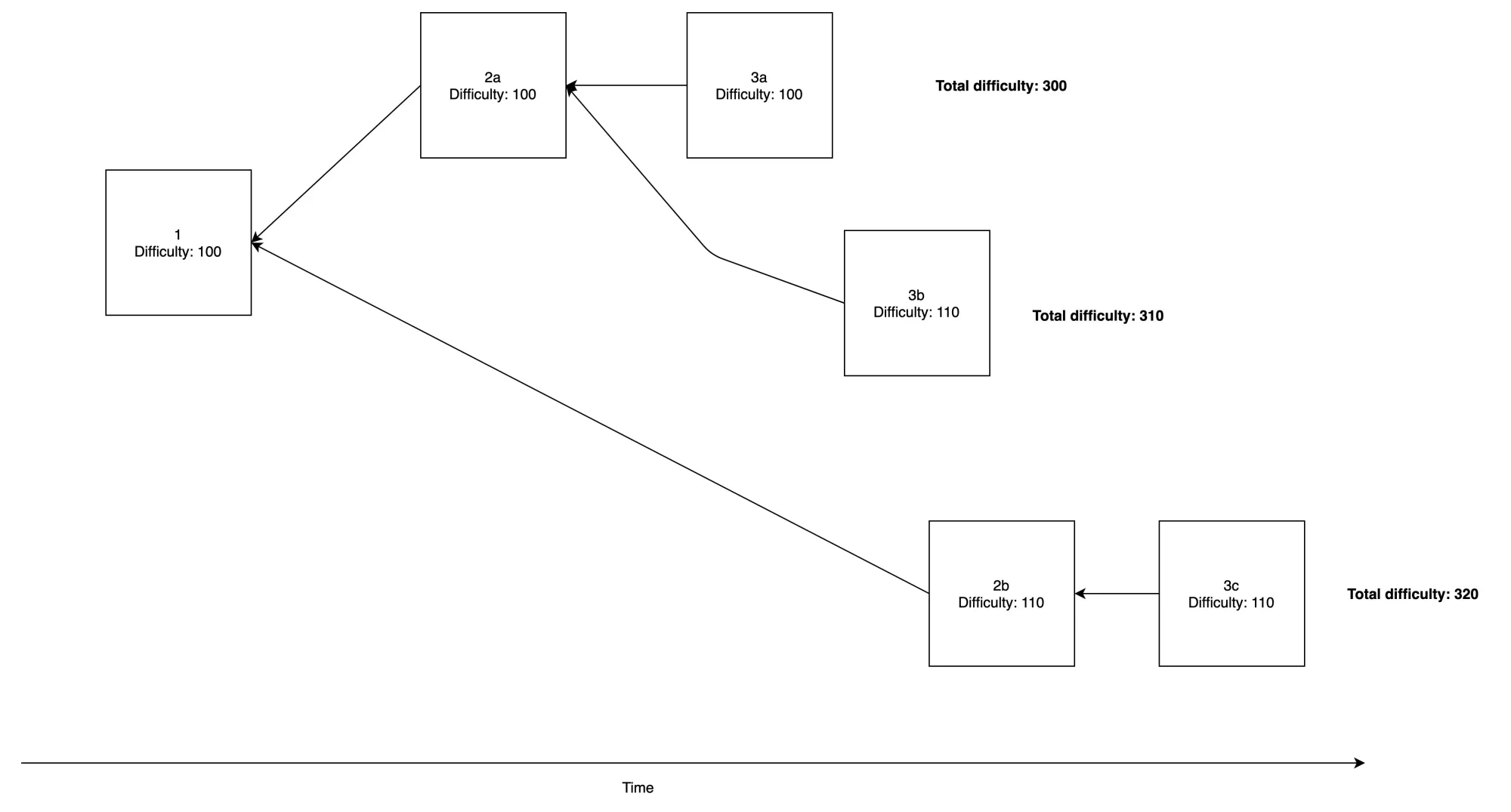
In Ethereum and other Proof‑of‑Work (PoW) blockchains, the “longest‑chain rule” (more precisely, the “highest total‑difficulty chain rule”) is used. When a client observes two competing chains, it selects the one with the greatest accumulated difficulty.
Example
- Synchronization starts from block 1 with difficulty 100.
- Blocks 2a and 3a are mined, each with difficulty 100, creating a fork whose total difficulty is 300.
- A block 3b appears with difficulty 110, pointing to 2a as its parent, raising the total difficulty to 310. At this point the node switches to the chain containing 3b, causing a 1‑block reorg (only 3a is replaced).
- Subsequently, blocks 2b and 3c (both difficulty 110) arrive, forming a new fork with total difficulty 320, leading to a 2‑block reorg (2a and 3b are replaced by 2b and 3c).
If a later block 4a points back to 3a, the fork‑choice rule will again flip back to the original chain, and the process can repeat.
3. Impact of chain reorgs
Common triggers
- Network latency: Miners A and B discover blocks at roughly the same time. The order in which the blocks propagate through the network causes different nodes to see different blocks first, creating a temporary tie.
- A third miner C continues mining on one of the branches, eventually breaking the tie and causing the other branch to be abandoned. Occasionally 2–5‑block reorgs occur; in extreme cases, network failures, client bugs, or malicious attacks can produce much larger reorganizations.
Negative consequences
- Node overhead: Reorgs require rolling back transactions or modifying state, increasing storage and compute load.
- Degraded user experience: Confirmation times lengthen, which is especially problematic for exchanges and other custodial services that must guarantee deposit safety.
- Transaction uncertainty: Users cannot easily determine whether a transaction will survive in a block that might be reorganized, raising the risk of failed DeFi operations or improper MEV (Miner Extractable Value) extraction.
- Higher 51 % attack surface: Under the longest‑chain rule, an attacker only needs to out‑pace the honest miners on the portion of the chain that has not yet been finalized; frequent reorgs lower the cost of mounting such an attack.
Worst‑case scenario
If an attacker succeeds in repeatedly reorganizing the chain, the settlement guarantees of the blockchain could collapse, potentially halting the network. In that situation, miners might be incentivized to build directly on top of a specific block to “steal” late‑stage fees or MEV, a short‑term profit motive that conflicts with the long‑term value of holding ETH. While this behavior may be attractive in the short run, it undermines the security assumptions of the protocol.
4. Post‑Merge Ethereum and Proof‑of‑Stake (PoS)
In Nakamoto PoW, blocks become linearly immutable once they are selected by the fork‑choice rule; overturning them requires discarding successive blocks, and the cost rises with the depth of the chain, making the process relatively slow.
The Ethereum Beacon Chain introduces the Gasper consensus protocol, which adopts LMD‑GHOST as its fork‑choice rule and separates responsibilities into:
- Proposers: Validators randomly selected to propose a block for a given slot.
- Attesters: A committee of validators that votes on blocks; voting power is proportional to their stake. Controlling a majority of votes is equivalent to controlling the fork‑choice outcome.
A slot occurs every 12 seconds. For each slot, the protocol pseudo‑randomly shuffles validators and selects roughly 1/32 of them to form a committee (currently about 196 k validators, yielding a committee size of roughly 6 125). An attacker who controls only a small fraction of validators will find it virtually impossible to obtain a majority within a committee, making a solo reorg unattainable.
Example probability
Assume there are 24 validators, of which 9 are malicious. Randomly assigning two committees makes it exceedingly unlikely that the malicious group will hold a majority in either. Using the binomial distribution, the probability that the adversary controls over 50 % of a committee drops sharply as committee size grows.
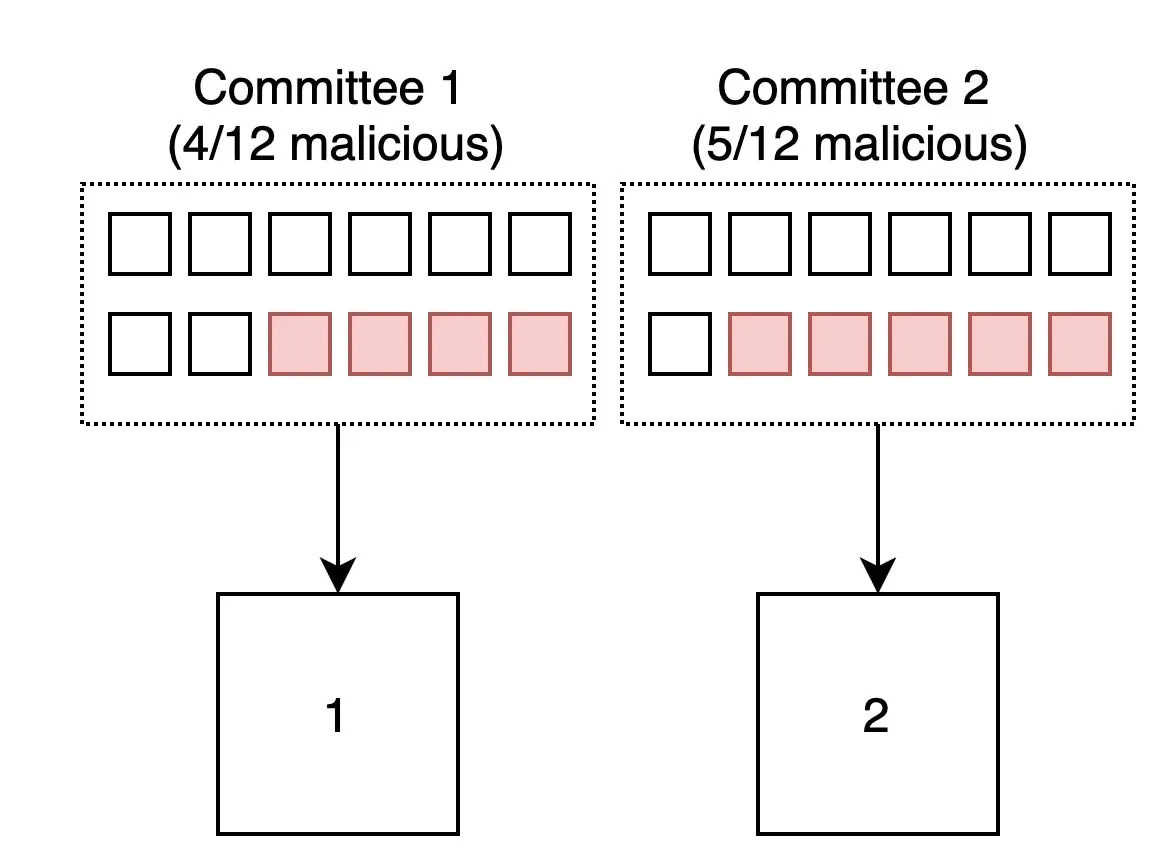
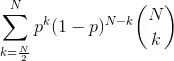
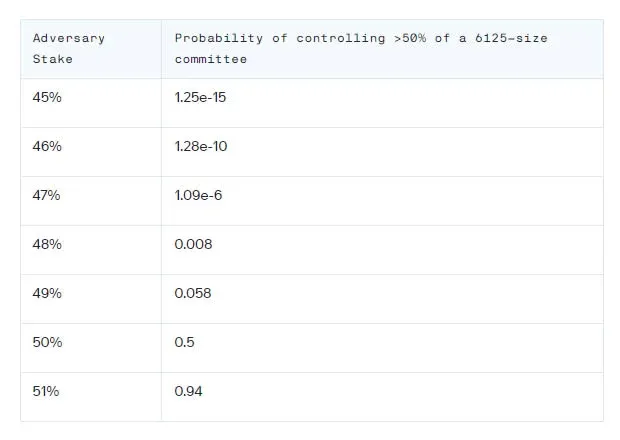
Consequently, executing a reorg directly requires the attacker to control close to 50 % of the validator set.
If an adversary controls 25 %–49 % of validators, more subtle attacks become possible, but recent protocol upgrades address many of these vectors, rendering them difficult to carry out in practice.
In a PoS system, any block deeper than two epochs is considered finalized and cannot be rolled back. Should a conflict arise involving finalized blocks (for example, if an attacker amassed 67 % of the staking power), resolution would rely on social intervention from the community rather than technical rollback.
Game‑theoretic view of reorg strategies
- PoW (longest chain): Even a 1–10 % chance of success can motivate a mining pool to attempt a reorg for lucrative post‑state or MEV gains. Hence some miners run a dedicated reorg client.
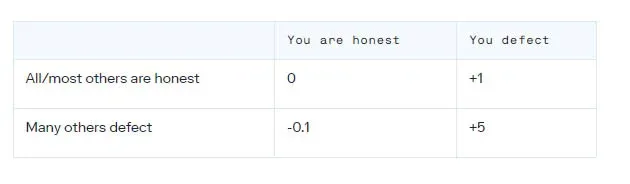
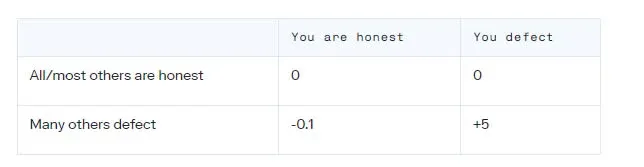
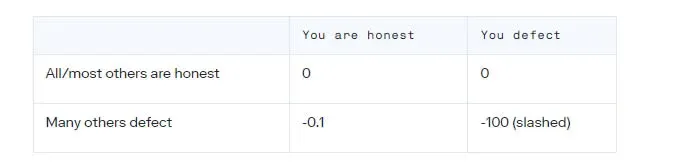
- Gasper: Reorgs spanning 1–64 slots are theoretically possible, but the attacker must control a large share of validators and coordinate attacks across multiple slots simultaneously, leading to prohibitive costs. As long as more than 51 % of validators behave honestly, the incentive to run reorg software is essentially zero, establishing a stable equilibrium.
- Tendermint: Reorgs are outright prohibited at the protocol level; unless more than 1/3 of validators are compromised, a single‑slot finality cannot be broken, also achieving a steady‑state equilibrium.
In summary, while a reorg client remains technically feasible, fork‑choice rules based on parallel proofs provide a much stronger security equilibrium.
5. Practical recommendations
Within the Ethereum context, the most effective mitigation is to accelerate the Merge and complete the transition to PoS as swiftly as possible. The pre‑Merge period carries the highest risk because miners remain the system’s central actors and their attack window is relatively short. The following factors help reduce that risk:
- Diverse miner identities: The majority of Ethereum miners also participate in other chains or ecosystems, giving them strong incentives to maintain good standing.
- Declining emergency‑Merge costs: As the scheduled Merge approaches, the technical difficulty, financial outlay, and operational risk of performing an emergency, last‑minute merge drop dramatically.
After the Merge, a single validator—or a small validator pool—cannot independently launch a reorg attack. A successful attack would require the majority of validators to go offline simultaneously, a coordination cost that is practically prohibitive. For organizations seeking additional safety, consider:
- Adjusting the fork‑choice rule to raise the theoretical reorg threshold to 50 %.
- Exploring single‑slot finality consensus mechanisms to eliminate reorg possibilities entirely.
The above constitutes a complete analysis of What is an Ethereum Reorg Attack? It becomes harder after the Ethereum 2.0 Merge. For more information on the Ethereum 2.0 Merge, please follow other articles on Bitaigen (比特根).
Note: When dealing with fiat on‑ramps or off‑ramps, global users typically transact in USD via SEPA or SWIFT channels. U.S. residents should use Binance.US rather than the global Binance platform. Additionally, crypto gains may be taxable in your jurisdiction; consult a local tax professional for guidance.
Related Reading
- 1INCH Token Overview: Price, Supply, and Governance Features
- Ethereum's Move from PoW to PoS Explained
- MetaMask (Fox Wallet) Setup: Add BSC & HECO on Android
💡 Register on Binance with referral code B2345 for the maximum trading fee discount. See Binance complete guide.



