
 Bitaigen Research
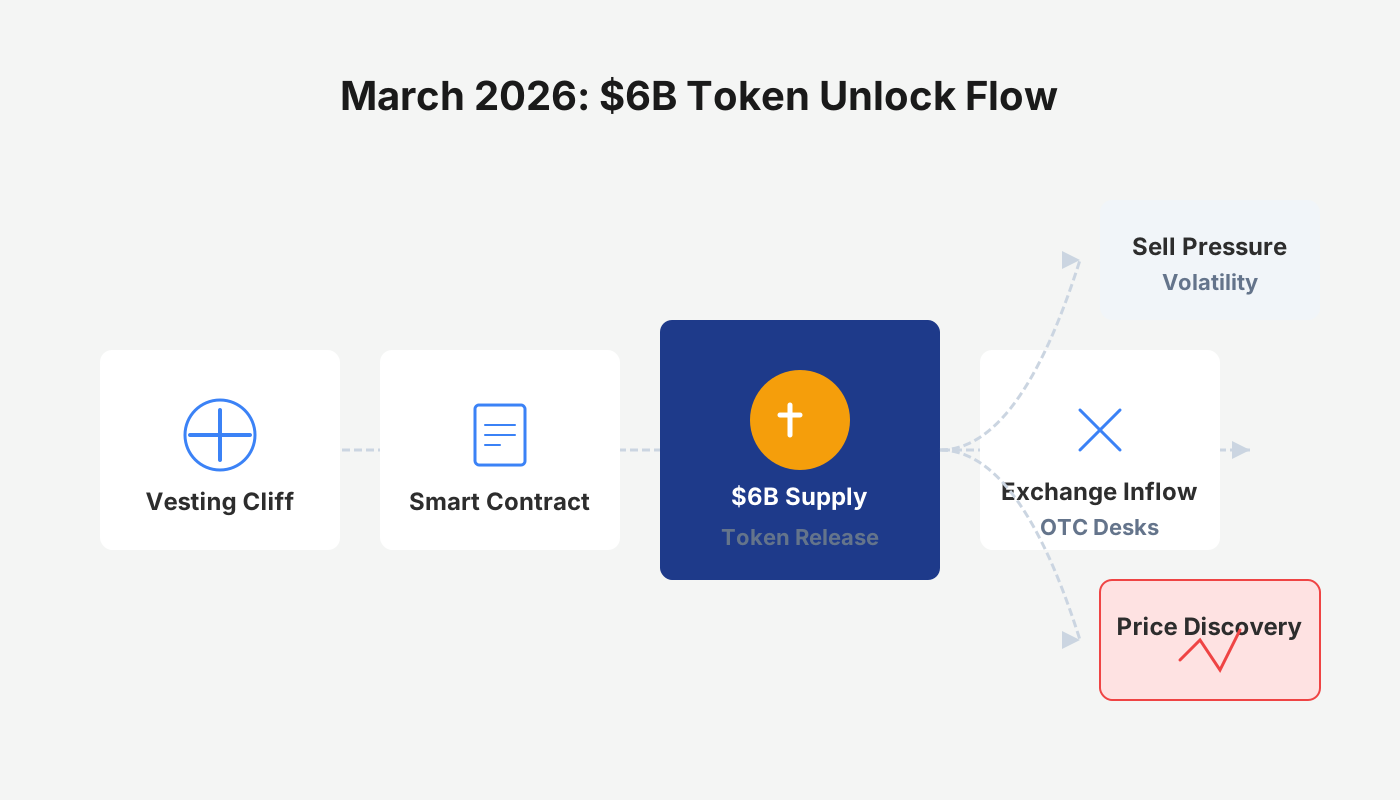
 March 2026 Is Set to Witness an Unprecedented Token Unlock Wave, with Over $6 Billion Worth of Assets Entering Circulation—roughly Three Times the Normal Monthly Unlock Volume. This surge could significantly reshape market supply‑and‑demand dynamics, and traders should position themselves in advance.
This article examines token economics at its core, dissecting why the upcoming massive unlocks will dominate market attention. We outline the key price‑impact factors and spotlight the most talked‑about projects of the season, helping readers identify potential risks and opportunities early. To understand the logic behind the unlock wave and how to respond, keep reading.
What Is a Token Unlock and Why Does It Affect Prices?
A token unlock refers to previously locked or vested tokens becoming freely transferable; holders can now trade them on exchanges or move them to wallets. An unlock is neither inherently good nor bad—it is a standard component of most projects’ token‑economic models, designed to smooth supply, incentivize long‑term holding, and mitigate post‑launch sell‑off risk.
Three main pathways through which token unlocks influence price:
- Supply surge: Once newly unlocked tokens hit the market, price pressure typically appears if demand does not rise in tandem.
- Market pre‑reaction: Before the unlock date, some traders may reduce positions, hedge, or shift to safer assets to pre‑empt the expected supply shock.
- Holder‑behavior variance: Tokens allocated to teams or early investors are generally more likely to be sold quickly than community‑incentive tokens, creating a higher short‑term sell‑off risk.
Why Is the March 2026 Unlock Particularly Sensitive?
This month’s unlocks are characterized by large “cliff‑style” releases—massive, discrete influxes of supply occurring at a single point in time rather than a gradual, linear distribution.
- WBT (≈ 81.5 million tokens) will unlock in a single event in mid‑March, representing about 56.55 % of its circulating supply and causing a “step‑wise” supply jump. Even modest selling can generate noticeable downward pressure; meanwhile, market participants often reduce exposure before the unlock, creating a double‑edged squeeze.
- GRASS will release an amount exceeding 10 % of its total circulating supply in one go, also tightening short‑term liquidity. By contrast, the H token distributed to early contributors tends to be sold for profit, amplifying risk.
In a risk‑averse environment where capital flows toward Bitcoin or stablecoins, such sudden supply spikes can magnify volatility; if risk appetite is high, the market may experience sharp intraday price swings instead.
Key Takeaways
- March’s top‑tier token unlocks could generate a short‑term supply shock, especially when large amounts are released “cliff‑style.”
- The anomaly this month is driven mainly by WhiteBIT Coin (WBT), which is expected to account for roughly $4.18 billion (about 69 % of the total unlock value for the month), dramatically reshaping its supply structure.
- The impact depends not only on the unlock size but also on the recipient profile, market depth, and overall risk sentiment.
Which Token Unlocks Are the Hottest in March 2026?
The unlock list for the month spans exchange‑native tokens, DeFi aggregators, identity protocols, Layer‑1 blockchains, and DePIN projects, each with a market value of several hundred million USD or more. Below are the five projects attracting the most attention.
1. WhiteBIT Coin (WBT)
- Unlock date: 2026‑03‑13 (UTC)
- Unlock amount: ≈ 81.5 million tokens
- Estimated value: ≈ $4.18 billion USD
- Circulating‑supply share: ≈ 56.55 %
- Beneficiaries: Funds 2 allocation bucket
This is a classic cliff‑style unlock; all tokens hit the market on the same day, potentially creating strong short‑term sell pressure if a large volume lands on exchanges.

2. Jupiter (JUP)
- Unlock date: 2026‑03‑28 (UTC)
- Unlock amount: ≈ 53,472,222 tokens (monthly unlock)
- Circulating‑supply share: ≈ 1.65 %
- Beneficiaries: Diverse allocation range
Although smaller than the late‑February airdrop, the relatively thin liquidity could still trigger price fluctuations as the market absorbs the supply.

3. Humanity Protocol (H)
- Unlock date: 2026‑03‑25 (UTC)
- Unlock amount: ≈ 131.22 million tokens
- Maximum‑supply share: ≈ 1.3 %
- Beneficiaries: Early contributors
Unlocks aimed at early contributors often come with a high redemption intent, so monitoring internal wallet transfers becomes crucial.

4. Aptos (APT)
- Unlock date: 2026‑12‑03 (UTC)
- Unlock amount: ≈ 11.31 million tokens
- Issued‑supply share: ≈ 0.69 %
- Beneficiaries: Community allocation
Even though it represents less than 1 % of total supply, a concentrated position or tight derivatives exposure could still spark short‑term volatility.

5. Grass (GRASS)
- Unlock date: 2026‑02‑28 (UTC)
- Unlock amount: ≈ 55 million tokens
- Supply‑share: ≈ 13.15 %
- Beneficiaries: Contributors
The sizable unlock will continue to affect capital flows into early March, creating a two‑stage market reaction: pre‑unlock positioning followed by post‑unlock supply pressure.

How Will March 2026’s Top Token Unlocks Influence Market Liquidity and Sentiment?
March 2026 represents the largest USD‑denominated unlock window of the year, with WBT’s concentrated release dramatically boosting overall supply. When assessing impact, traders typically focus on the following factors:
| Key Factor | Bearish Scenario | Bullish Scenario |
|---|---|---|
| **Supply share** | Cliff releases above 5 % intensify sell pressure | Linear releases below 2 % are relatively gentle |
| **Beneficiary type** | Funds or early investors tend to liquidate quickly | Ecosystem incentives, staking rewards encourage holding |
| **Liquidity depth** | Insufficient DEX/CEX depth amplifies slippage | Robust market makers and active spot trading buffer the shock |
| **Macro trend** | Bitcoin downtrends heighten risk‑off sentiment, magnifying supply shock | Rising risk appetite provides altcoins with buying support |
By combining unlock data with liquidity metrics, capital‑flow analytics, and sentiment signals, traders can more precisely identify the “supply‑shock window” and look for opportunities amid volatility.
How to Track Token Unlocks in Real Time?
Staying on top of the latest unlock schedules helps you plan positions ahead of sudden sell‑offs. The following platforms deliver reliable, up‑to‑date information:
- TokenUnlocks.app – Detailed unlock calendars, allocation breakdowns, and live updates.
- CryptoRank.io – Aggregates March 2026 unlock events by date and sector, making it easy to compare monthly totals.
- Messari.io – Couples token‑economics analysis with unlock data to assess whether tokens will be staked, distributed, or sold outright.
Additionally, the Bitget Wallet token tracker displays multi‑chain assets on a single screen, lets you set alerts, and monitors exchange inflows—ideal for staying synchronized during critical windows.
Which Trading Strategies Perform Best During March 2026’s Major Token Unlocks?
Different unlock profiles tend to produce distinct market behaviours. The following approaches may prove effective this month:
- Post‑unlock Momentum Trading
- Capture rebounds after the initial sell‑off dissipates; employ tight stop‑losses and rapid execution. Bitget’s DEX aggregator and real‑time price tools provide the necessary infrastructure.
- Contrarian Accumulation
- Deep sell‑offs often create low‑price entry points, especially for Layer‑1, DeFi, or infrastructure tokens with medium‑term upside. Use Bitget Wallet’s capital‑flow monitoring to spot potential value‑recovery windows.
- Diversified Allocation
- Spread assets across projects with varying unlock structures, sectors, and chain characteristics to dilute single‑event impact. Bitget’s token tracker helps you keep tabs on upcoming unlocks and rebalance dynamically.
Risk‑Management Tips for Token Unlock Periods
- Cap exposure per unlock: Keep any single unlock’s position to 2‑3 % of your portfolio to avoid concentration risk.
- Scenario planning: Pre‑define three operating plans for bearish, neutral, and bullish market conditions, with clear target prices and liquidity expectations.
- Compliance logging: Export wallet transaction logs to satisfy tax and regulatory requirements. *(Note: Crypto gains may be taxable in your jurisdiction; consult a local tax professional.)*
- Portfolio monitoring: Leverage Bitget Wallet’s cross‑chain dashboard to watch asset movements across more than 130 chains and adjust holdings promptly.
How Bitget Wallet Helps You Stay Informed About March 2026’s Hot Token Unlocks
Bitget Wallet integrates trading, monitoring, and security features into a single solution, delivering full‑chain support for this month’s massive unlock events.
Core Features & Strategic Benefits
| Feature | Details | Strategic Value |
|---|---|---|
| Real‑time Unlock Monitoring | Built‑in unlock calendar covering 130+ networks, with allocation timelines and instant alerts | Prepare positions before supply shocks hit, reducing exposure to sudden volatility |
| Cross‑chain Trading Infrastructure | DEX liquidity aggregation, bridging, and gas‑optimization | Execute low‑slippage swaps, rapid rotations, or hedges during turbulent periods |
| Non‑custodial Security Architecture | Multi‑party computation (MPC) authentication, key‑recovery, $700 M user protection fund | Guard against phishing and exchange attacks when unlock activity peaks, keeping assets safe |
With these capabilities, Bitget Wallet evolves from a simple wallet into a comprehensive toolkit for “information pre‑positioning, flexible allocation, and asset security” throughout the March 2026 unlock wave.
Conclusion
March 2026’s token unlocks concentrate supply shocks across exchange‑native tokens, DeFi governance assets, Layer‑1 blockchains, and infrastructure projects. Whether it’s WBT’s cliff‑style release, JUP’s monthly vesting, APT’s community distribution, or the H and GRASS unlocks, each event carries distinct implications for liquidity, sentiment, and price dynamics.
Global‑market considerations: All fiat references are expressed in USD; cross‑border transfers should use SEPA or SWIFT where applicable. U.S. users must conduct fiat on‑ramps/off‑ramps through Binance.US rather than the global Binance platform.
By monitoring unlock schedules, assessing holder composition, and aligning trading tactics with market depth and macro trends, participants can navigate the heightened volatility responsibly while remaining compliant with local tax obligations.
Related Reading
- SOL Price Analysis: Can Solana Stay Above $180?
- Pi Coin 2025 Price Forecast: Technical & Fundamental Review
- Tether USDT Supply Drops Biggest Since 2022 FTX Collapse
💡 Register on Binance with referral code B2345 for the maximum trading fee discount. See Binance complete guide.



