
 Bitaigen Research
 In an era marked by persistent inflation and frequent geopolitical conflicts, the subtle interplay between oil prices and crypto assets offers traders a distinctive perspective. We will dissect blockchain sentiment, whale positions, and derivatives holdings to help you capture potential macro signals and seize opportunities in the oil market.
>
Note: All fiat references are expressed in USD, and transfers can be executed via SEPA or SWIFT channels. U.S. residents should access cryptocurrency markets through Binance.US or other locally regulated platforms.
Key Takeaways
- During inflation shocks or geopolitical crises, a faint yet discernible macro correlation can emerge between oil and crypto assets.
- Sentiment in the crypto market, whale positions, and risk‑aversion signals often reflect the broader macro pressure that underpins oil prices.
- Publicly available derivatives data on the blockchain can reveal the distribution of oil‑related positions and potential short‑squeeze risks.

Why Incorporate Crypto Signals into an Oil‑Trading View
The financial system is increasingly intertwined, making cross‑asset linkages impossible to ignore. Oil price movements are typically driven by supply‑chain disruptions, geopolitical tension, and related factors; crypto assets, on the other hand, react more sharply to liquidity shifts and investor sentiment. Although the fundamentals of the two markets differ dramatically, macro‑level stress can cause their price trajectories to move in sync—or in opposite directions—providing macro traders with an extra source of intelligence.
Macro‑Level Oil‑Crypto Relationship
How an Indirect Link Operates
- When crude oil spikes sharply due to supply constraints or political conflict, global inflation expectations rise, pushing energy costs higher.
- As disposable income is squeezed, investors’ risk appetite tends to decline, reducing demand for high‑volatility assets such as Bitcoin.
- The typical macro chain looks like: Oil price surge → Heightened inflation concerns → Pressure on risk assets.
This pattern has been validated in several recent geopolitical events: on the same day oil prices surged, Bitcoin often exhibited a flat or declining trajectory. However, the relationship is not permanent; both oil and crypto markets remain subject to their own supply‑and‑demand dynamics, and long‑term divergences are common.
Specific Signals Traders Watch
Crypto Performance When Oil Prices Rise
- Weakness in crypto assets – During a rapid oil rally triggered by an unexpected supply shock, equity markets are usually under pressure, and the upward momentum of cryptocurrencies is likewise limited.
- Shift toward negative sentiment – Market participants anticipate tighter liquidity, causing crypto sentiment indicators to swing quickly into bearish territory.
Crypto Recovery After Oil Prices Stabilize
When energy‑market volatility eases and inflation worries soften, risk appetite rebounds. At that point, digital assets such as Bitcoin often regain buying interest, leading to a price bounce.
Applying Blockchain Data to Oil Trading
Transparency of Tokenized Oil Derivatives
On several crypto platforms, tokenized contracts linked to crude oil allow traders to speculate on price movements. Because these contracts live on a blockchain, analysts can directly observe:
- Open interest size and direction (long vs. short)
- Leverage utilization levels
- Concentration zones of liquidation prices
Such granular data is often difficult to obtain in real time from traditional commodity markets.
Monitoring “Whale” Activity
Large‑scale holders—commonly called whales—frequently employ high leverage in tokenized oil contracts. On‑chain transaction data makes it possible to spot:
- Clusters of massive long or short positions
- Abnormal concentration of leverage ratios
- Critical price levels that could trigger cascading liquidations
When a substantial amount of capital tilts toward the same direction, the probability of sharp price swings rises markedly.
Short‑Term Short‑Squeeze and Squeeze Signals
If oil prices climb while the derivatives market simultaneously hosts a large pool of short positions, further price appreciation forces those shorts to cover by buying, creating an accelerating upward move—a classic short‑squeeze loop. Monitoring this kind of positioning structure can provide an early warning of heightened volatility in the oil market.
Interpreting Crypto Sentiment Indicators
Sentiment acts as a multiplier in digital‑asset markets. Crypto traders tend to react to macro news faster than participants in traditional finance, so sentiment gauges often move before other markets have fully digested the information.
- Rising pessimism – Usually coincides with rising oil prices, signaling tightening global liquidity.
- Capital flows – Large‑scale inflows or outflows from exchanges can mirror shifts in overall risk appetite.
When these sentiment signals align with oil‑price movements, they can be viewed as corroborating evidence of macro pressure.
Combining Technical and On‑Chain Signals
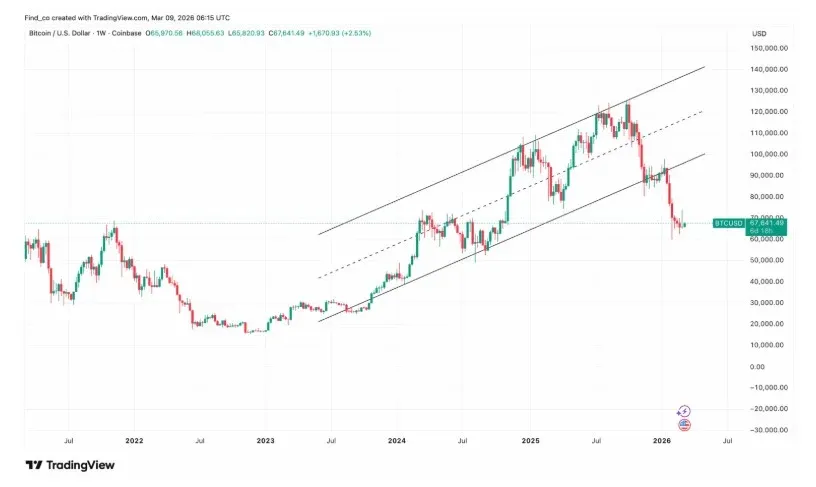
- Technical patterns – Defensive formations such as bear flags or descending channels on Bitcoin often correspond to heightened macro uncertainty.
- On‑chain sentiment – Extreme values in coin‑distribution metrics, exchange net inflows/outflows, and funding rates frequently precede a market tightening phase.
- Liquidity monitoring – Capital exiting speculative assets may hint at a tightening of financial conditions, which often dovetails with upward trends in energy prices.
Together, these cues form an auxiliary toolkit for macro traders assessing potential oil‑price trajectories.
Limitations of Using Crypto Data
Timeliness of the Correlation
The oil‑crypto link tends to surface during inflation shocks or heightened geopolitical tension; under normal conditions, the two asset classes usually move independently.
Traditional Oil Drivers Remain Dominant
- OPEC production decisions
- Supply‑chain interruptions or transportation bottlenecks
- International sanctions and conflicts
These fundamental factors continue to exert the primary influence on crude‑oil pricing.
💡 Register on Binance with referral code B2345 for the maximum trading fee discount. See Binance complete guide.



