
 Bitaigen Research
 We have observed a significant uptick in activity on the Solana network recently, while the merchant adoption rate of Bitcoin payments is also accelerating. This article combines on‑chain data and market intelligence to analyze the driving forces behind these trends, compares them with the latest developments on Ethereum, and helps readers grasp the newest movements in the two major ecosystems.
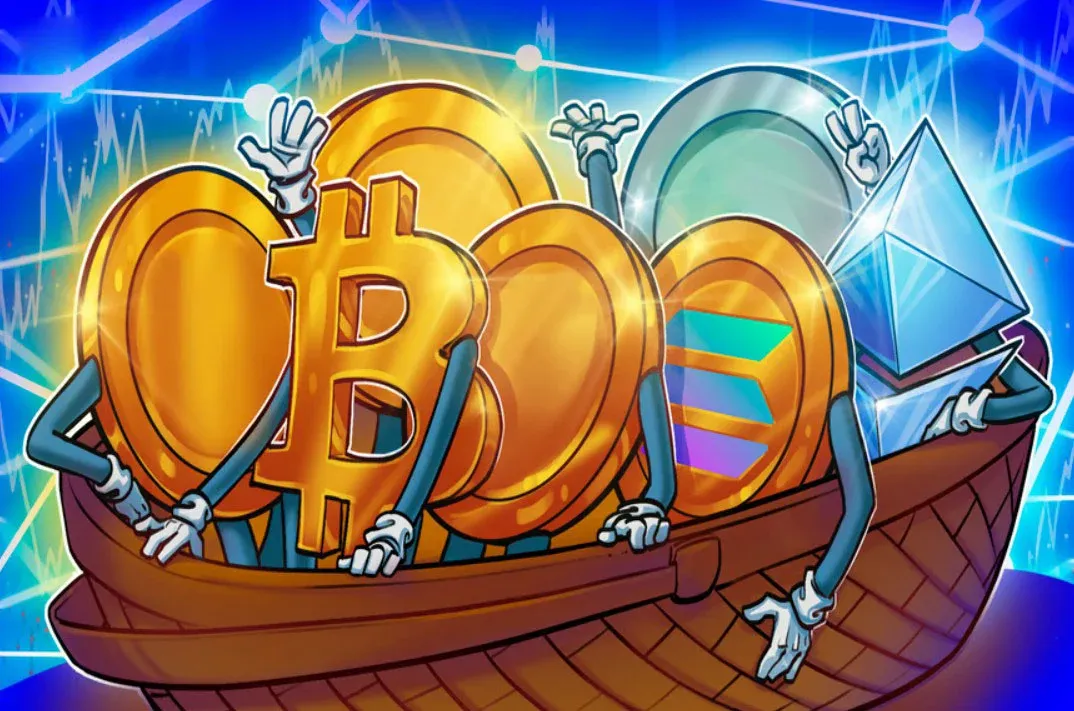
In January 2024, Solana’s active address count grew roughly 115% month‑over‑month, and in the United States about 4 out of every 10 merchants have already started accepting Bitcoin (BTC) payments.
The emergence of new artificial‑intelligence tools has made launching meme tokens easier than ever, sparking a surge of activity on Solana. At the same time, Ethereum is steadily advancing its future‑compatibility upgrades and working to reduce transaction fees.
1. Active Solana address count rises nearly 115%
- Measurement date: up to January 28
- Growth magnitude: daily active addresses jumped 115% month‑over‑month
- Total: stabilized above 5 million (Nansen data)
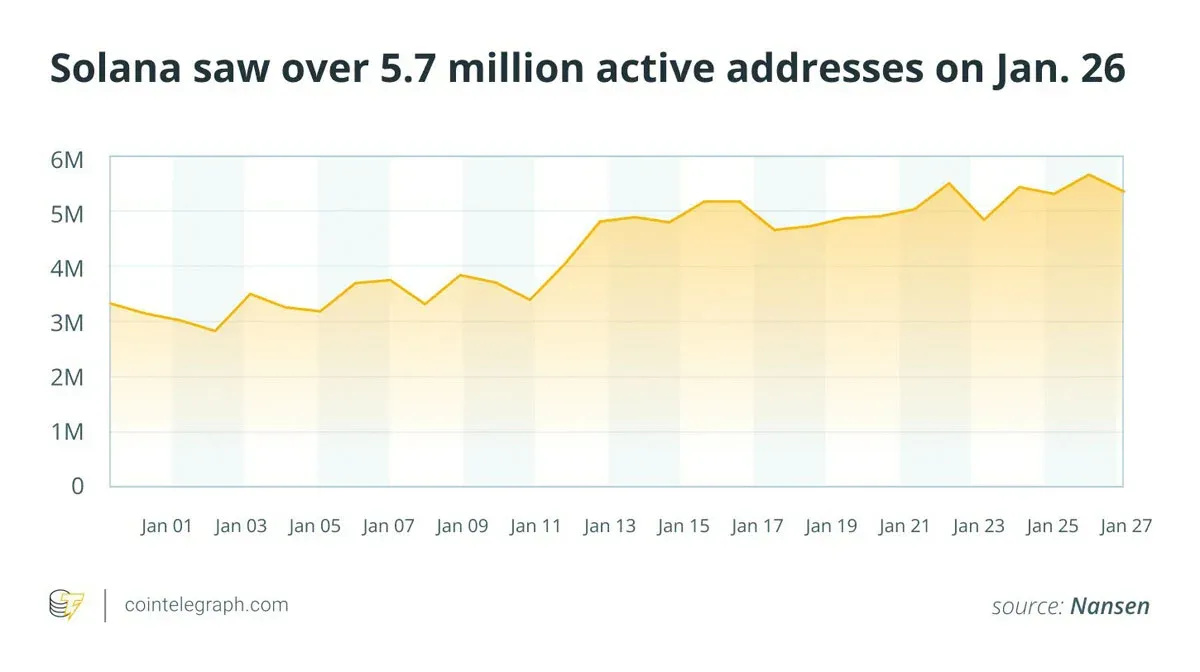
Data collected on January 28.
The surge is primarily driven by Anthropic’s launch of Claude Cowork—an AI agent that can control a user’s desktop—and a renewed wave of meme‑token minting. Developers using the Solana‑based token‑issuance platform Bags were therefore able to push token launches to a new high.
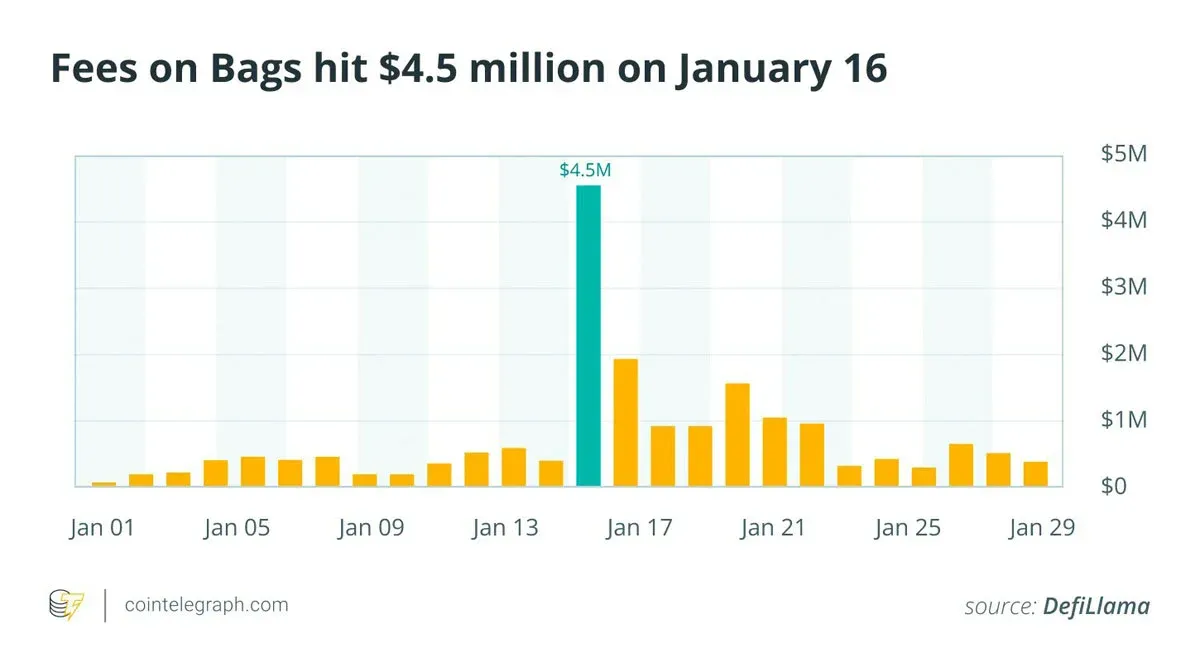
- Platform fees: on January 16 they spiked to US $4.5 million; by comparison, from September to December 2023 daily fees were mostly in the five‑figure range, sometimes dropping to a few hundred dollars.
- Token count: during the same period, the number of tokens that “graduated” from Bags or were launched exceeded that of the other popular platform Pump.fun.
2. Ethereum active addresses increase 25%
- Growth overview: by the end of December, Ethereum’s daily active addresses already surpassed those of well‑known Layer 2 solutions Base and Arbitrum; in January they grew another 25%.
- Fees: on January 29 the average transaction fee fell below $0.01.
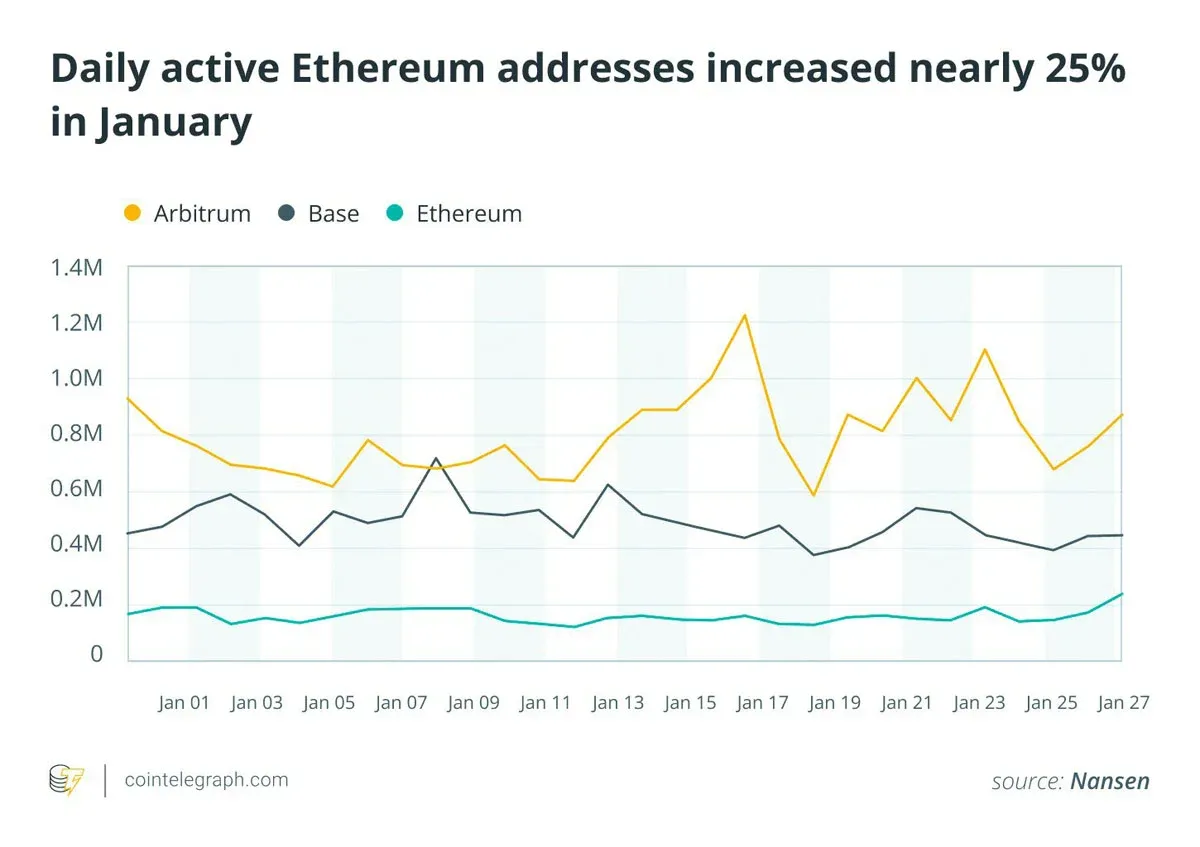
Data collected on January 28.
The rise in activity is attributed to several key network upgrades—including larger block sizes and lower fees. On January 12, Ethereum co‑founder Vitalik Buterin stated that Ethereum ultimately needs to “abandon testing,” meaning it should continue operating and meeting user demand without active developer intervention.
3. Seven U.S. Bitcoin mining firms face curtailments during the winter storm
- Affected companies: Riot, Core Scientific, CleanSpark, Bitdeer and three other mining operations.
- Cause: the winter storm placed severe strain on power grids across the southeastern and central‑southern United States.
VanEck’s head of digital‑asset research Matthew Siegel explained that these mines have been prepared structurally to act as flexible loads through utility demand‑response programs.
“We have not yet confirmed real‑time curtailment measures for this storm, but the model has proven its value when conditions tighten.”
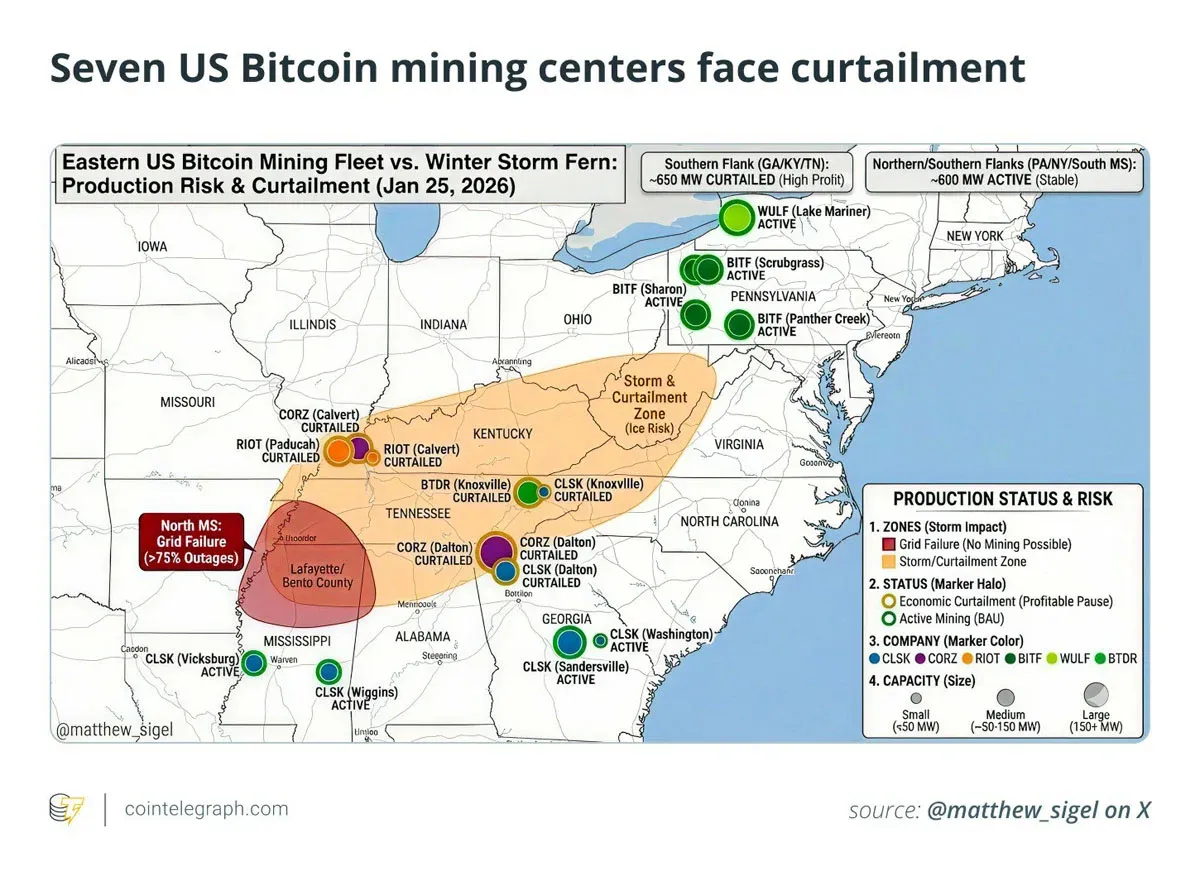
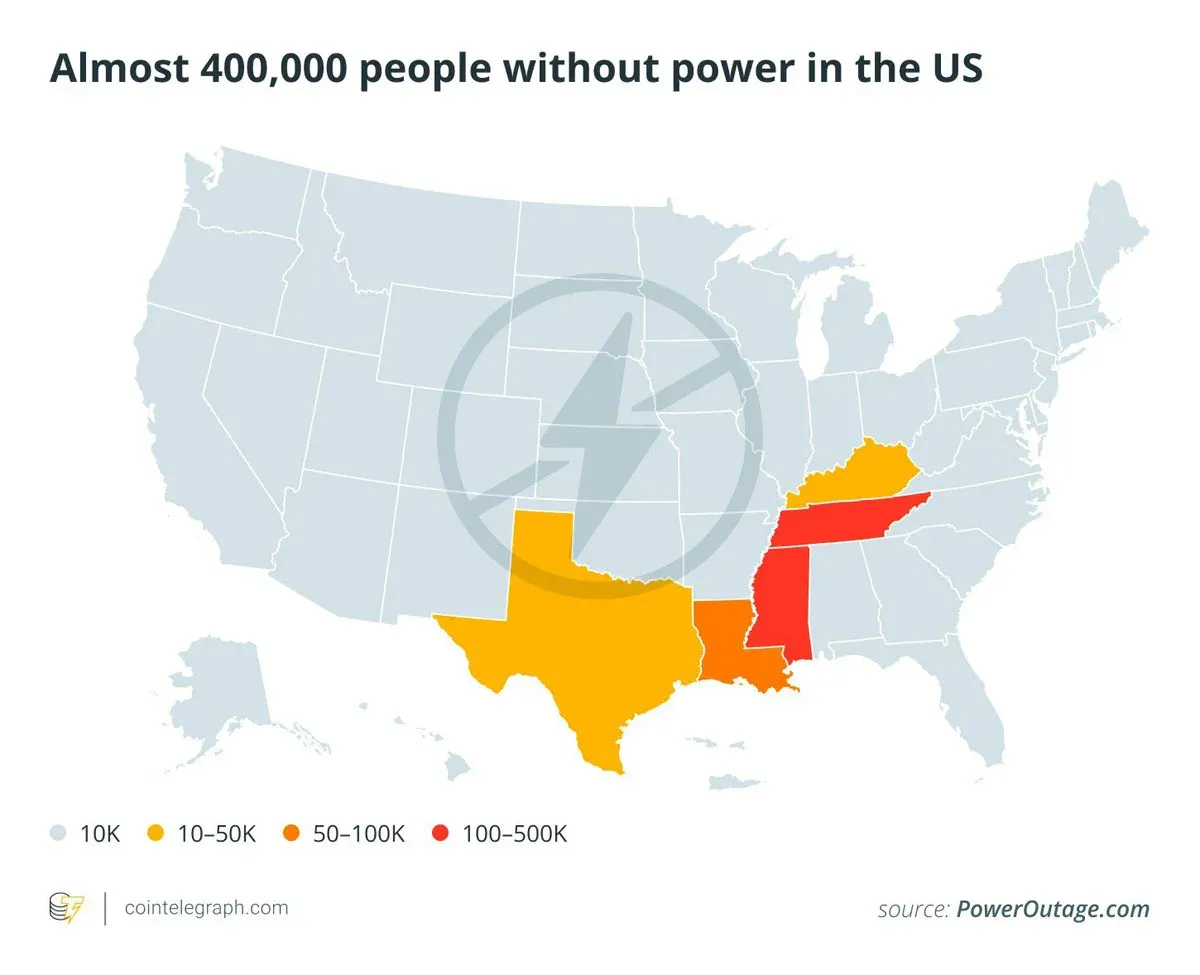
The storm affected the U.S. Midwest and Northeast, causing flight cancellations, hazardous travel conditions, and power outages. By January 27 it had resulted in at least 20 fatalities. Southern states, lacking robust winter‑prepared infrastructure, were hit hardest; as of January 28, roughly 400,000 customers in Kentucky, Tennessee, Mississippi, Louisiana and Texas were without electricity.
Many Bitcoin miners locate their facilities in regions with relatively stable electricity prices, taking advantage of low‑price power during off‑peak periods and temporarily shutting down equipment during peak demand to reduce operating costs.
4. Forty percent of U.S. merchants accept crypto payments: PayPal report
- Adoption rate: roughly 4 out of every 10 merchants in the United States now accept cryptocurrency payments.
- Source: PayPal’s January 2024 report.
- Benefits: faster transaction speed, greater privacy, and the ability to attract customers who are proficient with crypto.
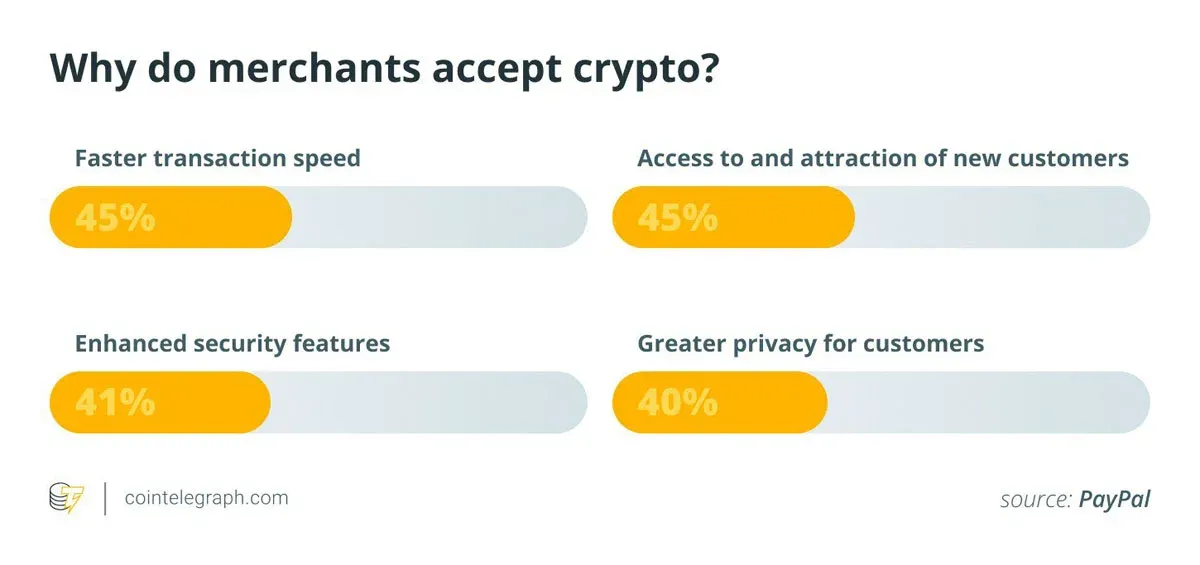
PayPal Vice President and General Manager Mei Zhabane said, “From the data and conversations with our customers, we see crypto payments moving out of the experimental phase and into everyday commercial use.” About 84% of surveyed merchants believe crypto payments will become mainstream within the next five years.
5. Bitcoin price fluctuates amid the Greenland incident
- Price movement: mid‑month Bitcoin briefly touched US $100,000 before retreating to US $87,000, a drop of more than 10%.
- Context: the price swing coincided with heightened discussion around former U.S. President Donald Trump’s claim that the United States should take control of Greenland. Greenland is an autonomous territory of Denmark, and both Denmark and the United States are NATO members.
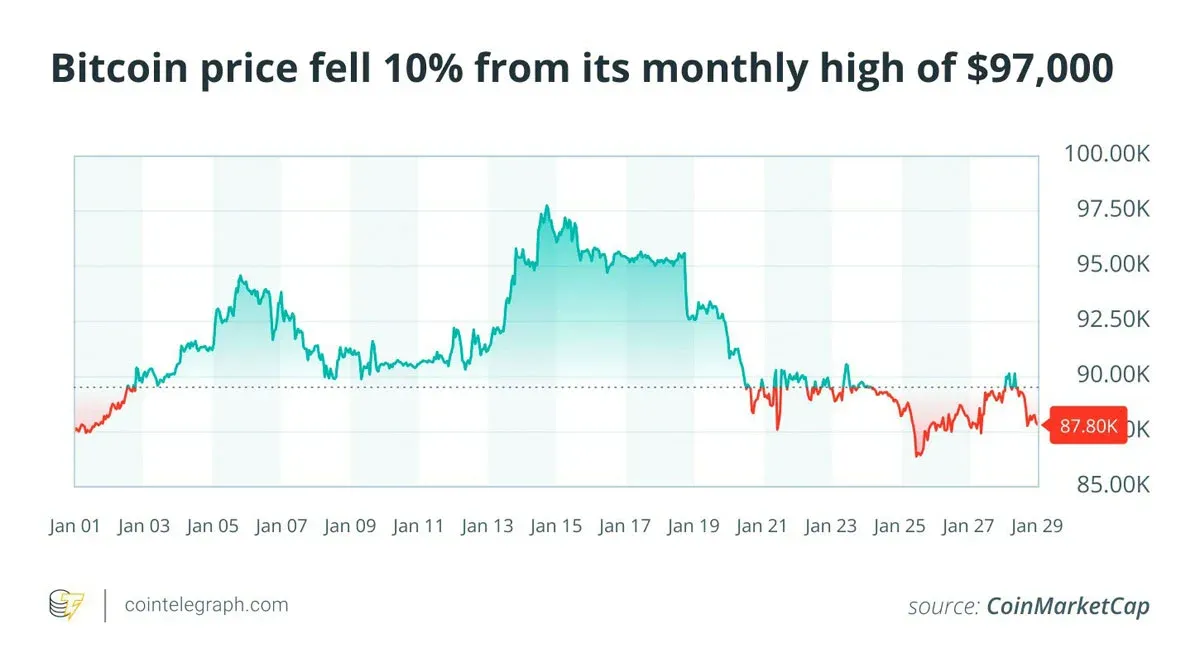
Data collected on January 28.
Although the rhetoric has since moderated, risk assets such as Bitcoin remain sensitive to “big‑stick” political statements. IG’s chief market analyst Chris Boshang argued that Trump’s threats triggered a global sell‑off, and crypto assets did not act as a safe haven. Some analysts note that unilateral tariffs and aggressive comments toward former allies exerted downward pressure on Bitcoin’s price.
---
The above constitutes the monthly chart analysis of the 115 % surge in active Solana (SOL) addresses and the fact that 4 out of 10 merchants accept Bitcoin (BTC). For more on Solana address growth and crypto‑payment penetration, stay tuned to Bitaigen’s other articles.
*Note: In jurisdictions where cryptocurrency transactions are taxable, gains may need to be reported in accordance with local tax laws. U.S. residents should conduct fiat conversions through Binance.US (or other U.S.-compliant exchanges) using USD, SEPA, or SWIFT where applicable.*
Related Reading
- Bitcoin at $65k, Ethereum $3.1k, TON tops Dogecoin
- Fed Rate & Inflation Trigger Bitcoin & Ethereum Volatility
- Satoshi Nakamoto Identity & Bitcoin Holdings Traced
💡 Register on Binance with referral code B2345 for the maximum trading fee discount. See Binance complete guide.
⚠️ Risk Disclaimer: Crypto prices are highly volatile. This is not investment advice.



