
 Bitaigen Research
 We dissect the architectural principles, consensus mechanisms, and cross‑chain interoperability to systematically compare the design differences between Polkadot parachains and Ethereum 2.0. By contrasting the technical roadmaps of these two major public blockchains, readers can grasp each platform’s strengths and limitations and anticipate the future direction of blockchain scaling.
Introduction
In the evolution of public‑chain technology, Polkadot’s parachains and Ethereum 2.0’s sharding solution are regarded as two important branches. Although they belong to different project ecosystems, their overall architectures share several similarities. Below we examine both from the perspectives of design philosophy, consensus mechanism, and cross‑chain capabilities, providing a systematic comparison and analysis.
Ethereum 2.0 Sharding Architecture
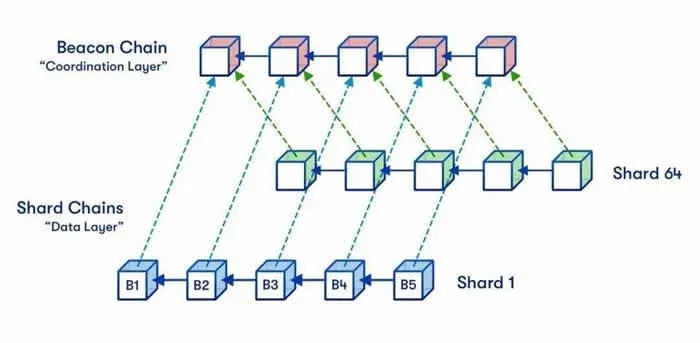
The core of Ethereum 2.0’s roadmap is sharding, a concept originally from the database world that splits a single table across multiple machines to boost parallel processing.
In Ethereum’s implementation, the network is divided into up to 1,024 shards, each functioning as an independent sub‑network that processes a portion of transactions and smart contracts.
The chain that provides unified consensus and cross‑shard communication is called the Beacon Chain, whose role is analogous to Polkadot’s Relay Chain. Every 64 blocks (i.e., one epoch), the Beacon Chain performs a state finalization, which typically takes 6–12 minutes.
On the consensus layer, ETH 2.0 uses Proof‑of‑Stake (PoS), requiring each validator to lock up 32 ETH. Each shard needs at least 256 validators to achieve finalization. If the whole network runs 64 shards, the total validator count reaches roughly 16,384.
Polkadot Parachains and Parathreads
Polkadot’s design revolves around two main concepts: Parachains and Parathreads. A parachain is an independent blockchain that connects directly to Polkadot’s main chain (the Relay Chain) and shares the Relay Chain’s security and consensus. To become a parachain, a project must occupy a slot in the system; slots are limited—approximately 100 are available in version 1.0.
Slots are allocated through DOT auctions. Winners obtain 2 years of usage rights. After the lease expires, they must re‑enter the auction. The DOT locked during the auction is returned to the original holder at the end of the lease, so no funds are permanently consumed.
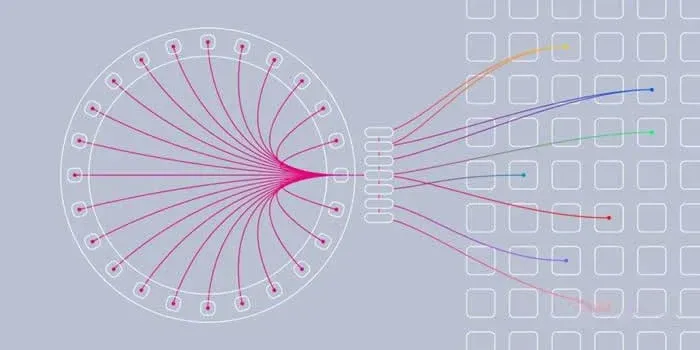
Compared with permanently occupying resources, Parathreads operate on a pay‑as‑you‑go basis. When a thread needs the Relay Chain to finalize its block, it submits a request and pays the corresponding fee. Because multiple threads may compete for confirmation simultaneously, the Relay Chain orders them by fee amount, enabling dynamic resource allocation.
Core Benefits of Becoming a Parachain
Joining Polkadot’s parachain ecosystem offers two primary advantages:
- Enhanced security – Parachain blocks are collected and finalized by the Relay Chain, allowing each chain to benefit from Polkadot’s robust consensus and reducing the risk of attacks on any single chain.
- Cross‑chain interoperability – Polkadot implements Cross‑Chain Message Passing (XCMP) at the protocol layer, similar to inter‑process communication (IPC) in operating systems. XCMP lets different parachains exchange messages, invoke instructions, or transfer tokens. As long as a chain declares the message types it can accept according to the XCMP spec, it can interoperate seamlessly.
Scarcity of Slots and the Role of Parathreads
Because slot numbers are finite, many new chains cannot directly secure parachain status. To address this, Polkadot provides two alternative routes: experimenting on the Kusama test network, or adopting the Parathread model. The latter does not require participation in costly slot auctions and is suited for applications with lower block‑production frequency (e.g., every few minutes or even hourly).
Key Design Differences – Comparison Table
| Comparison Dimension | Polkadot Parachain | Ethereum 2.0 Shard |
|----------------------|-------------------|--------------------|
| Design Goal | Cross‑chain connectivity, horizontal scaling | Alleviate throughput bottlenecks, improve overall performance |
| Finalization Frequency | Typically < 1 minute | Every epoch (64 blocks) ≈ 6–12 minutes |
| Consensus Mechanism | Nominated PoS (NPoS), ~10 validators per chain, total ≈ 1,000 | PoS, 256 validators per shard, total ≈ 16,384 |
| Inter‑chain Communication | XCMP provides direct message passing between chains | Shards communicate internally via the Beacon Chain |
| Cross‑chain Capability | Native support for parachain‑to‑parachain interactions | Requires bridge solutions (e.g., Bitcoin‑bridge) for external chains |
The table shows that Polkadot emphasizes building a multi‑chain interoperable ecosystem, whereas Ethereum 2.0 aims to create a unified, high‑efficiency base layer. Their consensus models, validator set sizes, and finalization windows differ markedly.
Limitations of Cross‑Chain Implementations
Although Polkadot enjoys inherent cross‑chain advantages among its parachains, connecting to external chains such as Bitcoin still necessitates bridges or similar intermediary solutions—mirroring Ethereum’s approach of using bridge protocols for cross‑chain transfers. Consequently, Polkadot’s cross‑chain edge is primarily internal to its own ecosystem.
Conclusion
Polkadot’s parachain projects are currently in a rapid growth phase. While the Polkadot mainnet launched later than Ethereum and missed the early “golden” period, its full launch is expected by the end of this year or early next year, providing a window to catch up with Ethereum for market share. Whether Polkadot can replicate or even surpass Ethereum’s influence remains an ongoing story worth monitoring.
For deeper analyses of the architectural differences between Polkadot parachains and Ethereum 2.0, stay tuned to Bitaigen’s upcoming reports.
Note: Crypto transactions and gains may be subject to tax obligations in your jurisdiction. Users should consult local tax regulations and consider professional advice.
Financial platforms: U.S. users should access Binance.US for compliant trading; globally, fiat on‑ramps typically use USD via SEPA/SWIFT.
💡 Register on Binance with referral code B2345 for the maximum trading fee discount. See Binance complete guide.



