
 Bitaigen Research
 Recently, discussions around Bitcoin inscriptions and BRC‑20 tokens have been unusually heated, with frequent price swings and a split market sentiment. The industry is still debating whether inscriptions will become a lasting structural component of the Bitcoin ecosystem or merely a short‑lived meme craze.
Some investors are trying to capture the opportunities that inscriptions may bring, while many others feel regret for having missed the window. Yet another group remains on the fence, waiting to see whether they should continue to follow the trend, and no consensus has emerged.
A few projects are experimenting within a tolerable loss range; the outcomes could be a multiple‑fold return or a loss of principal, so the risk is objectively present.
Within the Bitcoin ecosystem, the Lightning Network and other Layer‑2 protocols deserve attention. This article does not blindly chase the inscription hype; instead, it systematically introduces the Bitcoin Lightning Network and the major L2 projects.
The Lightning Network is Bitcoin’s second‑layer scaling solution, offering instant, low‑fee peer‑to‑peer payments; Bitcoin’s L2 landscape mainly comprises the Lightning Network, Stacks, Taproot and its asset protocols, among others.
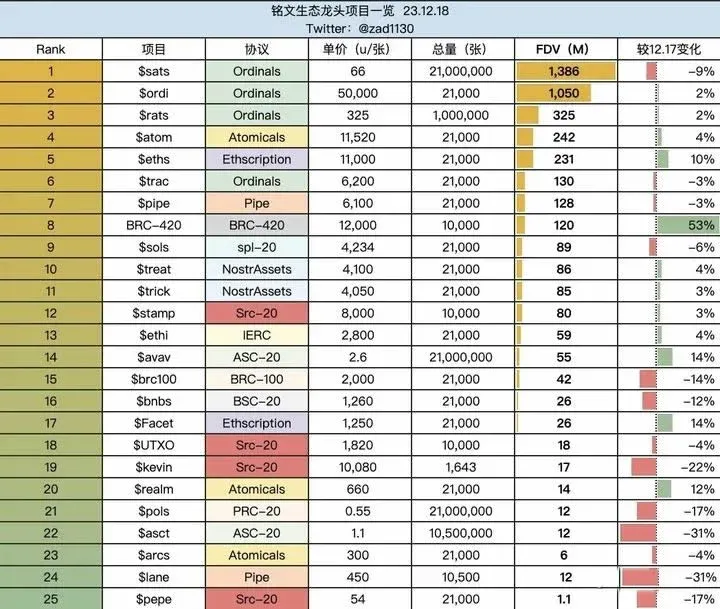
Inscription ecosystem token data
In this article we outline the core principles of the Bitcoin Lightning Network and evaluate the L2 projects that are currently worth watching, helping readers clarify the technical direction and application outlook, conduct a deeper analysis, and avoid blindly following hype. If you want to understand how scaling solutions achieve low‑fee instant payments, keep reading.
① What is the Lightning Network?
Lightning Network is Bitcoin’s Layer 2 scaling solution. It creates bi‑directional payment channels between peers, allowing tiny payments to be settled off‑chain without locking funds in a centralized custodian, thereby reducing fees and boosting transaction speed.
At the time of writing, the Lightning Network hosts more than 14,000 nodes and the total network capacity has exceeded 5,000 BTC. As an off‑chain payment protocol, it removes the dependence on mining confirmations, dramatically shortening settlement times and saving on transaction (gas) costs.
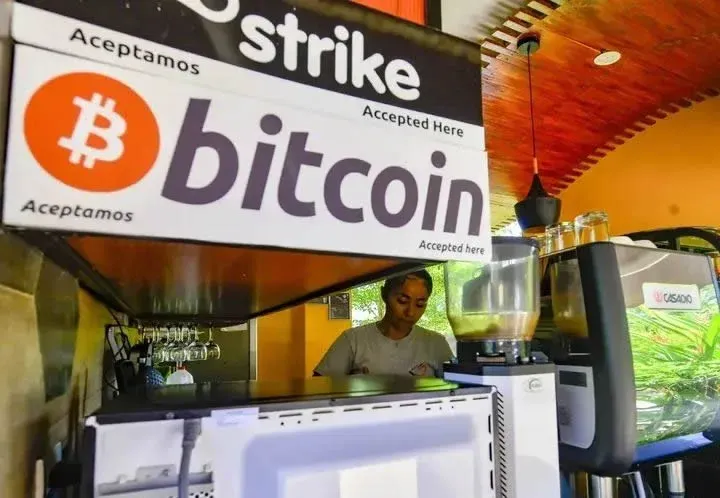
For example, a resident of El Salvador can buy a flat‑bread or a coffee on the street and complete the payment instantly simply by using the Lightning Network.
Common Bitcoin Lightning wallets include Strike, Phoenix, Blue Wallet, and Chivo, among others.
② What is Stacks?
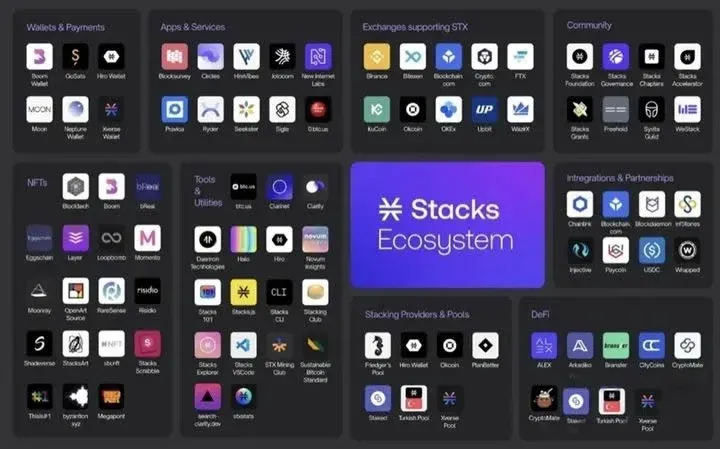
Stacks is a Bitcoin‑anchored smart‑contract platform that functions as a Layer 2 solution. Unlike the Lightning Network, which focuses on payments, Stacks provides an independent ledger for storing data that does not reside on the Bitcoin main chain, enabling developers to deploy any decentralized application on top of it.
Developers can write smart contracts on Stacks, port existing Ethereum protocols, or create entirely new business logic. As technical investment in the Bitcoin ecosystem continues, Stacks supplies the infrastructure needed for on‑chain development.
Within the Stacks ecosystem, several DeFi projects have already emerged, such as Alex, Velar Protocol, and Arkadiko Protocol; their associated tokens are worth monitoring.
③ What are Taproot and the Taproot Assets protocol?
Taproot is the soft‑fork upgrade that Bitcoin implemented in 2021. The upgrade introduced the Tapscript scripting language, allowing Bitcoin transactions to embed more flexible conditional logic, thus enhancing the network’s programmability and privacy.
Built on Taproot, the Taproot Assets protocol—developed by Lightning Labs—enables the issuance of digital assets directly on the Bitcoin blockchain. These assets can be transferred via traditional Bitcoin transactions or moved through Lightning Network off‑chain channels for fast, low‑fee circulation.
Take the recently popular Nostr Assets project as an example. It seamlessly combines Taproot Assets with the Nostr decentralized relay network, offering permissionless, trust‑less asset sending, receiving, and trading capabilities, while exposing a rich set of use‑cases for developers.
The project recently airdropped TREAT and TRICK to early users and plans a next‑round airdrop to holders of ORDI.
Satoshi Nakamoto described Bitcoin in the original whitepaper as “a peer‑to‑peer electronic cash system.” However, due to Bitcoin’s price volatility and historically high transaction fees, real‑world usage has leaned more toward value storage than everyday payments.
The emergence of the Lightning Network makes instant Bitcoin payments feasible. By settling transactions off‑chain, payments are completed almost instantly and at a fraction of the on‑chain fee, fulfilling Satoshi’s original vision of electronic cash.
As the next Bitcoin halving approaches and block rewards are cut in half, exploration of transaction mechanisms beyond miner rewards continues to heat up.
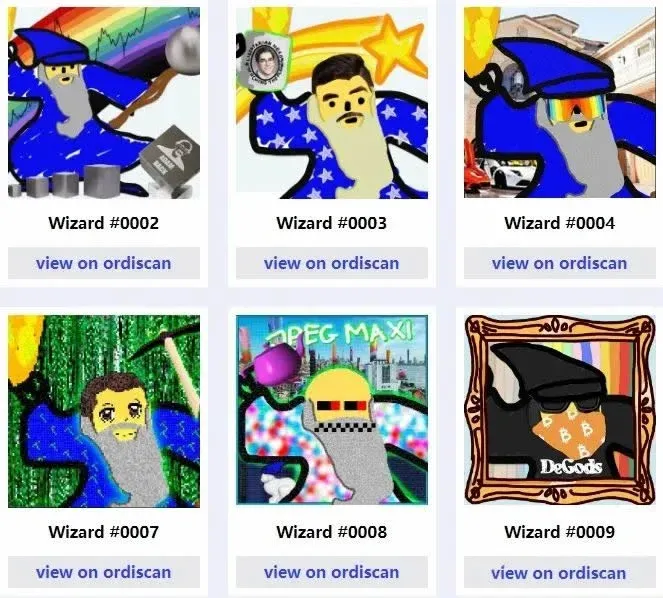
Recently, the on‑chain Bitcoin NFT project BitFrog saw its floor price surge to 0.36 BTC (approximately $15,000 USD)—roughly a quarter of a Bitcoin’s value. Whether a wave of Bitcoin‑based NFTs comparable to Ethereum’s will materialize remains to be seen.
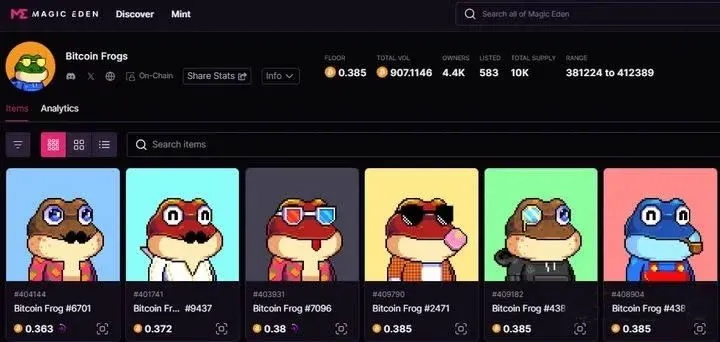
The rapid rise in BRC‑20 prices has once again drawn attention back to Bitcoin inscriptions and the broader ecosystem. The industry is still debating whether inscriptions are a meme or a long‑term opportunity. Regardless of the eventual conclusion, a diversified set of on‑chain use‑cases helps push the Bitcoin ecosystem forward. Whether the future will be dominated by a multi‑chain symbiosis or by Bitcoin alone will be tested over time.
*Note for readers in the United States:* If you wish to trade or acquire any of the tokens mentioned, you must use Binance.US rather than the global Binance platform.
*Tax reminder:* Crypto gains may be subject to taxation in your local jurisdiction; consult a qualified tax professional to understand your obligations.
Related Reading
- Bitcoin Anonymity: Addresses, Signatures & Multi‑Address
- Taproot Assets Mainnet Review: Multi‑Asset Issuance on Bitcoin & DeFi Impact
- Bitcoin Lightning Network: Instant Low‑Fee Payments
💡 Register on Binance with referral code B2345 for the maximum trading fee discount. See Binance complete guide.



