
 Bitaigen Research
 Bitcoin holders often look for ways to preserve the value of their assets while also earning extra returns that resemble interest. Although Bitcoin itself was not designed with a traditional staking mechanism, the market still offers several “pseudo‑staking” solutions that can generate income from idle BTC. Below we first clarify the concepts, then introduce five common earning methods one by one, and finally point out the associated risk considerations.
*In this article we dissect the technical reasons why Bitcoin lacks a native staking function, and we analyse the various pseudo‑staking schemes that are popular in the market. The goal is to help token holders identify the source of any yields and the potential risks, so you can seek suitable value‑addition routes without having to move or sell your BTC.*
What Is Staking
In the blockchain space, staking refers to locking a certain amount of tokens in a designated contract or platform in exchange for rewards that support network security, provide computational power, or perform other services. The core logic of staking is similar to depositing money in a bank to earn interest: the assets stay put temporarily, are used to keep the chain running, and the holder receives extra token rewards based on the amount locked and the lock‑up period.
Not every crypto asset offers this capability. Bitcoin’s security relies on proof‑of‑work (PoW)—the miner who solves the hash puzzle fastest earns the right to create the next block and collect the block reward, regardless of how many bitcoins they hold. Consequently, Bitcoin does not have a native staking mechanism.
The Difference Between Bitcoin Lending and Staking
Many people mistakenly call “using Bitcoin as collateral to borrow other assets” staking. In reality, this operation is more accurately described as collateralized lending: a user deposits Bitcoin with a platform as collateral, receives a loan (usually in another cryptocurrency), and pays a borrowing interest rate. The borrowed funds can be used for trading, arbitrage, or any other activity, and are repaid later. Although the workflow also involves “putting Bitcoin into a contract and not touching it for a while,” the source of the return and the risk profile are fundamentally different from genuine staking.
Why Bitcoin Cannot Be Staked Directly
Bitcoin was conceived primarily as a store of value and a peer‑to‑peer payment medium, not as a vehicle for earning staking rewards. Simply holding Bitcoin does not trigger any on‑chain mechanism that would generate additional BTC. Because Bitcoin holds the largest influence across the crypto ecosystem, many projects have built financial products that mimic staking in order to attract Bitcoin holders and offer extra yields.
Below are five typical “pseudo‑staking” approaches that can turn idle Bitcoin into a source of income.
1. New‑Token Mining (Yield Farming)
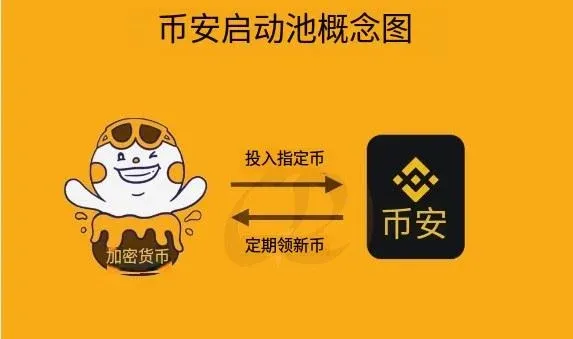
Some exchanges run short‑term new‑token mining campaigns. Users lock Bitcoin or other specified tokens and receive newly issued project tokens on an hourly or daily basis. For example, OKX’s “Flash Earn” program has historically delivered annualised yields that exceed 10 % over a few days. It is important to recognise that these rewards are funded mainly by the project’s marketing budget or platform exposure fees, and they have little direct correlation with Bitcoin’s intrinsic value.
2. Cash‑and‑Carry Arbitrage
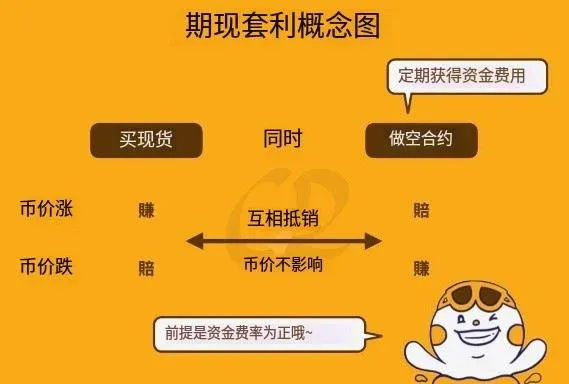
Exploiting the price spread between Bitcoin’s spot market and its futures market can be treated as a form of staking‑style income. The typical workflow is:
- Open a short Bitcoin futures contract on a derivatives exchange.
- Use actual Bitcoin as margin for that contract.
Because the profit or loss on the futures position offsets the spot‑market exposure, the overall position is theoretically insulated from BTC price swings while it is open. When the number of long positions exceeds short positions, longs are required to pay a funding fee to shorts every eight hours; that fee becomes a potential source of income for the short‑side participant.
However, if market sentiment flips and short positions become the minority, the funding flow reverses: the short side may have to pay the fee to longs, eroding any expected profit. Timing is therefore critical. Several exchanges have packaged this principle into dedicated products—for instance, Binance’s BFUSD offering and Coinbase’s Bitcoin Yield Fund (CBYF)—both of which essentially deliver returns derived from cash‑and‑carry arbitrage.
3. Lending Out Bitcoin for Interest
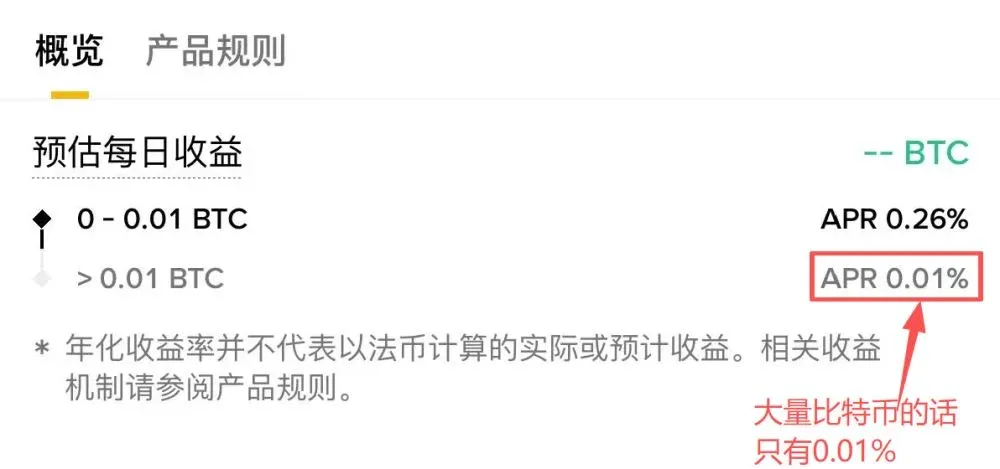
Providing Bitcoin to borrowers in exchange for interest paid in Bitcoin is another way to earn a modest return. Most centralized exchanges feature auto‑matching lending products; you simply deposit BTC on the designated “Earn” page and receive interest on a daily basis. Because demand for Bitcoin loans is relatively modest, the annualised rates are generally low. Binance’s “Earn” program, for example, offers roughly 0.01 % p.a. on BTC, meaning that holding 1 BTC would generate only 0.0001 BTC after a full year.
4. Bitcoin Staking in Decentralised Projects
Certain layer‑1 or layer‑2 protocols accept Bitcoin as a security bond, helping to improve the network’s resistance to attacks. Representative examples include Babylon and Stacks. Users lock BTC in the project’s smart contract, thereby contributing to the network’s security, and receive the native project token (e.g., BABY) as a reward. These schemes typically deliver annual yields around 0.5 %, which is modest but relatively stable compared with many high‑risk alternatives.
5. Wrapping Bitcoin (WBTC) to Participate in DeFi
Bitcoin can be converted into Wrapped Bitcoin (WBTC), an ERC‑20 token that represents BTC on the Ethereum network. Once wrapped, the token can be supplied as liquidity, lent out, or used for market‑making on various DeFi platforms. The process is analogous to exchanging fiat for a game token before entering a virtual casino: you retain the underlying value (you can always unwrap WBTC back into BTC), while gaining access to the extra income streams that DeFi markets provide.
Binance’s Bitcoin Yield Channels
Binance offers dedicated Bitcoin‑focused financial products. After depositing BTC, users begin receiving daily returns. If you have not yet created a Binance account, you can register and download the client via the following links:
- Binance Global Registration: <https://accounts.binance.com/register?ref=B2345> (copy the link into your browser)
- Binance Android App Download: <https://www.bitaigen.com/binance/download>
Important for U.S. residents: Binance’s global platform is not available in the United States. U.S. users should instead use Binance.US or another regulated U.S. exchange that offers comparable BTC earning products.
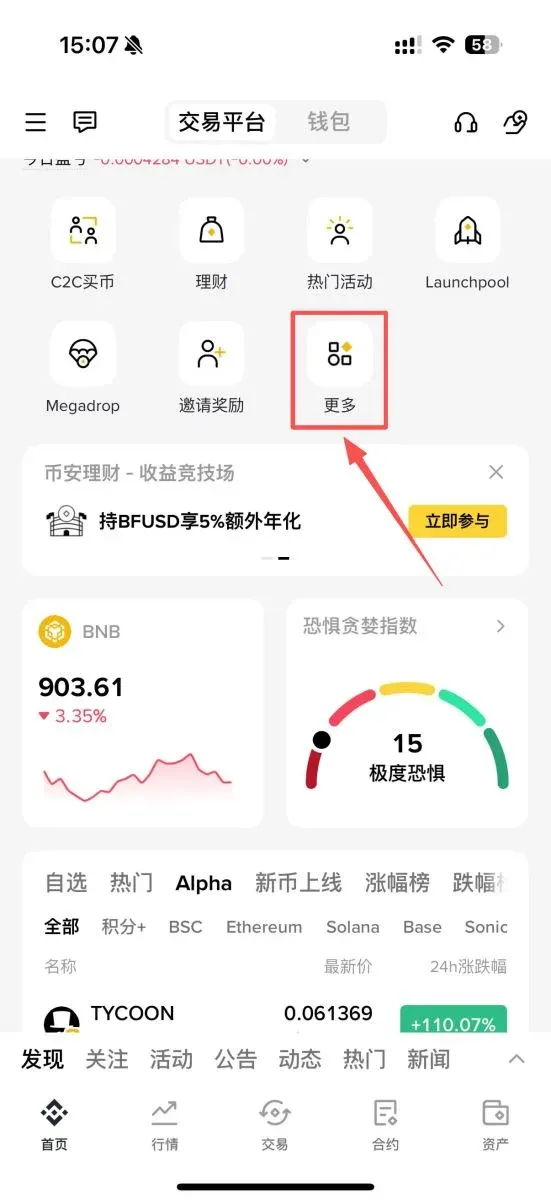
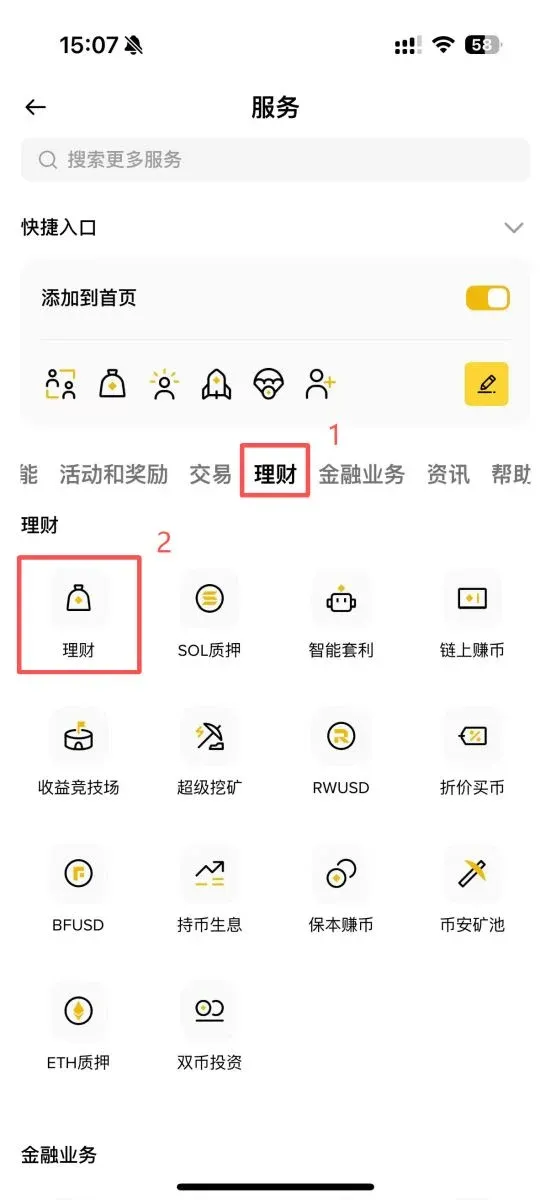
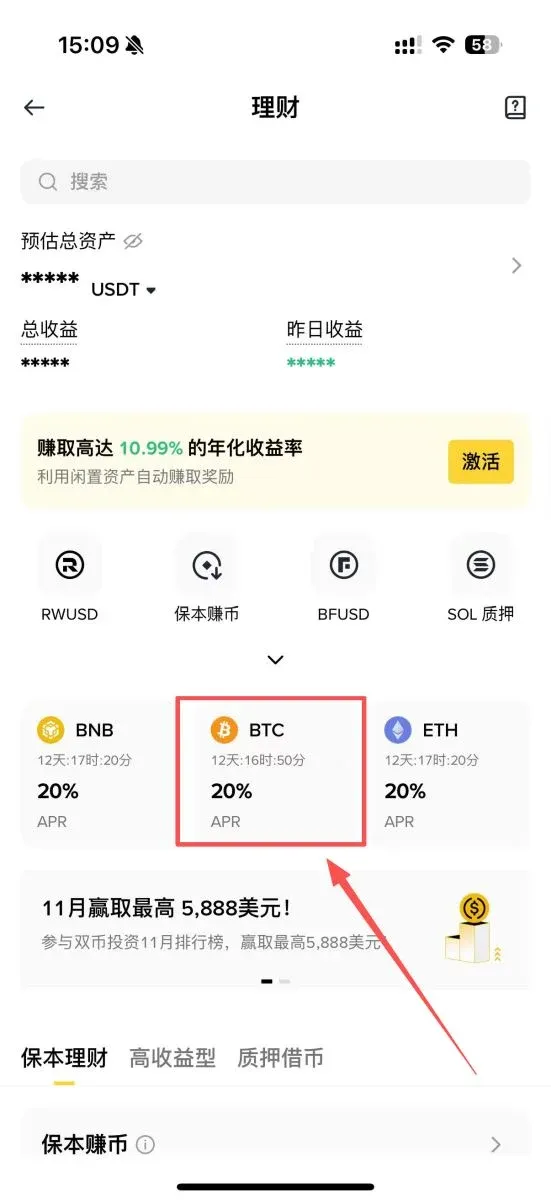
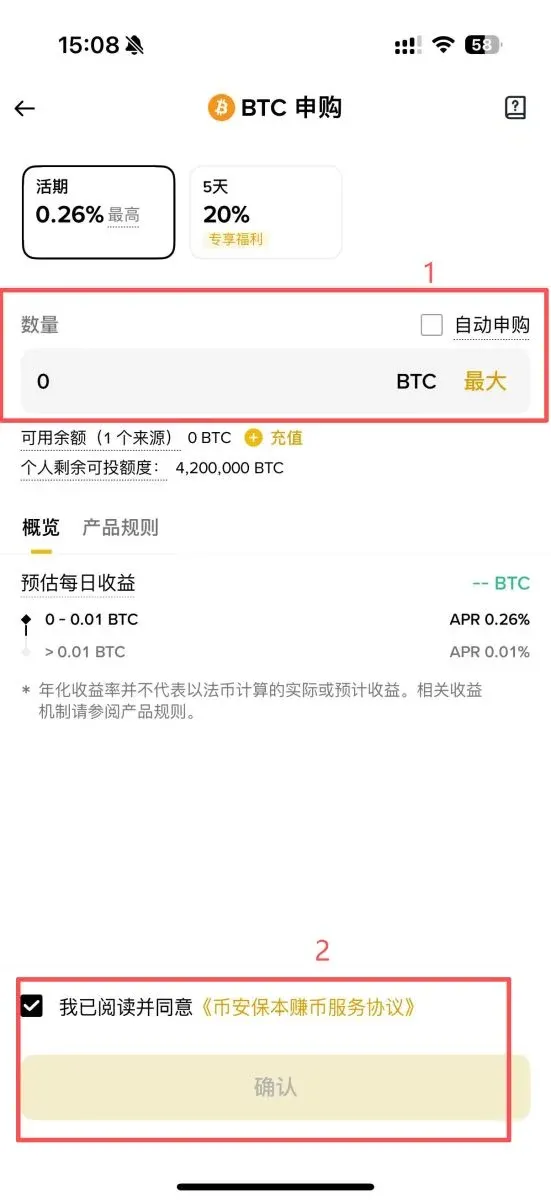
After registration, open the Binance app, navigate to More → Binance Earn → Earn, scroll down to locate BTC, and tap to subscribe and lock your Bitcoin. Note that the displayed annualised yield of 0.26 % applies only to the first 0.01 BTC you allocate; any amount above that receives a reduced rate of 0.01 %.
The first payout arrives the next day, and subsequent earnings are automatically credited each day. To redeem, go to Wallet → Earn, and the system will return your Bitcoin to the spot wallet within a short processing window.
Potential Risks of “Staking” Bitcoin
Any form of pseudo‑staking carries inherent risk, and promotions that claim “zero risk, zero fees” are often scams. Common risk vectors include:
- Cash‑and‑Carry Arbitrage – Extreme market volatility can flip the direction of funding fees, turning a supposed income into a cost.
- New‑Token Mining & Lending – If the project team or platform suffers a security breach, fraud, or outright exit scam, the deposited Bitcoin may be lost in full.
- Decentralised Contracts – Bugs or vulnerabilities in smart‑contract code can result in assets being locked forever or stolen.
Before participating, carefully assess your own risk tolerance. If you prefer to avoid additional exposure, keeping Bitcoin in a cold‑storage wallet remains the safest option. While the yield is effectively zero, this approach maximises protection of the underlying asset.
Tax note: In many jurisdictions, any profit generated from Bitcoin‑related activities—including lending interest, yield‑farming rewards, or gains from wrapped‑token strategies—may be subject to capital‑gains or income tax. Users should consult local tax regulations or a qualified tax professional to ensure compliance.
Frequently Asked Questions (FAQ)
What is the typical annualised return for Bitcoin “staking”?
Bitcoin itself has no staking design, so returns depend entirely on the pseudo‑staking method you choose, the platform you use, and prevailing market conditions. In general, most schemes deliver modest annual yields.
Is it safe to lock Bitcoin on a third‑party platform?
Safety hinges on the reputation, audit results, and custodial practices of the platform or project. Before committing funds, review any available security audits, community feedback, and the platform’s insurance or reserve mechanisms.
---
The content above systematically explains the concept of Bitcoin staking, why Bitcoin cannot be directly staked, and five alternative ways to generate yields from idle BTC. For more up‑to‑date techniques and market insights, consider following Bitaigen (比特根) for the latest news.
Related Reading
- Bitcoin Hits $74K: Price Rebound or Major Trend Reversal?
- 9 Bitcoin Energy Myths Debunked by ESG Expert Daniel Batten
- Kimchi Premium Expands to Bitcoin, Ethereum & Altcoins
💡 Register on Binance with referral code B2345 for the maximum trading fee discount. See Binance complete guide.



